This post contains affiliate links. If you buy through our links we may earn a small commission — at no extra cost to you. This never influences our recommendations.
Goal Zero’s Nomad line runs from 5 watts all the way to 200 watts, all under the same name — so it’s worth being clear up front: the Nomad 5 is the smallest one, and it’s not built to charge a power station.
This is a phone-and-headlamp panel, not a Yeti panel. If you landed here looking to charge a portable power station, our Goal Zero Nomad 100 review is the one you actually want.
| Spec | Goal Zero Nomad 5 |
|---|---|
| Output | 5W monocrystalline, USB-A |
| Weight | 12.7 oz |
| Dimensions | 9.5 x 7 x 1.1 in |
| Design | Built-in kickstand, built-in Flip power bank charging dock |
| Chainable | No |
What This Panel Actually Charges
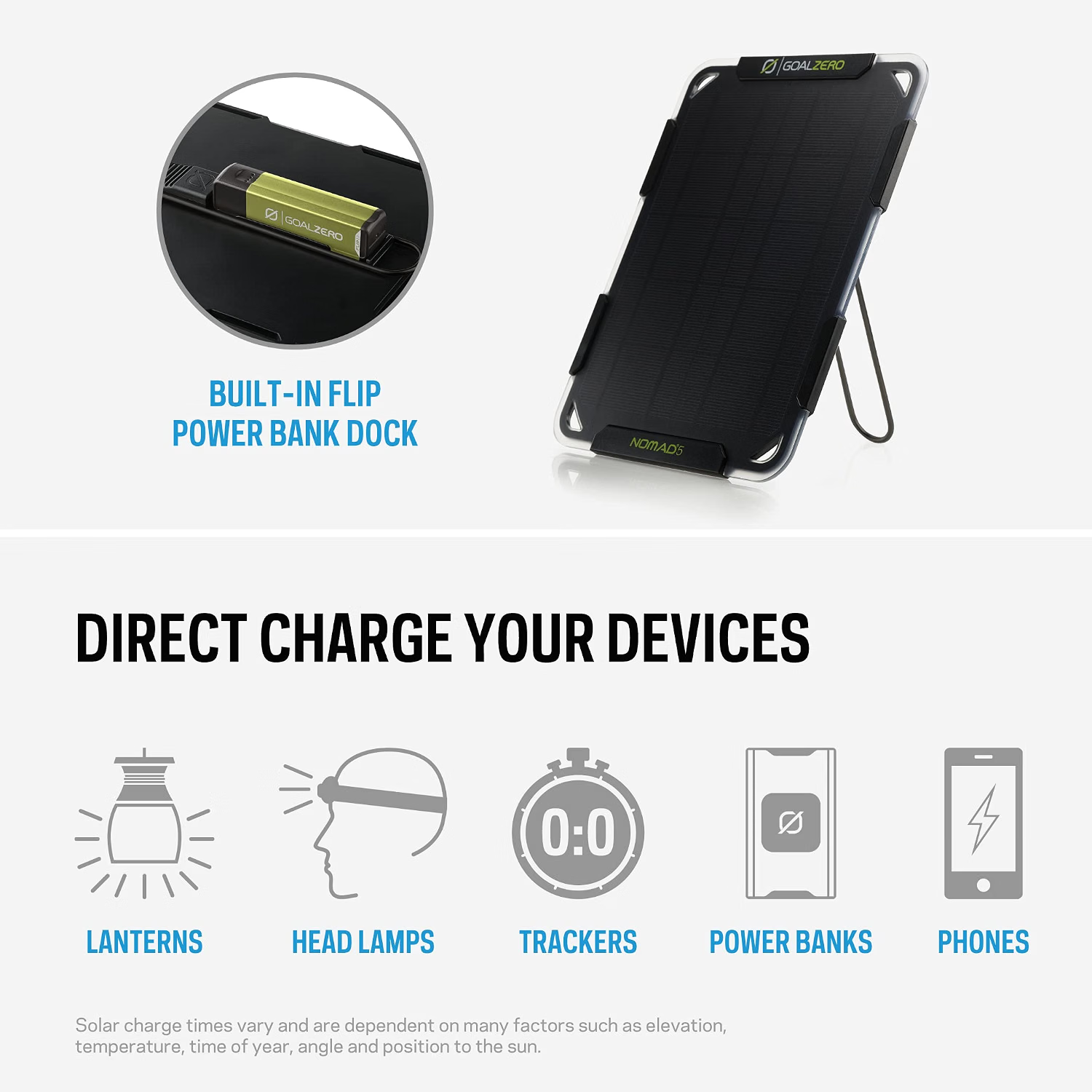
Think phones, headlamps, fitness trackers, and small USB-A devices — the Nomad 5 is built for keeping personal gear alive on a multi-day hike, not for running anything with real wattage.
It’s designed to pair directly with Goal Zero’s Flip power banks through a built-in charging dock, so you can top off a Flip during the day and use it to charge your phone after dark.
Plugging a phone straight into the panel works too, but a power bank in between is the more reliable way to actually use the power you’re collecting.
The Real Limitation: No Chaining, and Output Depends Entirely on Sun
Unlike the larger Nomad panels, the 5 and 10 aren’t chainable — this is a single, fixed 5W ceiling with no way to add a second panel later.
At this wattage, weather matters more than it does with bigger panels. Real-world reports include at least one case of a Nomad 5 failing to keep a phone charged over a multi-day backcountry trip, so treat 5W as a best-case number, not a guarantee in mixed weather.
For anything beyond basic phone top-ups on a short trip, sizing up to the Nomad 10 or 20 gives real breathing room without much extra weight.
Buying It as Part of a Kit
Goal Zero also sells the Nomad 5 bundled with their Guide 12 Plus power bank — a 2,500mAh battery with a built-in flashlight that can also run on AA/AAA batteries in a pinch.
That bundle makes sense if you don’t already own a compatible power bank; buying the panel alone is the better move if you’re just adding solar charging to gear you already have.
| Pros | Cons |
|---|---|
| Genuinely lightweight at 12.7 oz — barely noticeable in a pack | Not chainable — 5W is a hard ceiling |
| Built-in kickstand and Flip power bank dock, no extra parts | Output drops fast in cloudy or shaded conditions |
| Simple, rugged build for basic device charging | Some real-world reports of unreliable output on multi-day trips |
Best for: Ultralight hikers and backpackers who just need to keep a phone or headlamp alive, not anyone charging a power station or multiple devices at once.
Goal Zero Nomad 5 Solar Panel
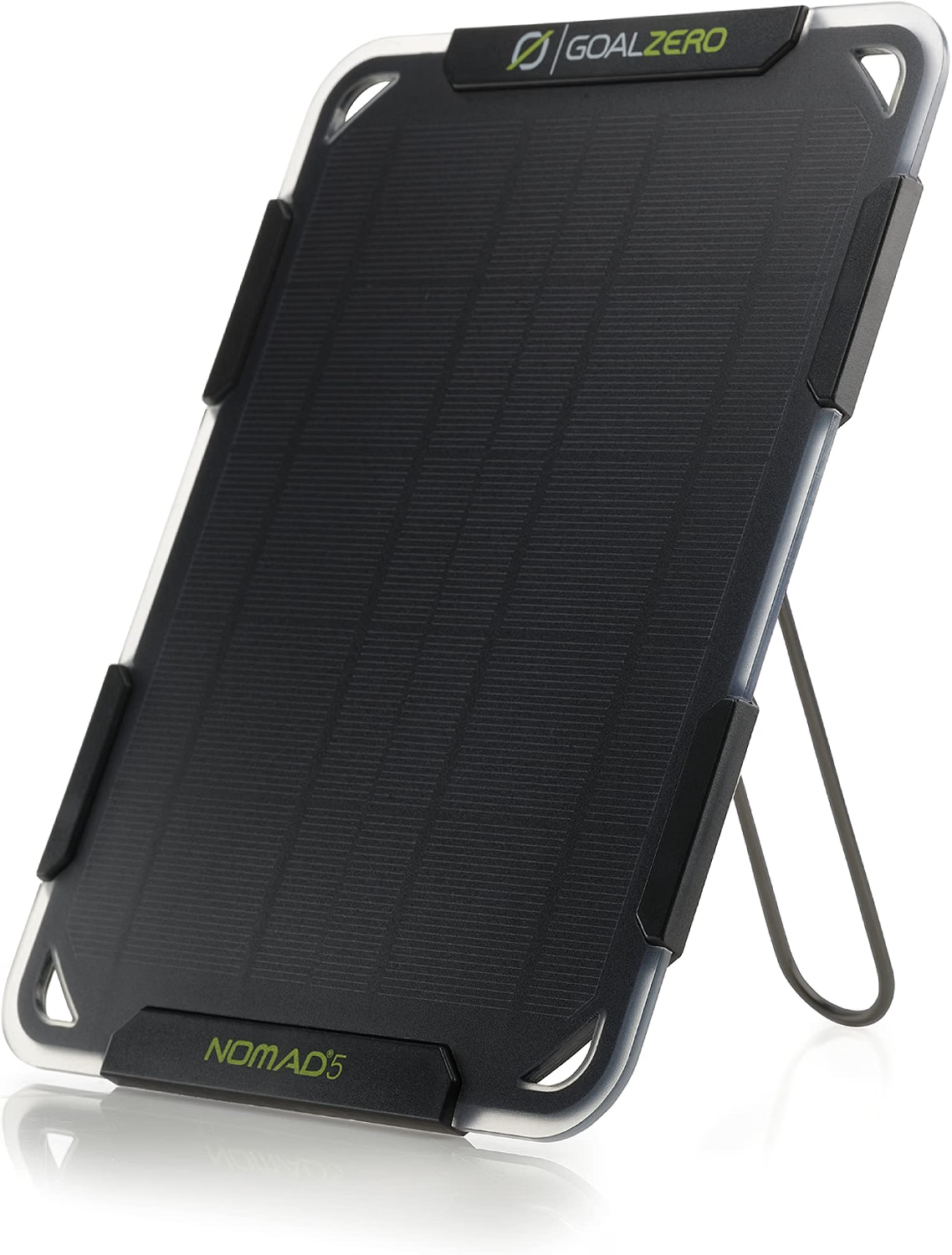
This is the panel to grab if weight is the priority and your charging needs are genuinely minimal — a phone, a headlamp, maybe a fitness tracker.
It’s not a panel to buy expecting power-station-level output; that’s a different product in the same lineup entirely.
Full details and current price: Goal Zero Nomad 5 Solar Panel on Amazon
Frequently Asked Questions
Can the Goal Zero Nomad 5 charge a power station?
No — at 5W, it’s built for phones and small USB devices only. For power stations, look at the Nomad 50, 100, or larger.
Can I chain multiple Nomad 5 panels together for more power?
No, the Nomad 5 and 10 aren’t chainable — that feature starts at the Nomad 20.
What’s the difference between the Nomad 5 and the Nomad 10?
Mainly output and port options — the Nomad 10 offers roughly double the wattage for a modest weight increase, worth it if 5W feels marginal for your needs.
Does it work with any power bank, or just Goal Zero’s?
It has a built-in charging dock specifically for Goal Zero’s Flip power banks, though you can also plug other USB devices directly into the panel.
How reliable is the output in real-world conditions?
At this wattage, cloud cover and shade noticeably cut output — some users report inconsistent charging on multi-day trips, so treat 5W as a best-case figure.
Final Verdict
The Nomad 5 does exactly one job well — keeping a phone or headlamp topped off on a lightweight trip — and nothing more. Buy it for that job specifically, and size up if your needs are any bigger than a single phone.