This post contains affiliate links. If you buy through our links we may earn a small commission — at no extra cost to you. This never influences our recommendations.
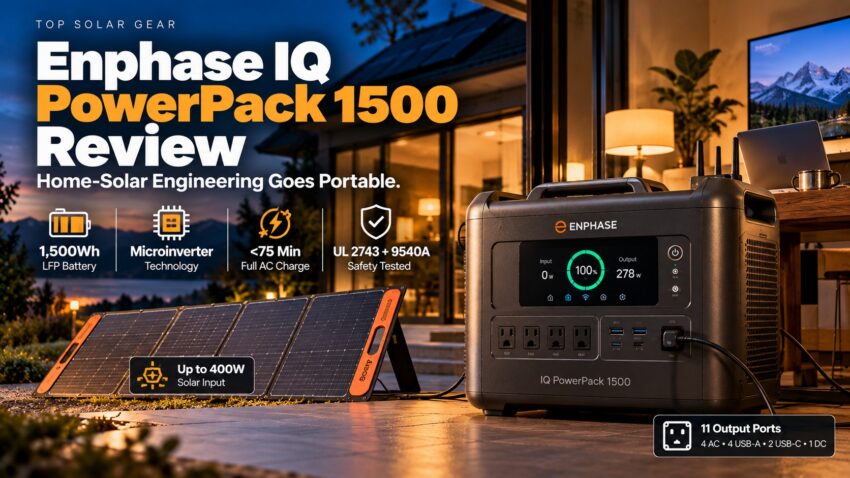
Enphase built its name on rooftop microinverters, not coolers you carry to a campsite. The IQ PowerPack 1500 is its first attempt at a portable power station, and the pedigree shows in the safety certifications more than in the specs sheet.
| Spec | Enphase IQ PowerPack 1500 |
|---|---|
| Capacity | 1,500 Wh LFP (lithium iron phosphate) |
| Output | 1,500 VA continuous, 11 total ports |
| Charging | 0-100% in under 75 minutes via AC |
| Solar input | Up to 400W (two 200W or one 400W panel) |
| Weight | 55.7 lbs |
| Warranty | 5 years or 2,500 cycles |
Where the Enphase Pedigree Actually Shows Up
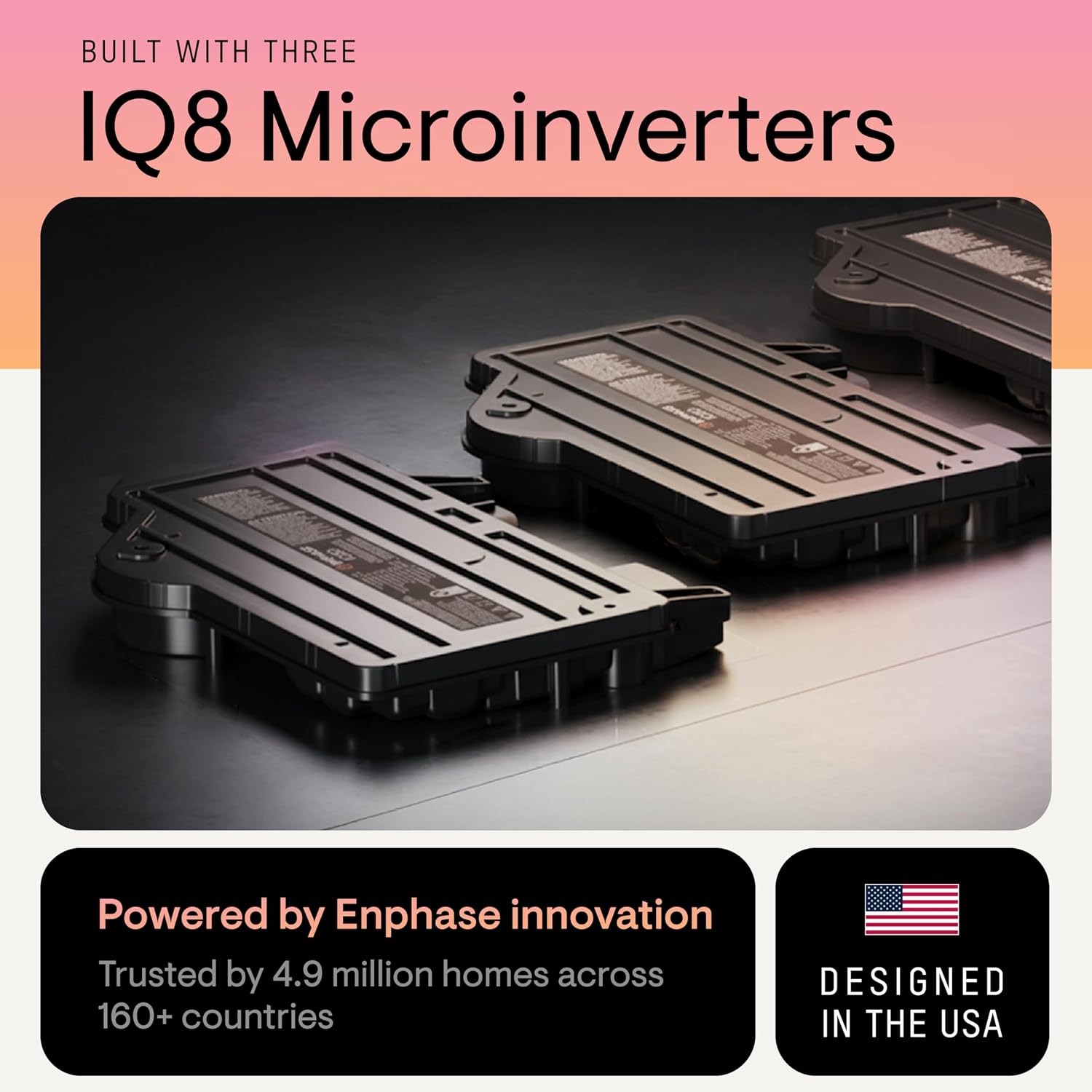
This is the first portable power station built around microinverter technology instead of a single central inverter — Enphase’s argument is that a failure in one microinverter doesn’t take the whole unit down the way it would with a traditional design.
It’s also the first in this category to meet both UL 2743 and UL 9540A safety standards, and the 75-minute full recharge from a wall outlet is genuinely fast for 1,500Wh.
The Honest Weight Problem
At 55.7 lbs, this is heavy for its capacity class. The DJI Power 2000, for comparison, packs 2,048Wh — more capacity — into 48.5 lbs, noticeably lighter despite storing more energy.
If you’re prioritizing capacity-per-pound, several competitors currently beat the IQ PowerPack 1500 on that specific metric. Enphase’s safety certifications and microinverter design are the trade-off you’re making, not something you get for free.
The App Requires More Than It Should
Setting up the Enphase App to connect this unit asks for a real amount of personal information — full name, address, date of birth — just to create the account needed to use the app at all.
The unit also connects to its own private 4G network by default, with limited user control over that connection. For a portable power station, that’s more connectivity than the actual app functionality seems to need — mostly monitoring input and output data, not deep control over settings.
If that data and connectivity footprint bothers you, that’s a legitimate reason to look elsewhere, even with Enphase’s strong reputation in home solar.
What It’s Actually Good At
11 output ports (4 AC, 4 USB-A, 2 USB-C, 1 DC) cover a genuinely wide mix of devices at once, and the 7-inch touchscreen gives real on-unit control without needing the app for basic monitoring.
The 400W max solar input, achievable with two 200W panels, is solid for this capacity class, and 24/7 phone support backed by a 5-year warranty is a real point in Enphase’s favor if something goes wrong.
| Pros | Cons |
|---|---|
| Genuinely fast 75-minute full recharge via AC | Heavy for its capacity — competitors beat it on weight per Wh |
| First to market with UL 2743 and UL 9540A certification | App setup demands more personal data than it should need to |
| 11 ports and a real on-unit touchscreen | Built-in 4G connectivity with limited user control |
Best for: Buyers who specifically value Enphase’s safety certifications and brand reputation over winning on weight or raw value against newer competitors.
Enphase IQ PowerPack 1500 Portable Power Station
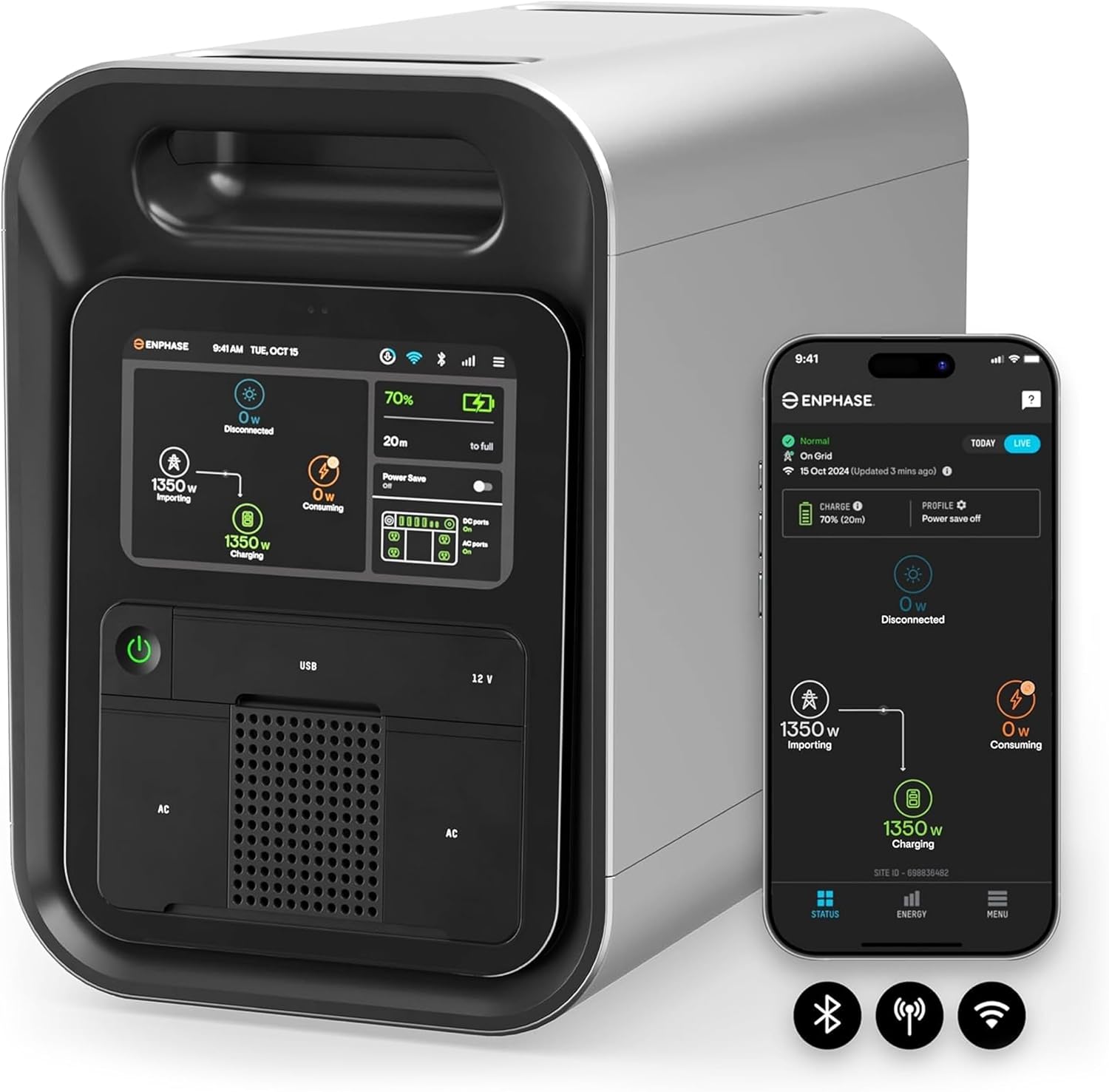
This is the standalone unit, without the bundled solar panel or cart accessories — a reasonable starting point if you already have compatible MC4 panels or just want to evaluate the core unit first.
Go in with realistic expectations on weight and app privacy, and the genuine safety and charging-speed strengths here are easier to appreciate on their own terms.
Full details and current price: Enphase IQ PowerPack 1500 on Amazon
Frequently Asked Questions
Is the Enphase IQ PowerPack 1500 heavy for its capacity?
Yes — at 55.7 lbs for 1,500Wh, competitors like the DJI Power 2000 offer more capacity at a lighter weight.
Does it require an account to use the app?
Yes, and setup asks for real personal information — full name, address, and date of birth — to create that account.
How fast does it charge?
0-100% in under 75 minutes via a standard AC wall outlet, genuinely fast for this capacity class.
What makes microinverter technology different here?
Instead of one central inverter, the design uses multiple microinverters, so a single component failure doesn’t necessarily take the whole unit offline.
Is it UL certified?
Yes, it’s the first portable power station to meet both UL 2743 and UL 9540A safety standards.
Final Verdict
Enphase’s safety engineering and charging speed are genuinely strong, but this isn’t the value or weight leader in its class — know that going in, and decide whether the certifications and brand trust are worth the trade-off for you.