
This post contains affiliate links. If you buy through our links we may earn a small commission — at no extra cost to you. This never influences our recommendations.
“5000 watt” is one of the most misread numbers in portable power. It tells you how much a station can run at once. It says nothing about how long it can keep running.
A 5,000W unit with a small battery will power a dryer, a well pump, or a central AC for under an hour. Here’s how to read the number, plus two stations that truly deliver it and one that comes close.
| Station | Output | Capacity | Best For |
|---|---|---|---|
| Anker SOLIX F3800 Plus | 6,000W, 120V/240V | 3,840Wh | RV and home backup in one unit |
| Jackery Explorer 5000 Plus | 7,200W, 120V/240V | 5,040Wh | Longer outages, heavy 240V loads |
| EcoFlow DELTA Pro 3 | 4,000W, 120V/240V | 4,096Wh | If 4,000W covers what you run |
Watts vs. Watt-Hours
Watts measure power: how much the station can push out at one moment. Watt-hours measure energy: how much is in the tank.
Take the F3800 Plus. Its 3,840Wh battery running a steady 5,000W empties in roughly 40-45 minutes. Run a 500W essentials load instead and the same battery lasts about 6-7 hours.
The naming adds confusion. On Jackery’s Explorer 5000 Plus, the “5000” is capacity (5,040Wh). Its output is actually 7,200W.
What 5,000 Watts Can Actually Run
These are typical running watts. Motors also pull a short startup surge, often two to three times higher.
| Appliance | Typical Running Watts |
|---|---|
| Refrigerator | 100-300W (cycles on and off) |
| Microwave | 1,000-1,500W |
| Window AC | 500-1,400W |
| Well pump | 750-2,000W |
| Electric dryer | 3,000-5,000W |
| Central AC | 3,000-5,000W+ |
Most people don’t need 5,000W to keep a home comfortable. A fridge, lights, router, and phone chargers add up to well under 1,500W. The big numbers come from dryers, central AC, and electric water heaters.
Want to check your own setup? Our sizing guide walks through the math, and this breakdown covers air conditioners specifically.
120V vs. 240V Matters More Than the Headline Number
Dryers, well pumps, electric ranges, and central AC run on 240V. A station that only outputs 120V can’t power them, no matter how many watts it’s rated for.
All three picks below output both 120V and 240V from a single unit. Wiring any of them into your home’s circuits takes a transfer switch and a licensed electrician. It’s not a plug-in job.
For a literal 5,000W rating, Bluetti’s AC500 is the rare one, but it’s a modular inverter sold without a battery. Its newer Apex 300 is the successor, at a lower 3,840W.
Our Picks
Anker SOLIX F3800 Plus — Best Overall
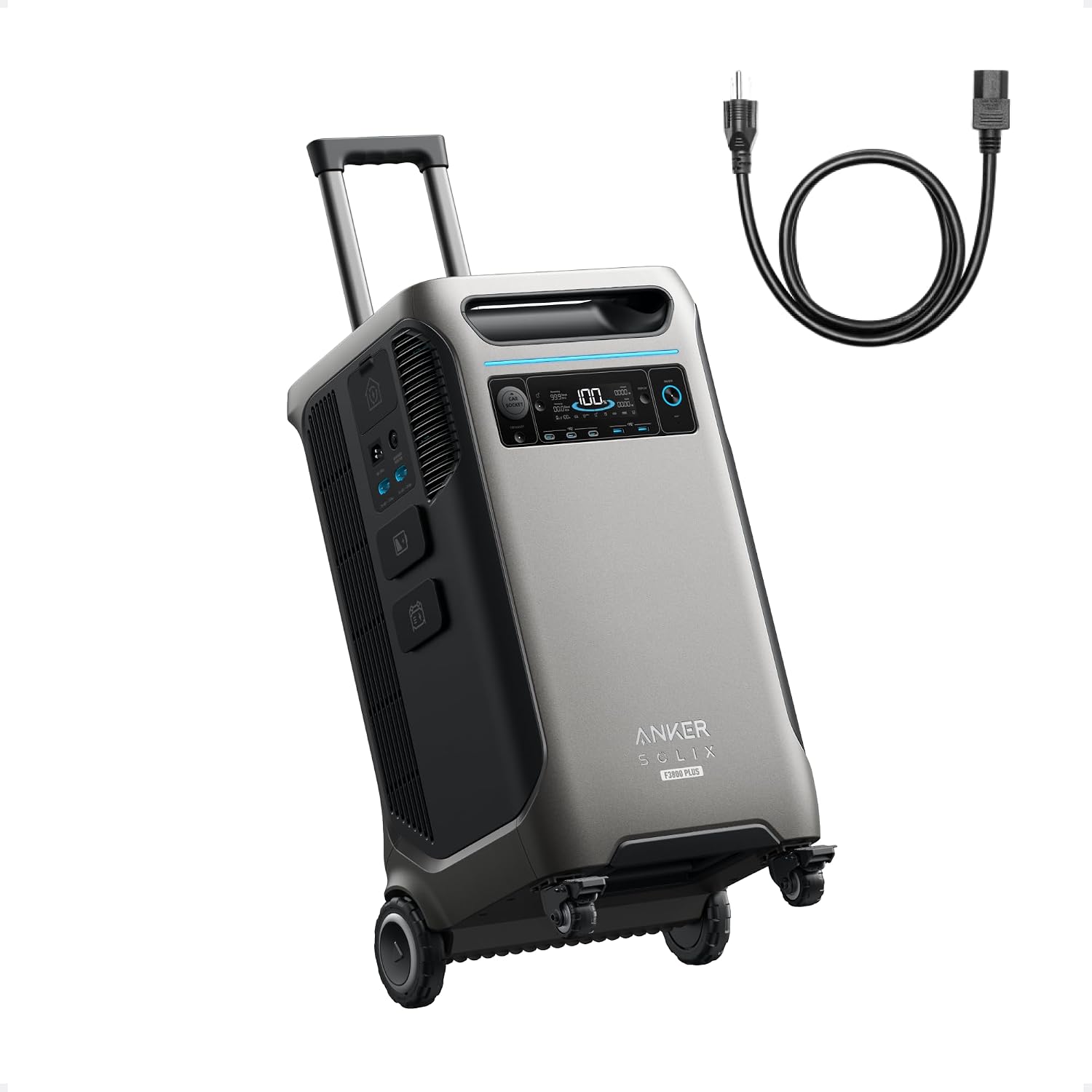
The F3800 Plus is the upgraded version of the original F3800, with up to 3,200W of solar input and expansion up to 53kWh. Output is 6,000W at both 120V and 240V, and pairing two units doubles it to 12,000W.
It’s wheeled, but it’s a big machine. Reviewers put it around 130 pounds with accessories, so plan where it lives. It can also charge an EV or an RV directly. Our F3800 review covers the original model in depth.
| Pros | Cons |
|---|---|
| 6,000W at both 120V and 240V from one unit | Heavy, even with wheels |
| Up to 3,200W solar input recharges fast | 3,840Wh runs big loads for under an hour |
| Expands up to 53kWh, 5-year warranty | Overkill for most households |
Best for: RV owners and homeowners who want a true 6kW unit they can grow into.
Full details and current price: Anker SOLIX F3800 Plus on Amazon
Jackery Explorer 5000 Plus — Best for Long Outages
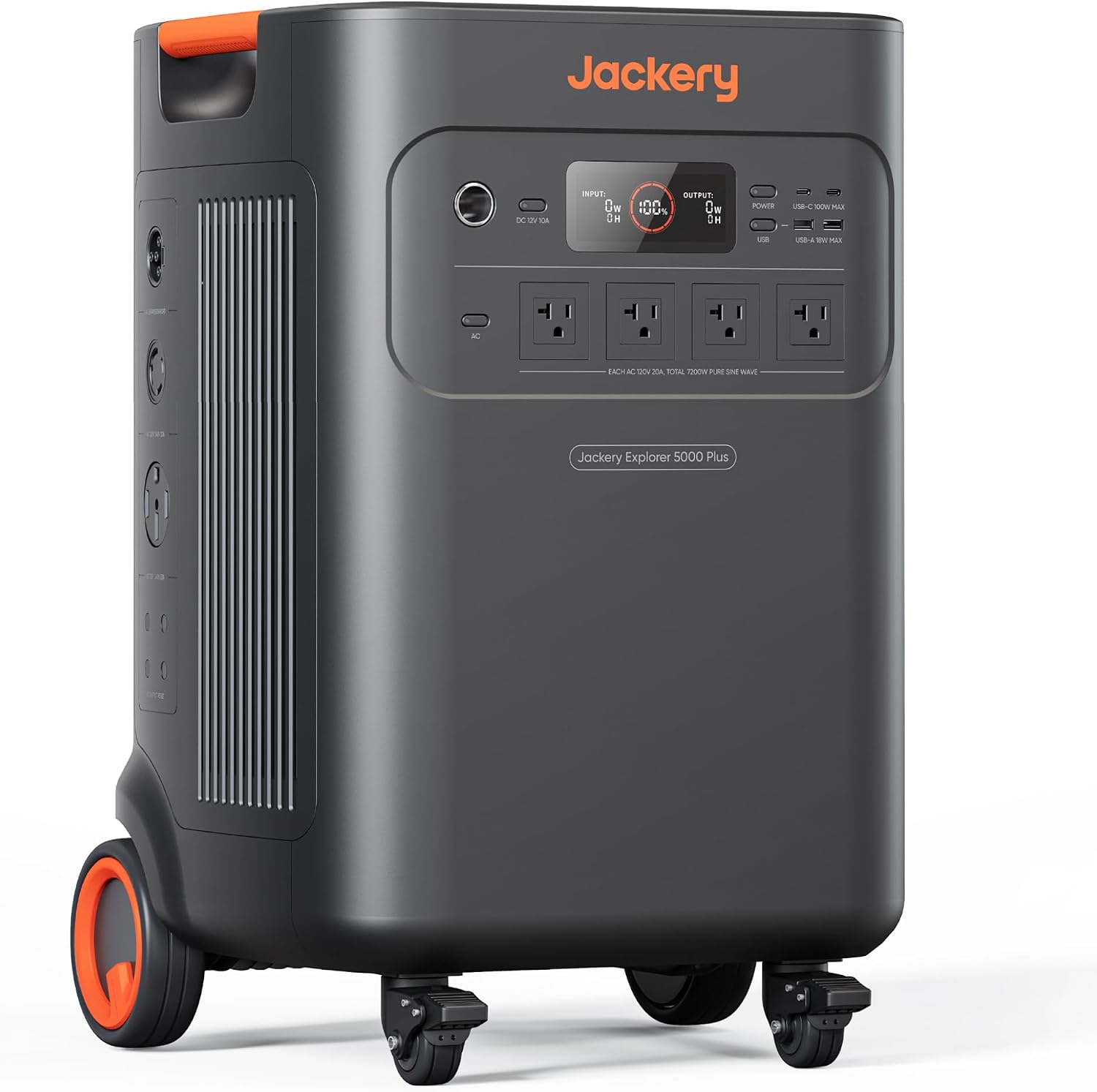
This one pairs a bigger battery (5,040Wh) with a stronger inverter: 7,200W rated, 14,400W surge. It expands to 60kWh and accepts up to 4,000W of solar, which Jackery says recharges it in about two hours.
Jackery also sells a 60A smart transfer switch for it, covering up to 12 circuits at 120V or 6 at 240V. That makes whole-home backup simpler to plan. See our full Explorer 5000 Plus review.
| Pros | Cons |
|---|---|
| 7,200W output with a 5,040Wh battery | Premium price for a premium unit |
| Expands to 60kWh for multi-day backup | Whole-home hookup still needs an electrician |
| Up to 4,000W solar input | Listings mix new and Renewed units, so check which you’re buying |
Best for: Homes that need heavy 240V loads and longer runtime in an outage.
Full details and current price: Jackery Explorer 5000 Plus on Amazon
EcoFlow DELTA Pro 3 — If 4,000W Is Enough
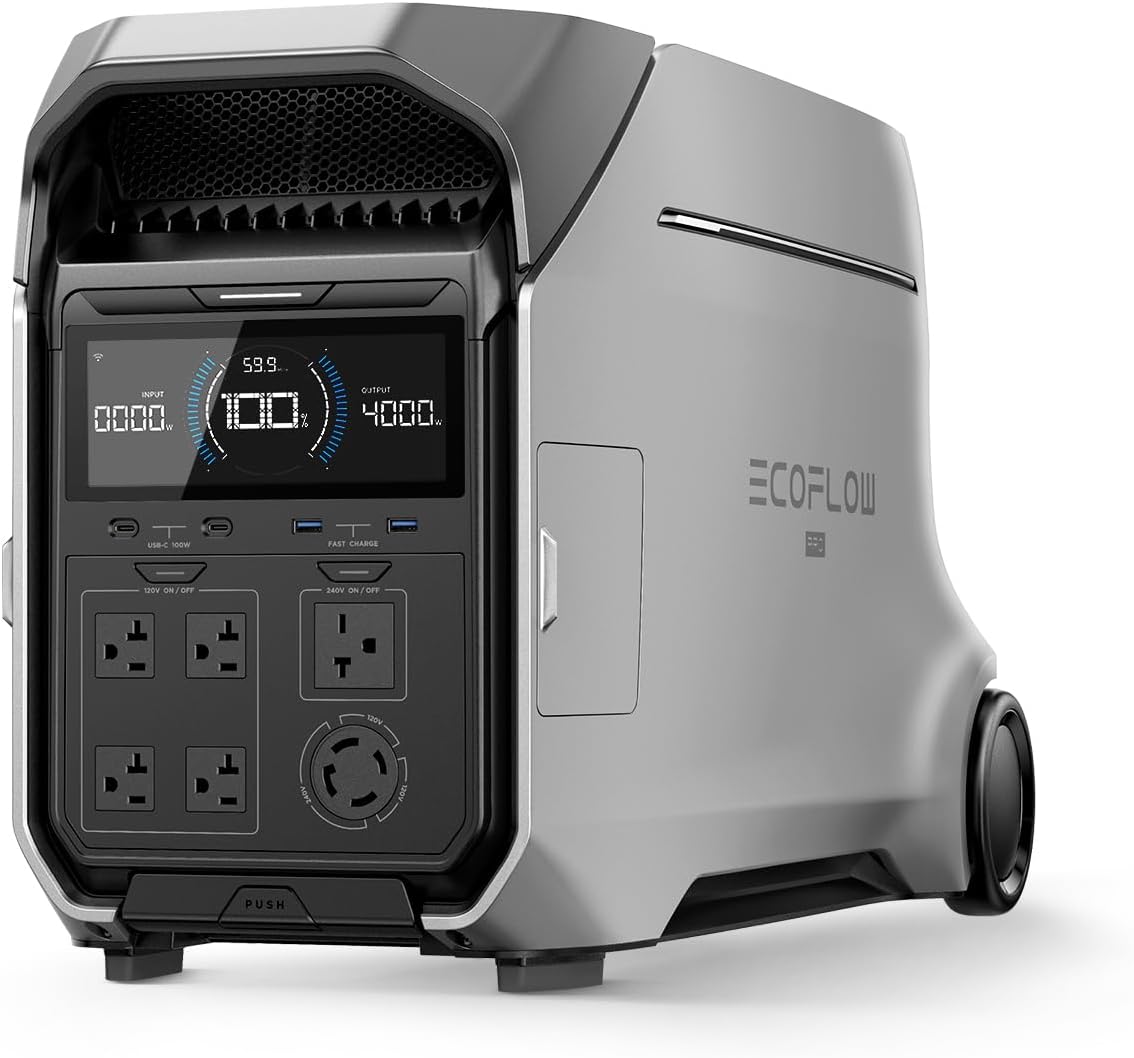
At 4,000W continuous, this is a step under the 5kW mark. It’s worth a look if your heaviest load is a well pump or window AC, not a dryer or central AC.
It pairs a 4,096Wh battery with 120V/240V output, and EcoFlow’s ecosystem makes adding batteries and panels straightforward. Read our DELTA Pro 3 review, or see how it stacks up in our F3800 vs. DELTA Pro 3 comparison.
| Pros | Cons |
|---|---|
| 4,096Wh battery with 120V/240V output | 4,000W continuous falls short of a true 5kW |
| Strong ecosystem of batteries and panels | Won’t start the biggest central AC units |
Best for: Buyers who want real capacity and 240V but don’t need the full 5,000W.
Full details and current price: EcoFlow DELTA Pro 3 on Amazon
Frequently Asked Questions
What does a 5000 watt solar generator mean?
It means the station can output up to 5,000 watts at once. How long it runs depends on battery capacity in watt-hours.
How long will a 5000W station run a full load?
Not long. A 3,840Wh battery drains in roughly 40-45 minutes at a steady 5,000W. Lighter loads last far longer.
Can it run central air conditioning?
Some units can, but it depends on the AC’s startup surge. You also need 240V output, plus a transfer switch to connect it to your home’s wiring.
Do I need 240V output?
Yes, for dryers, well pumps, electric ranges, and central AC. A 120V-only station can’t run them.
Is 5,000W more than I need?
Probably, unless you run large 240V appliances. A fridge, lights, router, and chargers usually total under 1,500W.
Final Verdict
| Station | Best For |
|---|---|
| Anker SOLIX F3800 Plus | A true 6kW unit for RV or home backup |
| Jackery Explorer 5000 Plus | Heavy 240V loads and longer outages |
| EcoFlow DELTA Pro 3 | Real capacity when 4,000W is enough |
Add up what you’d really run at the same time before you pay for 5,000W. If the total is under 4,000W, the DELTA Pro 3 saves money. If it’s higher, pick between the F3800 Plus and the Explorer 5000 Plus on how long you need the lights on.