This post contains affiliate links. If you buy through our links we may earn a small commission — at no extra cost to you. This never influences our recommendations.
Too small, and it dies before your trip ends. Too large, and you’ve overpaid for capacity you’ll never use.
Here’s the actual math to get it right the first time.
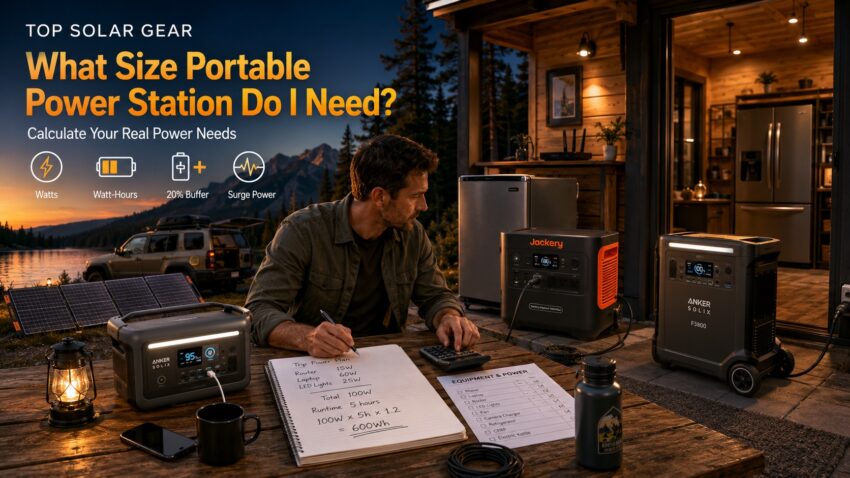
The Formula
Add up the watts of everything you want to run. Multiply by the hours you need them running. That’s your baseline watt-hours.
Then add a 20-25% buffer for real-world losses. The formula:
Minimum Capacity (Wh) = (Total device watts × hours of use) × 1.2
Example: a 15W router, a 60W laptop, and 25W of LED lights, all running for 5 hours.
100W × 5 hours = 500Wh. Multiply by 1.2, and you land at 600Wh minimum.
Why the Buffer Matters — Two Real Losses
Inverter loss: converting stored DC battery power into the AC power your devices actually use wastes 10-15% as heat. A 1,000Wh battery delivers roughly 850-900Wh of real, usable power — not the full rated number.
Cold weather loss: LiFePO4 batteries lose 10-20% of capacity in freezing temperatures, and up to 30-40% in extreme cold (around 14°F). If you’re sizing for winter use, add another 25-30% on top of your baseline.
Watts vs Watt-Hours — The Distinction That Trips People Up
These measure two completely different things, and confusing them is the single most common sizing mistake.
Watts (W) is output power — how much you can draw at any one instant. If your device needs 1,500W and the unit’s inverter only outputs 1,000W, it simply won’t turn on, regardless of battery size.
Watt-hours (Wh) is total stored energy — how long you can run something. A 1,000Wh unit runs a 1,000W device for 1 hour, or a 100W device for 10 hours.
Always check both specs. A massive battery with a small inverter is just as broken for your needs as a small battery with a huge inverter.
The Surge Trap With Fridges and Motors
A fridge running at 100W can genuinely need 300-400W just to start, when the compressor kicks on.
Check the continuous output rating and the surge rating separately. Watt-hour math alone won’t catch this — a unit can have plenty of battery capacity and still fail to start a fridge if its surge output is too low.
Capacity Tiers by Real Use Case
| Use Case | Capacity Range | Runtime Reality |
|---|---|---|
| Short trips — phones, lights, a fan | 250-500Wh | 1-2 days of basic electronics |
| Weekend camping — add a laptop, camera | 500-1,000Wh | A full weekend with margin |
| Outage basics, mini-fridge, CPAP | 1,000-1,800Wh | 12-24 hours depending on load |
| Full-size fridge, multi-device outage backup | 2,000-2,500Wh | ~24 hours; fridge cycling means real runtime is 8-10 hrs of actual compressor time |
| Multi-day whole-home priority circuits | 4,000Wh+ | Days, not hours — the right tier if outages regularly run long |
Matching Tiers to Real Products
1,024Wh Tier: Anker SOLIX C1000 Gen 2
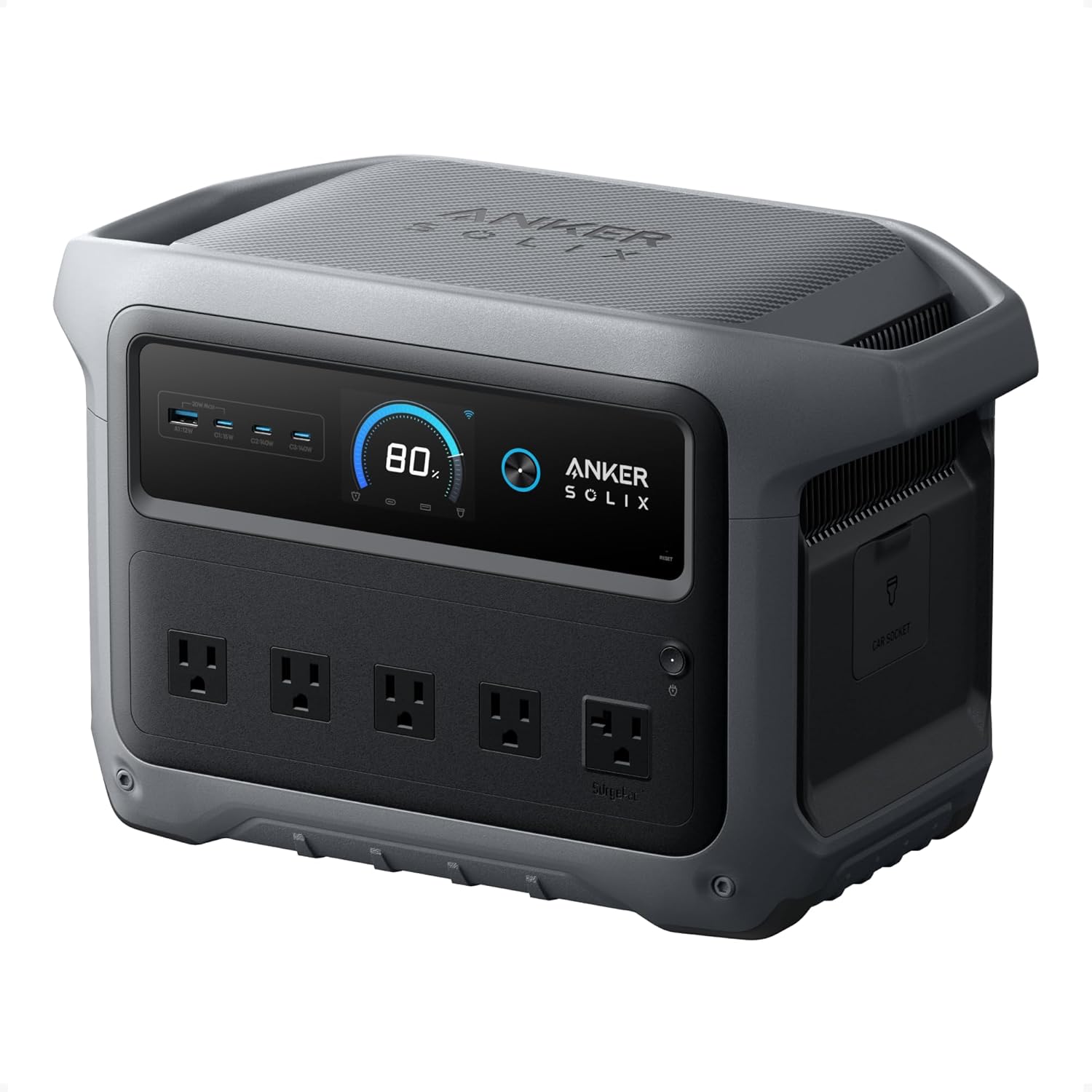
Fits the “outage basics” and “weekend camping” tiers well — phones, a router, LED lighting, and light device charging with real margin left over.
For the full breakdown against its closest sizing rival, see our best 1000W solar generators for the money guide.
2,042Wh Tier: Jackery Explorer 2000 Plus
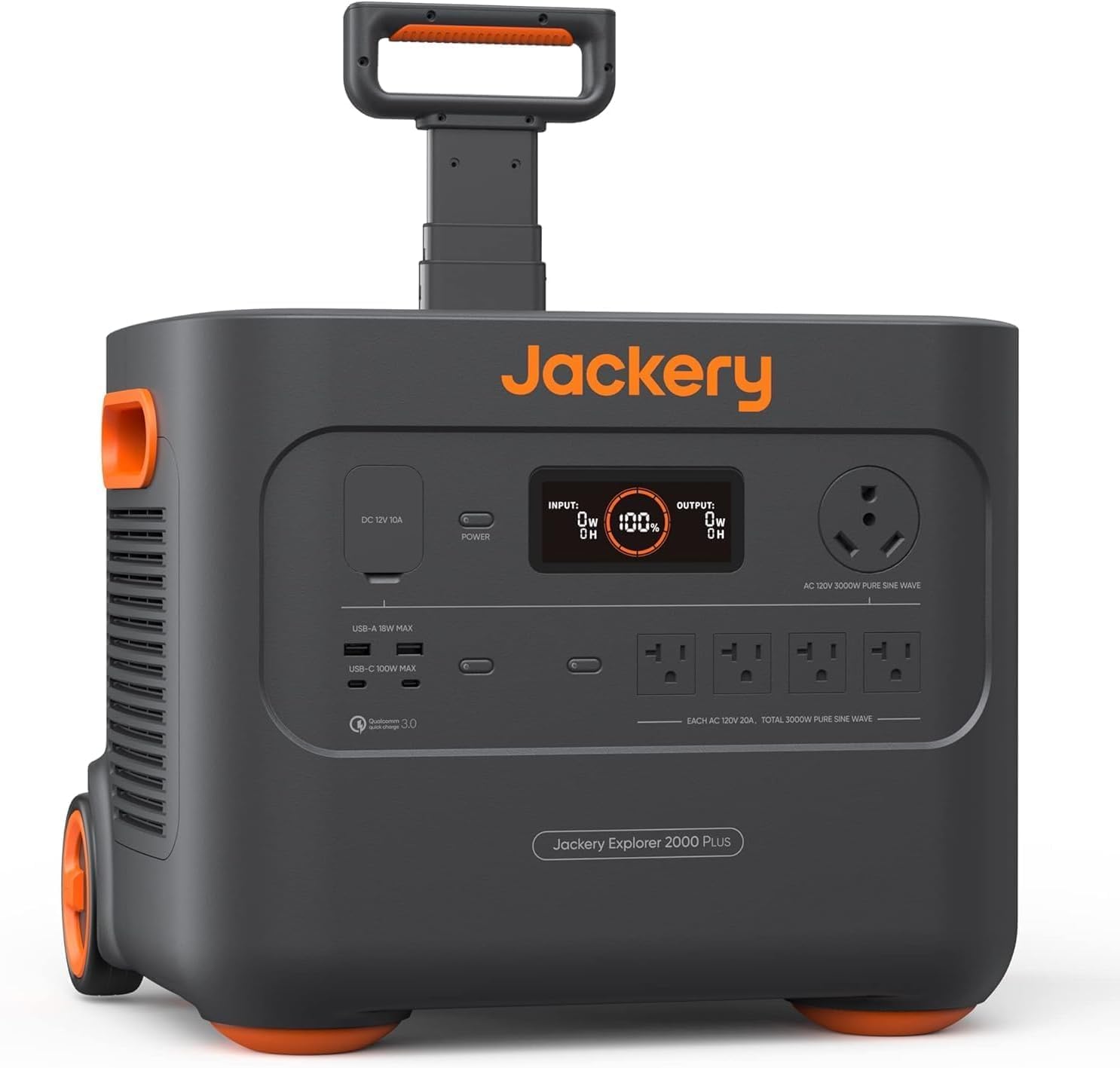
Sits right in the full-size fridge tier, with genuine surge headroom (3,000W continuous) to actually start a demanding compressor rather than just theoretically have enough watt-hours.
For the full spec breakdown, see our Jackery Explorer 2000 Plus review.
3,840Wh Tier: Anker SOLIX F3800
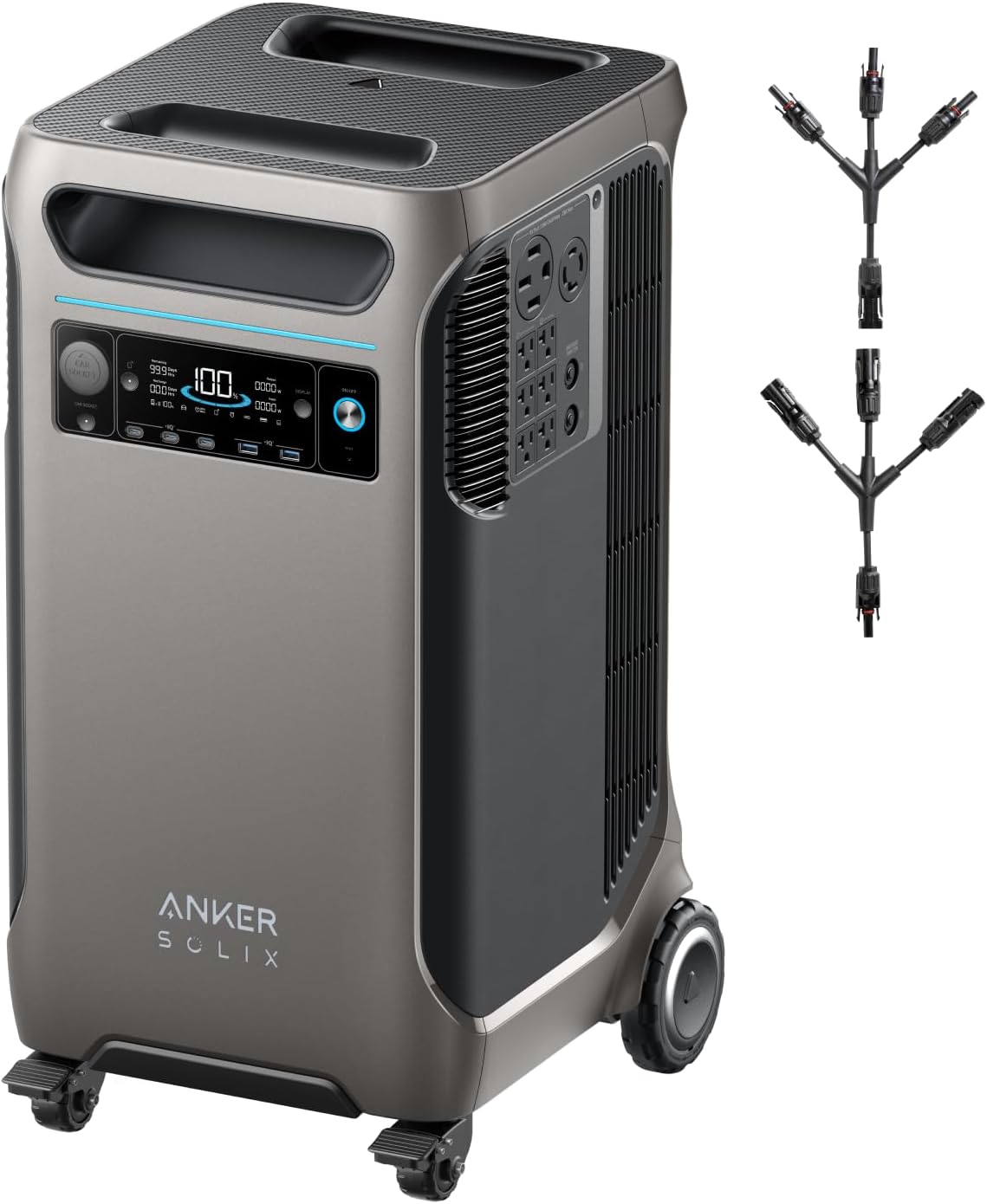
Built for the multi-day whole-home tier — genuine 120V/240V split-phase output and a real expansion path if your needs grow past the base unit.
For the full breakdown, see our Anker SOLIX F3800 review.
Frequently Asked Questions
What’s the actual formula for sizing a power station?
Multiply your total device wattage by hours of use, then multiply that by 1.2 to account for real-world losses. This gives you the minimum watt-hour capacity to look for.
Why does my 1,000Wh battery not deliver a full 1,000 watt-hours?
Inverter conversion from DC to AC wastes 10-15% as heat. A 1,000Wh battery realistically delivers 850-900Wh of usable power — plan around that lower number, not the rated spec.
Does cold weather really affect capacity that much?
Yes. LiFePO4 batteries lose 10-20% of capacity in freezing conditions, and as much as 30-40% in extreme cold. If you’re sizing for winter, add an extra 25-30% buffer beyond your baseline calculation.
Why won’t my power station run my fridge even though it has enough watt-hours?
Check the surge output rating separately from watt-hours. Fridge compressors need 2-3x their running wattage just to start — a unit can have plenty of stored energy and still fail if its surge rating is too low.
Is it better to oversize or undersize?
Oversize, within reason. A unit that’s slightly too small dies mid-use; one that’s slightly too large just costs more and weighs a bit more. Every sizing guide checked recommends erring toward more capacity, not less.
The Bottom Line
Do the math before you shop, not after you’re disappointed. List your actual devices, calculate real watt-hours with the 1.2x buffer, and separately confirm the surge rating covers anything with a compressor or motor.
For sizing specifically around outage scenarios, see our best portable power stations for power outages guide.