This post contains affiliate links. If you buy through our links we may earn a small commission — at no extra cost to you. This never influences our recommendations.
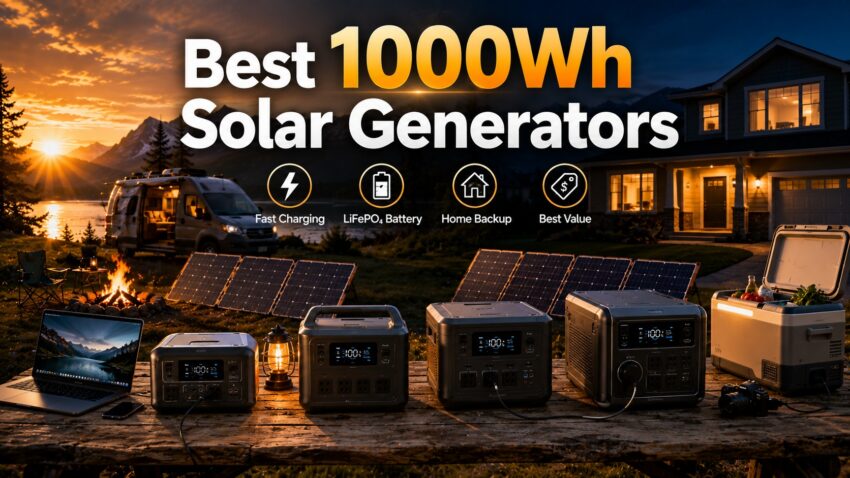
The 1000Wh/1000W class is the most competitive segment in the entire solar generator market — which is good news if you’re buying, because it means real competition on price. This is the capacity where you get genuine value: enough to run a fridge, CPAP, or a full day of device charging, without paying the premium that 2kWh+ units command. But “for the money” also means knowing which specs are worth paying extra for and which are just marketing.
This guide breaks down what actually matters at this price point, and which units deliver the most capability per dollar spent.
What “For the Money” Actually Means at 1000Wh
At this capacity class, the units cluster tightly on paper — 1,000–1,150Wh batteries, 1,500–2,000W continuous output, LiFePO4 chemistry across the board. The differences that actually justify paying more (or less) come down to four things: charge speed, solar input ceiling, cycle life, and included accessories. Everything else — app polish, port count, physical design — matters less than these four for getting genuine value.
Charge speed determines how often you can top up between uses and how quickly you recover after depleting the battery. A unit that charges in 45 minutes vs. 90 minutes isn’t a minor convenience — over a year of regular use, it’s the difference between charging once and being ready, versus planning around a 90-minute wait.
Solar input ceiling determines whether the unit can actually sustain itself off-grid. A 1000Wh unit with only 200W solar input takes 5–6 hours to fully recharge in good sun. The same unit with 500–800W solar input recharges in 1.5–2.5 hours — a meaningful difference for anyone using it away from grid power regularly.
Cycle life is where cheap and quality LiFePO4 genuinely diverge. All units at this price should use LiFePO4 (avoid anything using NMC chemistry at this price point, and check — some budget brands don’t disclose it clearly). Within LiFePO4, cycle ratings range from 3,000 to 4,000+ — at one full cycle per week, that’s a difference of roughly 8 years vs. 11+ years of usable life.
Best 1000W Solar Generators for the Money — Compared
| Model | Capacity | Output | AC Charge Time | Solar Input | Cycles |
|---|---|---|---|---|---|
| Bluetti AC180 | 1,152Wh | 1,800W / 2,700W | 45 min | 500W | 3,500 |
| Jackery Explorer 1000 v2 | 1,070Wh | 1,500W / 3,000W | ~60 min | 800W | 4,000 |
| EcoFlow DELTA 2 | 1,024Wh | 1,800W / 2,700W | 80 min | 500W | 3,000 |
| Anker SOLIX C1000 Gen 2 | 1,024Wh | 2,000W / 3,000W | 49 min | 600W | 4,000 |
Best Overall Value: Bluetti AC180
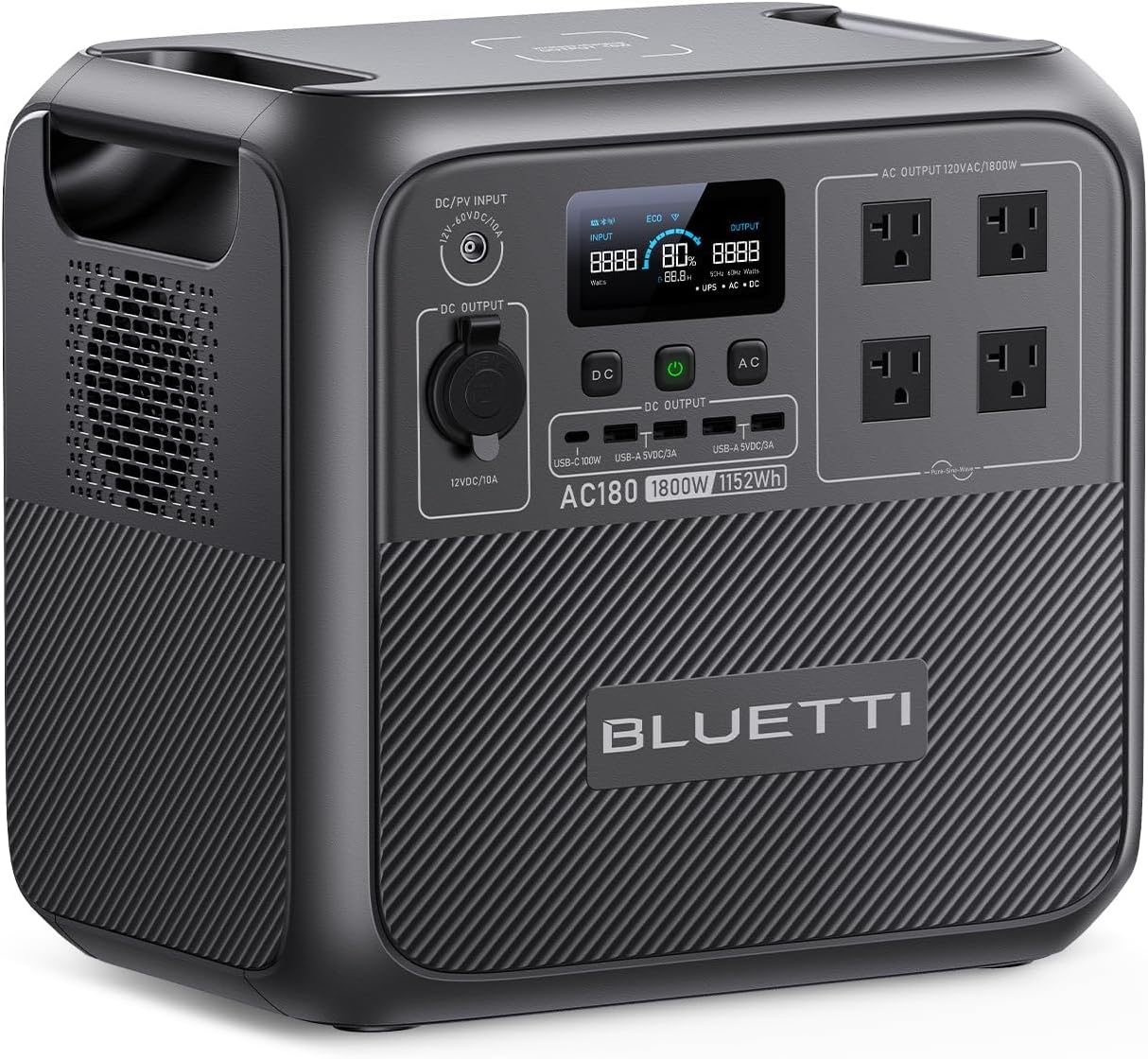
The AC180 delivers the strongest combination of specs relative to its typical street price in this class. A 45-minute full AC charge, 500W max solar input, and 2,700W surge capability via Power Lifting mode cover the same real-world use cases as units costing considerably more. At 1,152Wh, it has the largest raw capacity in this comparison — a genuine edge for anyone who wants maximum runtime per dollar.
The 11-outlet configuration and 20ms UPS switchover — keeping routers and PCs running seamlessly through a power blip — are features you’d typically expect to pay a premium for. Bluetti has built a reputation on packing flagship-adjacent features into mid-tier pricing, and the AC180 is the clearest expression of that in the 1kWh class. If you’re buying primarily on value-per-dollar without needing a specific brand ecosystem, this is the one to start with.
Pros: Largest capacity in class at 1,152Wh, 45-min AC charge, 2,700W Power Lifting surge, 500W solar input, 20ms UPS, 11 outlets
Cons: 3,500 cycles is solid but not the highest in this comparison; app has a steeper learning curve than some competitors
Best for: Buyers prioritizing maximum capacity and feature set per dollar spent, home backup and camping use
Best for Longevity: Jackery Explorer 1000 v2
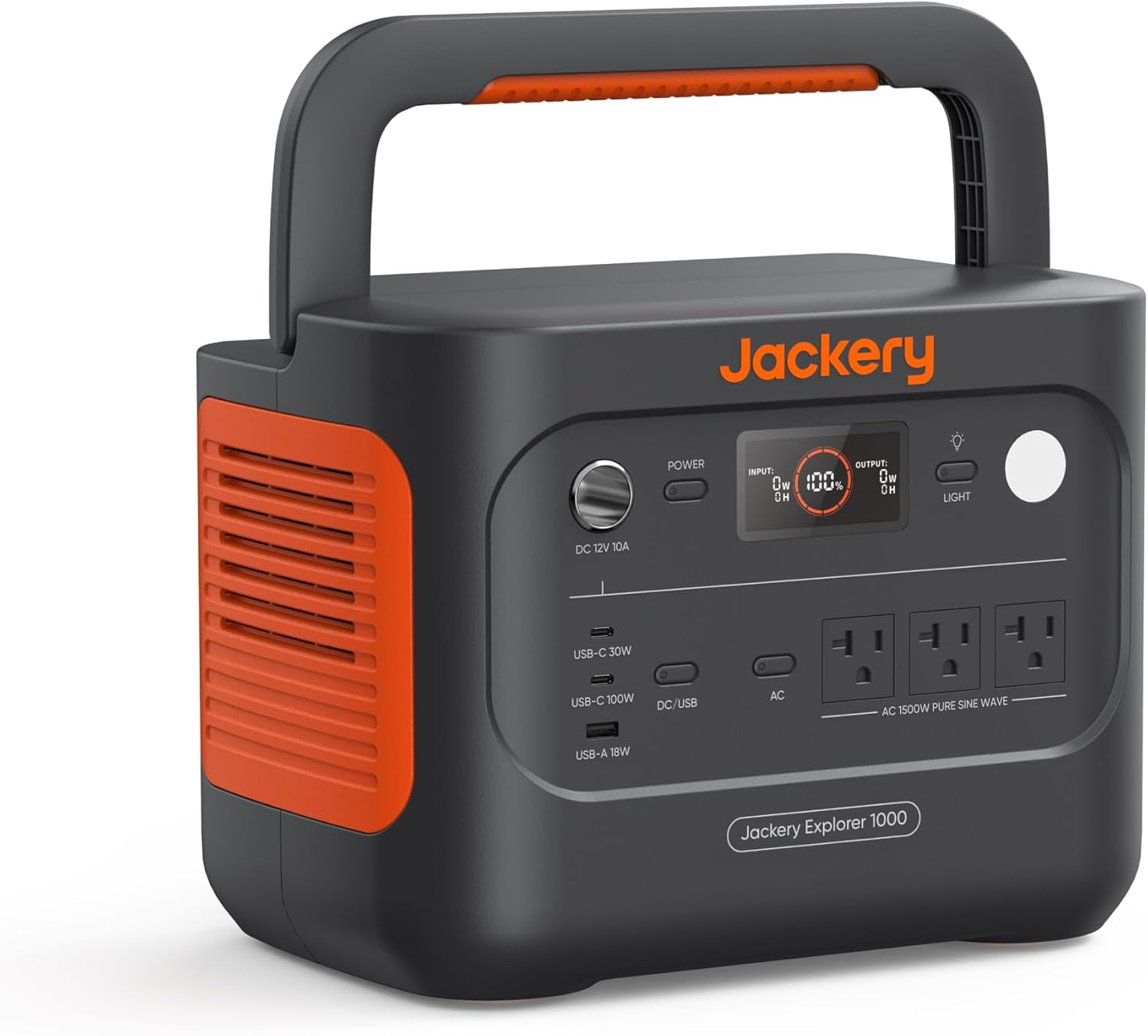
If cost-per-year-of-ownership is your actual metric for “value,” the Explorer 1000 v2’s 4,000-cycle rating changes the math. At one cycle per week, that’s roughly 11+ years of usable life before capacity meaningfully degrades — the longest-lived unit in this comparison alongside the Anker. Combined with the highest solar input in this group at 800W, it’s built for people who’ll use it regularly for years, not just keep it in a closet for occasional outages.
At 23.8 lbs, it’s also the lightest 1kWh-class unit here — genuinely easier to move around than the Bluetti or EcoFlow. The 3,000W surge handles demanding compressor startups without issue. The tradeoff for the best-in-class solar input is that it requires Jackery’s own panels for plug-and-play compatibility — factor that into total cost if you’re buying panels alongside. For a full breakdown of this unit in a camping context, see our solar generator for camping guide.
Pros: 4,000 LFP cycles (longest lifespan), 800W max solar input, lightest at 23.8 lbs, 3,000W surge, 5-year warranty
Cons: Requires Jackery panels for solar without adapter; slightly lower base capacity than Bluetti AC180
Best for: Frequent users who want the lowest cost-per-year of ownership, anyone prioritizing weight and cycle life
Best Track Record: EcoFlow DELTA 2
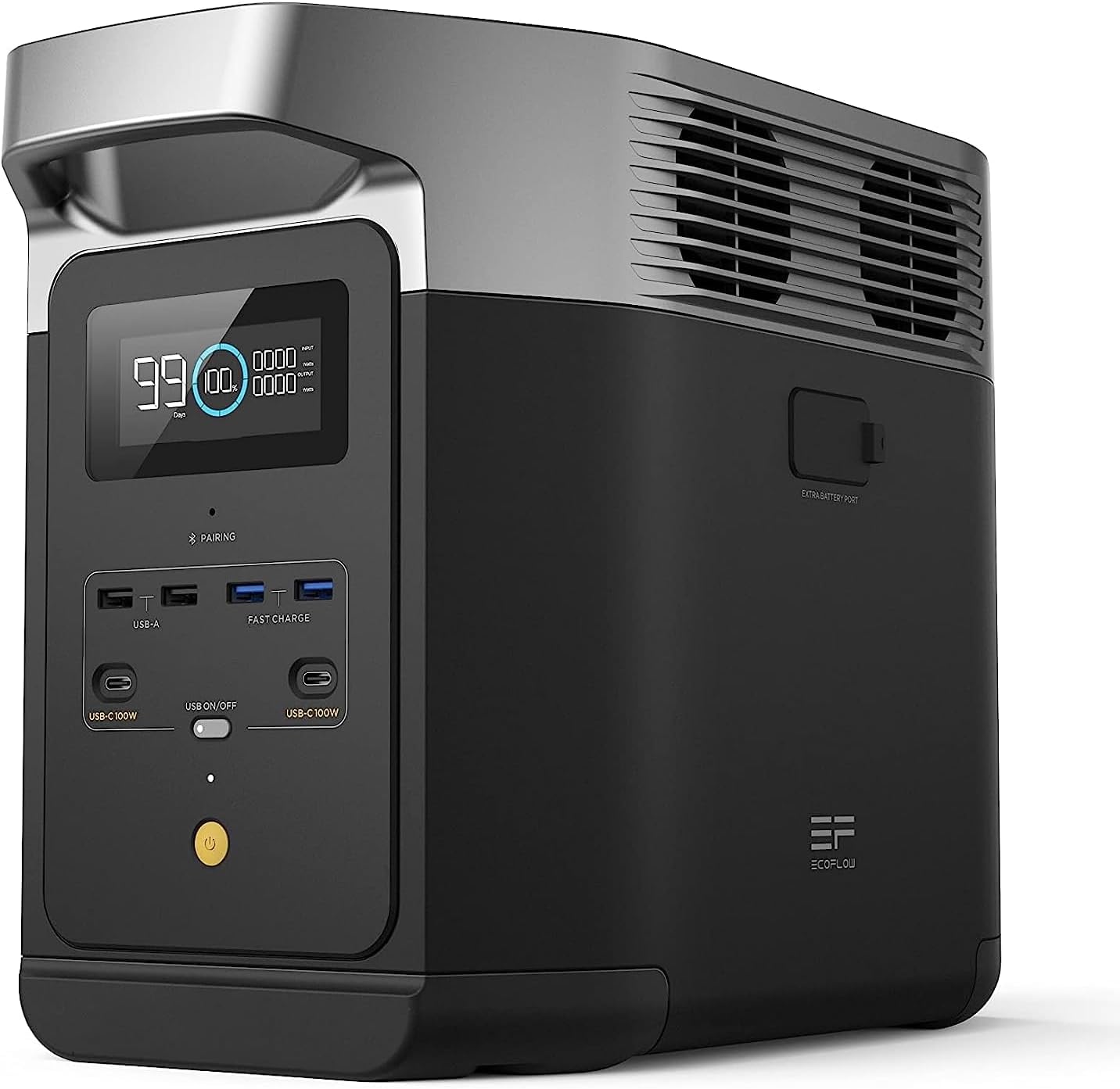
The DELTA 2 has been the most consistently recommended unit in this capacity class for good reason — proven reliability, strong app support, and genuinely useful features like quiet charging mode and adjustable charge limits to extend battery life. At 500W max solar input and 1,800W continuous output (2,700W via X-Boost), it’s well-matched to a fridge, CPAP, and full device load simultaneously.
The 80-minute AC charge is the slowest in this comparison, and the 3,000-cycle rating trails the Jackery and Anker — but EcoFlow’s ecosystem, expandability (up to 3kWh with battery packs), and long track record of real-world reliability make it a safe, well-supported choice even at a slightly higher price than pure spec-for-dollar competitors. If you value proven reliability and a mature app experience over squeezing out the last bit of spec-sheet value, this remains a smart buy.
Pros: Proven track record, strong app with quiet charging mode, expandable to 3kWh, 500W solar input, X-Boost 2,700W surge
Cons: Slowest AC charge in this comparison at 80 min, 3,000 cycles is the lowest cycle rating here
Best for: Buyers who prioritize proven reliability and ecosystem support over maximum spec-per-dollar
Best Output for the Price: Anker SOLIX C1000 Gen 2
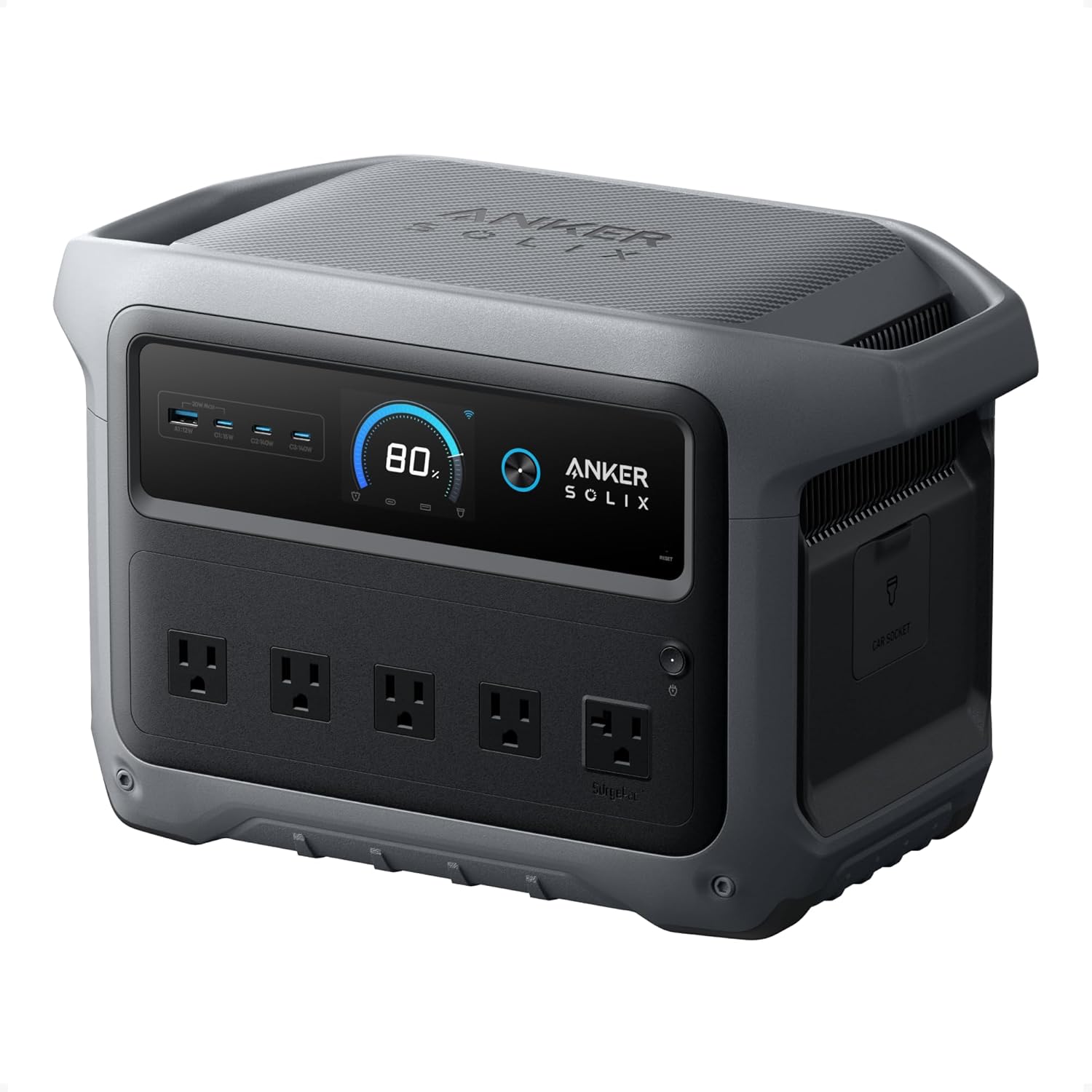
The C1000 Gen 2 wins outright on two numbers: fastest AC charge in this comparison at 49 minutes (Guinness World Record verified for its class), and highest continuous output at 2,000W. For anyone who wants to run appliances at the upper edge of what a 1kWh unit can handle — larger power tools, an induction burner, higher-draw kitchen appliances — the extra 200–500W of continuous output over its competitors is a genuine practical advantage, not just a spec-sheet number.
4,000-cycle LFP battery matches the Jackery for longevity, and 600W max solar input sits comfortably in the middle of this comparison. For a full breakdown of the C1000 Gen 2 alongside the rest of Anker’s SOLIX lineup, see our Anker solar generator guide.
Pros: Fastest AC charge at 49 min, highest continuous output at 2,000W, 4,000 LFP cycles, compact build, 5-year warranty
Cons: 600W solar input trails Jackery’s 800W ceiling; no expandability like EcoFlow
Best for: Buyers who need the highest continuous output at this capacity, anyone who values fastest possible AC recharge
What a 1000Wh Unit Actually Runs
Realistic expectations, not marketing numbers:
| Device | Draw | Runtime on 1,050Wh (average) |
|---|---|---|
| Laptop (60W) | 60W | ~13–14 hours |
| 12V compressor fridge | 40–50W avg | ~16–18 hours |
| Standard kitchen fridge | 100–150W avg | ~12–14 hours |
| CPAP (no humidifier) | 30–60W | 2–3 nights |
| TV (LED, 40″) | 60W | ~13–14 hours |
| Box fan | 50W | ~16 hours |
| Wi-Fi router | 15W | ~50+ hours |
What it won’t run for long: Anything above 1,800–2,000W continuous — hair dryers, electric kettles, most microwave ovens — will either trip overload protection or drain the battery within 30 minutes of actual use. For a full breakdown of refrigerator-specific sizing at this capacity, see our solar generator for refrigerator guide.
What Solar Panels to Pair for Best Value
To actually get the value out of these units’ solar input ceilings, pair with panels that match. For most of these 1000W-class units, two 200W panels (400W total) is the practical sweet spot — enough to recharge a depleted battery in 2–3 hours of good sun without overspending on panel capacity the unit can’t use.
Third-party panels work with Bluetti, EcoFlow, and Anker units via standard connectors. Jackery’s Explorer 1000 v2 requires Jackery’s own panels for plug-and-play compatibility. See our 200 watt solar panel guide for compatible options across brands.
Frequently Asked Questions
What’s the best 1000W solar generator for the money in 2026?
For raw capacity and feature set per dollar, the Bluetti AC180 delivers the strongest overall value — largest capacity in class, fast charging, and a robust feature set at a competitive price. If longevity is your priority, the Jackery Explorer 1000 v2’s 4,000-cycle rating offers the lowest cost-per-year of ownership for frequent users.
Is a 1000Wh solar generator enough for home backup?
For essential loads — refrigerator, router, phone charging, LED lighting, and a CPAP — yes, a 1000Wh unit provides 12–20 hours of coverage depending on load. For whole-home backup or multi-day outages without solar recharge, you’ll want a larger or expandable system. See our solar generator for home backup guide for sizing a full household system.
What’s the difference between 1000Wh and 1000W?
Wh (watt-hours) is capacity — total stored energy. W (watts) is the inverter’s power rating — how much load it can handle at once. A unit can have 1,000Wh capacity but a 2,000W inverter (meaning it holds enough energy for roughly 1 hour at 1,000W draw, or many hours at lower draw). Both numbers matter for sizing — capacity determines runtime, inverter rating determines what devices you can actually run.
Do all 1000W solar generators use LiFePO4 batteries?
Most reputable brands at this price point do, but not universally — some budget brands still use older NMC lithium-ion chemistry without clearly disclosing it. LiFePO4 lasts 3,000–4,000+ cycles compared to 500–1,000 for NMC, and is significantly safer in heat. Always confirm battery chemistry before buying, especially with lesser-known brands.
How long does a 1000W solar generator take to fully recharge from solar?
Depends on the unit’s solar input ceiling and available sun. At 500W max solar input in 4–5 hours of good sun, expect a full recharge. At 800W max input (Jackery Explorer 1000 v2), that drops to roughly 2–3 hours in the same conditions. Cloudy days extend these times significantly — plan for 2–3x longer under overcast skies.
Final Verdict
| Your Priority | Best Pick |
|---|---|
| Best overall value, most capacity and features per dollar | Bluetti AC180 (B0C1SMJTDT) |
| Longest lifespan, lowest cost-per-year | Jackery Explorer 1000 v2 (B0D7PPG25F) |
| Proven reliability, mature ecosystem | EcoFlow DELTA 2 (B0B9XB57XM) |
| Fastest charge, highest continuous output | Anker SOLIX C1000 Gen 2 (B0FN7MSY4L) |
For most buyers shopping specifically on value, the Bluetti AC180 delivers the strongest combination of capacity, charge speed, and features for the price. If you plan to use it heavily for years, the Jackery Explorer 1000 v2’s 4,000-cycle battery is worth the marginal premium in cost-per-year terms. Both the EcoFlow DELTA 2 and Anker SOLIX C1000 Gen 2 remain excellent choices if their specific strengths — ecosystem maturity or maximum output — matter more to your use case than squeezing out the absolute best spec-per-dollar.
For camping-specific sizing and lighter-weight considerations, see our solar generator for camping guide. For refrigerator-specific surge and capacity math, our solar generator for refrigerator guide covers exactly what this capacity class can and can’t handle.