This post contains affiliate links. If you buy through our links we may earn a small commission — at no extra cost to you. This never influences our recommendations.
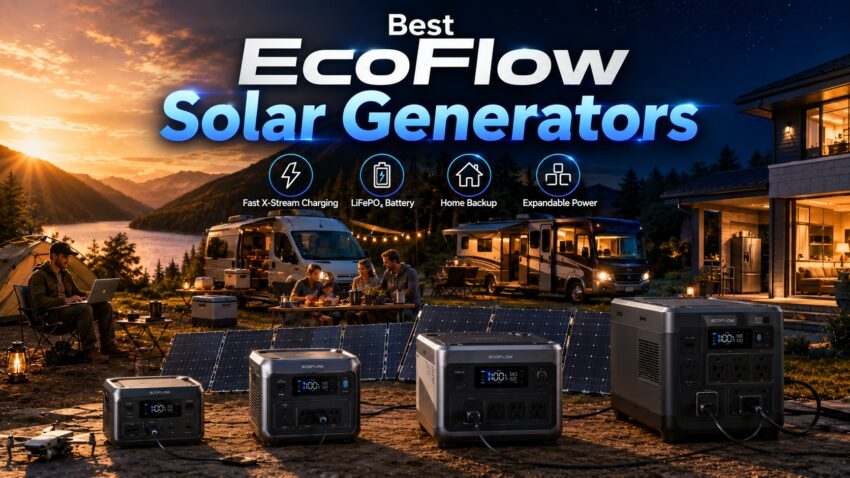
EcoFlow’s lineup has grown into one of the largest and, admittedly, most confusing catalogs in the solar generator space — RIVER 3, DELTA 3, DELTA 3 Plus, DELTA 3 Max, DELTA Pro 3, and more, each with overlapping capacities and easy-to-miss differences. This guide cuts through the naming and maps the lineup clearly, so you can pick the right EcoFlow model for camping, home backup, or a serious off-grid setup without guessing.
The EcoFlow Lineup Explained — RIVER, DELTA, and DELTA Pro
RIVER series: EcoFlow’s compact, budget-friendly line — 245–512Wh capacity, 300–600W output. Built for solo camping, backpacking, and light device charging. Not the right choice if a fridge or CPAP is on your list.
DELTA series: The core mid-range lineup — 1,024–2,048Wh capacity, 1,800–3,400W output. This is where most buyers land. Handles a fridge, CPAP, home backup essentials, and most camping needs. The “Plus,” “Max,” and “Max Plus” suffixes within this tier indicate capacity and output step-ups, not different product families.
DELTA Pro series: The top tier — 3,072–4,096Wh base capacity, up to 6,000W output (12,000W with X-Boost on the Pro 3), and expandable to 48kWh+ with additional battery packs. Built for whole-home backup, 240V appliance support, and multi-day outage coverage.
Every current EcoFlow model uses LiFePO4 (LFP) battery chemistry, rated for 3,000–4,000 cycles to 80% capacity — roughly 8–10 years of daily use regardless of which tier you choose.
Which EcoFlow Model Is Right for You?
| Model | Capacity | AC Output | AC Charge Time | Best For |
|---|---|---|---|---|
| RIVER 3 | 245Wh | 300W / 600W surge | 1 hour | Solo camping, device charging |
| DELTA 3 Plus | 1,024Wh | 1,800W / 3,600W surge | 45 min | Best overall — most buyers |
| DELTA 3 Max | 2,048Wh | 3,000W / 6,000W surge | 68 min | Fridge + freezer, larger home backup |
| DELTA Pro 3 | 4,096Wh | 4,000W / 6,000W X-Boost | ~75 min | Whole-home backup, 240V appliances |
Best EcoFlow Solar Generators — Verified Picks
Best Budget Entry: EcoFlow RIVER 3
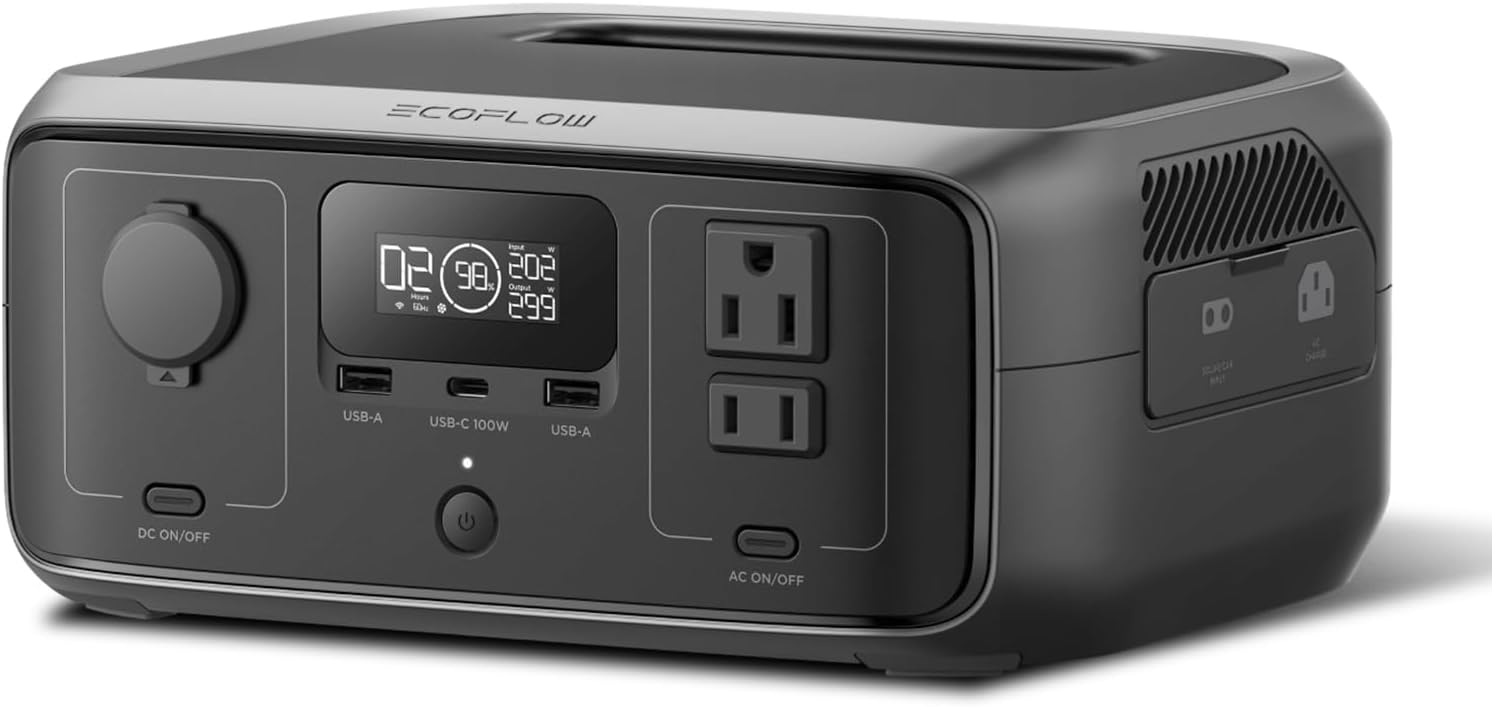
The RIVER 3 is the cleanest starting point in the EcoFlow lineup — 245Wh, 300W continuous output (600W X-Boost surge), and a 1-hour full AC charge, all at the most accessible price point in the catalog. It covers phones, a laptop, LED camp lights, and light device charging for a weekend trip without carrying unnecessary capacity you won’t use.
The LiFePO4 battery, IP54 water resistance, and sub-30dB quiet operation punch above the entry price. Solar charging via a compatible panel (sold separately or bundled) rounds out a genuinely capable starter unit for anyone new to solar power stations.
Pros: Lowest price in the EcoFlow lineup, 1-hour AC charge, LiFePO4 battery, quiet operation, IP54 rated
Cons: 245Wh won’t run a fridge or CPAP beyond very light use; 300W output limits appliance compatibility
Best for: Solo camping, weekend trips, device charging, first-time buyers testing the category
Best Overall: EcoFlow DELTA 3 Plus
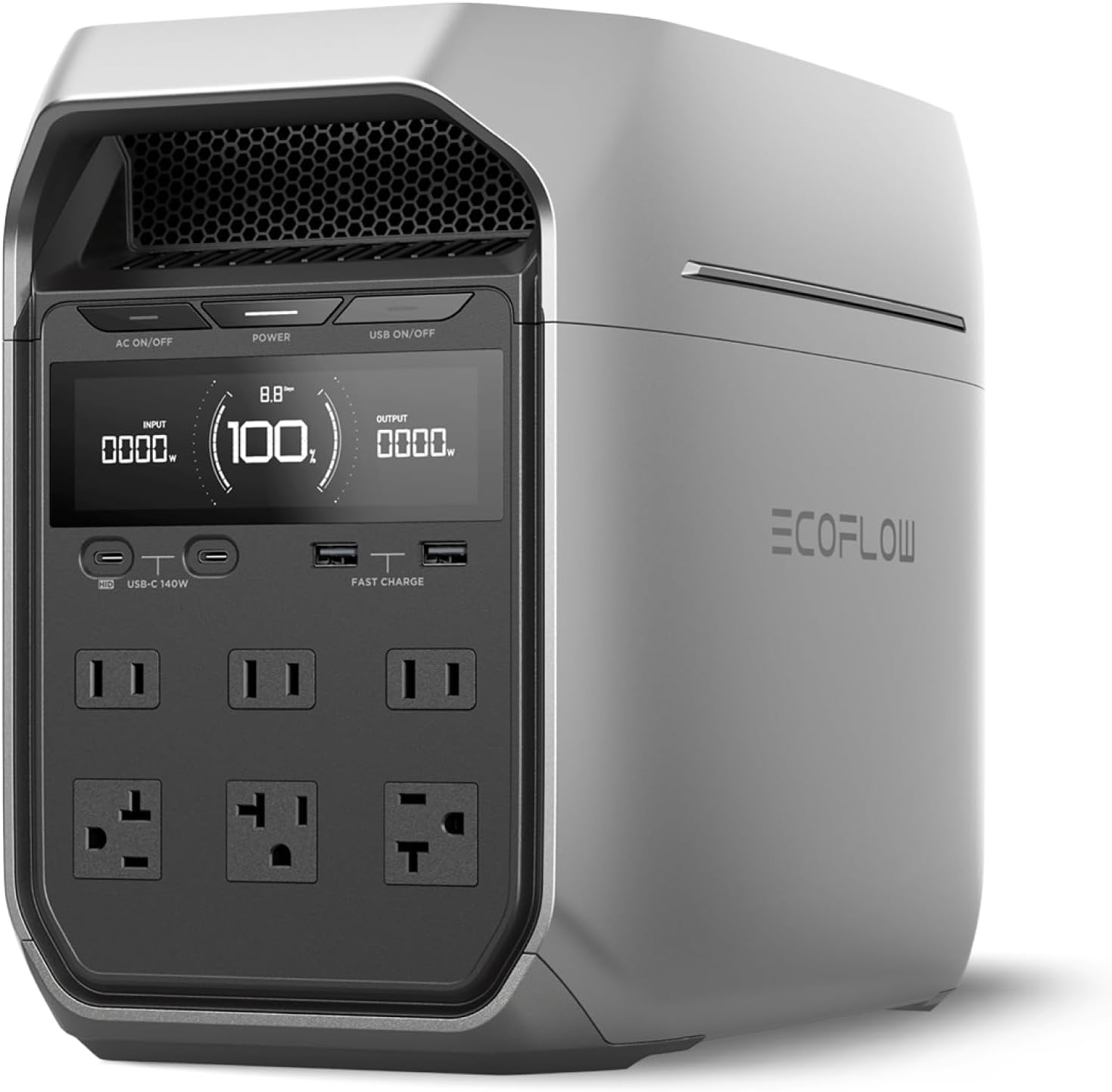
The DELTA 3 Plus is the model that fits the widest range of real-world needs — 1,024Wh capacity, 1,800W continuous output (3,600W X-Boost surge) that handles refrigerators, microwaves, and most kitchen appliances, and a 45-minute AC charge via X-Stream fast charging. It comfortably covers a fridge, CPAP, and full device load simultaneously — the core use case most buyers actually have.
Expandable up to 5kWh with EcoFlow’s Smart Extra Battery packs, so it grows with you rather than requiring a full replacement if your needs increase. The under-10ms UPS switchover protects sensitive electronics — routers, NAS drives, desktop computers — through outages without interruption. LiFePO4 cells rated for 4,000 cycles (25% more than industry standard) and a 10-year daily-use lifespan make this a buy-once purchase for most households.
Pros: 45-min AC charge, 3,600W X-Boost surge, expandable to 5kWh, under-10ms UPS, 4,000 LFP cycles, strong value at this capacity
Cons: 1,024Wh alone covers roughly 12–20 hours for a standard fridge without solar recharge
Best for: Home backup, camping with a fridge and CPAP, most buyers who want one unit to cover the majority of their needs
Best for Larger Home Backup: EcoFlow DELTA 3 Max
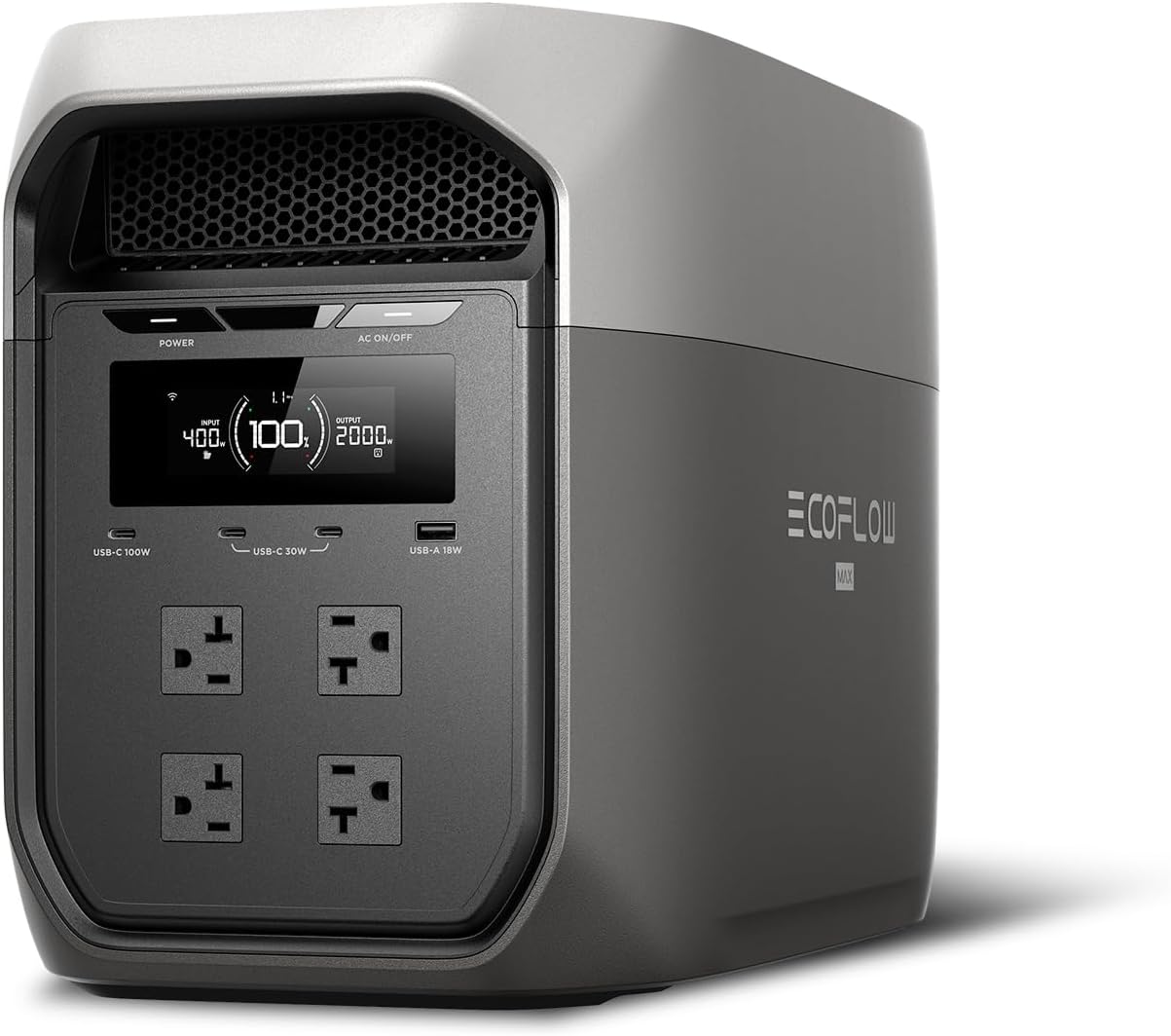
Stepping up to 2,048Wh, the DELTA 3 Max doubles the DELTA 3 Plus’s capacity while pushing continuous output to 3,000W (6,000W X-Boost surge) — enough headroom for a fridge and freezer running simultaneously, plus lighting, device charging, and a router through an extended outage. The 68-minute AC charge keeps recovery reasonably quick despite the larger battery.
For households wanting more runtime buffer than the DELTA 3 Plus offers without stepping up to the DELTA Pro 3’s price and size, this is the practical middle ground. Same IP65 battery pack rating and 4,000-cycle LFP chemistry as the rest of the DELTA 3 family.
Pros: 2,048Wh — double the DELTA 3 Plus capacity, 6,000W X-Boost surge handles demanding appliances, 68-min AC charge, expandable
Cons: Larger and heavier than the DELTA 3 Plus; higher price for the added capacity
Best for: Households running a fridge and freezer together, longer outages, buyers who want capacity headroom without going to DELTA Pro pricing
Best for Whole-Home Backup: EcoFlow DELTA Pro 3
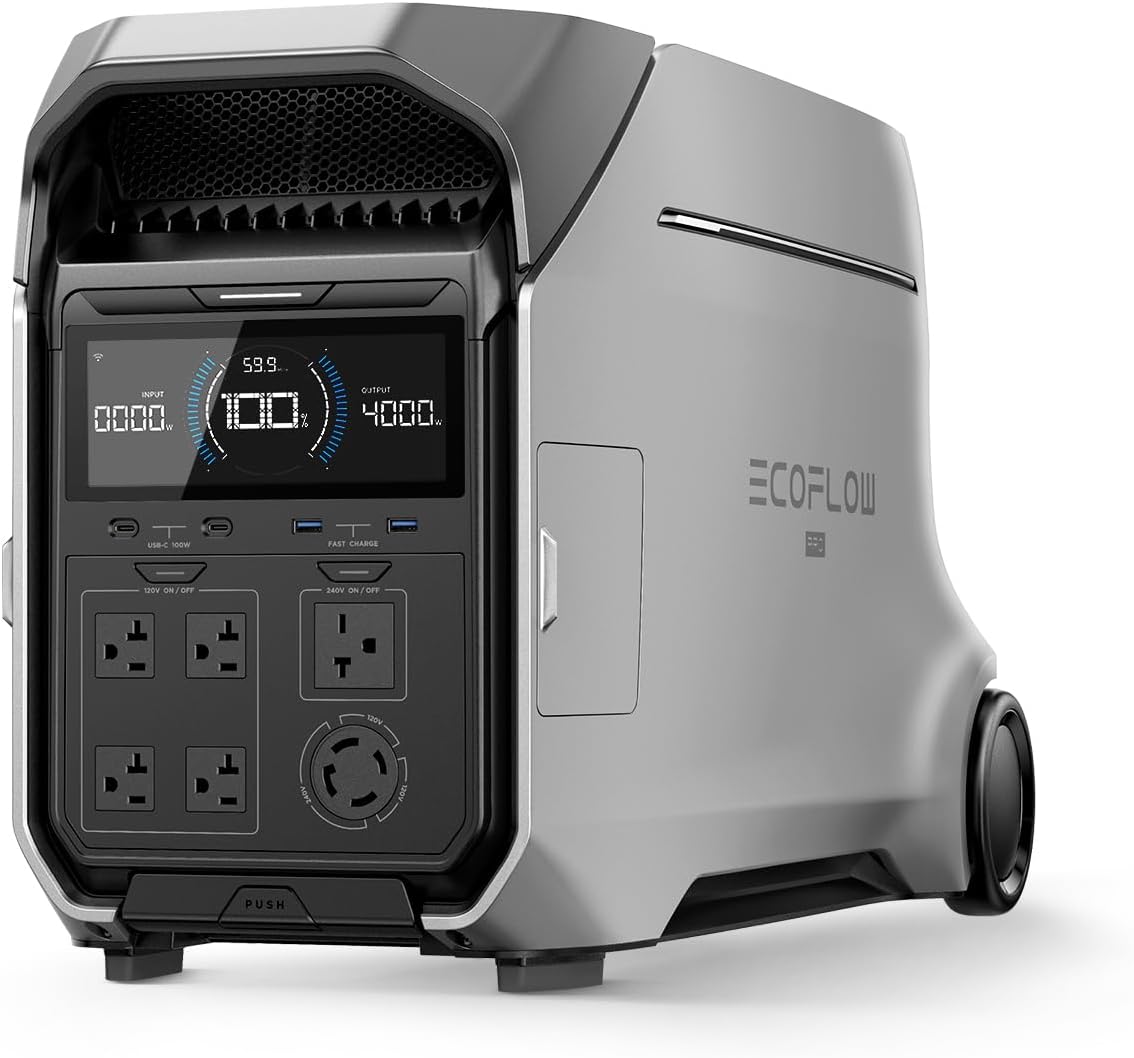
The DELTA Pro 3 is built for genuine whole-home backup, not portable camping use. At 4,096Wh with 4,000W continuous output (scalable to 6,000W with X-Boost, and up to 12,000W in multi-unit configurations), it can run a 3-ton central AC unit or a 1 HP water pump — appliances entirely out of reach for the DELTA 3 family. Native 120V/240V output covers both standard outlets and higher-voltage appliances directly.
Expandable to 48kWh with additional battery packs and smart generator integration, the Pro 3 is designed to deliver 2–4 days of whole-home backup power during extended outages — hurricane season, winter ice storms, or any multi-day grid-down scenario. Seven charging methods including solar, AC, car, EV charging stations, and gas generator integration give genuine flexibility for how you keep it topped up. X-Quiet technology keeps operation to around 30dB even at higher loads — quiet enough to run indoors overnight without disturbance.
Pros: 4,096Wh base capacity, native 120V/240V output, expandable to 48kWh, handles central AC and high-draw appliances, 7 charging methods, 30dB quiet operation
Cons: Significant price and weight — not a portable camping unit; overkill for typical camping or light home backup needs
Best for: Whole-home backup, multi-day outages, 240V appliance support, serious off-grid or storm-prone households
EcoFlow’s Solar Panel Ecosystem
EcoFlow solar panels use XT60 connectors and range from 60W to 400W. Panel selection should match your station’s solar input ceiling — sending more watts than a station can absorb wastes panel capacity, while undersized panels leave charging speed on the table.
| Station | Solar Input Ceiling | Recommended Panel Pairing |
|---|---|---|
| RIVER 3 | 110–220W | Single 110W or 160W panel |
| DELTA 3 Plus | 800W | Two 220W bifacial panels, or one 400W panel |
| DELTA 3 Max | 800W | Two 400W panels |
| DELTA Pro 3 | 3,600W | Multiple 400W panels in parallel/series arrays |
Third-party panels with MC4 connectors require an MC4-to-XT60 adapter to work with EcoFlow stations. For compatible third-party panel options, see our 200 watt solar panel guide.
EcoFlow vs Jackery vs Anker — How They Compare
Charge speed: EcoFlow’s X-Stream technology is competitive with Anker’s fastest-charging units — both consistently beat Jackery’s standard AC charge times at comparable capacities.
Solar input: EcoFlow’s DELTA Pro 3 solar input ceiling (3,600W) is the highest of any single unit across the three brands at this writing — a genuine advantage for anyone building a serious off-grid solar array.
Ecosystem breadth: EcoFlow’s lineup is the largest and most granular of the three, which is both an advantage (more precise capacity matching) and a drawback (harder to compare models at a glance — as this guide’s opening acknowledged).
Home backup scaling: EcoFlow’s DELTA Pro 3 expandability to 48kWh is among the most aggressive expansion ceilings available in a portable-class unit, competitive with Anker’s SOLIX F3800 lineup. For the full Anker comparison, see our Anker solar generator guide.
Frequently Asked Questions
What is the best EcoFlow solar generator overall?
For most buyers, the DELTA 3 Plus offers the strongest combination of capacity, output, fast charging, and expandability at a reasonable price. It covers fridge, CPAP, and full device loads — the core use case most people actually have.
Can an EcoFlow solar generator run a whole house?
The DELTA Pro 3, with native 120V/240V output and expandability to 48kWh, is EcoFlow’s model built specifically for whole-home backup — capable of running a central AC unit or well pump. The RIVER and standard DELTA 3 series are designed for essential-load backup and camping, not whole-home power.
How long do EcoFlow batteries last?
All current EcoFlow models use LiFePO4 batteries rated for 3,000–4,000 charge cycles to 80% capacity — translating to roughly 8–10 years of daily use before meaningful degradation. The DELTA 3 family specifically claims 4,000 cycles, about 25% above typical industry standard for this battery chemistry.
What’s the difference between DELTA 3, DELTA 3 Plus, and DELTA 3 Max?
These represent capacity and output tiers within the same product family rather than fundamentally different products. DELTA 3 and DELTA 3 Plus both sit around 1,024Wh with similar output; DELTA 3 Max steps up to 2,048Wh with higher continuous output. Check the specific Wh and W ratings on each listing carefully, since naming alone doesn’t always make the tier obvious.
Do I need EcoFlow’s own solar panels, or can I use third-party panels?
Third-party panels work with EcoFlow stations via an MC4-to-XT60 adapter, since most non-EcoFlow panels use MC4 connectors. EcoFlow’s own panels connect directly without an adapter and are matched to specific solar input ceilings for each station, which simplifies pairing if you’re buying new.
Final Verdict
| Your Situation | Best Pick |
|---|---|
| Budget entry, solo camping | RIVER 3 (B0DB1S36YP) |
| Best overall — most buyers | DELTA 3 Plus (B0DCC2BVFW) |
| Larger home backup, fridge + freezer | DELTA 3 Max (B0FQV6LMVX) |
| Whole-home backup, 240V appliances | DELTA Pro 3 (B0D14FMFZD) |
For most people shopping the EcoFlow lineup, the DELTA 3 Plus is the easy recommendation — capable output, fast charging, and enough capacity to cover the essential-load use cases most buyers actually have. Step up to the DELTA 3 Max if you’re covering more appliances or want extra runtime buffer, and go straight to the DELTA Pro 3 if whole-home backup with 240V appliance support is the actual goal.
For a broader comparison across brands, see our Anker solar generator guide and portable power station guide. For RV and camping-specific sizing, our solar generator for RV guide and solar generator for camping guide cover use-case-specific recommendations.