This post contains affiliate links. If you buy through our links we may earn a small commission — at no extra cost to you. This never influences our recommendations.
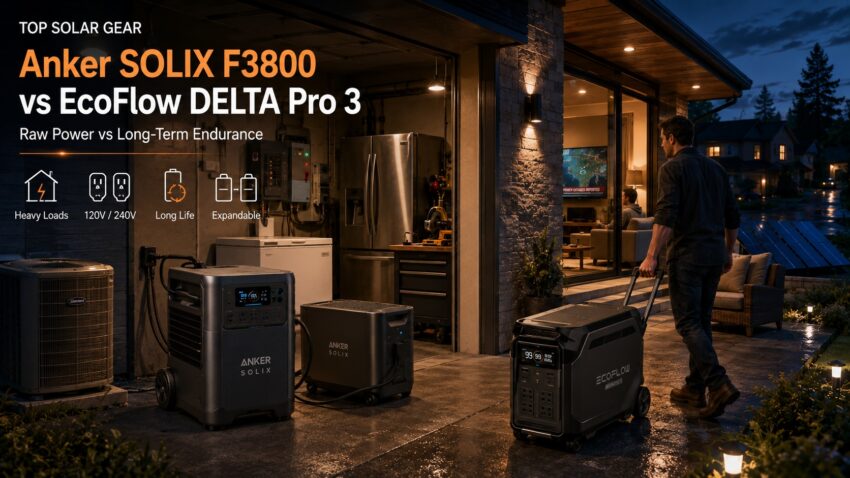
Both target the same job: whole-home backup at roughly 4kWh. One wins decisively on raw output. The other wins on battery longevity and weight.
A note before we start — Anker has released an updated “F3800 Plus” with a higher solar input ceiling. This comparison covers the base F3800, matching our existing individual review.
Full Spec Comparison
| Spec | Anker SOLIX F3800 | EcoFlow DELTA Pro 3 |
|---|---|---|
| Capacity | 3,840Wh | 4,096Wh |
| Battery chemistry | LiFePO4 | LiFePO4 |
| Cycle life | 3,000 cycles (see note in our full review) | 4,000 cycles |
| AC output | 6,000W continuous | 4,000W continuous |
| Surge output | 9,000W | 8,000W |
| Voltage output | 120V/240V split-phase | 120V/240V (not simultaneous — see below) |
| Weight | ~132 lbs | ~103-113.5 lbs |
| Expandable | Yes, to ~26.9kWh | Yes, to ~36.9kWh |
The Two Units Side by Side
Anker SOLIX F3800
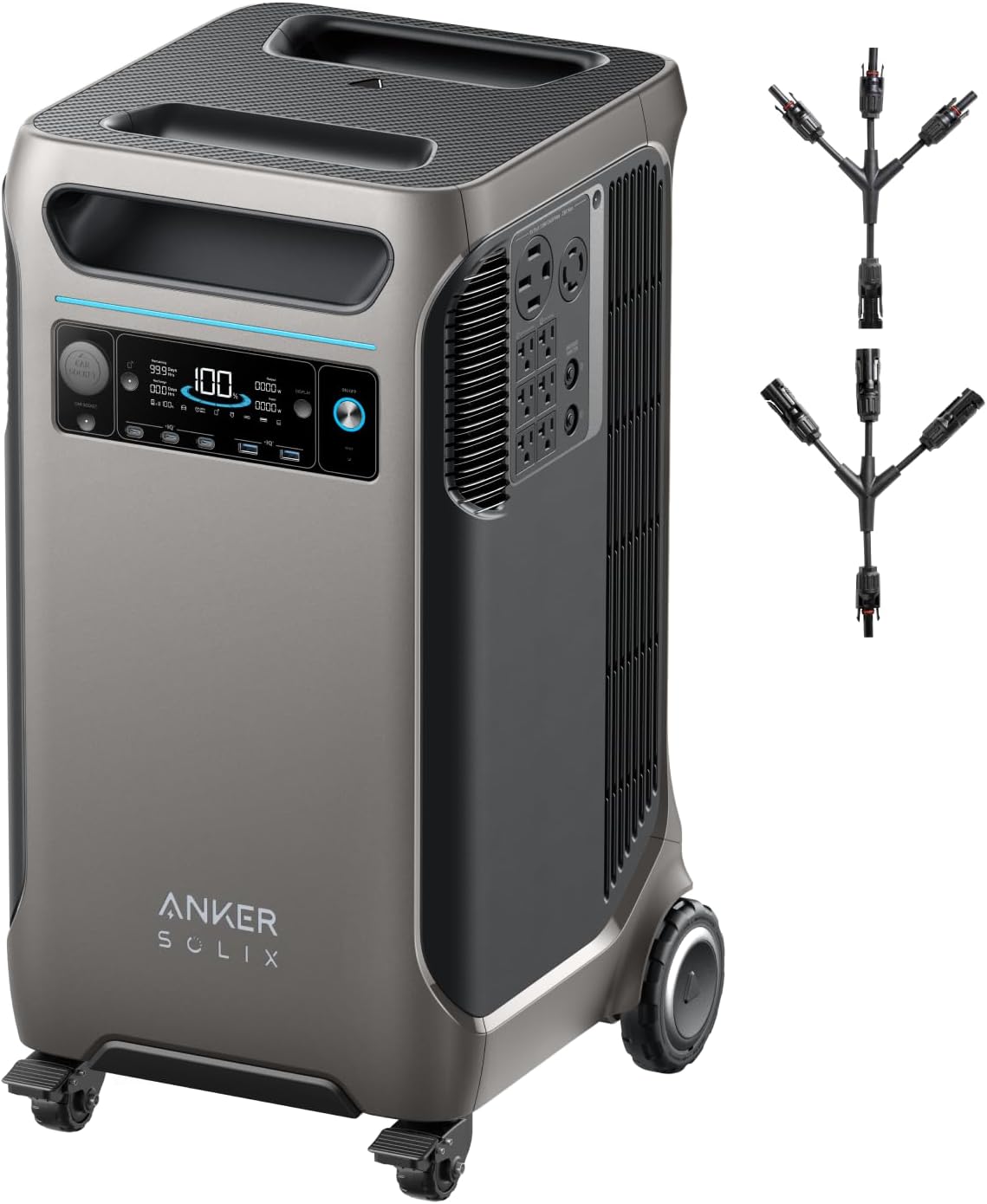
This wins clearly on raw power. 6,000W continuous and 9,000W surge give it real margin for heavy loads — HVAC equipment, multiple kitchen circuits, power tools.
One independent device-compatibility test found it successfully powered 52 of 53 tested appliances, versus 48 for the DELTA Pro 3. For the full breakdown including an honest cycle-life discrepancy across sources, see our Anker SOLIX F3800 review.
EcoFlow DELTA Pro 3
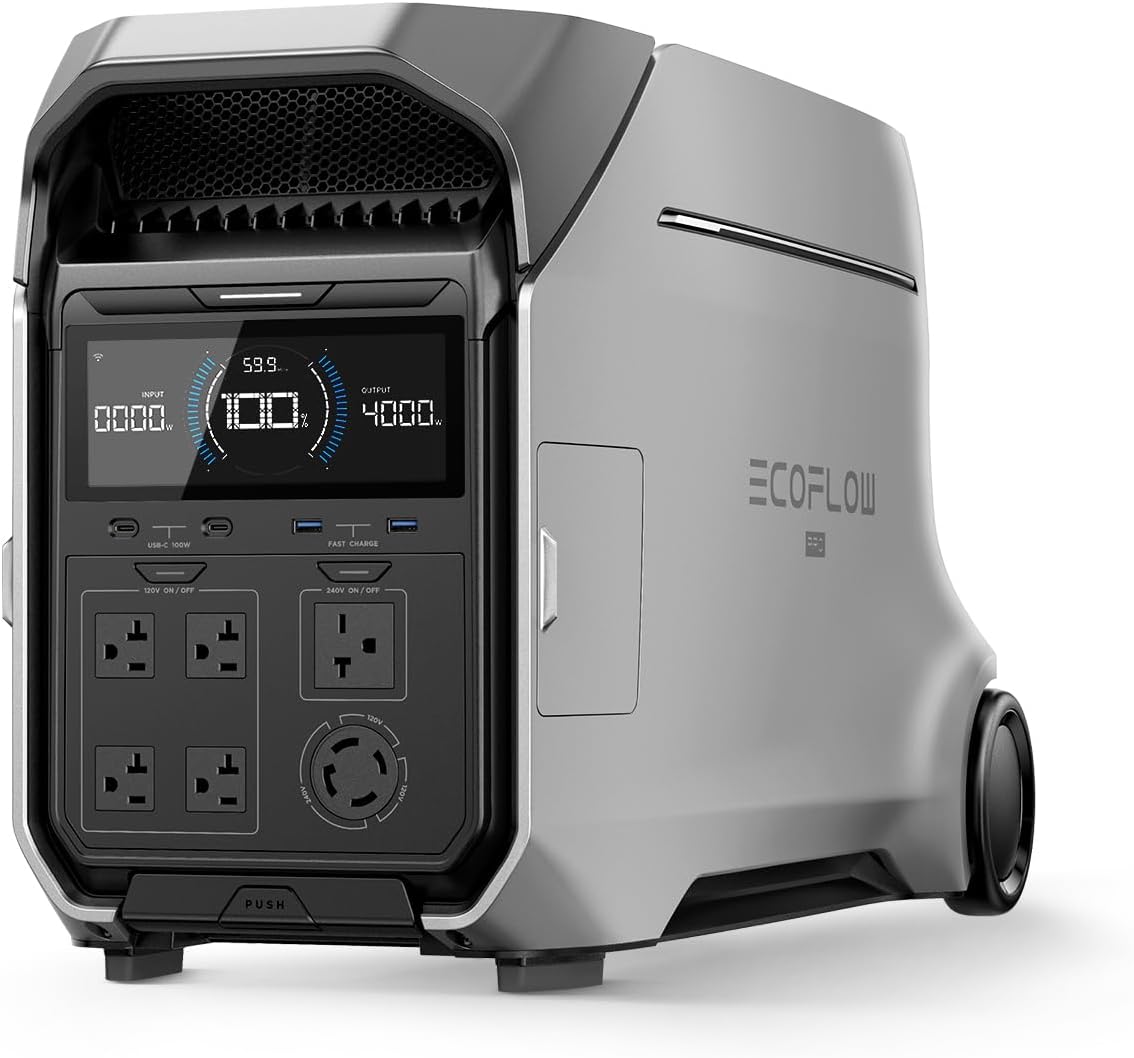
This wins on longevity and weight. A confirmed 4,000-cycle rating beats the F3800’s 3,000, and at roughly 19 lbs lighter, it’s genuinely easier to move.
One real limitation worth knowing: it can’t output 120V and 240V simultaneously — a genuine constraint if your setup needs both at once. For the full spec breakdown, see our EcoFlow DELTA Pro 3 review.
An Honest Note From Real Owners
Across both units, independent aggregated feedback points to the same general complaints: cost, weight, occasional firmware bugs, and adapter/accessory friction — not unique to either brand specifically, but worth expecting at this tier regardless of which you choose.
Which One Should You Buy?
| Your Situation | Better Fit |
|---|---|
| Running heavy 240V loads — HVAC, power tools | Anker SOLIX F3800 |
| Need simultaneous 120V and 240V output | Anker SOLIX F3800 |
| Want the longest-lasting battery for daily use | EcoFlow DELTA Pro 3 |
| Weight and portability matter at this size | EcoFlow DELTA Pro 3 |
| Planning the largest possible expansion later | EcoFlow DELTA Pro 3 (36.9kWh vs 26.9kWh ceiling) |
Frequently Asked Questions
Which has more output power?
The Anker SOLIX F3800, at 6,000W continuous and 9,000W surge, versus the DELTA Pro 3’s 4,000W continuous and 8,000W surge — a meaningful gap for heavy-draw appliances.
Which battery lasts longer?
The EcoFlow DELTA Pro 3, rated for 4,000 cycles versus the F3800’s 3,000 — a real advantage for anyone planning years of near-daily use.
Can the DELTA Pro 3 output 120V and 240V at the same time?
No — this is a genuine limitation independent reviewers have flagged. The F3800 supports simultaneous 120V/240V split-phase output; the DELTA Pro 3 does not.
Which is lighter?
The EcoFlow DELTA Pro 3, by roughly 19 lbs depending on the specific measurement source — a real difference if you’re moving it regularly.
Is there a newer version of the F3800 I should know about?
Yes — Anker has released an “F3800 Plus” with a higher solar input ceiling. This comparison covers the base F3800; research the Plus separately if maximum solar charging speed matters to you.
The Bottom Line
For raw power and simultaneous 120V/240V output, the Anker SOLIX F3800 wins clearly. For battery longevity and lighter weight, the EcoFlow DELTA Pro 3 is the stronger pick.
Neither is a bad choice at this tier — the decision comes down to whether output headroom or long-term durability matters more for your specific use case.
For broader outage-sizing guidance, see our best portable power stations for power outages guide.