This post contains affiliate links. If you buy through our links we may earn a small commission — at no extra cost to you. This never influences our recommendations.
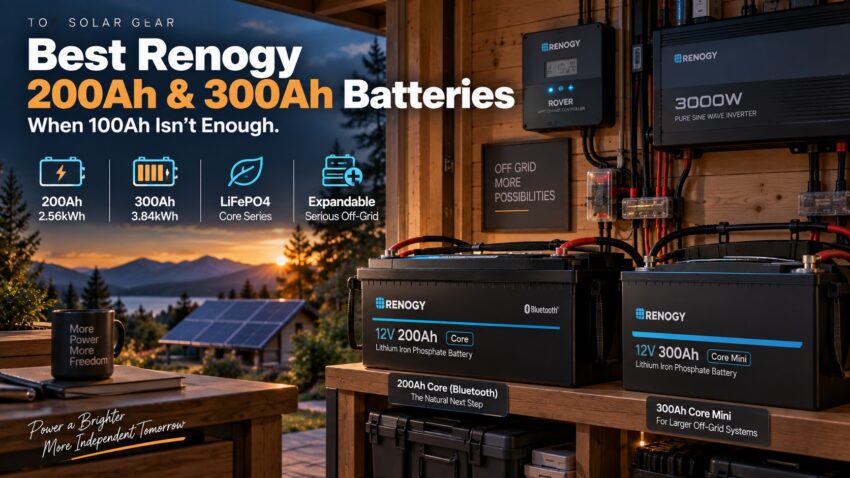
If you’ve read our guide to the best solar battery, you already know the 100Ah Renogy is the right starting point for most setups. This is what comes next once 100Ah genuinely isn’t enough.
| Battery | Capacity | Best For |
|---|---|---|
| Renogy 12V 200Ah Pro | 200Ah / 2.56kWh | The natural first step up from 100Ah |
| Renogy 12V 300Ah Core Mini | 300Ah / 3.84kWh | Large off-grid banks, home backup systems |
When 100Ah Isn’t Enough
If your daily consumption is pushing past roughly 1,200Wh, or you’re building a bank meant to run a full off-grid cabin rather than just lights and device charging, 100Ah starts feeling thin fast.
Both batteries below still run on LiFePO4, so the reliability and lifespan story doesn’t change — you’re just getting a bigger tank.
Core vs. Pro: Why We’re Recommending the Upgrade
Renogy sells 200Ah in two tiers — a base Core model and this Pro version — and the Pro is worth the extra cost for most people sizing up.
Self-heating means it can keep charging in cold weather that would otherwise damage a standard LiFePO4 cell, and the IP67 rating handles dust and water exposure that a base-tier battery isn’t built for.
Our Picks
Renogy 12V 200Ah Pro Bluetooth Battery — The Natural Next Step
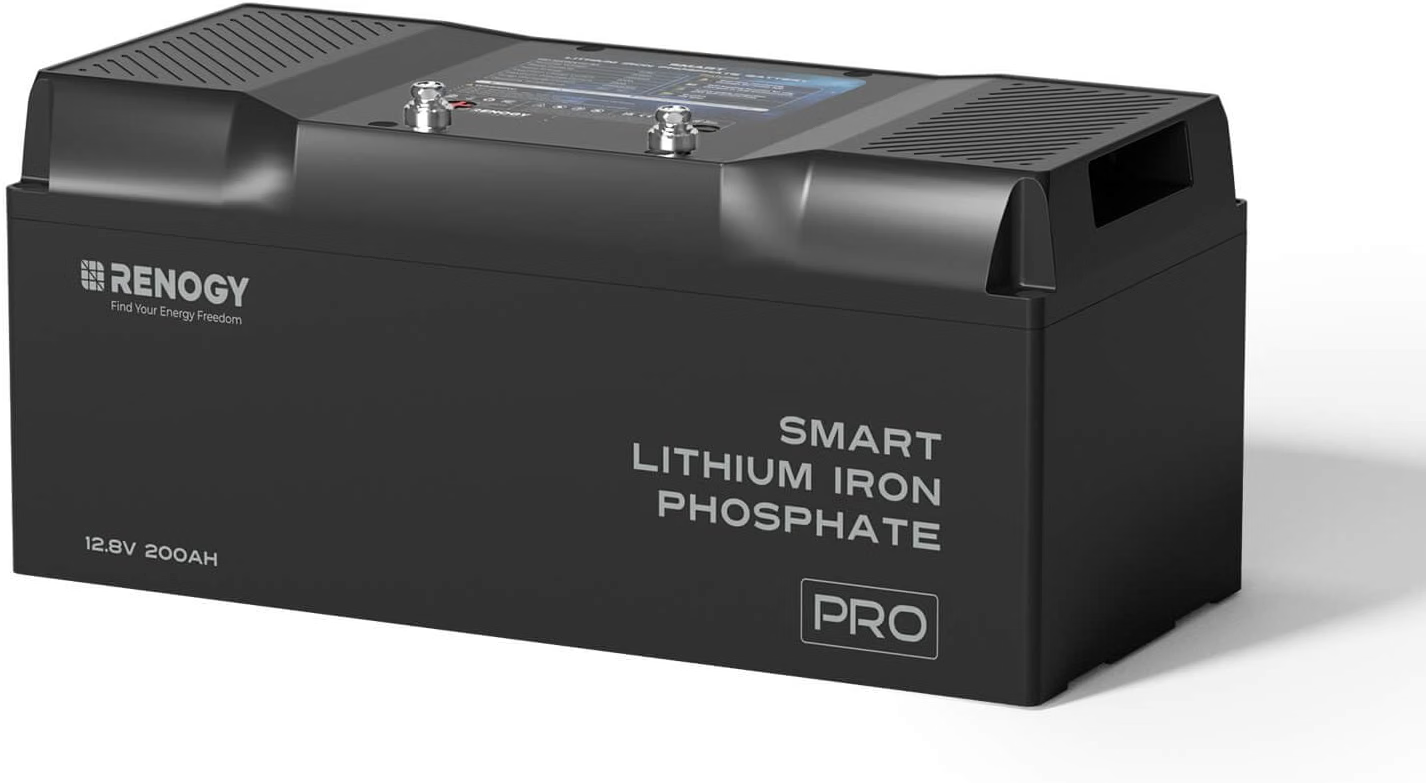
This delivers 200Ah with self-heating for cold-weather charging, an IP67 dust-and-water-resistant rating, and over 60 BMS protections — real headroom above a base-tier 200Ah battery, not just a bigger number.
Bluetooth monitoring through the Renogy app means checking your state of charge doesn’t require walking over and reading an LED display.
| Pros | Cons |
|---|---|
| Self-heating keeps charging safe in cold weather | Roughly double the footprint and weight of a 100Ah battery |
| IP67 rating and 60+ BMS protections for real durability | Priced above a base-tier 200Ah battery for that extra protection |
| Bluetooth app monitoring built in |
Best for: Anyone outgrowing a single 100Ah battery, especially in a cold climate where self-heating actually matters.
Full details and current price: Renogy 12V 200Ah Pro Battery on Amazon
Renogy 12V 300Ah Core Mini — Best for Large Off-Grid Banks
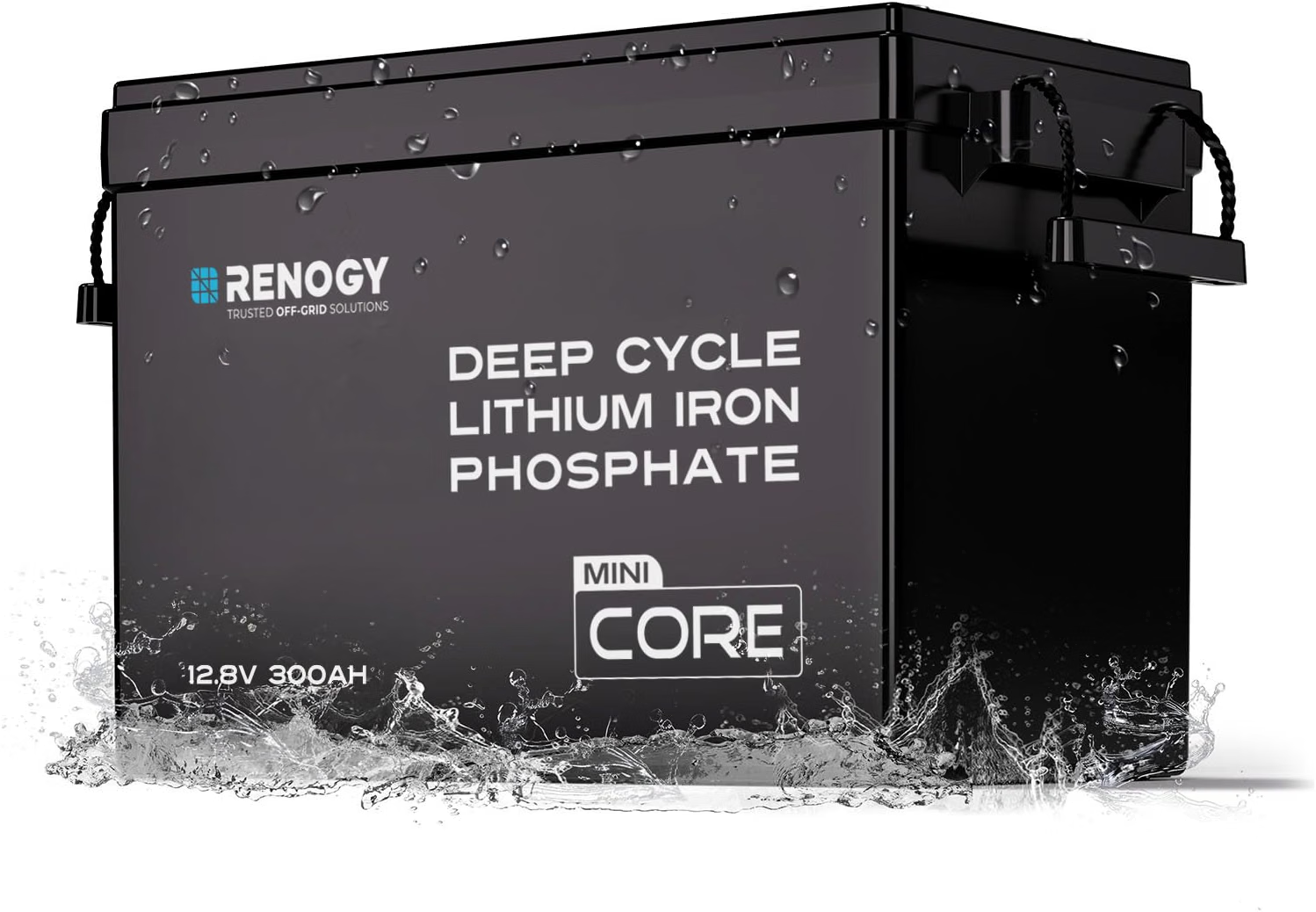
At 55.1 lbs, this is genuinely lighter than you’d expect for 300Ah — 57% lighter than an equivalent lead-acid battery, and more compact than most other 300Ah LiFePO4 batteries on the market.
It supports up to 4 in series and 4 in parallel, meaning a full off-grid or home-backup system built entirely from these units can scale to a 48V, 1,200Ah bank — genuinely serious capacity if you need it.
| Pros | Cons |
|---|---|
| Lighter and more compact than most 300Ah competitors | Significant investment for a single battery at this capacity |
| Scales to a 48V, 1,200Ah system with multiple units | Overkill for anything short of a real off-grid or home-backup build |
| 5-year service plan included |
Best for: Home backup systems or full off-grid cabins where 200Ah still isn’t enough capacity.
Full details and current price: Renogy 12V 300Ah Core Mini Battery on Amazon
Frequently Asked Questions
How do I know if I need more than 100Ah?
If your daily power consumption regularly exceeds around 1,200Wh, or you’re powering an off-grid cabin rather than just basic lighting and devices, it’s time to size up.
Can I mix 100Ah, 200Ah, and 300Ah batteries in the same bank?
It’s not recommended — batteries of different capacities and ages can charge and discharge unevenly when wired together, stressing the system. Stick to matching batteries in a parallel bank.
Does the 300Ah battery come with self-heating?
The Core Mini series doesn’t — Renogy’s Pro series batteries add self-heating for cold-climate charging if that’s a requirement for your setup.
How many 300Ah batteries do I need for a 48V system?
Four wired in series gets you 48V at 300Ah; adding a second set of four in parallel doubles that to 600Ah at 48V.
Is Bluetooth monitoring necessary, or just convenient?
Purely convenient — it lets you check charge status from your phone instead of reading an on-battery display, but doesn’t affect how the battery actually performs.
Final Verdict
| Battery | Best For |
|---|---|
| Renogy 12V 200Ah Pro | The first step up once 100Ah runs short |
| Renogy 12V 300Ah Core Mini | Serious off-grid or home backup capacity |
Size up gradually rather than jumping straight to 300Ah “just in case” — a 200Ah battery covers more real-world use cases than people expect before 300Ah actually becomes necessary.