This post contains affiliate links. If you buy through our links we may earn a small commission — at no extra cost to you. This never influences our recommendations.
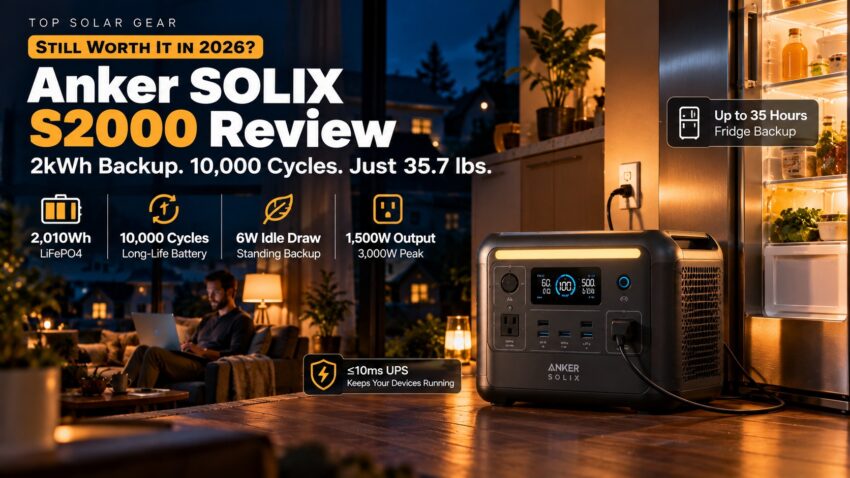
Most 2kWh-class power stations get bigger and heavier to hit that capacity. The S2000 does the opposite — Anker built it to be the smallest and lightest unit in its class while more than doubling typical cycle life.
| Spec | Anker SOLIX S2000 |
|---|---|
| Capacity | 2,010Wh LiFePO4 (314Ah cells) |
| Output | 1,500W continuous, 3,000W peak |
| Cycle life | 10,000 cycles to 60%, ~15-year design life |
| Idle draw | 6W — low enough for always-on backup use |
| Weight | 35.7 lbs |
| Fridge backup | Up to 35 hours |
What Actually Makes This Different
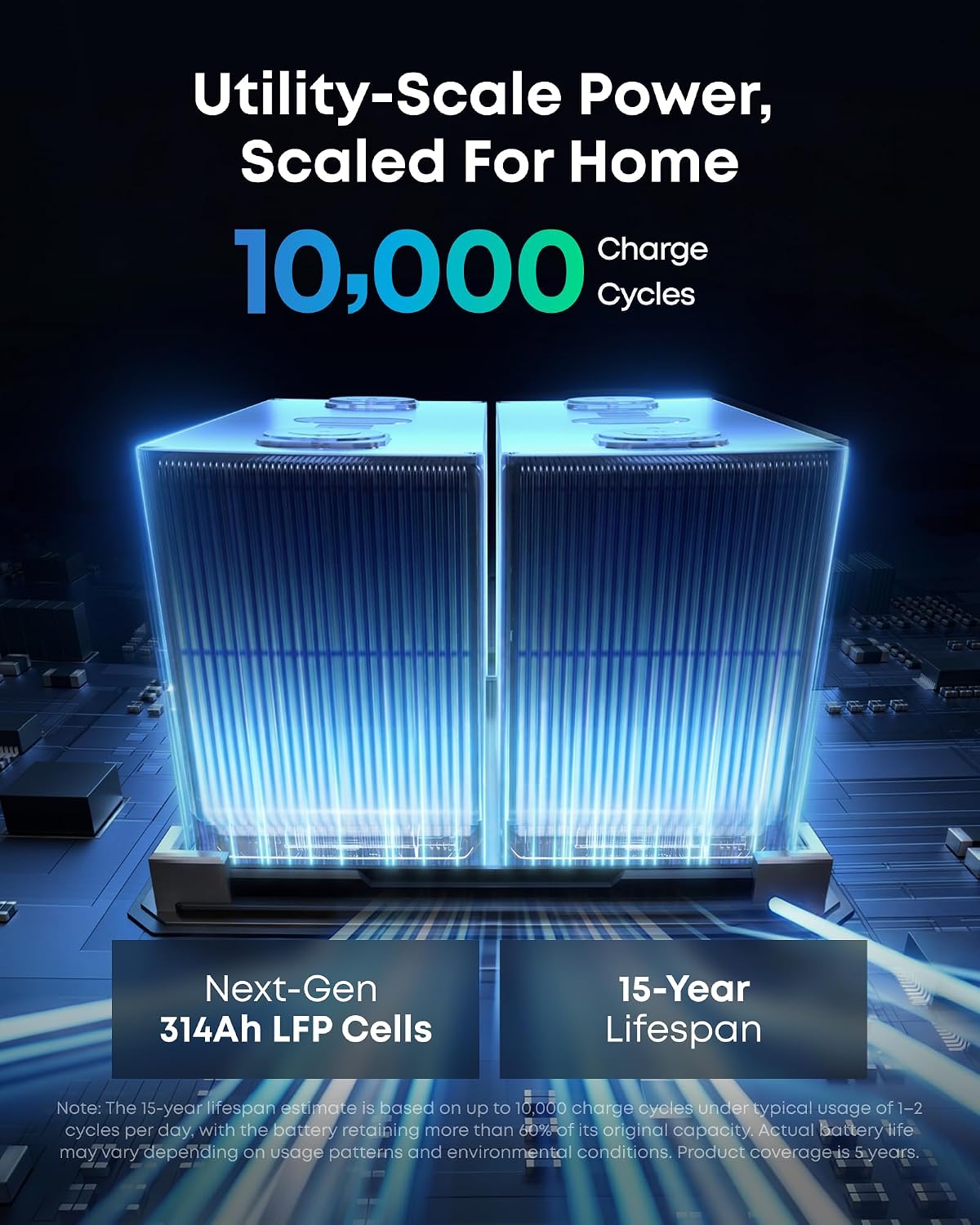
10,000 charge cycles is genuinely double what most 2kWh-class competitors offer — Anker’s own 15-year design-life claim comes directly from that next-generation 314Ah cell chemistry, not just marketing language.
The 6W idle draw matters more than it sounds: a power station that sits plugged in as standing home backup loses real capacity over time just sitting there. 6W is low enough to make that a non-issue, which is exactly the “forget it’s even there until you need it” use case Anker built this for.
At 35.7 lbs and roughly 30% smaller than the class average, it’s also just easier to actually move and place than most units storing 2kWh.
The Trade-Off: Less Peak Power
Here’s the honest catch, and it’s a real one — our own Anker SOLIX C1000 Gen 2 is rated at 2,000W continuous with a 3,000W peak, meaningfully higher than the S2000’s 1,500W continuous rating.
The framing that actually matters isn’t “which is better” — it’s which failure worries you more. The S2000 stores roughly double the energy of the C1000, so it runs things longer. The C1000 is more likely to successfully start something that needs a big initial surge. Pick based on your actual risk, not just the bigger number.
Two other real limitations: the S2000 isn’t expandable with add-on batteries, and it skips the 12V port some buyers specifically look for.
Real-World Backup Numbers
Anker rates it for up to 35 hours of fridge backup and roughly 29 hours running a CPAP machine — genuinely useful numbers for the two most common “what if the power goes out overnight” concerns.
A ≤10ms UPS switchover means it can sit between your electronics and the wall, kicking in fast enough that sensitive devices don’t even register the interruption.
| Pros | Cons |
|---|---|
| 10,000-cycle battery, roughly double typical competitor lifespan | 1,500W continuous output trails higher-wattage rivals like the C1000 |
| 6W idle draw, genuinely suited to always-on standing backup | Not expandable with add-on batteries |
| Smallest and lightest in its 2kWh class | No 12V port included |
Best for: Standing home backup where longevity and low idle loss matter more than maximum peak wattage.
Anker SOLIX S2000 Portable Power Station
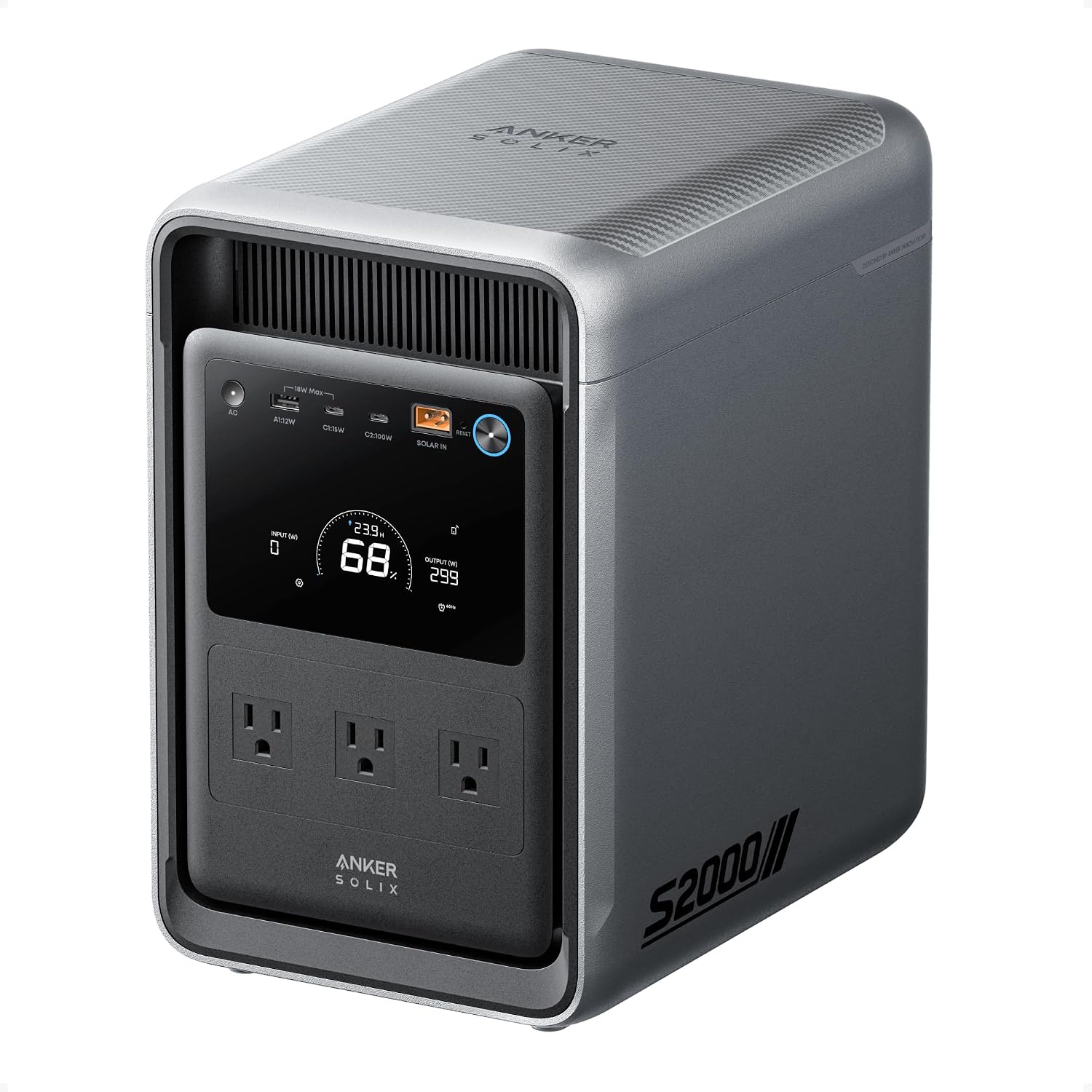
MSRP sits at $1,199.99, but it’s been repeatedly discounted to the $649-699 range since launch — at that price, the cycle-life-to-cost ratio here is genuinely hard to beat in this capacity class.
Full details and current price: Anker SOLIX S2000 on Amazon
Frequently Asked Questions
How does the S2000 compare to the Anker SOLIX C1000?
The S2000 stores roughly double the energy (2,010Wh vs. 1,024Wh) but outputs less continuous power (1,500W vs. 2,000W) — pick based on whether runtime or startup power matters more for your use case.
Is the S2000 expandable with extra batteries?
No, unlike some competitors in this capacity class, the S2000 doesn’t support add-on battery packs.
How long can it run a refrigerator?
Up to 35 hours per Anker’s rating, one of the stronger numbers in its capacity class for this specific use case.
What does the 6W idle draw actually mean for me?
It means the unit loses very little charge just sitting plugged in as standing backup — a real advantage if you want to set it up once and not think about it.
Does it have a 12V port?
No, this is one of its notable omissions compared to some competitors.
Final Verdict
If standing home backup with real longevity is the goal, the S2000’s cycle life and idle efficiency make it a genuinely smart pick — just confirm your appliances don’t need more than 1,500W continuous before you commit.