This post contains affiliate links. If you buy through our links we may earn a small commission — at no extra cost to you. This never influences our recommendations.
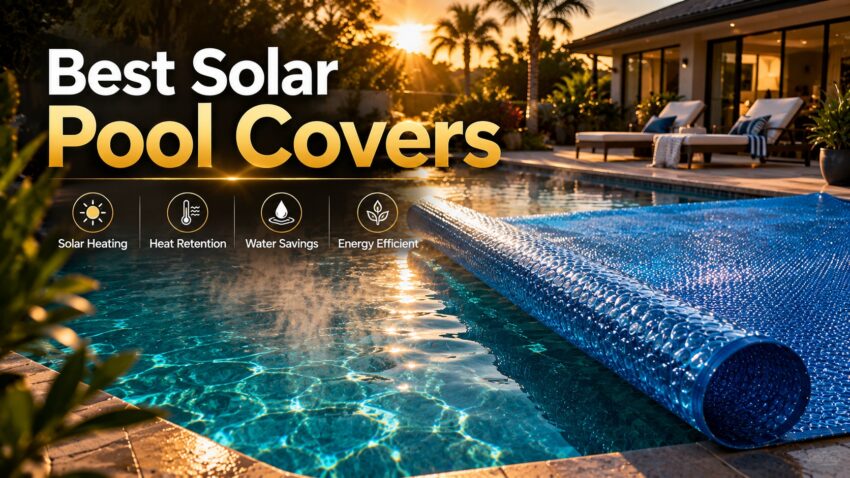
A solar pool cover is the single highest-ROI accessory for any pool owner. For $50–150, it raises water temperature by up to 15°F, cuts evaporation by up to 95%, reduces chemical consumption, and keeps debris out — all with zero ongoing energy cost. This guide covers how solar covers actually work, what specs matter, and which ones are worth buying for your pool shape and size.
How a Solar Pool Cover Actually Works
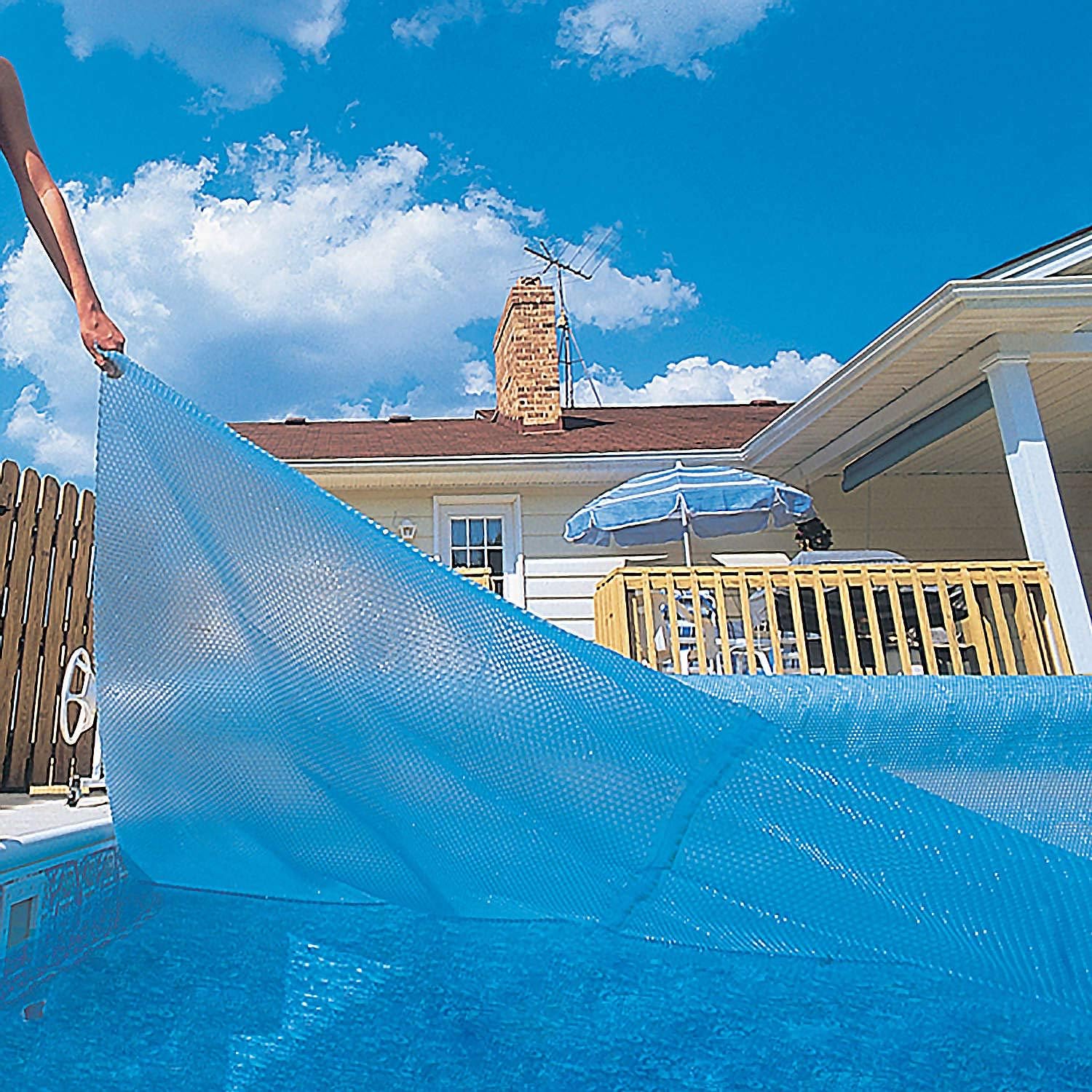
A solar pool cover isn’t insulation in the traditional sense — it’s a heat collector. The surface is covered in thousands of small air bubbles, each acting as a tiny lens that concentrates sunlight and transfers heat directly into the water below. Installed bubble-side down, the cover captures solar energy throughout the day and adds it to your pool’s water temperature.
At night, the same cover switches roles — it traps the heat gained during the day and slows the rate at which it escapes into the cooler night air. The combination of active daytime heating and nighttime heat retention is what produces the headline 10–15°F temperature increase that quality covers deliver.
The secondary benefit is evaporation control. Water evaporation is the single biggest source of heat loss in any pool, and it’s also what drives chemical loss — chlorine and other treatment chemicals leave with the evaporating water. A solar cover physically blocks that evaporation pathway, reducing water loss by up to 95% and meaningfully cutting how often you need to rebalance chemicals.
Color and Material — What Actually Affects Heating Performance
Solar pool covers come in blue, clear, and dual-color (clear top with dark bubbles) variants. The difference matters more than most buyers realize.
Clear/translucent covers let the maximum amount of sunlight pass through to heat the water directly. They’re the most efficient at active daytime heating but provide less protection from UV degradation of pool chemicals — direct UV exposure burns off chlorine faster. If you go clear, plan to add cyanuric acid (chlorine stabiliser) to your water if you haven’t already.
Blue/opaque covers block more UV from reaching the water directly while still transferring meaningful heat through the bubble-lens effect. They protect chlorine levels better than clear covers and are the more common choice for pools that don’t use stabilised chlorine. Slightly less aggressive heating than clear, but the trade-off is usually worth it for lower chemical consumption.
Dark bubbles with clear top represent the best of both — the dark underside absorbs heat efficiently while the clear top still allows good light transmission. This combination, used in premium covers like the GeoBubble and higher-tier Sun2Solar products, delivers the strongest heating performance available in a solar cover.
Thickness (Mil Rating) — Finding the Right Balance
Solar pool covers are sold by thickness in mils (thousandths of an inch), typically ranging from 8 to 16 mil. This is the spec that determines both durability and handling ease — and they trade off against each other.
| Thickness | Durability | Handling | Best For |
|---|---|---|---|
| 8 mil | 1–2 seasons | Lightest, easiest to handle | Budget, warm climates, easy-set pools |
| 12 mil | 3–5 seasons | Good balance | Most pool owners — the sweet spot |
| 16 mil | 5–7 seasons | Heaviest, harder to manage solo | Year-round use, harsh climates, longevity priority |
For most pool owners, 12 mil is the right balance — durable enough to last multiple seasons without tearing, while still light enough that one person can deploy and remove it without a fight. Step up to 16 mil if you’re in a climate with intense UV exposure or want maximum lifespan and don’t mind the extra weight.
Best Solar Pool Covers — Verified Picks
| Product | Shape | Thickness | Best For |
|---|---|---|---|
| Sun2Solar 18ft Round, 1200 Series | Round | 12 mil | Best overall round cover |
| Sun2Solar 16x32ft Rectangle, 1200 Series | Rectangle | 12 mil | Best for larger inground pools |
| Intex 28015E, 18ft Round | Round | 8 mil | Best budget option |
| Blue Wave NS415, 16x24ft Rectangle | Rectangle | 12 mil | Best for smaller inground rectangles |
Best Overall Round Cover: Sun2Solar Blue 18ft Round, 1200 Series
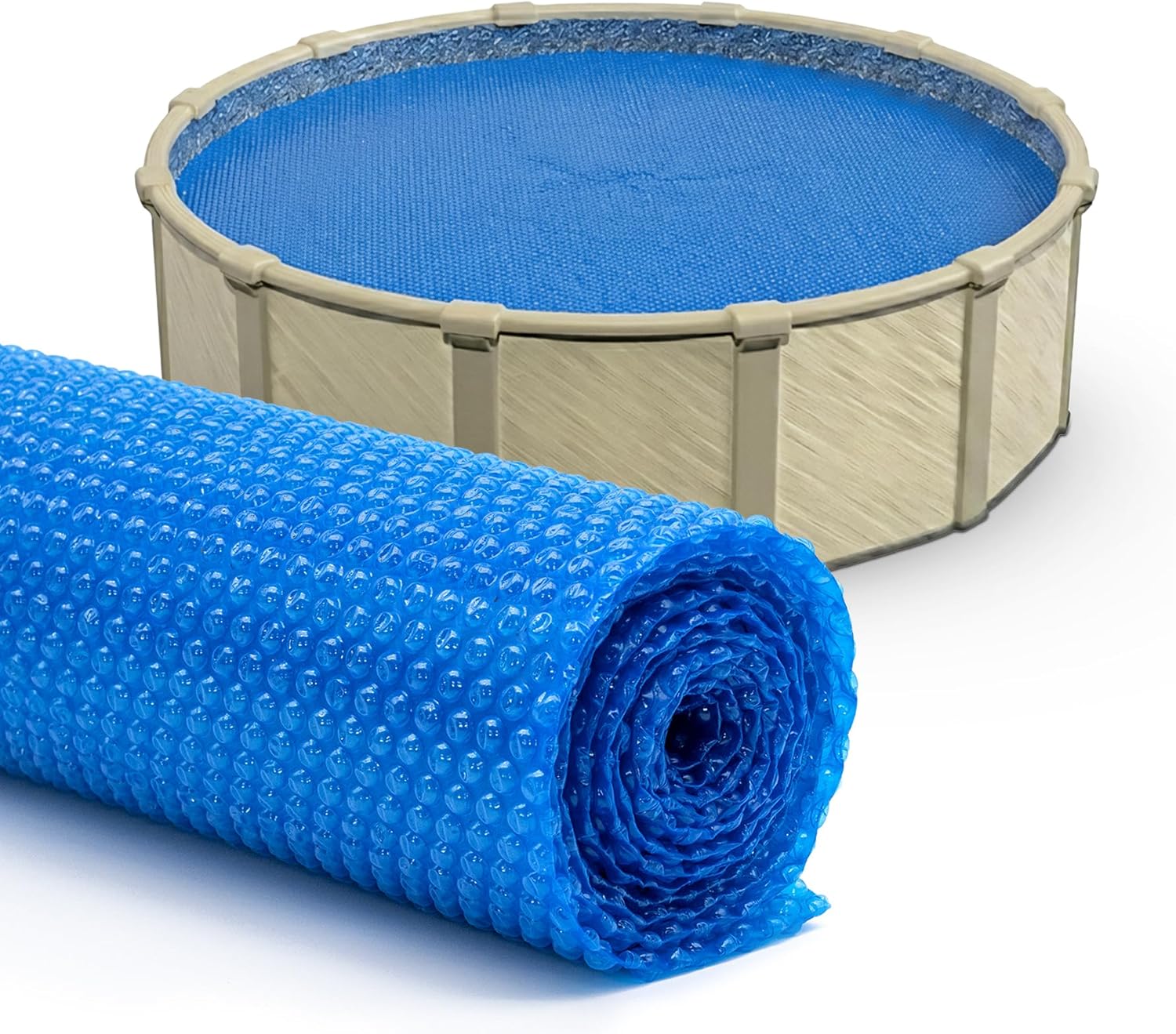
Sun2Solar’s 1200 Series is the most consistently well-reviewed solar pool cover line on Amazon, and the 18ft round size covers the most common above-ground pool diameter. At 12 mil thickness, it delivers the durability-to-handling balance most pool owners want — substantial enough to last multiple seasons, light enough to manage without a struggle. The blue translucent material allows strong heat transfer while offering meaningful UV protection for pool chemicals.
Sun2Solar covers are designed to be trimmed for non-standard pool shapes — buy a size at or slightly above your pool’s diameter, then trim to fit if needed. The thermal bubble pattern is dense and consistent, which is the main quality differentiator between premium and budget covers — uneven bubble distribution reduces heating performance across the surface. Available in multiple sizes from 12ft to 33ft round and various thickness tiers (800, 1200, 1600 Series) if 18ft or 12 mil isn’t the right fit for your pool.
Pros: 12 mil durable construction, strong heat transfer, trimmable for custom fit, available in multiple sizes and thicknesses, well-established brand reputation
Cons: Heavier than 8 mil budget options — needs two people or a cover reel for easy handling; blue color slightly reduces max heat transfer vs clear
Best for: Most above-ground and inground round pools, anyone wanting the best balance of durability and performance
Best for Larger Inground Pools: Sun2Solar Blue 16ft x 32ft Rectangle
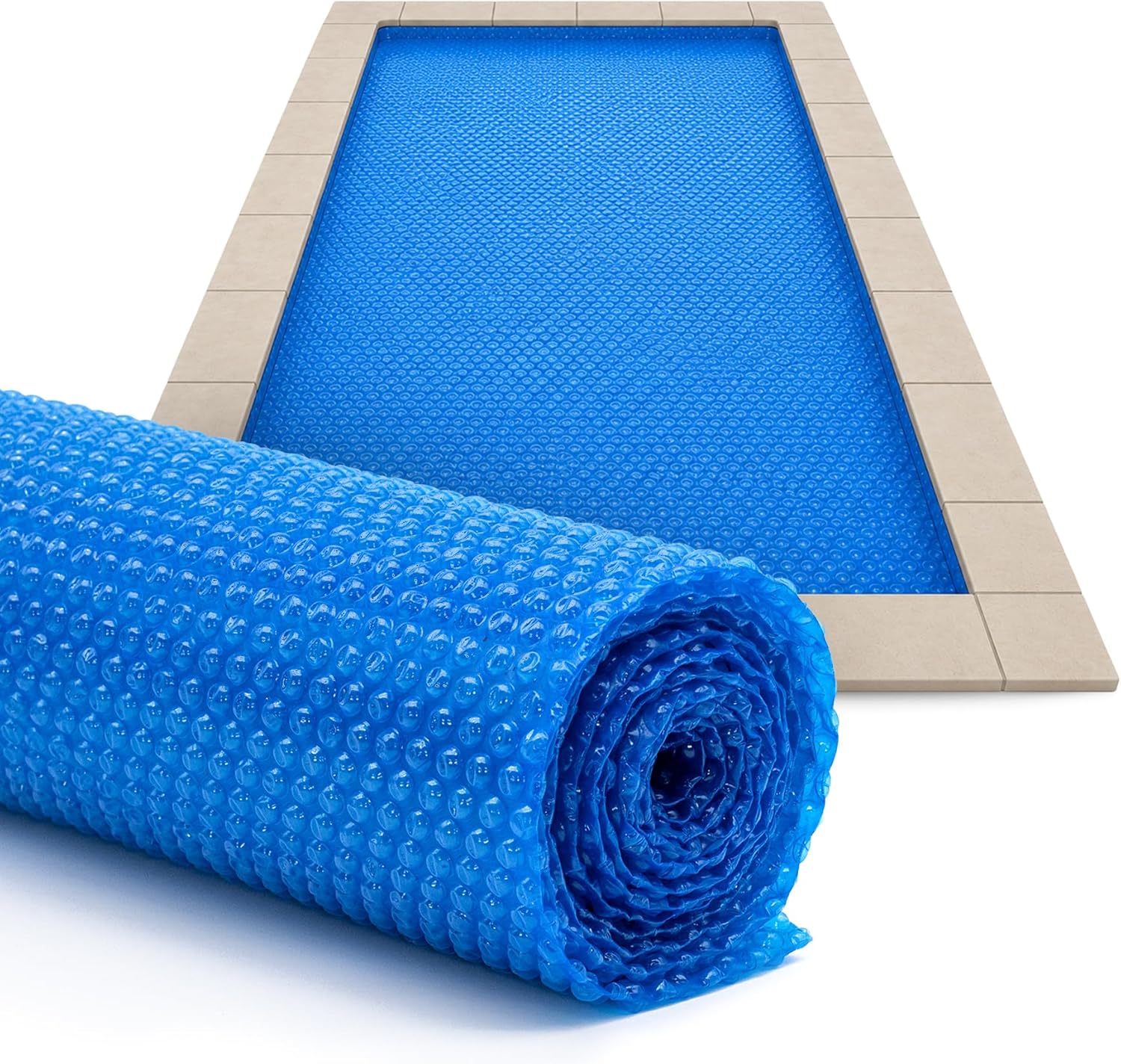
The same 1200 Series 12 mil construction as the round version, sized for one of the most common inground rectangular pool dimensions. Covers a standard-sized backyard inground pool in a single piece — no seaming or piecing multiple covers together, which is both easier to manage and more thermally efficient since seams are where heat escapes most readily.
For rectangular and inground pools specifically, fit matters more than with round above-ground pools — an inground pool’s coping and edges are less forgiving of a poorly sized cover. The trimmable edge design lets you fine-tune the fit around skimmers, ladders, and steps without compromising the cover’s structural integrity. Five-year limited warranty backs the build quality.
Pros: Single-piece coverage for standard 16×32 inground pools, 12 mil durability, trimmable for skimmers and steps, 5-year warranty
Cons: Significant size and weight — a cover reel is strongly recommended for daily use; not suitable for non-standard pool dimensions without trimming
Best for: Standard-sized inground rectangular pools, homeowners who want one-piece coverage without seams
Best Budget: Intex 28015E Solar Pool Cover, 18ft Round
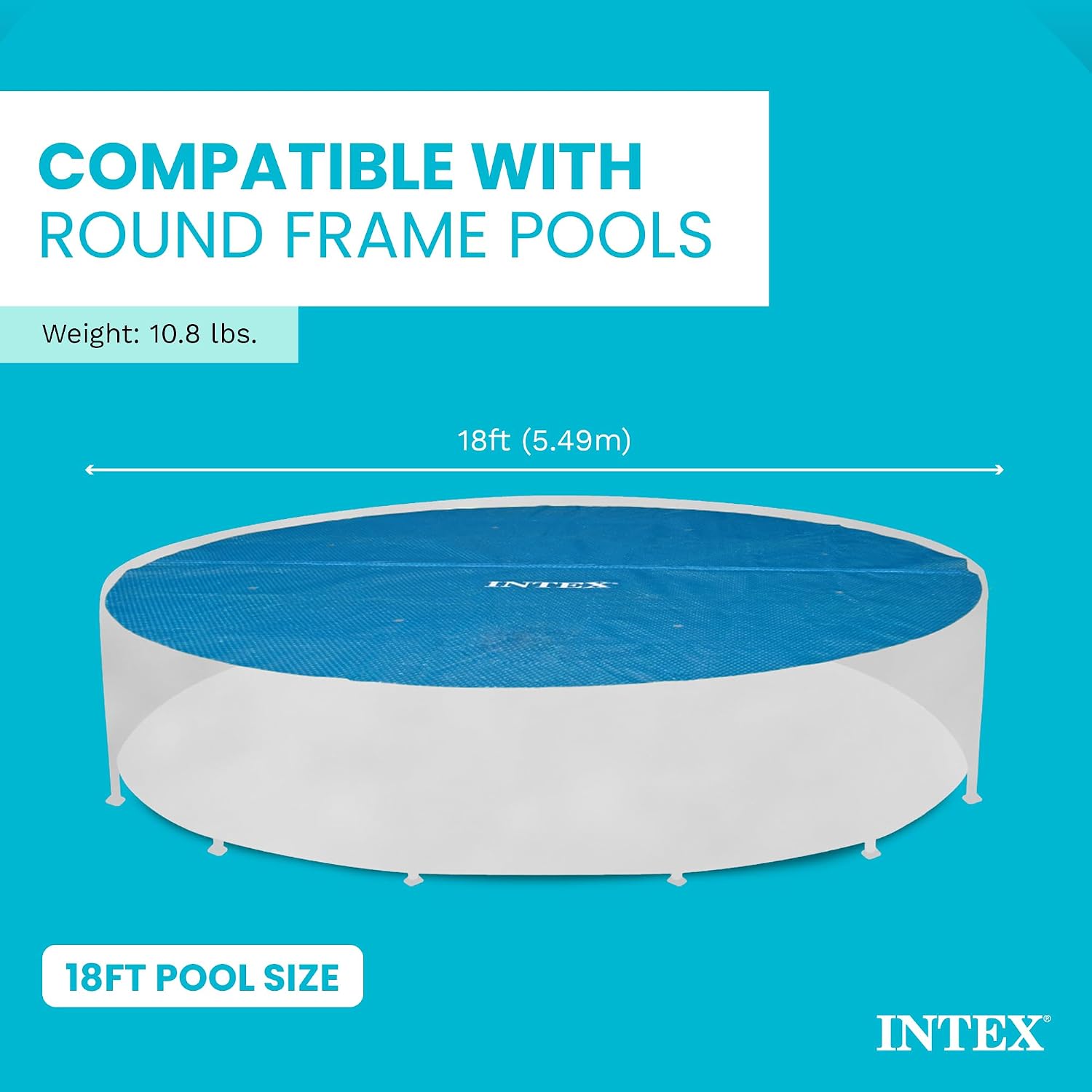
If you have an Intex, Bestway, or similar Easy Set above-ground pool and want the most cost-effective heating solution, the Intex 28015E is the proven default choice. At 8 mil, it’s noticeably lighter and easier to handle than the 12 mil options above — a meaningful advantage for kids, elderly users, or anyone managing the cover solo on a daily basis.
The trade-off for the lighter weight is shorter lifespan — typically 1–2 seasons of regular use before the seams or material begin showing wear, compared to 3–5 seasons for the heavier 12 mil covers. For seasonal or occasional pool owners who replace accessories periodically anyway, this is a reasonable trade. It delivers the same core heat transfer and evaporation reduction benefits as premium covers, just with less durability over time. Includes drain holes designed to release rainwater collected on top of the cover.
Pros: Lightest and easiest to handle, lowest price point, genuine heating and evaporation benefits, designed specifically for Intex/Easy Set pools
Cons: Shorter lifespan (1–2 seasons typical), less UV and chemical resistance than thicker covers
Best for: Intex and similar Easy Set pool owners, budget-conscious buyers, anyone who values easy handling over maximum longevity
Best for Smaller Inground Rectangles: Blue Wave NS415, 16ft x 24ft
Blue Wave is a long-established pool supply brand, and the NS415 fills the gap for smaller inground rectangular pools that don’t need the full 16×32 footprint. The 12 mil thermal bubble construction matches the Sun2Solar covers in durability terms, with a 5-year warranty that the brand explicitly positions as outlasting standard Intex-style covers.
The transparent blue polymer is engineered to maximise sunlight penetration to the water depth while still offering meaningful UV protection — a middle-ground approach between fully clear and fully opaque blue covers. For 16×24 inground pools specifically — a common size for smaller backyard installations — this is a well-fitted, well-reviewed option that doesn’t require oversizing and trimming a larger cover.
Pros: Properly sized for 16×24 inground pools, 12 mil durable construction, 5-year warranty, strong heat transfer with UV protection balance
Cons: Fixed size — not suitable for pools significantly different from 16×24 dimensions without trimming a larger cover instead
Best for: Inground rectangular pools in the 16×24 size range, buyers who want a properly fitted cover rather than trimming a larger one
How to Size Your Solar Pool Cover Correctly
Round pools: Measure the diameter at the widest point. Buy a cover at or slightly larger than this measurement — most covers can be trimmed down but can’t be extended.
Rectangular and oval pools: Measure length and width at the longest and widest points. For standard sizes (16×32, 18×36, 20×40, etc.), a properly fitted cover is usually available. For non-standard dimensions, buy the next size up and trim to fit.
Freeform/kidney-shaped pools: No cover is manufactured to your exact shape. Buy a rectangle or oval large enough to cover the entire pool surface, then trim to match your pool’s outline using the edge as a guide. Cut conservatively — you can always trim more material away, but you can’t add it back.
Always trim with the bubble side down on the water — laying the cover in place on the pool first lets you mark the exact cut line rather than guessing on dry ground. Leave a 2–3 inch flap near the skimmer opening so you can tuck debris underneath before removal.
Installation and Daily Use Best Practices
Bubble side down, always. The bubbles need direct contact with the water to act as heat-transferring lenses. Installing bubble-side up significantly reduces the heating effect — this is the single most common mistake new solar cover owners make.
Keep it on whenever the pool isn’t in use. Daytime coverage maximises heat collection; nighttime coverage minimises heat loss through evaporation. Running your pump while the cover is on is completely safe and doesn’t need to be interrupted.
Consider a cover reel for larger pools. A 16x32ft or larger cover is genuinely heavy and unwieldy to manage by hand daily. A cover reel (manual or motorised) makes daily removal and replacement dramatically easier and extends the cover’s lifespan by reducing folding stress and dragging damage.
Inspect seams periodically. The seams — where panels of bubble material are joined — are typically the first failure point on any solar cover, not the bubble material itself. Catching a small seam separation early and addressing it (some covers can be patched) extends usable life significantly.
Frequently Asked Questions
How much does a solar pool cover actually raise water temperature?
Manufacturer claims typically cite 10–15°F increases, and this is realistic with consistent daily use in a sunny climate — particularly for above-ground pools with smaller water volumes that heat and cool faster. Inground pools with larger water volumes see somewhat smaller temperature gains but still benefit meaningfully, especially in shoulder seasons (spring and fall) when extending the swimming season is the goal.
Do solar pool covers really reduce chemical costs?
Yes, substantially. Since evaporation is the primary pathway for both water and chemical loss, reducing evaporation by up to 95% directly reduces how often you need to add chlorine, algaecide, and pH balancers. Many pool owners report meaningful reductions in monthly chemical spending after switching to consistent solar cover use.
How long do solar pool covers last?
8 mil budget covers typically last 1–2 seasons of regular use. 12 mil covers last 3–5 seasons. 16 mil premium covers can last 5–7 seasons with proper care. UV exposure, pool chemical balance, and how carefully the cover is folded and stored during winter all affect actual lifespan significantly.
Should I get a clear or blue solar pool cover?
Clear covers transfer more direct heat but allow more UV to reach and degrade pool chemicals — appropriate if you use stabilised chlorine (cyanuric acid) or don’t mind more frequent chemical top-ups. Blue covers offer a better balance of heating and chemical protection for most pool owners, which is why blue is the more commonly recommended default.
Can I leave a solar pool cover on during a heavy rainstorm?
Yes — quality covers include drain holes designed to release accumulated rainwater rather than pooling on the surface and potentially stressing the material. If your cover lacks drain holes and significant water pools on top, it’s worth removing it temporarily during sustained heavy rain to avoid undue strain on the bubble structure.
Final Verdict
| Your Situation | Best Pick |
|---|---|
| Standard 18ft round pool, best overall | Sun2Solar 18ft Round 1200 Series (B00DV4SSJW) |
| Larger 16×32 inground rectangular pool | Sun2Solar 16x32ft Rectangle (B01C4JSPSS) |
| Intex/Easy Set pool, budget priority | Intex 28015E 18ft Round (B000PGMU5C) |
| Smaller 16×24 inground rectangle | Blue Wave NS415 16x24ft (B003TQMC9Y) |
For most pool owners, the Sun2Solar 1200 Series in whichever shape matches your pool is the right starting point — 12 mil construction balances durability and handling, and the brand’s consistent reviews reflect genuinely reliable performance season after season. Budget-conscious Intex pool owners get excellent value from the Intex 28015E, and smaller inground rectangular pools are well served by the properly fitted Blue Wave NS415.
For more pool accessories that pair well with a solar cover, see our guides on solar water pumps for off-grid pool filling and circulation, and solar lighting for pools for evening ambiance once the cover comes off.