This post contains affiliate links. If you buy through our links we may earn a small commission — at no extra cost to you. This never influences our recommendations.
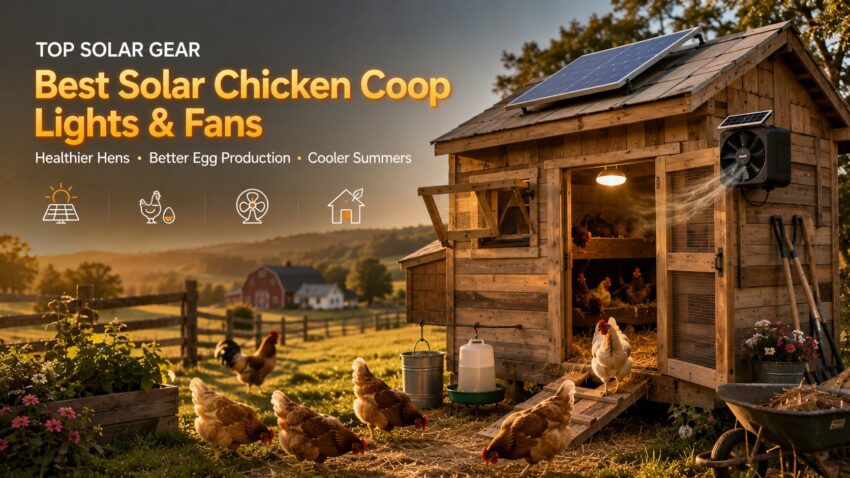
Hens need 14-16 hours of light daily for consistent egg production — well beyond what most regions get naturally through fall and winter, which is why laying drops off seasonally without supplemental light. Meanwhile, summer heat without adequate ventilation poses a genuine welfare risk, since chickens don’t sweat and rely entirely on airflow and panting to regulate body temperature. This guide covers how to handle both correctly with solar equipment, and the best picks for each.
Why Light Timing Matters More Than Just “More Light”
Chickens’ laying cycles are directly tied to daylight length, which is why production naturally drops as days shorten in fall and winter. Supplemental light extends the perceived day length, keeping the reproductive cycle active through the darker months. The mechanism matters for how you time it: a light that comes on before dawn to simulate an earlier sunrise works with the flock’s natural rhythm, while artificially extending the evening can leave hens caught mid-activity when darkness suddenly falls, since chickens navigate poorly in the dark and need time to settle in naturally at dusk.
The practical guidance: if you’re adding light, favor a pre-dawn timer that turns on before sunrise rather than one that extends the evening — this respects the natural dusk-to-roost behavior while still extending total daylight hours for egg production.
Give Your Flock a Break — Don’t Run Supplemental Light Year-Round
Continuous, year-round supplemental lighting isn’t good practice — hens benefit from a natural seasonal rest period, and continuous high-output laying without any break can contribute to earlier reproductive burnout. Most experienced keepers use supplemental light specifically through the darkest months (typically fall through winter) rather than running it indefinitely.
Ventilation Matters as Much as Light — Especially in Summer
Chickens regulate body heat primarily through panting and airflow, not sweating, making adequate ventilation a genuine welfare issue during hot weather, not just a comfort preference. A solar exhaust fan pulls hot, humid air out of the coop while drawing in cooler fresh air, meaningfully reducing heat stress risk during summer months and helping control ammonia buildup and moisture from droppings year-round.
Best Solar Chicken Coop Lights and Fans — Verified Picks
| Product | Type | Key Spec | Best For |
|---|---|---|---|
| LOTOFIT Solar Coop Light 3-Pack | Portable light | Dusk-to-dawn 6H timer | Small-medium coops, flexible placement |
| Solar Coop Pendant Light (IP66) | Hanging pendant light | 3-color dimmable, 16.4ft cord | Larger coops, fixed installation |
| DSTANA 25W Solar Fan | Exhaust fan | 400 CFM, 15000mAh battery | Summer ventilation, any coop size |
Best Light for Most Coops: LOTOFIT Solar Chicken Coop Light with Timer, 3-Pack
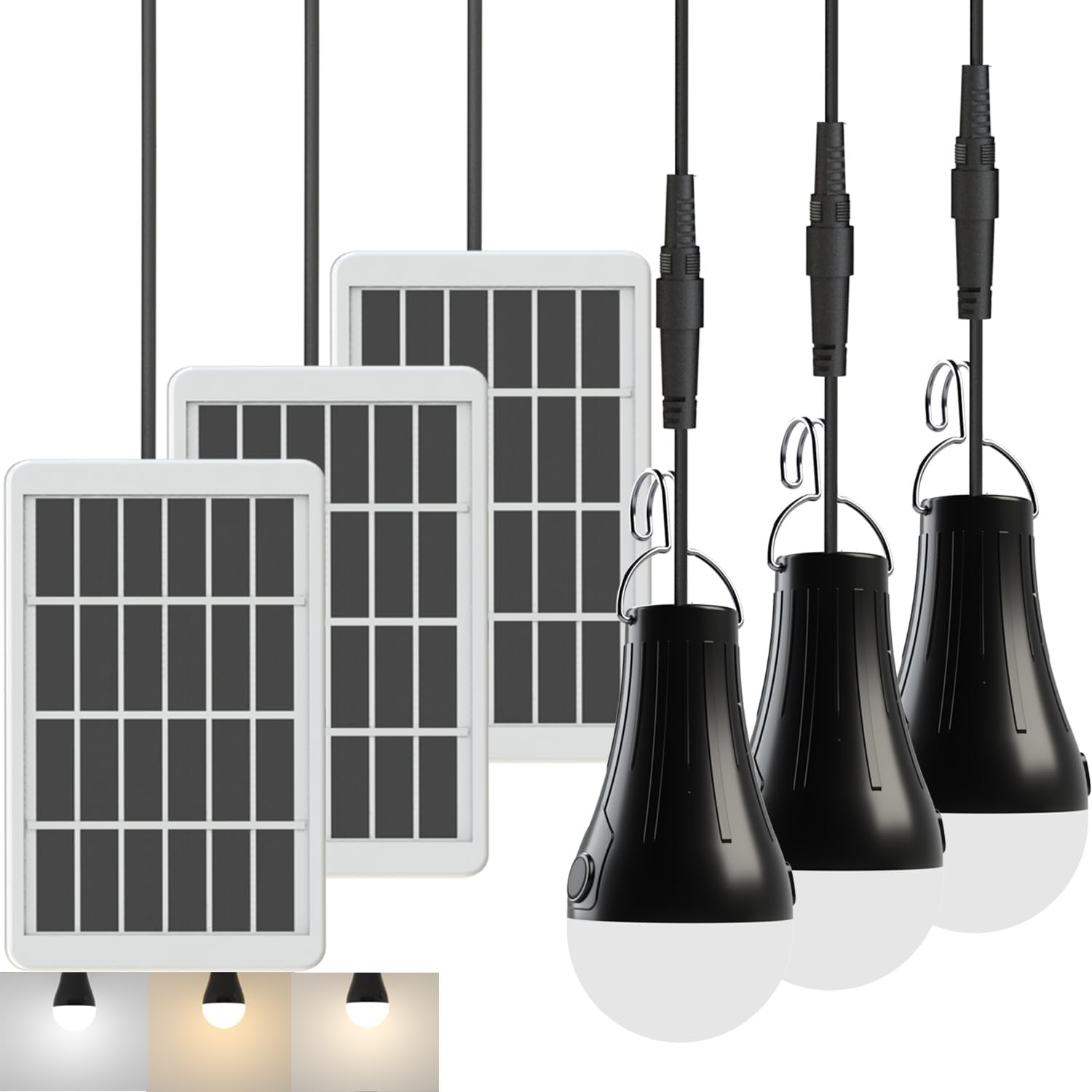
Three portable, rechargeable solar bulbs with a smart dusk-to-dawn 6-hour automatic timer — set it once and it handles the schedule without manual intervention. Three switchable color temperatures (3000K warm, 4000K natural, 6000K cool white) let you use warm light to keep hens calm during evening hours and switch to cool white for clearer visibility when cleaning or doing health checks. IPX4 waterproof rating and flexible placement — nesting boxes, feeding stations, or water areas — make this a genuinely versatile starting point for most coop sizes.
Best for Larger Coops: Solar Chicken Coop Pendant Light (IP66)
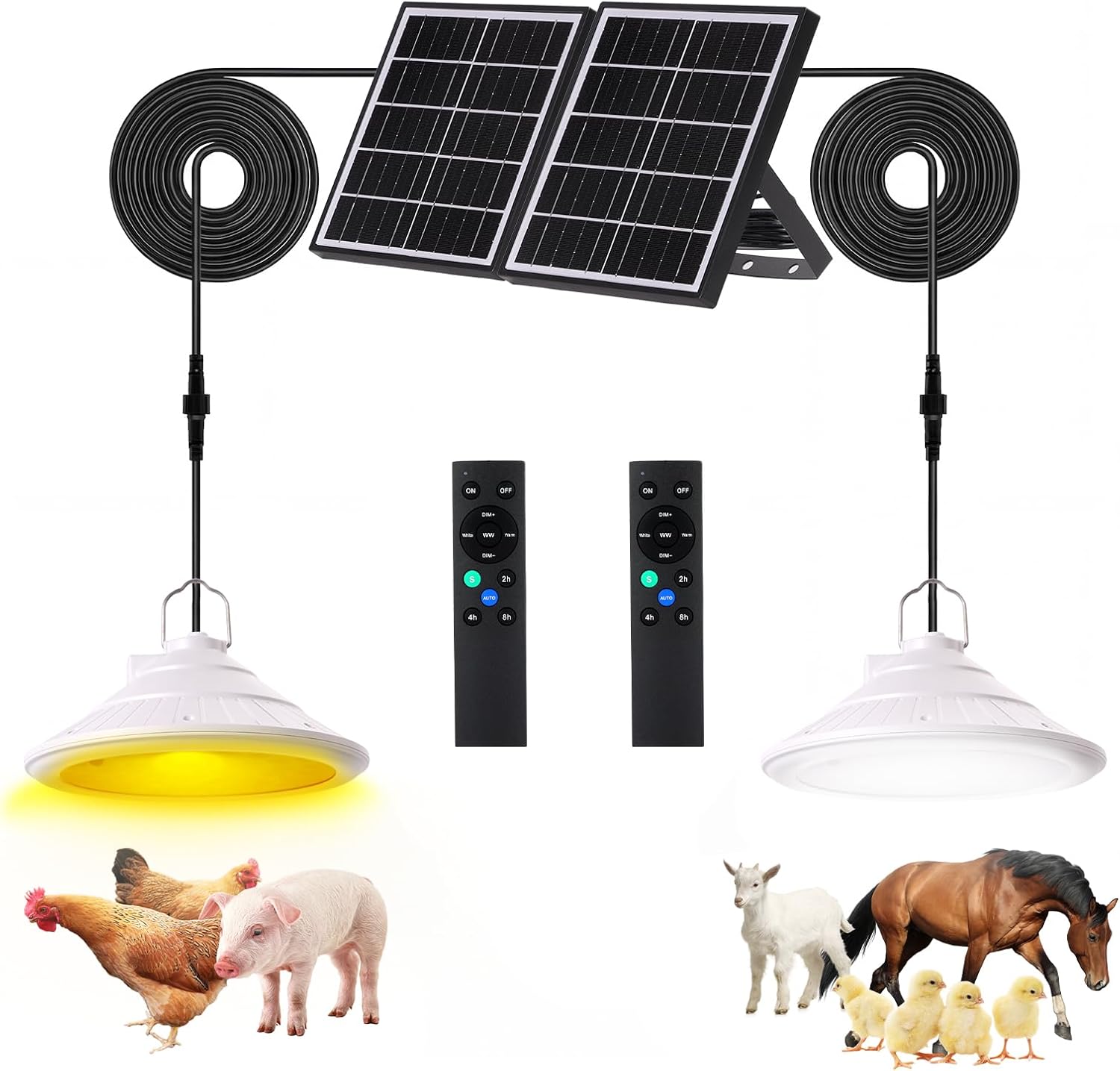
For larger coops needing more consistent, centralized illumination, this IP66-rated hanging pendant light offers a higher and more reliable output than portable bulb options. The 16.4ft cord lets you position the solar panel in full sun while mounting the actual light fixture wherever coverage is needed inside the coop, and three-color dimmable LED gives control over both brightness and warmth. The higher IP66 waterproof rating (versus IPX4 on portable bulbs) makes this the more durable choice for a fixed, permanent installation.
Best Fan: DSTANA 25W Solar Fan for Chicken Coop
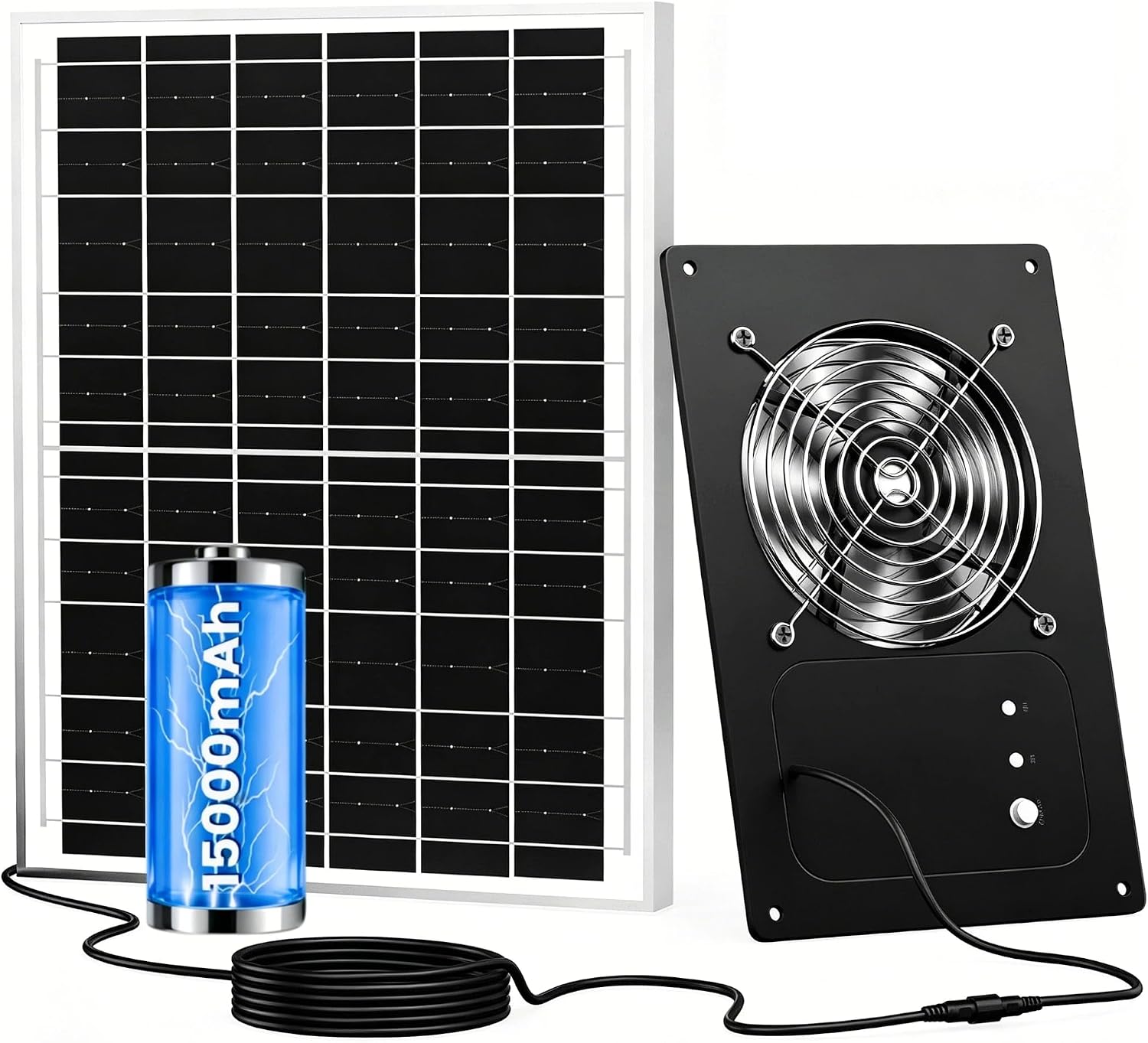
A 25W monocrystalline solar panel paired with a 15,000mAh battery delivers 400 CFM of airflow and runs continuously for 12-15 hours on a full charge (requiring 6-7 hours of sunlight) — enough to keep ventilation running well into the evening after the sun goes down. At just 36dB, it runs genuinely quiet even installed directly in the coop, and the built-in 3H/6H memory timer automatically resumes its schedule each night once darkness is detected. The 16ft extension cable gives flexibility to mount the solar panel in the sunniest spot while positioning the fan itself wherever ventilation is most needed.
Installation Tips
Mount the solar panel separately from the light or fan if needed. Most of these products include an extension cable specifically so the panel can face full sun even if the ideal light or fan placement is in a shadier spot.
Set light timers for pre-dawn, not evening extension, to work with your flock’s natural dusk-to-roost behavior rather than against it.
Position fans for cross-ventilation — an exhaust fan works best paired with a passive intake vent on the opposite side of the coop, creating actual airflow through the space rather than just moving air near the fan itself.
Frequently Asked Questions
How many hours of light do chickens need for egg production?
Hens need approximately 14-16 hours of light daily for optimal, consistent egg production. Natural daylight alone falls short of this range for much of the year in most regions, which is why supplemental lighting through fall and winter helps maintain laying through the darker months.
Should coop lights come on in the morning or evening?
Morning is generally better practice — a pre-dawn timer that simulates an earlier sunrise works with chickens’ natural rhythm, while extending evening light can leave hens caught mid-activity when the light suddenly shuts off and true darkness falls, since chickens navigate poorly at night.
Do chickens need a break from supplemental lighting?
Yes — running supplemental light year-round without any seasonal break isn’t recommended. Most keepers use it specifically through the darkest months and let hens have a natural rest period the rest of the year, supporting long-term reproductive health rather than pushing continuous peak production indefinitely.
How much ventilation does a chicken coop actually need?
Enough to prevent heat stress in summer and control humidity and ammonia buildup year-round, since chickens rely entirely on airflow and panting (not sweating) to regulate body temperature. A solar exhaust fan paired with a passive intake vent on the opposite side of the coop creates genuine cross-ventilation rather than just localized air movement.
Will a solar fan run all night?
Quality units with a sufficiently large battery (10,000mAh+) can run 12-15 hours on a full charge, covering a full night of ventilation after 6-7 hours of daytime charging. Check the specific battery capacity and stated runtime before buying if all-night operation matters for your climate.
Final Verdict
| Your Situation | Best Pick |
|---|---|
| Small-medium coop, flexible light placement | LOTOFIT Solar Coop Light 3-Pack |
| Larger coop, fixed centralized lighting | Solar Chicken Coop Pendant Light |
| Summer ventilation, any coop size | DSTANA 25W Solar Fan |
The Bottom Line
Light and ventilation solve two different seasonal problems — supplemental light extends daylight for winter egg production, while a fan protects your flock from summer heat stress. Most homesteads benefit from having both on hand. Time your lighting for pre-dawn rather than evening extension, give your flock a seasonal break from supplemental light, and pair any fan with proper cross-ventilation for it to actually work as intended.
For other rural and homestead solar equipment, see our best solar fence charger guide and off-grid solar system guide.