This post contains affiliate links. If you buy through our links we may earn a small commission — at no extra cost to you. This never influences our recommendations.
A solar pond aerator eliminates electricity costs entirely — genuinely appealing for a remote pond, an off-grid property, or simply avoiding another line item on the electric bill. But it’s worth being honest upfront: solar isn’t automatically the right choice for every pond, and undersizing is one of the most common mistakes pond owners make. This guide covers real sizing by gallons and fish load, a durability concern worth knowing about, and when a traditional electric aerator is actually the better call.
How Solar Pond Aerators Actually Work
A solar panel powers an air compressor, which pushes air through tubing down to diffusers placed near the pond bottom. As bubbles rise, they create water movement throughout the pond and help bring low-oxygen water up toward the surface — reducing stagnant zones, controlling algae growth, and creating a healthier environment for fish and beneficial bacteria. A built-in battery stores daytime solar charge to keep the system running overnight and through cloudy stretches.
Sizing by Pond Size and Fish Load
| Pond Size | Recommended Aerator |
|---|---|
| Under 120 gallons (small water garden, decorative pond) | 2-4W solar aerator |
| 400-500 gallons | 8-15W solar aerator with battery backup |
| 500-2,000 gallons, moderate fish stocking | 15W+ solar aerator, or consider electric |
| 2,000+ gallons, heavy koi/fish stocking | Electric aerator strongly recommended |
Fish load matters as much as raw gallons — a heavily stocked koi pond needs meaningfully more oxygenation per gallon than a lightly stocked decorative pond of the same size. When in doubt, size up rather than down; an undersized aerator struggling to keep pace with a pond’s oxygen demand is a common and preventable mistake.
When Solar Is the Right Choice — And When It Isn’t
Solar genuinely makes sense for: remote ponds without nearby electrical access, off-grid properties, smaller decorative or water garden ponds, and situations where avoiding an added electric bill matters more than maximum aeration power.
Electric is the more reliable choice for: larger ponds (500-2,000+ gallons), heavily stocked koi or fish ponds, and any situation where consistent, weather-independent aeration genuinely matters for fish survival. One well-regarded pond resource is direct about this: electric air pumps are “more reliable than solar powered aerators as you’re not reliant on sunlight for operation,” and specifically recommends electric for most fish-stocked ponds needing dependable output.
The honest reason: solar output varies with sunlight, and while battery backup bridges overnight and short cloudy stretches, an extended run of overcast weather can genuinely reduce aeration below what a heavily stocked pond needs — a real risk electric aerators simply don’t carry.
An Honest Durability Note
This is worth knowing before you buy: independent testing of budget solar aerator kits has found longevity issues in some units, with pumps failing after roughly 12-17 months of use in certain cases. This isn’t universal across every product, but it’s a real, documented pattern in the budget segment of this category. If a pump does fail within a reasonable window, most listings include at least a one-year manufacturer warranty — worth confirming before purchase, and worth keeping your purchase receipt regardless.
Best Solar Pond Aerators — Verified Picks
| Product | Wattage | Battery | Pond Size | Best For |
|---|---|---|---|---|
| NFESOLAR 3W | 3W | 2200mAh | Up to 120 gallons | Small decorative ponds, water gardens |
| NFESOLAR 15W Large | 15W | 4400mAh | Larger ponds, koi | Bigger ponds, longer overnight runtime |
Best for Small Ponds: NFESOLAR Solar Pond Aerator (3W)

Purpose-built for ponds up to roughly 120 gallons, this compact unit pairs a 3W solar panel with a built-in 2200mAh battery for continuous day-and-night oxygenation. Three working modes — strong bubble, soft bubble, and a 10-second on/off cycling mode — let you match output to actual conditions, with the low-power cycling mode specifically recommended for weaker winter sunlight when full continuous output isn’t achievable anyway. The integrated panel-and-pump design solves waterproofing concerns and simplifies installation to just a few minutes.
Best for Larger Ponds: NFESOLAR 15W Large Solar Pond Aerator
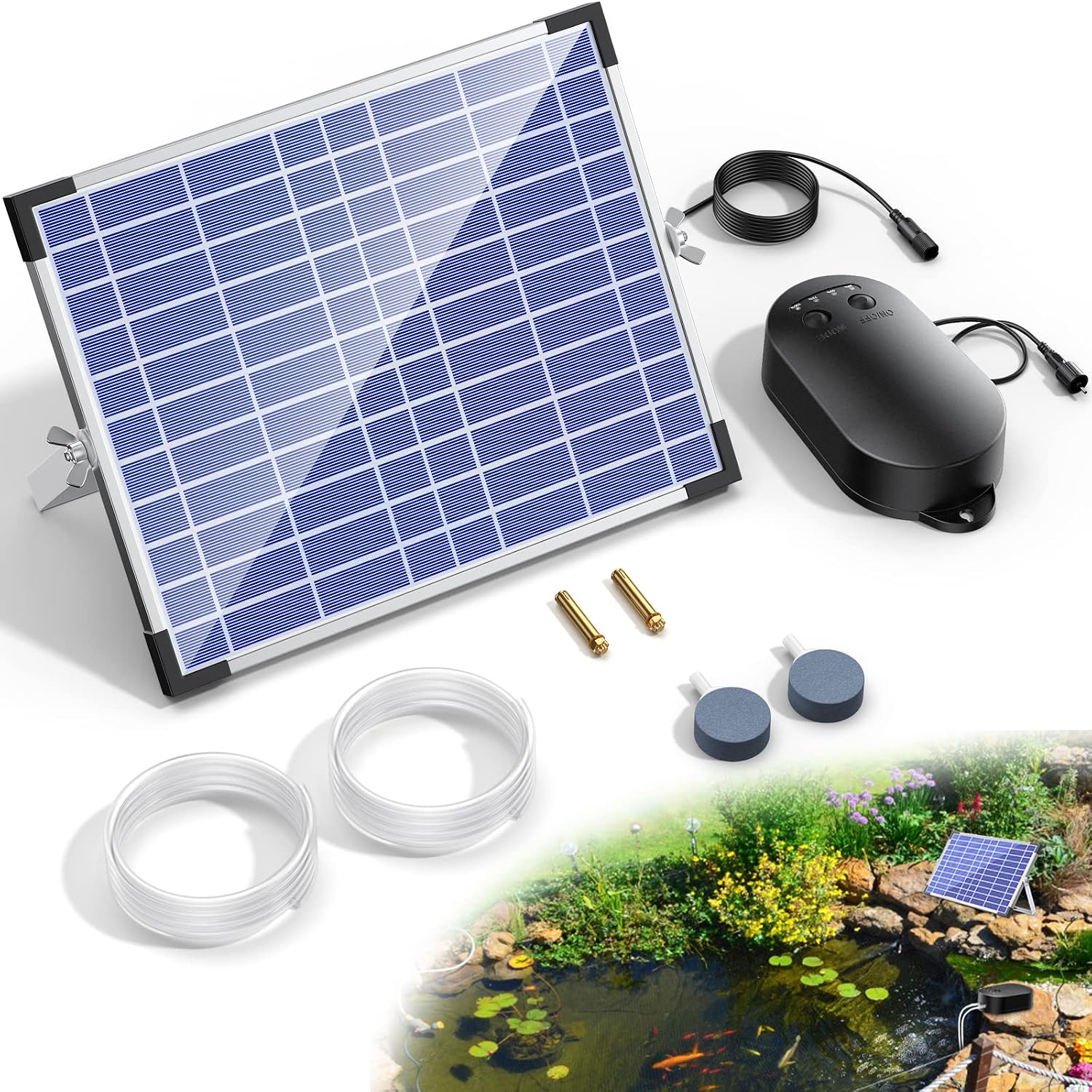
For koi ponds and larger water features, this 15W unit steps up meaningfully — two air outlets rather than one, a larger 4400mAh battery rated for up to 110 hours of runtime on a full charge (48 hours specifically in the strongest bubble mode), and a built-in power display so you can monitor battery status at a glance. At 50dB, it’s quiet enough not to disturb outdoor living spaces near the pond. The dedicated circulation mode is specifically designed for extended cloudy stretches — switch to it during multi-day overcast weather to stretch battery reserves further than continuous strong-bubble operation would allow.
Installation Tips
Keep air stones at a consistent, moderate depth. Most manufacturers specify a maximum diffuser depth (often around 3-3.5 feet) — placing stones too deep can reduce airflow efficiency and strain the pump.
Position the solar panel for maximum consistent sun, separate from the pump location if your product supports a separated design — south-facing placement with no shade obstruction throughout the day matters as much here as on any other solar device.
Switch to circulation or low-power mode during extended cloudy weather rather than running strong-bubble mode continuously — this conserves battery reserve and keeps at least some oxygenation running through a multi-day overcast stretch instead of running the battery flat.
Frequently Asked Questions
Is a solar pond aerator powerful enough for a fish pond?
It depends on pond size and fish load. For smaller, lightly stocked ponds under a few hundred gallons, a properly sized solar aerator provides adequate oxygenation. For larger, heavily stocked koi ponds (500-2,000+ gallons), a traditional electric aerator is generally the more reliable choice, since it doesn’t depend on sunlight for consistent output.
Will a solar pond aerator work at night?
Yes, as long as the battery was adequately charged during the day — quality units with a 4400mAh battery can run 48-110 hours depending on the selected mode, covering overnight operation and short cloudy stretches without issue.
How long do solar pond aerators actually last?
It varies by product quality. Independent testing has documented some budget units failing after roughly 12-17 months of use — a real durability concern worth factoring into your purchase decision. Confirm the manufacturer warranty period before buying, and keep your purchase receipt in case a replacement is needed within that window.
What happens to a solar pond aerator during extended cloudy weather?
Battery reserve gets drawn down faster than it recharges, and output may need to drop to a lower-power circulation mode to stretch remaining battery life through the stretch. Most quality units include a dedicated low-power mode specifically for this scenario. For ponds where consistent aeration is critical regardless of weather, an electric aerator avoids this limitation entirely.
How deep should I place the air stones?
Most manufacturers specify a maximum depth, often around 3-3.5 feet — check your specific product’s instructions, since placing diffusers too deep can reduce airflow efficiency and put extra strain on the pump.
Final Verdict
| Your Situation | Best Pick |
|---|---|
| Small decorative pond or water garden | NFESOLAR 3W Solar Pond Aerator |
| Larger pond or koi, need extended runtime | NFESOLAR 15W Large Solar Pond Aerator |
The Bottom Line
Solar pond aerators are a genuinely good fit for smaller ponds, off-grid properties, and situations where avoiding an electric bill outweighs the need for maximum guaranteed output. For larger, heavily stocked fish ponds where consistent aeration genuinely matters for fish survival, an electric aerator remains the more reliable choice, since it isn’t dependent on sunlight. Whichever direction you go, size generously rather than minimally, and keep an eye on battery reserve during extended cloudy stretches.
For other rural and homestead solar equipment, see our solar water pump guide and best solar fence charger guide.