This post contains affiliate links. If you buy through our links we may earn a small commission — at no extra cost to you. This never influences our recommendations.
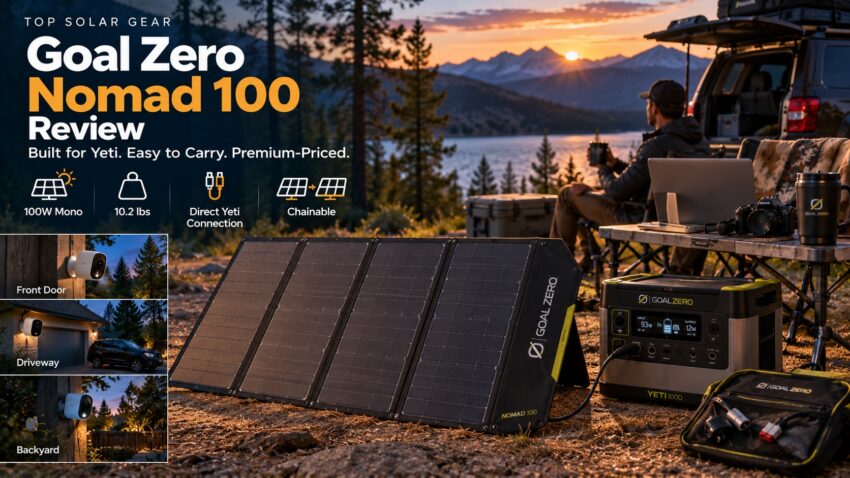
Search “Goal Zero solar panel” and you’ll land on a whole lineup — Nomad, Boulder, Ranger, in wattages from 5 to 400. The one most people actually mean is the Nomad 100.
It’s the size that makes sense for most people: enough wattage to matter, light enough to actually carry, and built to pair straight into Goal Zero’s own power stations without any guesswork.
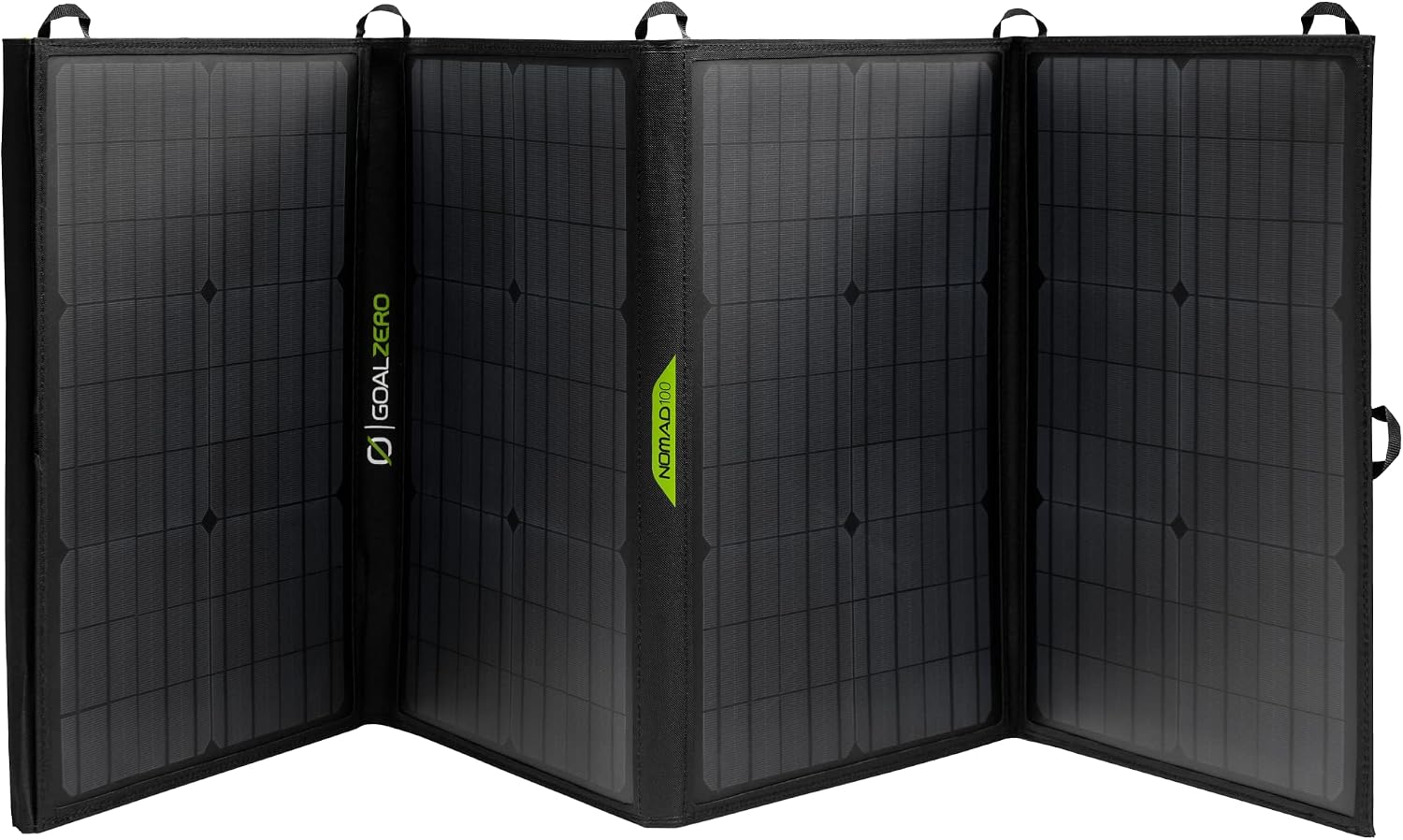
| Spec | Goal Zero Nomad 100 |
|---|---|
| Output | 100W monocrystalline |
| Weight | 10.2 lbs |
| Design | Foldable, built-in kickstand |
| Connector | Built-in 8mm cable |
| Chainable | Yes, with an 8mm-to-Anderson combiner cable |
| Weatherproof | Yes |
What You’re Actually Paying For
Goal Zero isn’t the cheapest way to get 100 watts of solar. Renogy, Anker, and half a dozen other brands sell similar-wattage panels for noticeably less.
What you’re buying instead is a panel built specifically to work with Goal Zero’s Yeti power stations — no adapters, no guessing whether the voltage lines up, just plug and go.
If you already own a Yeti, or you’re building a setup around one, that fit is worth something. If you don’t, you’re paying a premium for compatibility you won’t use.
The Compatibility Catch
That built-in 8mm connector is a Goal Zero standard, not a universal one. Own an EcoFlow, Jackery, Anker, or Bluetti power station instead? This panel won’t plug straight in.
You can bridge the gap with an adapter cable, but you’re adding a step, a part that can fail, and a voltage mismatch risk if you grab the wrong one.
Bottom line: buy this panel because you have (or plan to get) a Goal Zero Yeti. Buy a panel built for your brand if you don’t.
Nomad 100 vs. Boulder 100: Which Style Actually Fits You
This is the fork in the road Goal Zero doesn’t spell out clearly: Nomad panels fold up and travel with you, Boulder panels are rigid glass-and-aluminum built to stay put.
If you’re taking this on road trips, camping, or overlanding — anywhere you pack the gear away between uses — the Nomad’s foldable design is the right call.
If you’re mounting it once on an RV roof, a cabin, or a fixed off-grid setup and leaving it there for years, the Boulder 100 Briefcase holds up better to constant weather exposure than a panel designed to be folded and unfolded hundreds of times.
Buying the wrong style for how you’ll actually use it is the single most common regret in Goal Zero reviews — portable buyers who mounted a Nomad permanently, and stationary buyers who lugged a heavy Boulder around camp.
How Long This Actually Takes to Charge a Yeti
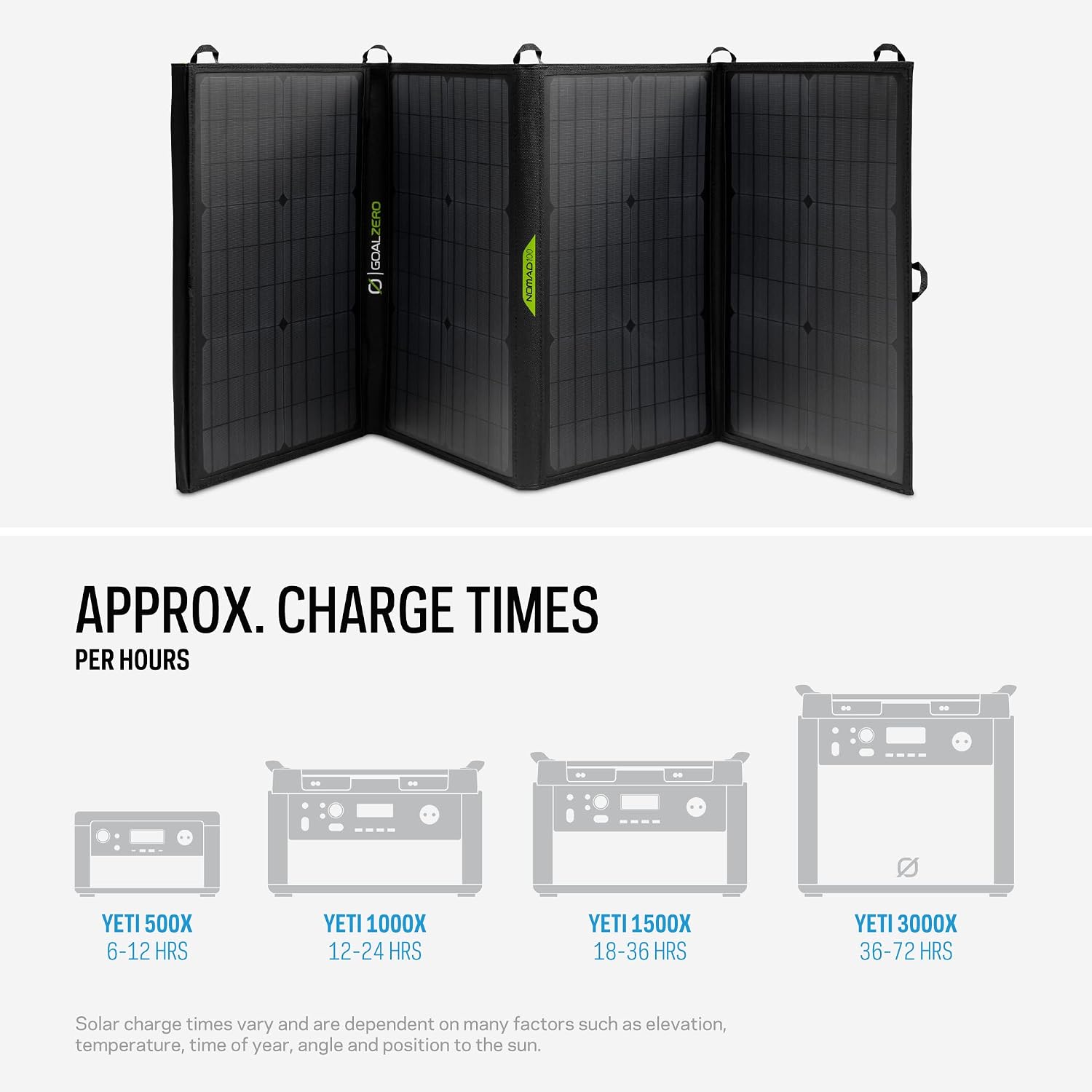
On paper, 100 watts times 5 peak sun hours is 500 watt-hours. In practice, angle, clouds, and heat eat into that — expect closer to 350-400Wh in a genuinely good day.
That means one Nomad 100 takes roughly a full day of solid sun to bring a Yeti 500 back from empty, and closer to two full days for something in the Yeti 1000 range.
That’s exactly why the chaining option matters more than it sounds — pair two Nomad 100s and you cut that charge time close to in half, which turns “maybe by tomorrow” into “done by dinner.”
For the full math on matching panel wattage to your specific power station size, see our how big of a portable power station do I need guide.
Pros: Plug-and-play with Goal Zero Yeti stations, zero adapter guesswork; chainable for more wattage later; genuinely rugged, weatherproof build; folds down small enough to actually carry.
Cons: Priced well above similar-wattage panels from other brands; proprietary 8mm connector means real friction if you own a different power station brand.
Best for: Current or future Goal Zero Yeti owners who want a panel that just works, without adapter shopping.
Goal Zero Nomad 100 Solar Panel
Full details and current price: Goal Zero Nomad 100 Solar Panel on Amazon
Frequently Asked Questions
Will the Goal Zero Nomad 100 work with my EcoFlow or Jackery power station?
Not directly — its 8mm connector is a Goal Zero standard. You’d need an adapter cable, and it’s worth checking voltage compatibility before you buy one.
Can I connect more than one Nomad 100 together?
Yes, with an 8mm-to-Anderson combiner cable, and larger Goal Zero Yeti stations can take advantage of the extra input.
Is the Nomad 100 worth the price over cheaper alternatives?
If you own or plan to own a Goal Zero Yeti, yes — the plug-and-play fit has real value. If you don’t, a similarly-rated panel built for your specific power station brand is the better buy.
How much does the Nomad 100 weigh?
10.2 lbs, and it folds down for storage and transport.
Is it weatherproof for outdoor use?
Yes, it’s built to handle outdoor conditions during use, though like most portable panels it’s not meant to be left out permanently exposed to the elements long-term.
Final Verdict
The Nomad 100 earns its price if a Goal Zero Yeti is already in your setup or on your shopping list — otherwise you’re paying for an ecosystem fit you don’t need.