This post contains affiliate links. If you buy through our links we may earn a small commission — at no extra cost to you. This never influences our recommendations.
This article is for informational purposes only and does not replace guidance from your CPAP manufacturer or healthcare provider. Always verify your specific CPAP machine’s power requirements and compatibility before relying on any backup power source, and test any setup at home before you need it during travel, camping, or an outage.
A CPAP machine isn’t optional overnight equipment — for many people, it’s the difference between safe, restful sleep and a genuinely dangerous night. That makes sizing backup power for it different from sizing power for a phone charger or a camp light. Get it right and you sleep through a storm without a second thought. Get it wrong and you’re awake at 2am wondering if the battery will make it to sunrise.
This guide covers the actual math behind CPAP power draw, what specs matter most for medical device reliability, and the best solar generators for every use case — from weekend camping to full-time home backup.
The Math: How Much Power Does Your CPAP Actually Use?
Every CPAP machine has two very different power profiles depending on one setting: the heated humidifier.
| Configuration | Typical Draw | Per Night (8 hrs) |
|---|---|---|
| No humidifier | 30–60W | 240–480Wh |
| Humidifier, low/medium heat | 60–100W | 480–800Wh |
| Humidifier, high heat + heated tubing | 100–150W | 800–1,200Wh |
The gap between “no humidifier” and “full heated humidification” roughly doubles or triples power draw. If you’re sizing a backup power source and want to maximize runtime in a pinch, turning off the heated humidifier and heated tubing is the single biggest lever you have — it can turn one night of coverage into two or three.
Find your machine’s exact number: Check the label on the bottom or back of your CPAP, or the power supply brick itself — it usually lists wattage directly, or volts and amps (multiply them for watts). For the most accurate figure, a plug-in power meter (under $20) tracks real draw over a full night, including any startup ramp that basic label numbers don’t capture.
Why Pure Sine Wave Isn’t Negotiable for Medical Devices
CPAP machines contain a brushless DC motor that depends on clean, stable power to run at the correct, consistent speed. Pure sine wave inverters replicate the smooth waveform of standard wall power (under 3% total harmonic distortion in quality units). Modified sine wave inverters deliver power in rough, stepped approximations — and CPAP motors respond to this by running hotter, buzzing audibly, and in some cases malfunctioning or shutting down entirely.
This isn’t a minor technical detail — it’s the single most important spec to verify before buying any power station for CPAP use. Every unit recommended in this guide is confirmed pure sine wave. Never use a modified sine wave inverter with a CPAP or any other sensitive medical device, regardless of price.
LiFePO4 and Depth of Discharge — Why Battery Chemistry Matters Here Specifically
For a device you may be depending on nightly or during a real emergency, battery reliability over years of use matters more than almost any other backup power scenario. LiFePO4 (LFP) batteries are the only chemistry worth considering for CPAP backup — they handle heat better (critical if the unit sits in a hot car or garage), last 3,000–4,000+ charge cycles versus 500–1,000 for older lithium-ion, and degrade far more gradually.
One additional detail worth knowing: some units allow the battery to discharge closer to 0% without protective shutoff reserving 10–15% as a safety buffer, which effectively gives you more usable capacity per rated Wh. This varies by manufacturer and model — check the spec sheet if maximizing every watt-hour matters for your situation.
Best Solar Generators for CPAP — Verified Picks
| Model | Capacity | CPAP Runtime (no humidifier) | Best For |
|---|---|---|---|
| Jackery Explorer 300 | 292Wh | ~1 night | Weekend trips, ultralight travel |
| Bluetti AC70 | 768Wh | 2–3 nights | Best value for multi-night coverage |
| EcoFlow DELTA 2 | 1,024Wh | 3–4 nights | Humidifier users, home backup |
| Jackery Explorer 1000 v2 | 1,070Wh | 3–4 nights | Daily/home use, longest battery life |
Best for Weekend Trips: Jackery Explorer 300
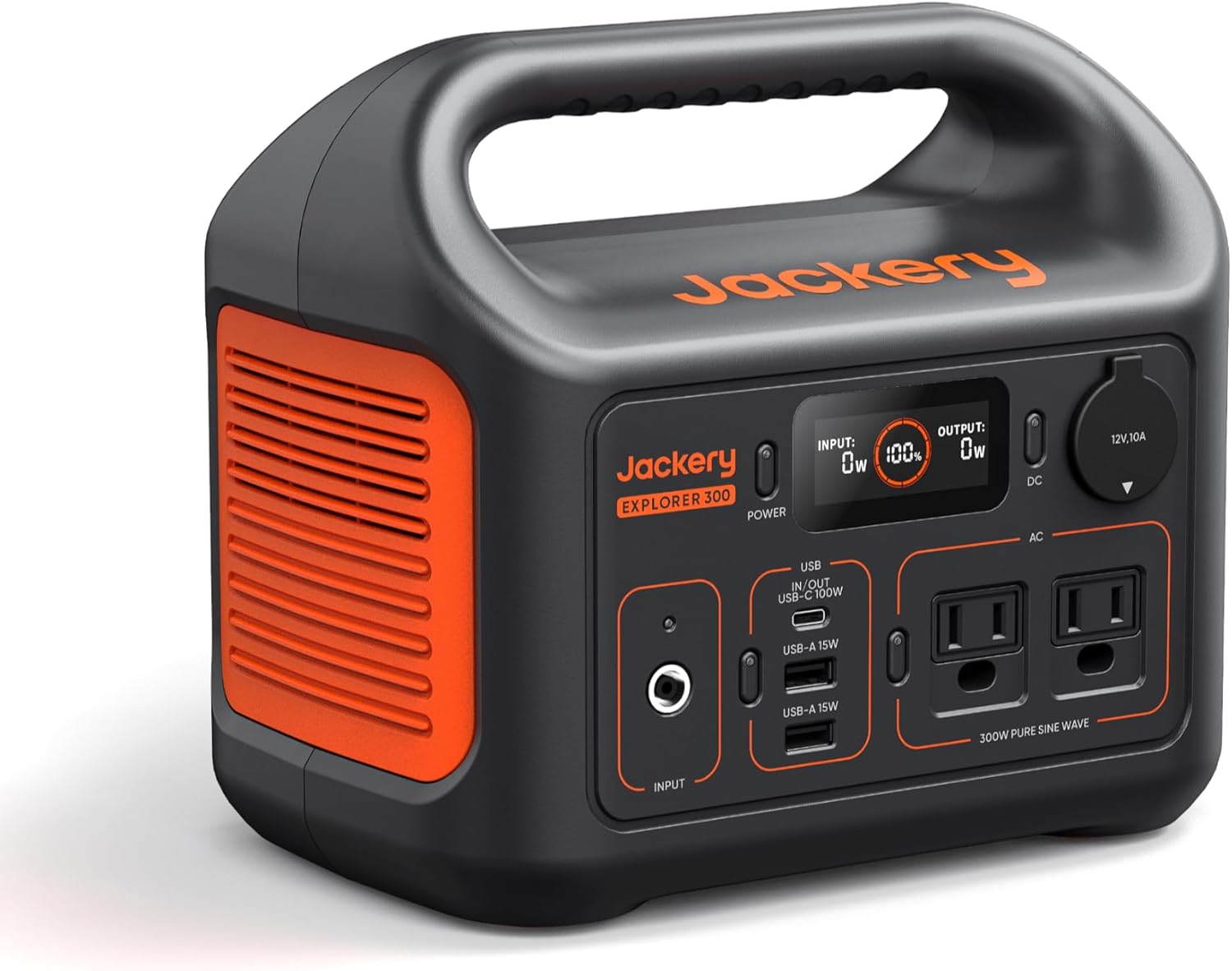
At 7.1 lbs, the Explorer 300 is genuinely the lightest practical option for anyone traveling with a CPAP for a weekend — camping, a hotel without reliable power, or a short emergency at home. Its 292Wh capacity covers roughly one full night without a humidifier, or a partial night with one enabled. Two AC outlets and pure sine wave output cover the CPAP plus a phone or tablet charging simultaneously.
The 2-hour full charge via wall outlet means quick recovery for a multi-night trip if you have access to power during the day. For anyone whose primary use case is occasional weekend camping rather than daily or emergency reliance, this is the right-sized, right-priced starting point. For the full review, see our Jackery Explorer 300 review.
Pros: Lightest option at 7.1 lbs, pure sine wave, 2-hour full charge, lowest price point, easy one-hand carry
Cons: Only 1 night of coverage without humidifier, less for humidifier users; 88W max solar input is slow to recharge
Best for: Occasional weekend camping, short trips, first-time CPAP power buyers
Best Value for Multi-Night Coverage: Bluetti AC70
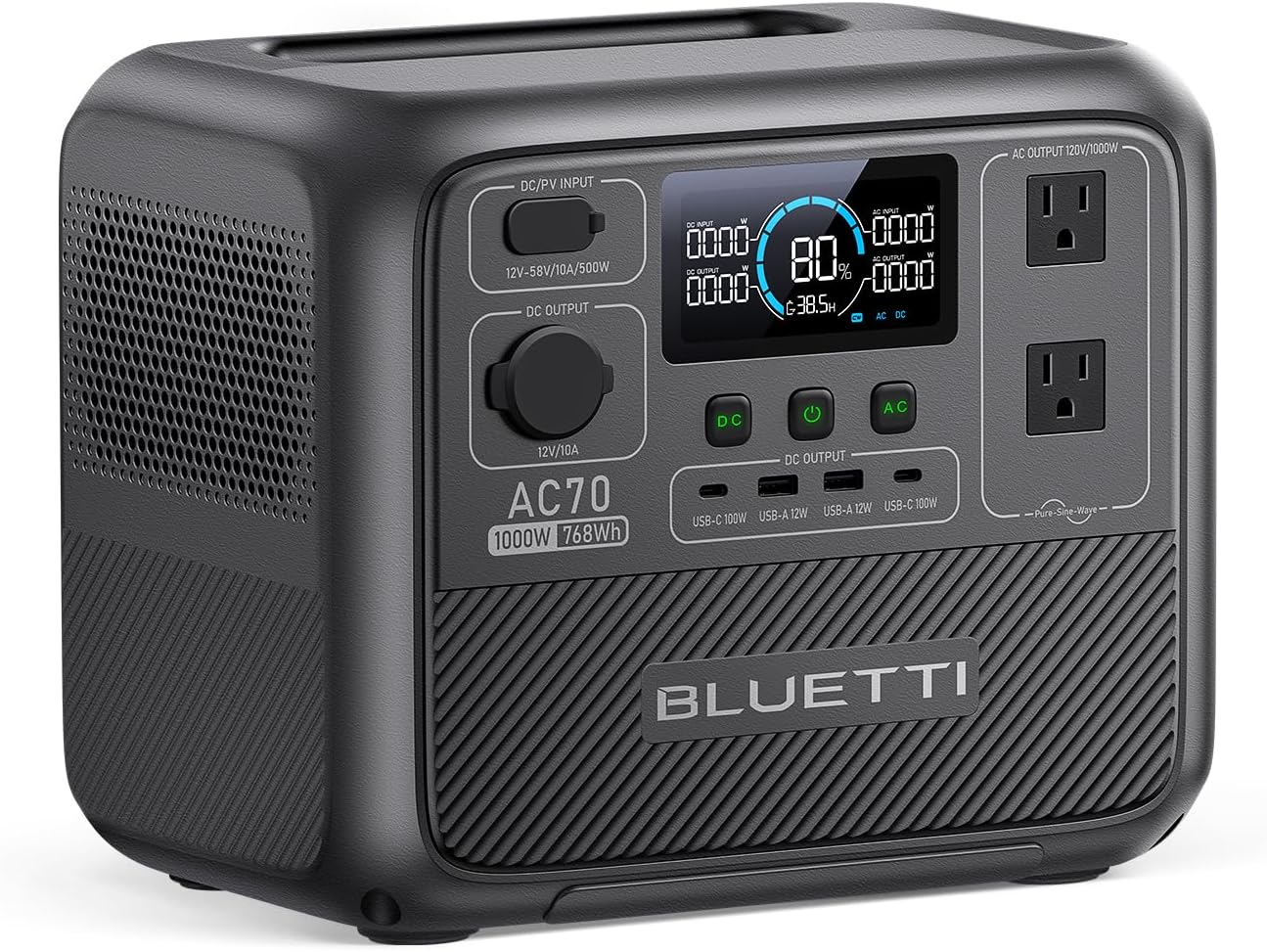
The AC70 hits a genuinely useful middle ground — 768Wh delivers 2–3 nights of CPAP use without a humidifier, or roughly 1.5–2 nights with one enabled, all in a 24 lb package that’s still manageable to move. The 45-minute AC charge to 80% is fast enough for a quick top-up between uses, and 500W max solar input means a couple of days of decent sun keeps it topped off indefinitely for extended camping or off-grid situations.
App monitoring lets you check remaining runtime at a glance rather than guessing — genuinely reassuring at 11pm when you want to confirm you’ll make it through the night. For CPAP users who camp regularly, travel frequently, or want solid multi-night emergency backup without stepping up to a full 1kWh+ unit’s price and weight, this is the pick.
Pros: 2–3 nights of coverage, 45-min AC charge, 500W solar input, app monitoring, pure sine wave, strong value
Cons: Not enough capacity for extended multi-day home backup covering other devices simultaneously
Best for: Regular campers and travelers, multi-night trips, users who want a meaningful buffer without going to 1kWh+
Best for Humidifier Users and Home Backup: EcoFlow DELTA 2
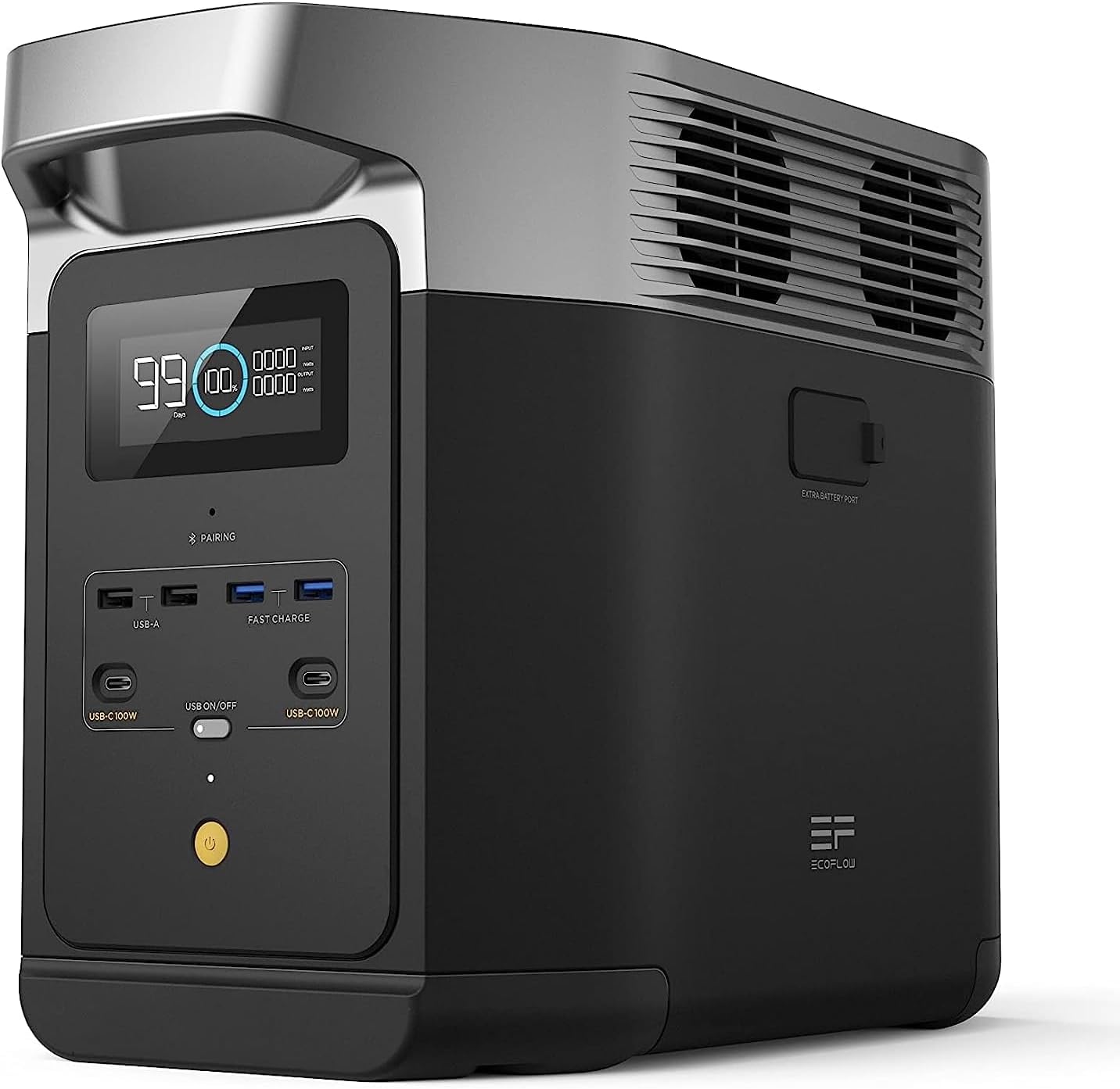
If you run your CPAP with a heated humidifier every night — pushing draw to 80–150W rather than 30–60W — the DELTA 2’s 1,024Wh capacity is the right category. It delivers roughly 3–4 nights without a humidifier, or 2–3 nights with full heated humidification enabled, giving genuine peace of mind through a multi-day outage rather than anxiously watching a percentage tick down.
The X-Boost surge handling means the CPAP’s brief startup draw is a non-issue, and the unit doubles as coverage for a router, phone charging, and lighting during the same outage — CPAP users are rarely only worried about the CPAP. App control lets you set a discharge limit to protect remaining capacity for the CPAP specifically if you’re sharing power across multiple household needs during an extended outage. 500W solar input means daily recharge is realistic if the outage stretches beyond a few days.
Pros: 3–4 nights of coverage, handles heated humidifier comfortably, X-Boost surge protection, app control with discharge limits, expandable to 3kWh
Cons: Heavier at 27 lbs; higher price point than lighter travel-focused options
Best for: Nightly heated humidifier users, home emergency backup, households needing CPAP plus other essential coverage
Best for Daily Reliance and Longevity: Jackery Explorer 1000 v2
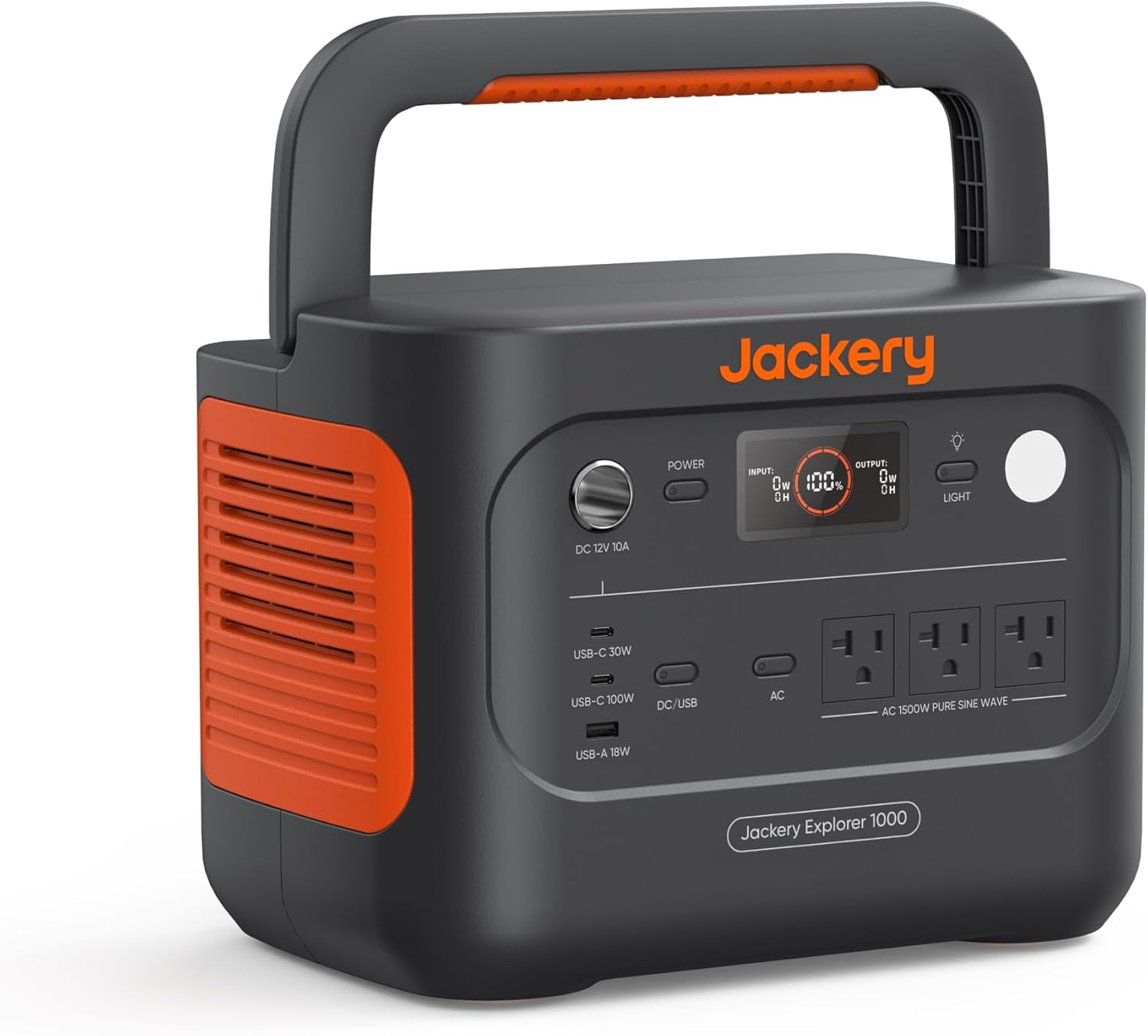
For CPAP users who depend on backup power regularly rather than occasionally — daily off-grid living, an area with frequent outages, or simply wanting the most durable long-term investment — the Explorer 1000 v2’s 4,000-cycle LFP battery is the standout number. At one cycle per week, that’s over a decade of reliable nightly use before capacity meaningfully degrades, versus roughly 8 years for 3,000-cycle competitors.
1,070Wh delivers 3–4 nights without humidifier, comparable to the DELTA 2, with the added advantage of 800W max solar input — the highest in this comparison — for anyone pairing with solar panels for genuine off-grid, indefinite CPAP power. At 23.8 lbs it’s also lighter than the DELTA 2. The one consideration: solar charging without an adapter requires Jackery’s own panels, worth factoring in if you’re building a dedicated solar setup around CPAP reliability.
Pros: 4,000 LFP cycles (longest lifespan in this comparison), 800W max solar input, lighter than DELTA 2 at 23.8 lbs, 1-hour emergency AC charge
Cons: Requires Jackery panels for plug-and-play solar; similar nightly capacity to the DELTA 2 at a comparable price
Best for: Daily or frequent CPAP reliance, off-grid living, anyone prioritizing long-term battery durability
Extending Your Runtime — Practical Steps
Turn off the heated humidifier and heated tubing. This is the single biggest lever available — it can roughly double or triple your runtime on the same battery. If medically appropriate, this is the first adjustment to make when maximizing nights of coverage matters more than comfort.
Use the DC output if your CPAP supports one. Many CPAP machines have a DC input port (a round barrel jack, usually on the back). Connecting directly via DC bypasses the inverter’s AC conversion step, reducing draw by roughly 20–30% compared to running through the AC outlet. Check whether your specific CPAP model has this port and whether a compatible DC cable is available.
Pair with a solar panel for indefinite runtime. A single 100W foldable panel in decent sun produces roughly 300–500Wh per day — more than enough to fully replace one night’s CPAP use without a humidifier. For genuine reliability through bad weather, 200W of panel capacity is a safer target than 100W. See our 100W solar panel guide for compatible options.
Test your exact setup at home before you need it. Run a full night on battery power before a trip or storm season. Note the exact percentage used, confirm the CPAP behaves normally on the inverter’s power, and know your real number rather than an estimate. This single step turns “I think it’ll be fine” into “I know it’ll be fine.”
Frequently Asked Questions
Can a solar generator damage my CPAP machine?
Only if you use a modified sine wave inverter — the risk is real and well-documented, causing motor strain, audible buzzing, and potential long-term damage. Every unit recommended in this guide is pure sine wave, which delivers power essentially identical to a wall outlet and poses no risk to your CPAP. Always confirm “pure sine wave” explicitly before buying any power station for medical device use.
How many nights will a solar generator run my CPAP?
Depends on capacity and humidifier use. Without a heated humidifier (30–60W draw), a 300Wh unit covers about 1 night, a 768Wh unit covers 2–3 nights, and a 1,000Wh+ unit covers 3–4 nights. With a heated humidifier (80–150W draw), cut those estimates roughly in half. Calculate your exact numbers using your CPAP’s actual wattage from its label or a power meter.
Do I need solar panels, or is the battery alone enough?
For short trips or occasional outages, the battery alone is typically sufficient if sized correctly for your nights of coverage. For extended camping, off-grid living, or multi-day outages where you can’t recharge via wall outlet, solar panels are what make truly indefinite CPAP power possible — recharging during the day to cover each subsequent night indefinitely.
What size solar generator do I need for CPAP if I also want to power other devices?
Add your CPAP’s nightly Wh use to whatever else you need — a phone charge (10–20Wh), a small fan (400–500Wh for a full night), a router (120–150Wh for 8 hours). A CPAP-only setup can work with a smaller unit, but if you’re also covering other essentials during a home outage, size up to 1,000Wh+ with margin, or consider a system with expansion battery packs for future flexibility.
Is it safe to use a CPAP on battery power every single night?
Yes, as long as the power source delivers stable pure sine wave output and is sized correctly for consistent full-night coverage. LiFePO4 batteries used in quality solar generators are rated for thousands of charge cycles specifically because they’re designed for exactly this kind of daily reliance — nightly cycling for years without meaningful degradation.
Final Verdict
| Your Situation | Best Pick |
|---|---|
| Weekend trips, ultralight travel | Jackery Explorer 300 (B082TMBYR6) |
| Multi-night trips, best value | Bluetti AC70 (B0CLG6FYLQ) |
| Heated humidifier users, home backup | EcoFlow DELTA 2 (B0B9XB57XM) |
| Daily reliance, longest battery life | Jackery Explorer 1000 v2 (B0D7PPG25F) |
For most CPAP users, the Bluetti AC70 hits the sweet spot of capacity, price, and portability — 2–3 nights of coverage without a humidifier, fast charging, and genuine solar recharge capability. If you run a heated humidifier nightly, step up to the EcoFlow DELTA 2 or Jackery Explorer 1000 v2 for the extra capacity buffer that heated humidification demands. For occasional weekend trips, the Jackery Explorer 300 covers the essentials without unnecessary weight or cost.
Sleep is not something to gamble on. Whichever unit you choose, test it at home first, know your exact runtime, and pair it with a solar panel if you want genuinely indefinite off-grid coverage. For solar panels sized to these units, see our 100W solar panel guide. For broader emergency backup planning beyond just the CPAP, our solar generator for home backup guide covers whole-household sizing.