This post contains affiliate links. If you buy through our links we may earn a small commission — at no extra cost to you. This never influences our recommendations.
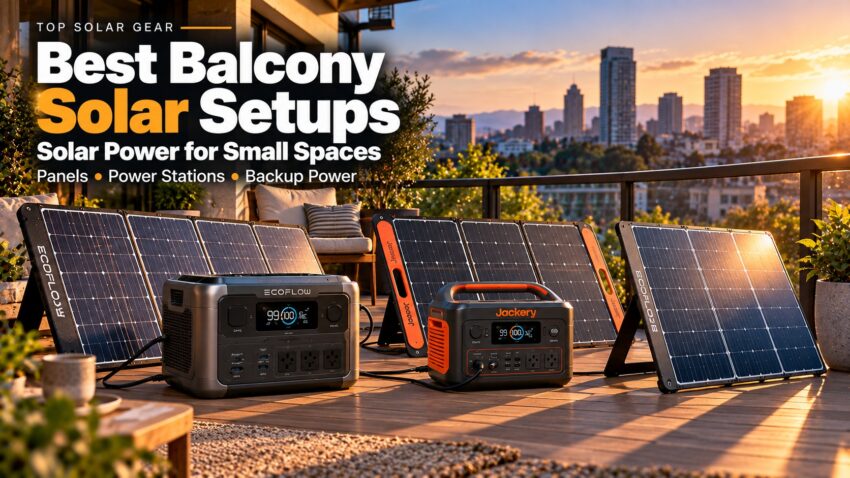
Balcony solar panels are small plug-in kits: one to four panels on a railing, patio or fence, plugged into a regular wall outlet through a microinverter.
Germany has more than a million of them. In the US, they only became legal in a handful of states over 2025 and 2026. Here’s where they’re legal, what they really produce, and three setups worth a look.
Quick Comparison
| Setup | Battery | Max AC Output | Solar Included | Works in Any State? |
|---|---|---|---|---|
| EcoFlow DELTA 3 Max Plus + 220W Panel | 2,048Wh | 3,000W | 220W bifacial panel | Yes |
| Jackery Solar Generator 1000 v2 + 200W Panel | 1,070Wh | 1,500W | 200W panel | Yes |
| EcoFlow 220W Bifacial Portable Panel | None (panel only) | — | 220W bifacial panel | Yes |
How Balcony Solar Works
The microinverter turns the panels’ DC power into 120V AC and feeds it into your home through a normal outlet. Your appliances use it first, so you pull less from the grid while the sun is out.
The safety piece is the microinverter. A proper unit shuts off instantly when the grid goes down or the plug is pulled, so the prongs never carry live power.
That also means a plain plug-in system gives you no power during an outage.
Look for UL 3700, the US safety standard written for this gear, or at minimum UL 1741. Certified kits such as EcoFlow’s STREAM series and the APsystems EZ1 microinverter are sold mainly through brand stores and solar retailers. Skip cheap microinverters with no UL listing.
Is Balcony Solar Legal in Your State?
Utah went first with HB 340 in March 2025. As of October 2026, ten states have signed plug-in solar laws:
Utah, Maine, Virginia, Maryland, Colorado, Connecticut, Vermont, New Hampshire, New Jersey and California.
Two of those aren’t in force yet. California’s law takes effect January 1, 2027, and New Jersey’s on March 1, 2027.
Most share the same basics: up to 1,200 watts per home, a standard 120V outlet, certified equipment, and no utility interconnection agreement. New Jersey also stops landlords and HOAs from banning it outright, while California’s law carries a 2030 sunset clause.
Everywhere else, it’s a grey area. Your utility may still require an interconnection application, so call them before you plug anything in.
How Much Power Will You Actually Get?
Here’s our rough estimate for an 800W balcony kit: 800W × about 5 sun hours × 65–80% real-world efficiency ≈ 2.6–3.2kWh a day in good sun.
That’s the best case. Panels hanging flat on a railing, facing east or west, or shaded by the floor above make less, so a realistic estimate for a typical balcony is 1.5–2.5kWh a day (roughly 550–900kWh a year).
At 17¢ per kWh, that’s about $90–155 a year. At California-style rates near 35¢, it’s closer to $190–320.
Weight matters too: a full-size 400W rigid panel can weigh around 45 lb, so secure it against wind.
Best Balcony Solar Setups (Legal in Every State)
These setups skip the grid connection entirely. The panel charges a portable power station, and you plug devices into the station, so no state law or utility approval applies.
They won’t trim your bill automatically, but they give you backup power in an outage, which a plain plug-in kit can’t.
1. EcoFlow DELTA 3 Max Plus + 220W Panel — Best for Home Backup
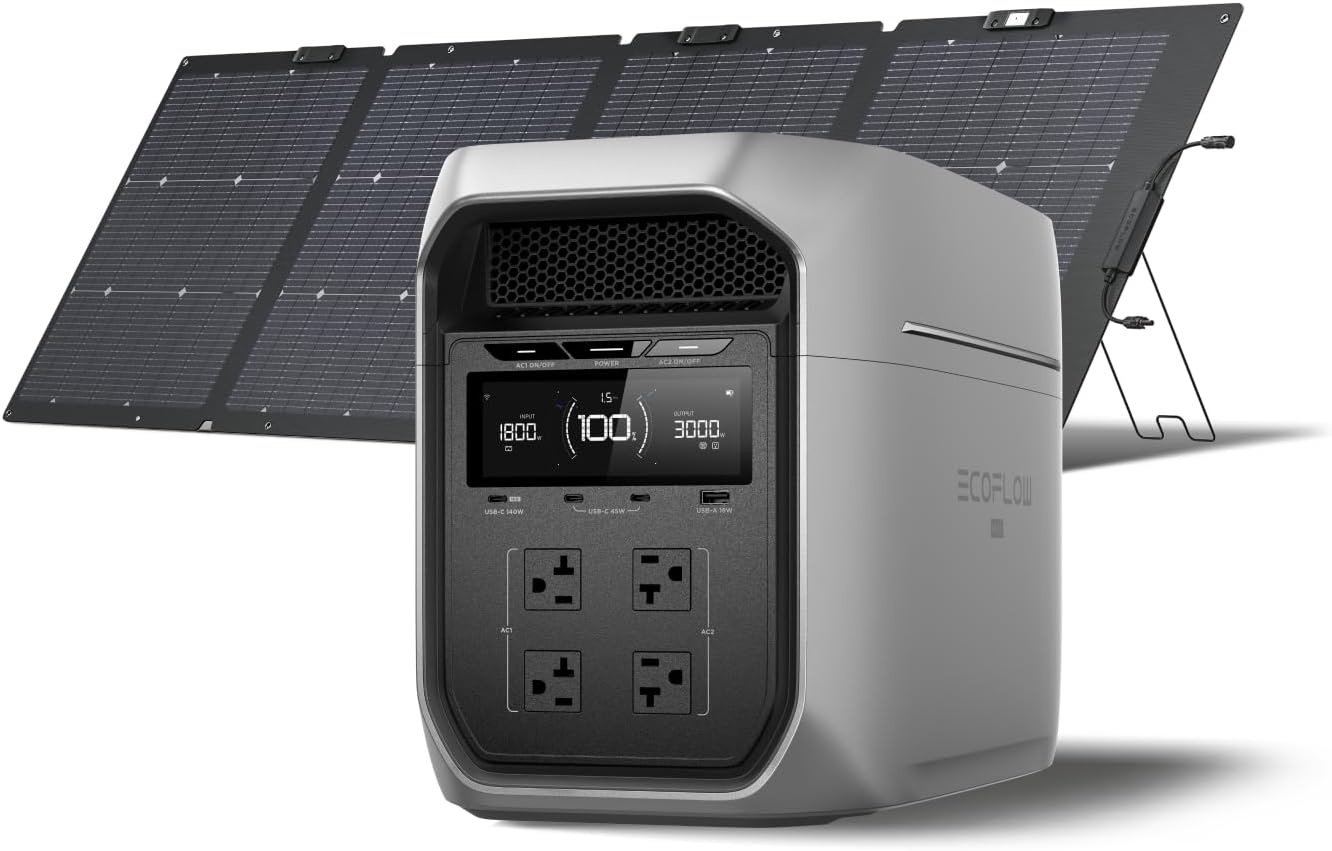
This bundle pairs a 2,048Wh LFP power station with a 220W bifacial panel. With 3,000W of output, it can run a fridge, a microwave, or a window AC unit during an outage.
The catch is the mismatch. Our estimate for the 220W panel is about 715–880Wh a day in good sun, so refilling the battery from solar alone takes two to three sunny days.
| Pros | Cons |
|---|---|
| Big battery for real outage backup | One panel is small for this battery |
| 3,000W output runs most appliances | Heavy to move on and off a balcony |
| Bifacial panel picks up reflected light | Expensive if you only want bill savings |
Best for: Apartment dwellers who want serious blackout backup topped up by balcony solar.
Full details and current price: EcoFlow DELTA 3 Max Plus with 220W Solar Panel on Amazon
2. Jackery Solar Generator 1000 v2 + 200W Panel — Best All-Rounder
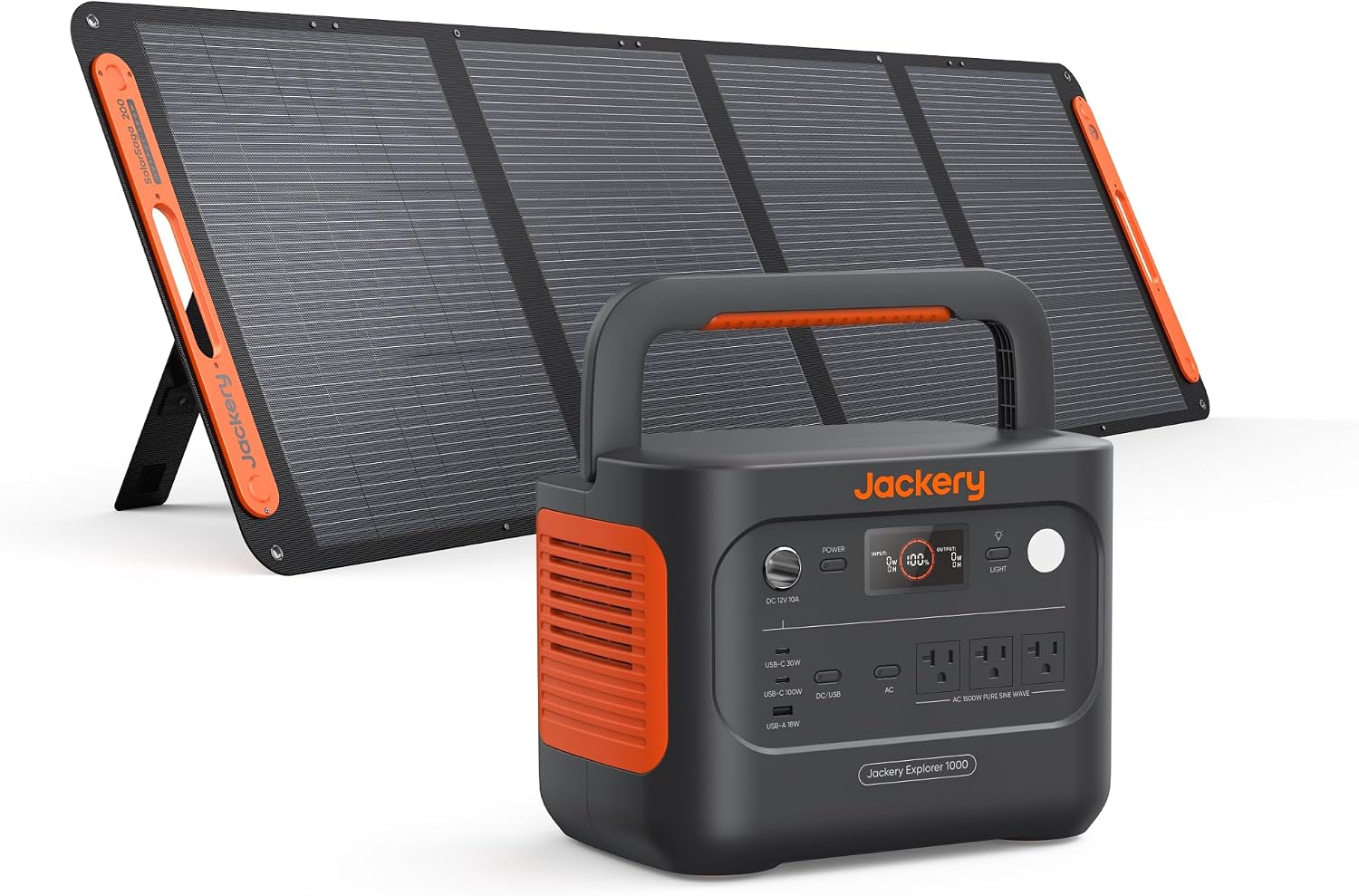
The Jackery pairs a 1,070Wh LFP station with a 200W folding panel. Its 1,500W output covers a laptop, router, TV and small kitchen appliances.
The catch: the station only accepts Jackery’s own panel connector, so third-party panels need an adapter. Our estimate for the 200W panel is about 650–800Wh a day, close to a full refill on a sunny day.
| Pros | Cons |
|---|---|
| Panel and battery are well matched | Proprietary solar connector |
| Easy to carry between balcony and room | 1,500W won’t run larger appliances |
| Doubles as camping power | Doesn’t offset your bill automatically |
Best for: Renters who want daily solar use plus outage backup without a huge battery.
Full details and current price: Jackery Solar Generator 1000 v2 with 200W Solar Panel on Amazon
3. EcoFlow 220W Bifacial Portable Panel — Best Panel If You Own a Station
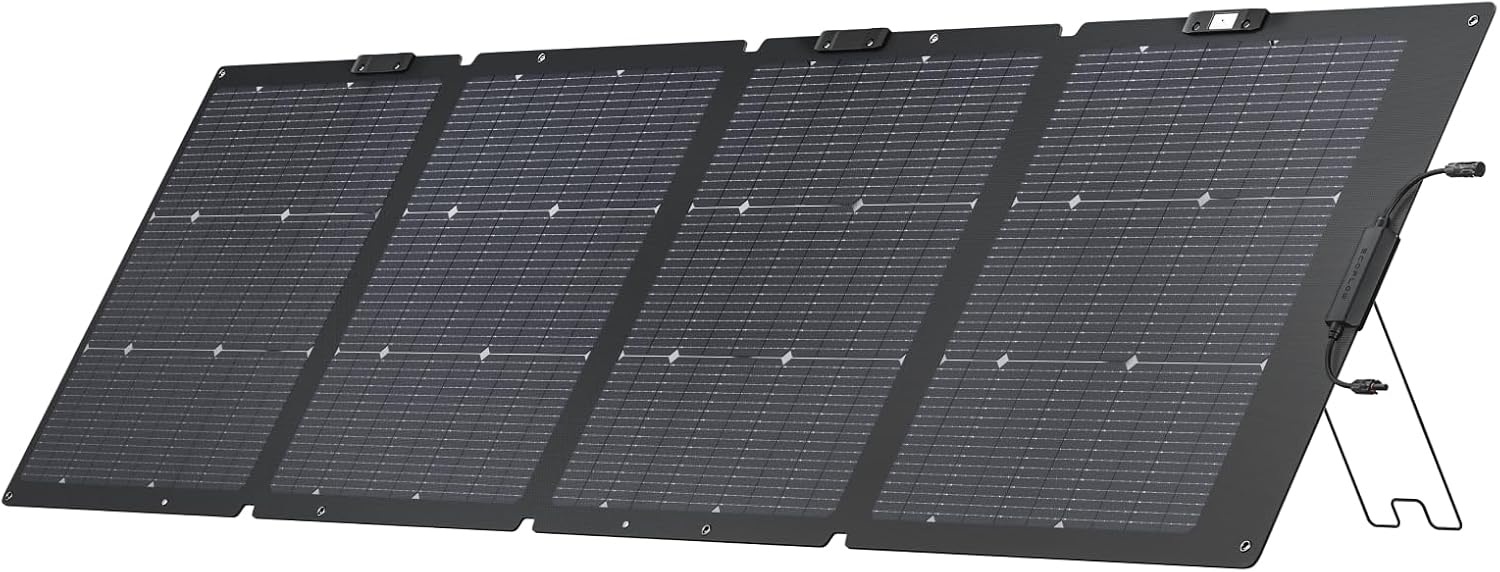
If you already have a power station, this is the panel to put on the balcony. It’s bifacial, so the back side catches light bouncing off a balcony floor or wall, and the IP68 rating means a passing shower won’t hurt it.
The catch: it stands on a kickstand rather than hanging on a railing, so it needs sunny floor space. Check your station’s solar input before you buy.
| Pros | Cons |
|---|---|
| Bifacial cells add output from reflected light | Needs floor space, not railing-mounted |
| IP68 weatherproofing | Check input compatibility with your station |
| Folds flat for storage | Panel only, no battery |
Best for: Power station owners who want a dedicated, high-output balcony panel.
Full details and current price: EcoFlow 220W Bifacial Portable Solar Panel on Amazon
For more bundles like this, see our guide to the best portable power station with solar panel, or read the full Jackery Explorer 1000 v2 review.
Frequently Asked Questions
Can I plug any solar panel into my wall outlet?
No. You need a certified plug-in microinverter between the panel and the outlet, and your state needs to allow it.
Do I need permission from my utility or landlord?
In states with plug-in laws, you usually don’t need a utility agreement. Landlord rules vary; only New Jersey bans blanket prohibitions so far, so check your lease.
Will balcony solar work during a power outage?
Not on its own. The microinverter shuts off with the grid, so you need a battery system or power station for backup.
How many watts can I install on a balcony?
Most US laws cap plug-in systems at 1,200 watts per home. Space and weight usually limit a balcony to two panels.
How long does balcony solar take to pay for itself?
Using our savings estimates above, payback for a typical kit lands around 4 to 10+ years, depending on your electric rate and sun. To size a battery-based setup, our guide on how big of a portable power station you need walks through the math.
Final Verdict
| Setup | Best For |
|---|---|
| EcoFlow DELTA 3 Max Plus + 220W Panel | Serious blackout backup with balcony solar top-ups |
| Jackery Solar Generator 1000 v2 + 200W Panel | Daily solar use and backup in a portable size |
| EcoFlow 220W Bifacial Portable Panel | Adding balcony solar to a station you already own |
If you live in one of the ten plug-in states, a certified plug-in kit is now a simple, legal way to trim your bill. Anywhere else, or if you also want outage backup, a power station and balcony panel gets you solar today.