This post contains affiliate links. If you buy through our links we may earn a small commission — at no extra cost to you. This never influences our recommendations.
Ring sells two genuinely different solar panel products, and they are not interchangeable — one is built for Ring’s battery-powered cameras, the other for Ring’s video doorbells, using different voltage and connector types entirely. Buying the wrong one means it simply won’t charge your device. This guide clears up that confusion first, then covers honest picks and a real efficiency trap that catches many buyers off guard.
Camera Panel vs Doorbell Panel — Know Which You Need First
| Your Device | Panel You Need |
|---|---|
| Stick Up Cam Battery/Pro, Outdoor Cam Plus, Spotlight Cam Battery/Plus/Pro | Ring Solar Panel (camera version) |
| Ring Video Doorbell (any battery-powered version) | Ring Solar Charger for Video Doorbell (separate product) |
| Floodlight Cam (wired or plug-in), Stick Up Cam Wired/Plug-in | Not compatible with any solar panel — these aren’t battery-powered |
Ring’s doorbells use a different charging voltage and connector than its cameras — a doorbell-specific solar charger will not work on a camera, and vice versa. If you own both a Ring camera and a Ring doorbell, you need two separate solar panel purchases, not one panel that covers everything.
The Efficiency Trap Most Buyers Miss
This is genuinely important and easy to overlook: mounting a solar panel behind window glass or a porch screen dramatically reduces its effectiveness. Standard window glass blocks most of the UV and infrared light solar cells rely on, cutting efficiency by 50-80%. A screen reduces output by 20-40% depending on mesh density. For reliable charging, the panel needs genuine direct outdoor exposure — not “outdoor-facing from inside,” but physically mounted outside in unobstructed sunlight.
How Much Sun Does It Actually Need?
Ring recommends at least 2-3 hours of direct sunlight daily for reliable performance, with most sources suggesting 3-4 hours as a safer target, especially for cameras seeing heavy daily use. More sun exposure improves charging speed and helps offset battery drain from frequent motion events — a camera positioned somewhere with limited daily sun may still slowly lose charge over time even with the panel attached, particularly during shorter winter days.
Official Ring Panel vs Third-Party Alternatives
Ring’s own panel offers the tightest compatibility and best weather sealing, since it’s purpose-built and factory-tested for Ring’s specific devices. Reputable third-party brands like Wasserstein have closed much of the performance gap, often offering comparable or higher wattage and notably longer cables (13+ feet vs Ring’s shorter stock cable) at a lower price — genuinely useful if your ideal mounting spot for maximum sun is further from the camera than Ring’s included cable reaches.
The trade-off: third-party panels require you to carefully match connector type and confirm at least 3.5W of output for reliable charging. Get this wrong and you risk inadequate charging or connection issues — always verify compatibility with your exact camera model before ordering a third-party panel.
Best Ring Solar Panels — Verified Picks
Best Official Option: Ring Solar Panel (2nd Generation), 5W

Ring’s own 2nd generation panel delivers up to 60% faster charging than the original version under comparable sunlight, according to Ring’s own testing. Compatible with the Stick Up Cam, Stick Up Cam Pro, Spotlight Cam Plus, and Spotlight Cam Pro via built-in USB-C or an included adapter for older models, it offers the tightest possible compatibility guarantee and the best factory weather sealing of any option. If avoiding any compatibility guesswork is your top priority, this is the safest starting point.
Best Third-Party Camera Option: Wasserstein Solar Panel for Ring Cameras
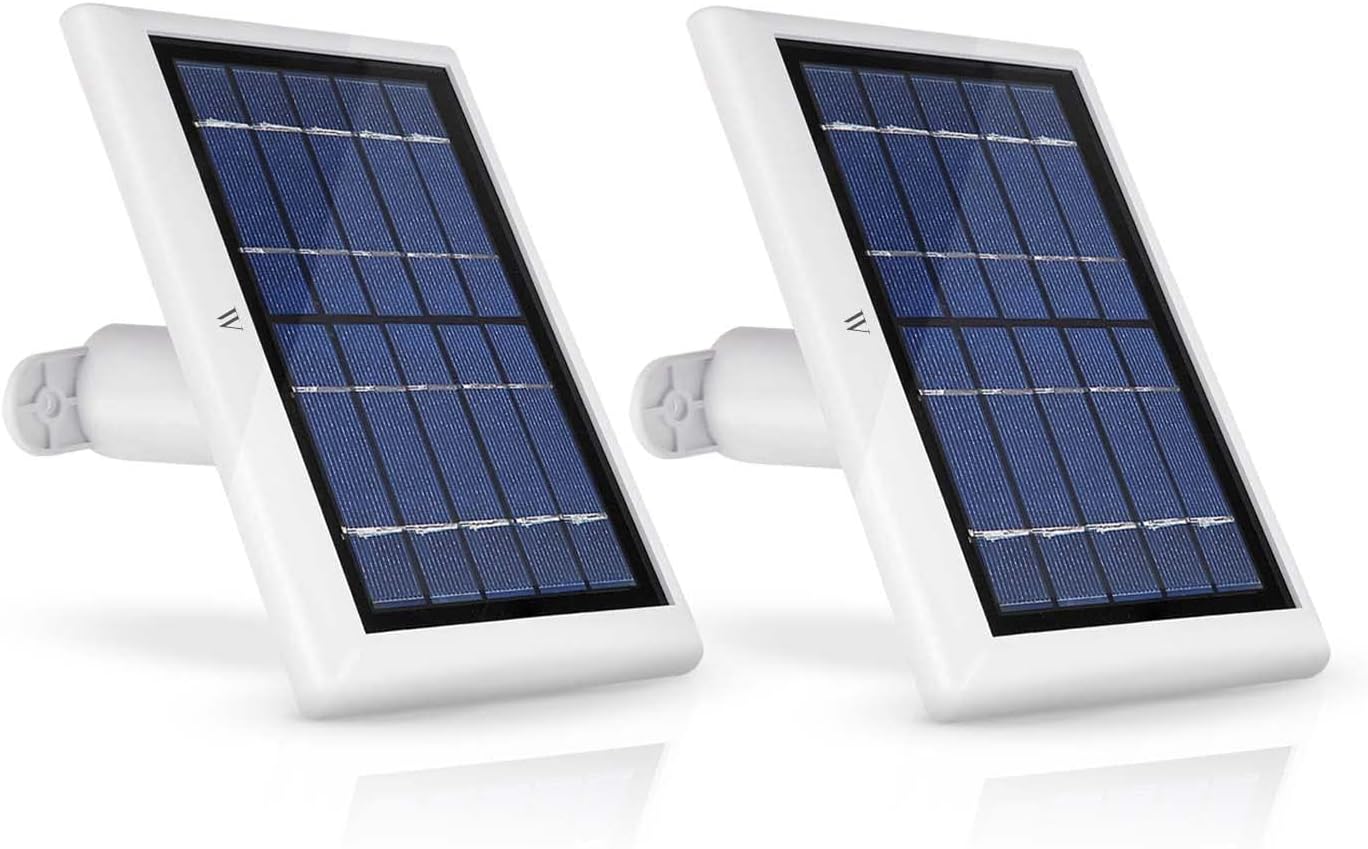
Wasserstein is an official Made for Google/Fitbit smart home accessory partner, and their Ring-compatible panel offers a genuinely longer 13.1ft cable — more than double some official Ring cables — giving real flexibility to mount the panel in the sunniest available spot regardless of where the camera itself sits. Compatible with the Spotlight Cam/Plus/Pro Battery, Stick Up Cam/Pro Battery, and Outdoor Cam Plus Battery, with a 360-degree adjustable mount for precise sun-angle positioning.
For Video Doorbells Specifically: Wasserstein Solar Panel for Ring Video Doorbell 2
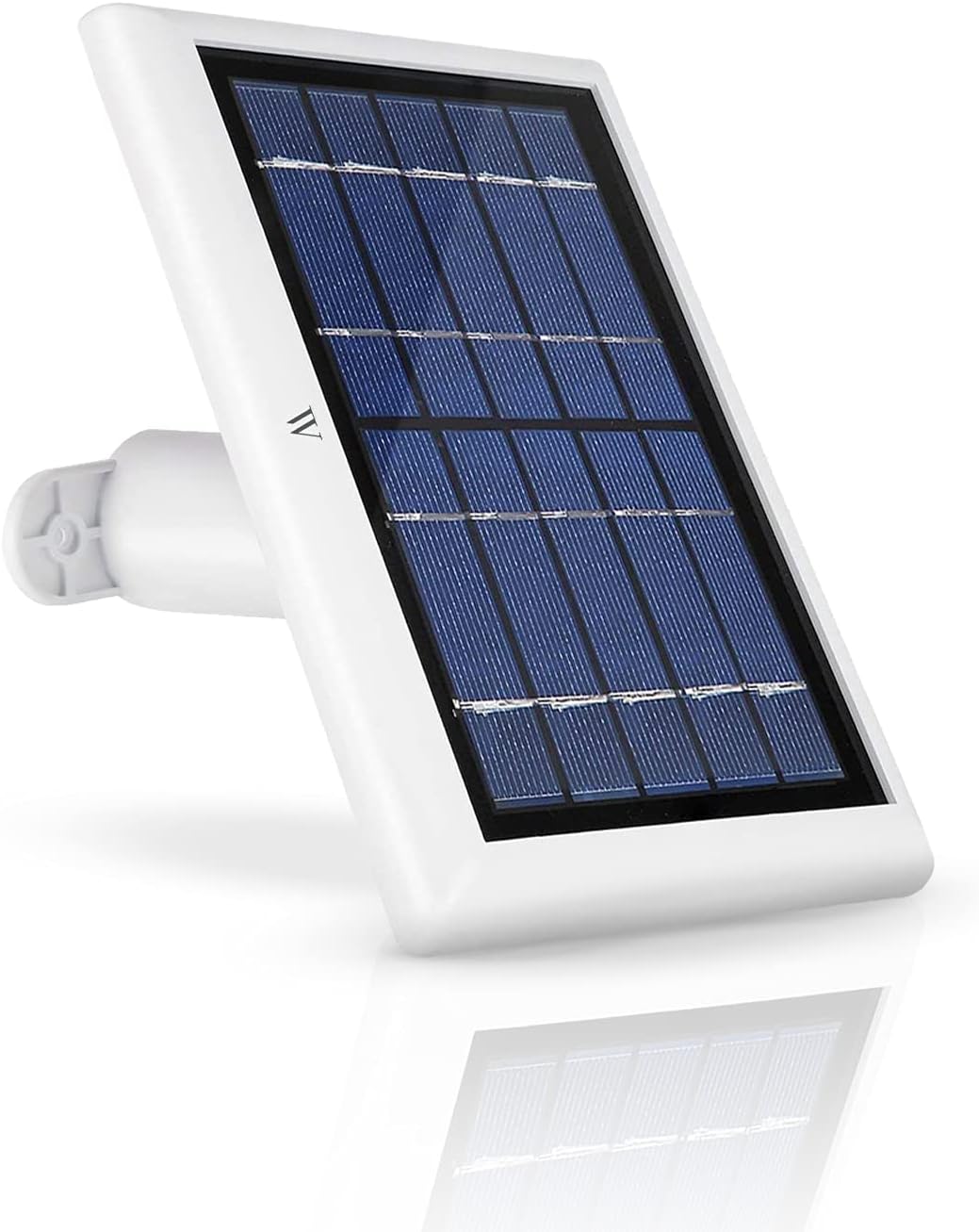
This is a completely separate product line from the camera panels above, built specifically for the Ring Video Doorbell 2’s distinct connector and voltage. A 360-degree adjustable mount allows year-round sun optimization as the sun’s angle changes seasonally, and the weather-resistant housing is built for genuine outdoor exposure. One important compatibility note directly from the manufacturer: if your Doorbell 2’s serial number (specifically the four digits following “bhrg4”) falls between 1715 and 2417, it is incompatible with this solar charger — Ring Support offers a free exchange for affected units, so check your specific doorbell’s serial number before assuming compatibility.
Frequently Asked Questions
Can I use the same solar panel for my Ring camera and Ring doorbell?
No — Ring’s cameras and doorbells use different charging voltages and connector types, so the two solar panel products are not interchangeable. If you own both device types, you need to purchase the correct panel for each separately.
Will a Ring solar panel work if mounted behind a window or screen?
Not well — standard window glass blocks most of the UV and infrared light solar cells need, cutting efficiency by 50-80%. A screen reduces output by 20-40%. For reliable charging, the panel needs genuine direct outdoor exposure, not indirect light through glass or mesh.
How much sunlight does a Ring solar panel need daily?
Ring recommends at least 2-3 hours of direct sunlight daily, with 3-4 hours being a safer target for cameras experiencing heavy motion-triggered use. Shorter winter days or shaded mounting locations may result in gradual battery drain even with the panel installed.
Can I use a third-party solar panel instead of Ring’s official one?
Yes, as long as the panel delivers at least 3.5W of output and the connector matches your specific Ring device’s charging port. Reputable brands like Wasserstein offer comparable or better specs (often with longer cables) at a lower price, but always verify compatibility with your exact model before ordering.
Is a solar panel compatible with the Ring Floodlight Cam or wired Stick Up Cam?
No — solar panels only work with Ring’s battery-powered devices. Wired and plug-in models, including the Floodlight Cam (wired/plug-in) and Stick Up Cam Wired/Plug-in, draw continuous power directly and have no battery for a solar panel to charge.
Final Verdict
| Your Situation | Best Pick |
|---|---|
| Want guaranteed compatibility, best weather sealing | Ring Solar Panel (2nd Generation) |
| Need a longer cable for flexible mounting | Wasserstein Solar Panel for Ring Cameras |
| Charging a Ring Video Doorbell specifically | Wasserstein Solar Panel for Ring Video Doorbell 2 |
The Bottom Line
Before buying anything, confirm which device you’re charging — a camera-specific panel and a doorbell-specific panel are genuinely different products with no crossover. Ring’s own official panel remains the safest choice for guaranteed compatibility, while Wasserstein’s third-party options offer longer cables and comparable performance at a lower price for both cameras and doorbells. Whichever you choose, mount it in genuine direct outdoor sun — not behind glass or a screen — for it to actually work as intended.
For other outdoor solar accessories, see our solar motion sensor lights guide.