This post contains affiliate links. If you buy through our links we may earn a small commission — at no extra cost to you. This never influences our recommendations.
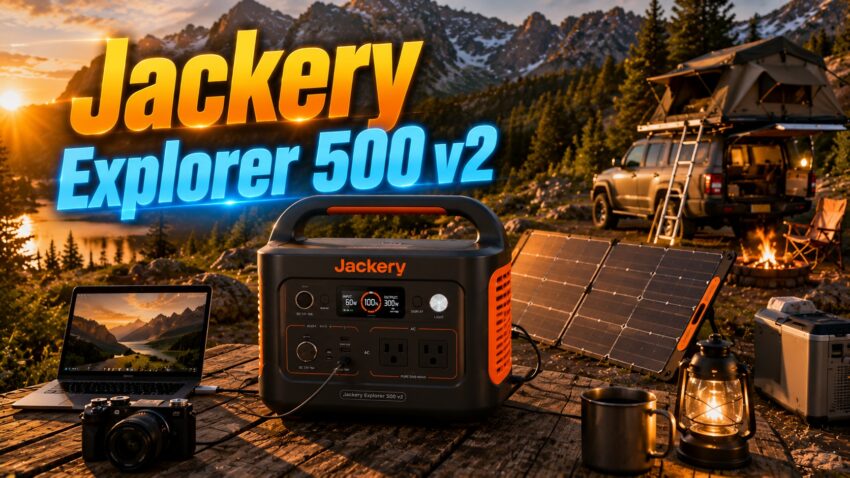
If you’ve searched “Jackery 500” recently, you’ve probably noticed something confusing: there are two different products using that name. The original Explorer 500 has been one of Jackery’s best-selling power stations for years. The new Explorer 500 v2 is a significant upgrade — different battery chemistry, faster charging, and a much longer lifespan. They’re not the same product, and which one you find depends on where you’re shopping.
This guide covers both: what each unit does, how they compare spec-for-spec, what the 500Wh class of power station actually works for, and which version to buy in 2026.
Jackery Explorer 500 v2 — Full Specs
| Spec | Explorer 500 v2 | Explorer 500 (Original) |
|---|---|---|
| Capacity | 512Wh | 518Wh |
| Battery chemistry | LiFePO4 (LFP) | NMC lithium-ion |
| Cycle life | 6,000 cycles to 80% | ~500 cycles to 80% |
| Rated lifespan | 10+ years | ~2–3 years daily use |
| AC output | 500W continuous / 1,000W surge | 500W continuous / 1,000W surge |
| AC outlets | 2× pure sine wave | 1× pure sine wave |
| USB-C output | Yes — 100W PD | No |
| USB-A ports | 2× | 3× |
| DC outputs | 12V car port | 2× DC barrel + car port |
| AC charge time (0–80%) | 52 minutes | ~7.5 hours |
| Solar input max | 100W | 65W effective |
| UPS function | Yes — 10ms switchover | No |
| Weight | 14 lbs | 13.3 lbs |
| Warranty | 5 years | 2 years (new) / 6 months (renewed) |
The spec difference that matters most is not capacity — it’s the battery chemistry. The v2 switched from NMC to LiFePO4. That’s the same upgrade that separates budget power stations from professional-grade ones, and it changes the long-term value calculation significantly.
Why the Battery Chemistry Upgrade Matters So Much
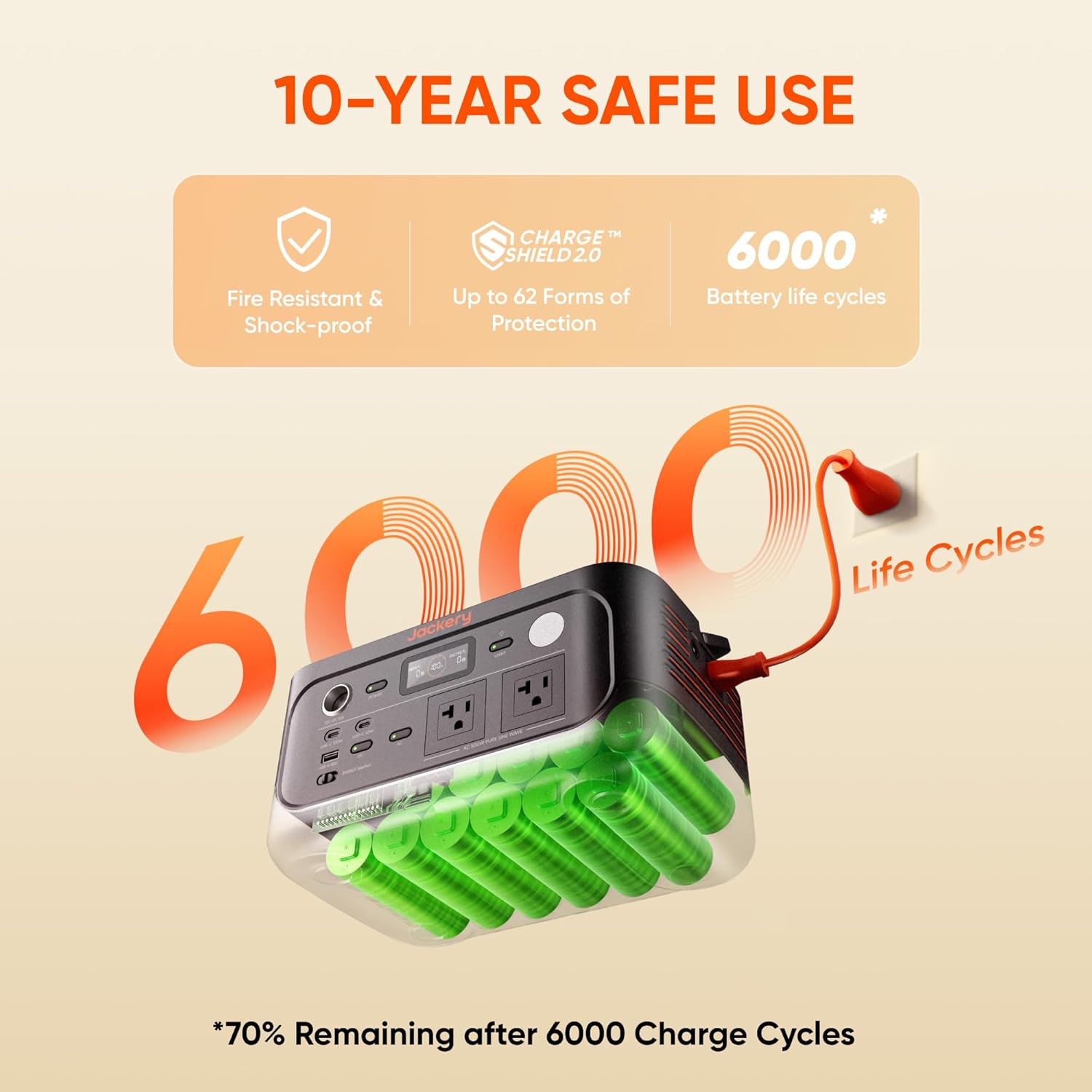
The original Explorer 500’s NMC battery is rated for approximately 500 charge cycles to 80% capacity. If you use it once a day, it degrades noticeably within two years. The v2’s LiFePO4 battery is rated for 6,000 cycles — twelve times as many — before hitting the same 80% threshold. Daily use for 10+ years from the same unit.
LiFePO4 is also safer at high temperatures and during fast charging. The original 500 takes 7.5 hours to charge from a wall outlet. The v2 goes from 0–80% in 52 minutes via AC — the fastest charging in its class. That’s a meaningful real-world difference: plugging in for an hour before leaving for a camping trip versus overnight charging.
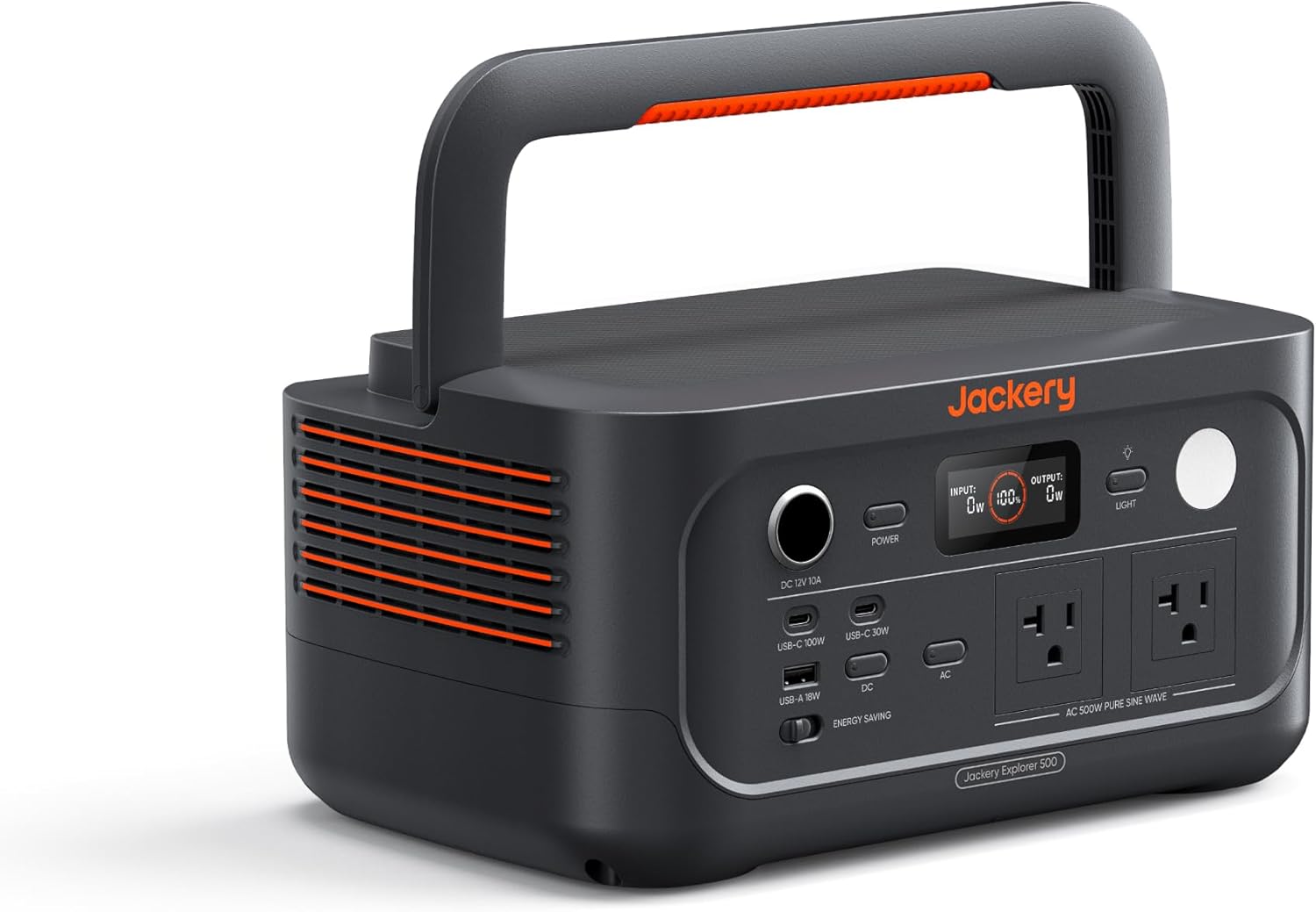
The v2 also adds a second AC outlet, a 100W USB-C PD port, and a 10ms UPS function that the original 500 lacks entirely. These aren’t minor spec bumps — the v2 is a substantially different product at a similar price point.
What 500Wh Actually Powers — Real-World Runtimes
The 500Wh class is the sweet spot for camping, weekend trips, and short-term emergency backup. Here’s what to realistically expect:
| Device | Draw | Estimated Runtime |
|---|---|---|
| Laptop (60W) | 60W | ~7 hours |
| Phone charging (10W) | 10W | ~40–50 charges |
| Mini fridge (45W cycling) | 45W avg | ~8–10 hours |
| CPAP (no humidifier, 30W) | 30W | ~2–3 nights |
| CPAP (with humidifier, 80W) | 80W | ~5–6 hours |
| LED lights (20W) | 20W | ~20 hours |
| Wi-Fi router (15W) | 15W | ~25 hours |
| Box fan (50W) | 50W | ~8 hours |
| TV — 40″ LED (60W) | 60W | ~7 hours |
Formula for any device: 512Wh × 0.85 (efficiency factor) ÷ device wattage = hours of runtime. The 0.85 accounts for inverter conversion losses — always apply this factor or you’ll overestimate runtime.
What the 500 won’t run: Hair dryers (1,000–1,875W), electric kettles (1,200W+), toasters (800–1,500W), microwave ovens (700–1,100W). Any appliance above 500W continuous draw will trigger the overload protection automatically.
Solar Charging the Jackery 500 v2
The Explorer 500 v2 accepts up to 100W of solar input, compared to the original’s effective cap of ~65W due to its charge controller design. Paired with a 100W solar panel in good conditions, the v2 charges in roughly 5–6 hours of direct sunlight — usable for a full day of camping if you set the panel out in the morning.
Jackery’s own SolarSaga 100W panel is the plug-and-play option — direct connector compatibility, no adapters needed. Third-party panels work but require an MC4 to DC8020 adapter (not included). For portable off-grid charging, see our 100W solar panel guide for compatible third-party options that pair well with the Explorer 500 v2.
For faster solar recharge, two panels can be connected in parallel to push toward the maximum solar input rating. Check the v2’s spec sheet for maximum input voltage before connecting any panel — exceeding the voltage ceiling will trip the protection circuit.
The UPS Function — Why It Matters for Home Backup
The v2’s 10ms UPS (Uninterruptible Power Supply) switchover is a feature the original 500 entirely lacked, and it’s useful for more than it sounds. When mains power cuts, the v2 switches to battery in 10 milliseconds — fast enough that most electronics don’t register the interruption. Routers, modems, desktop computers, NAS drives, and CPAP machines all continue running without a hiccup.
This makes the 500 v2 genuinely useful as a home UPS for essential devices during power outages, not just a camping power station you occasionally plug in. At 512Wh, it won’t run your whole home — but it will keep your internet, a few lights, a CPAP, and phone charging running through a typical overnight outage. For longer outages or higher loads, see our solar generator for home backup guide for the right capacity and output for whole-home coverage.
Who Should Buy the Jackery Explorer 500 v2
Best for:
- Weekend camping trips — runs a mini fridge, charges devices, powers lights all weekend on one charge
- CPAP users who camp or experience frequent outages — 2–3 nights without humidifier, the UPS function means no mid-night interruptions
- Work-from-home backup — keeps internet, laptop, and monitor running through most outages
- Van life supplementary power — pairs cleanly with a 100W rooftop panel for light daily use
- Anyone who wants a power station they won’t replace in 5 years — the 6,000-cycle LFP battery makes this a long-term buy
Not the right fit if:
- You need to run appliances above 500W — a toaster, hair dryer, or microwave needs the Explorer 2000 Plus or higher
- You want whole-home emergency backup — 512Wh runs essentials for one night, not multiple days of full household power
- Budget is tight — the original Explorer 500 in renewed condition is cheaper and still competent for light, infrequent use
Explorer 500 v2 vs Explorer 300 — Which Size?
The Explorer 300 (292Wh) is roughly half the capacity at about $100 less. It covers phones, a laptop, and lighting for a weekend trip — but won’t run a mini fridge overnight or a CPAP for multiple nights. If your power needs are truly minimal (devices only, no appliances), the 300 saves money and weight. If a mini fridge, fan, or CPAP is on your list, the 500 v2 is the right step up. See our Jackery Explorer 300 review for the full comparison.
Explorer 500 v2 vs Explorer 1000 v2 — When to Step Up
The Explorer 1000 v2 (1,070Wh) doubles the capacity and raises the continuous AC output to 1,500W — which opens up appliances the 500 v2 can’t touch: electric pots, most microwave ovens, power tools under 1,500W. If you’re running an off-grid cabin, a full van life setup, or want genuine multi-day home backup, the 1000 v2 is the right call. The 500 v2 is better when portability and quick recharge matter more than raw capacity. For the full breakdown of the power station lineup, see our portable power station guide.
Frequently Asked Questions
What’s the difference between the Jackery 500 and the Jackery 500 v2?
The core difference is battery chemistry. The original Explorer 500 uses NMC lithium-ion rated for ~500 cycles. The v2 uses LiFePO4 rated for 6,000 cycles — a 12× lifespan difference. The v2 also charges in 52 minutes vs 7.5 hours for the original, adds a second AC outlet, 100W USB-C PD, and a 10ms UPS function. At similar price points, the v2 is the significantly better long-term buy.
Can the Jackery 500 power a CPAP machine?
Yes. A CPAP without a heated humidifier draws 30–60W and runs for 2–3 nights on one charge. With the heated humidifier enabled, draw jumps to 80W+ and runtime drops to around 5–6 hours per charge. The v2’s UPS function also ensures the CPAP doesn’t cut out when switching from mains to battery power. Always check your specific CPAP’s wattage before relying on it — draw varies significantly between models and pressure settings.
How long does the Jackery 500 v2 take to charge?
Via AC wall outlet: 0–80% in 52 minutes, full charge in roughly 75 minutes. Via solar (100W panel in direct sunlight): 5–6 hours. Via car outlet: approximately 6 hours. The AC fast charging is the standout specification in this class — the original Explorer 500 took 7.5 hours via AC by comparison.
Can I run a refrigerator on the Jackery 500?
A 12V compressor camping fridge drawing 40–50W runs for 8–10 hours on a full charge. A standard household refrigerator typically draws 100–400W when the compressor runs — within the 500W output limit, but the 512Wh capacity won’t last long. For home fridge backup, count on 2–4 hours depending on your fridge’s draw and cycling frequency. The 500 is adequate for short outages; for multi-day backup, step up to the 1000 v2 or higher.
Does the Jackery 500 v2 have a pass-through charging?
Yes — you can charge the unit and power connected devices simultaneously. This is useful for using it as a desktop UPS or keeping it plugged in at camp while devices charge from it. Running in pass-through for extended periods is not recommended as a permanent setup — like any lithium battery, it’s healthiest when allowed to charge, discharge, and rest in cycles.
Final Verdict
| Your Situation | Recommendation |
|---|---|
| Best version to buy in 2026 | Jackery Explorer 500 v2 — LFP, 52-min charge, UPS |
| Tightest budget, light use only | Explorer 500 original (renewed) — lower upfront cost |
| Need more than 500W output | Step up to Explorer 1000 v2 |
| Devices only, no appliances | Consider Explorer 300 — smaller, lighter, cheaper |
The Jackery Explorer 500 v2 is the easy recommendation for anyone shopping in the 500Wh class in 2026. The LiFePO4 battery upgrade, 52-minute AC charging, second AC outlet, 100W USB-C PD, and UPS function make it a substantially better product than the original at a price that’s remained competitive. It’s the power station that makes sense for weekend camping, CPAP users, and home backup for essentials — and with 6,000 cycles rated lifespan, it’s a buy-once product for most users.
Check the Jackery Explorer 500 v2 on Amazon →
If you’re comparing across the full Jackery lineup, our Explorer 2000 Plus review covers the top of the range, and our portable power station guide ranks all the major options across every budget and use case.