This post contains affiliate links. If you buy through our links we may earn a small commission — at no extra cost to you. This never influences our recommendations.
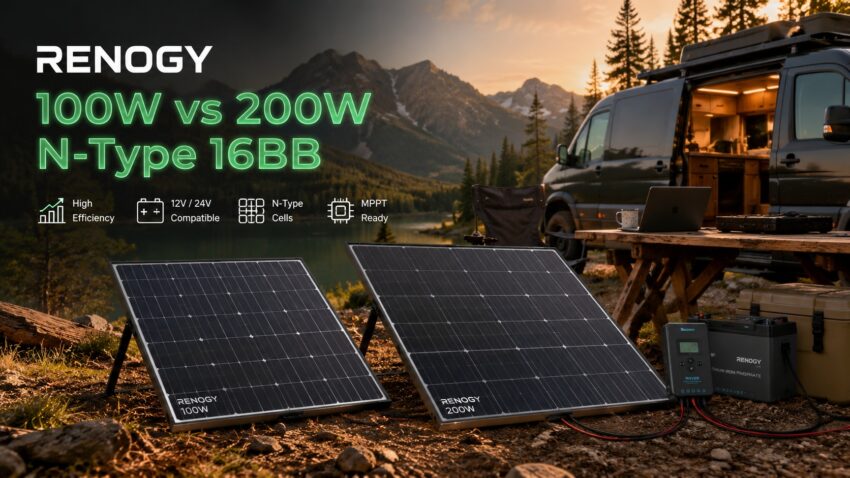
Renogy’s N-Type 16BB solar panel line comes in both 100W and 200W configurations, and the “24V” labeling on some listings trips up buyers who assume it means the panel only works on a 24V system. This guide covers the full spec sheet for both sizes, clears up what “24V” actually means on the label, and helps you pick the right size for your setup.
What “24V” on the Label Actually Means
This is worth clarifying directly, since it’s a genuine point of confusion in product listings. When a Renogy panel is titled “200 Watt 24 Volt Monocrystalline Solar Panel,” that phrase describes which battery system voltage the panel is suitable for — it doesn’t mean the panel itself only outputs 24V or only works with a 24V battery. Renogy’s own product documentation confirms these N-Type panels are compatible with both 12V and 24V battery systems, giving genuine installation flexibility regardless of which voltage label appears in the title.
Full Specifications — Both Sizes
| Spec | 100W N-Type 16BB | 200W N-Type 16BB |
|---|---|---|
| Cell technology | N-Type, 16BB (16 busbar) | N-Type, 16BB (16 busbar) |
| Efficiency | 25% | 25% |
| Compatible systems | 12V/24V | 12V/24V |
| Open-circuit voltage | Under 25V (compatible with most MPPT/PWM controllers) | ~40V (check controller max PV input) |
| Weatherproofing | IP65 | IP67 (junction box), IP65 |
| Temperature coefficient | -0.29%/°C | Low, similar range |
| Weight/size vs PERC equivalent | 8% lighter, 11% smaller | 7.5% lighter, 11.7% smaller |
| Degradation | ≤1% year one, ≤0.4% annually after | ≤1% year one, ≤0.4% annually after |
| Warranty | Manufacturer’s warranty available on request | 10-year product, 25-year 80% power output |
| Best for | Small setups, expandable arrays, tight roof space | Larger single-panel installations, RV/van roofs |
N-Type vs Older PERC — Why the Cell Technology Matters
Both panel sizes use Renogy’s current N-Type 16BB cell technology, a genuine step up from the older PERC (p-type) panels still common in the budget segment. N-Type cells deliver roughly 20W more output than a same-sized PERC panel, largely because the 16-busbar grid design improves photoelectric conversion efficiency while reducing the risk of hot spots and microcracks that shorten a panel’s usable life. The lower temperature coefficient also matters in practice — it minimizes power loss in high heat, which is exactly when off-grid systems in hot climates need output the most.
Best Renogy N-Type Panels — 100W and 200W
Renogy 100W N-Type 16BB Solar Panel
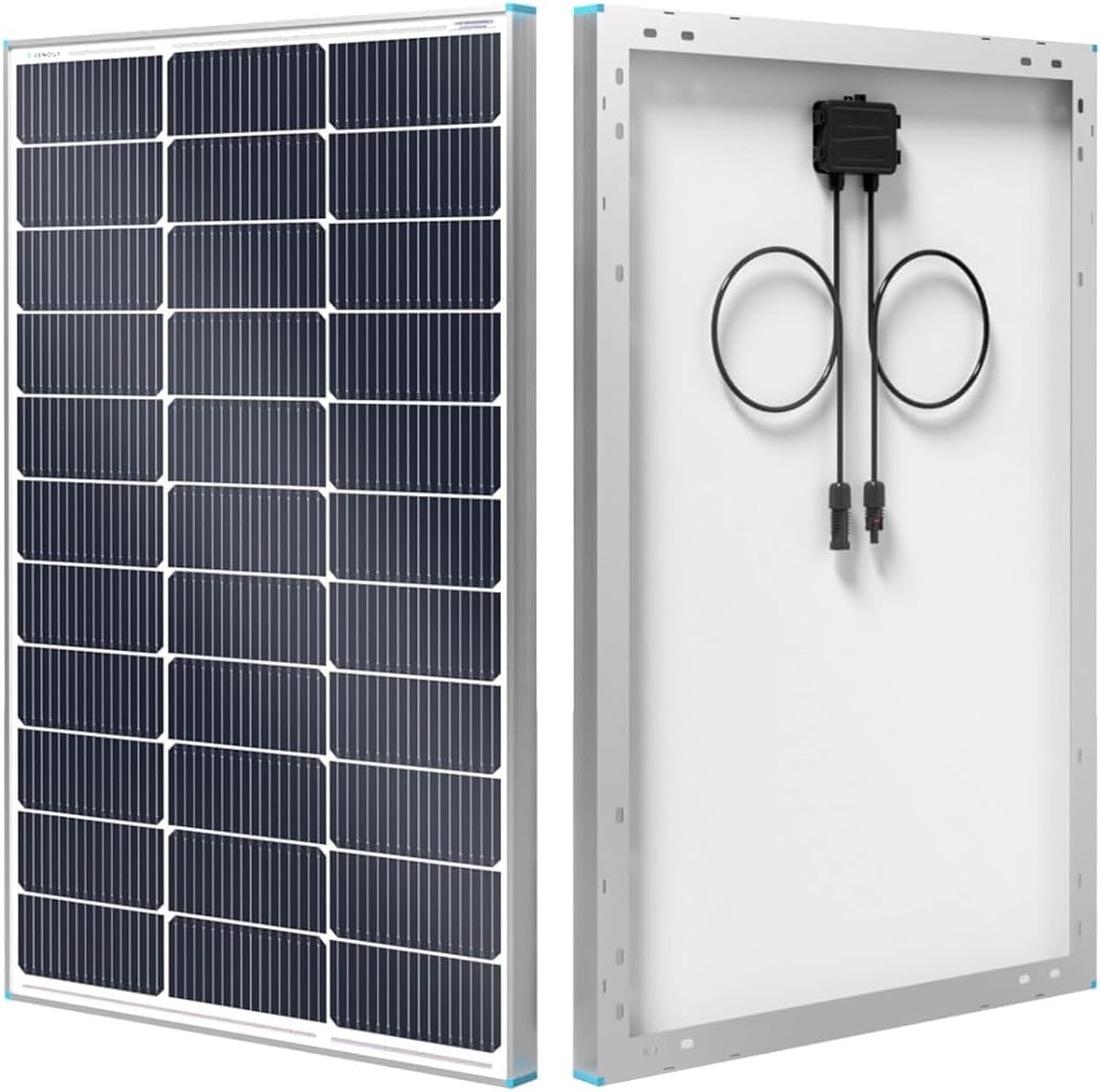
The 100W panel is the more flexible choice for irregular roof layouts — small cabins, sheds, and expandable off-grid arrays where fitting panels around vents and obstacles matters more than maximizing output from a single unit. At 25% efficiency with the same N-Type 16BB cell technology as the larger panel, it delivers the same per-watt performance advantages in a smaller, lighter, easier-to-position package. Open-circuit voltage under 25V means it works with virtually any MPPT or PWM controller on the market without special sizing considerations.
Renogy 200W N-Type 16BB Solar Panel (24V)
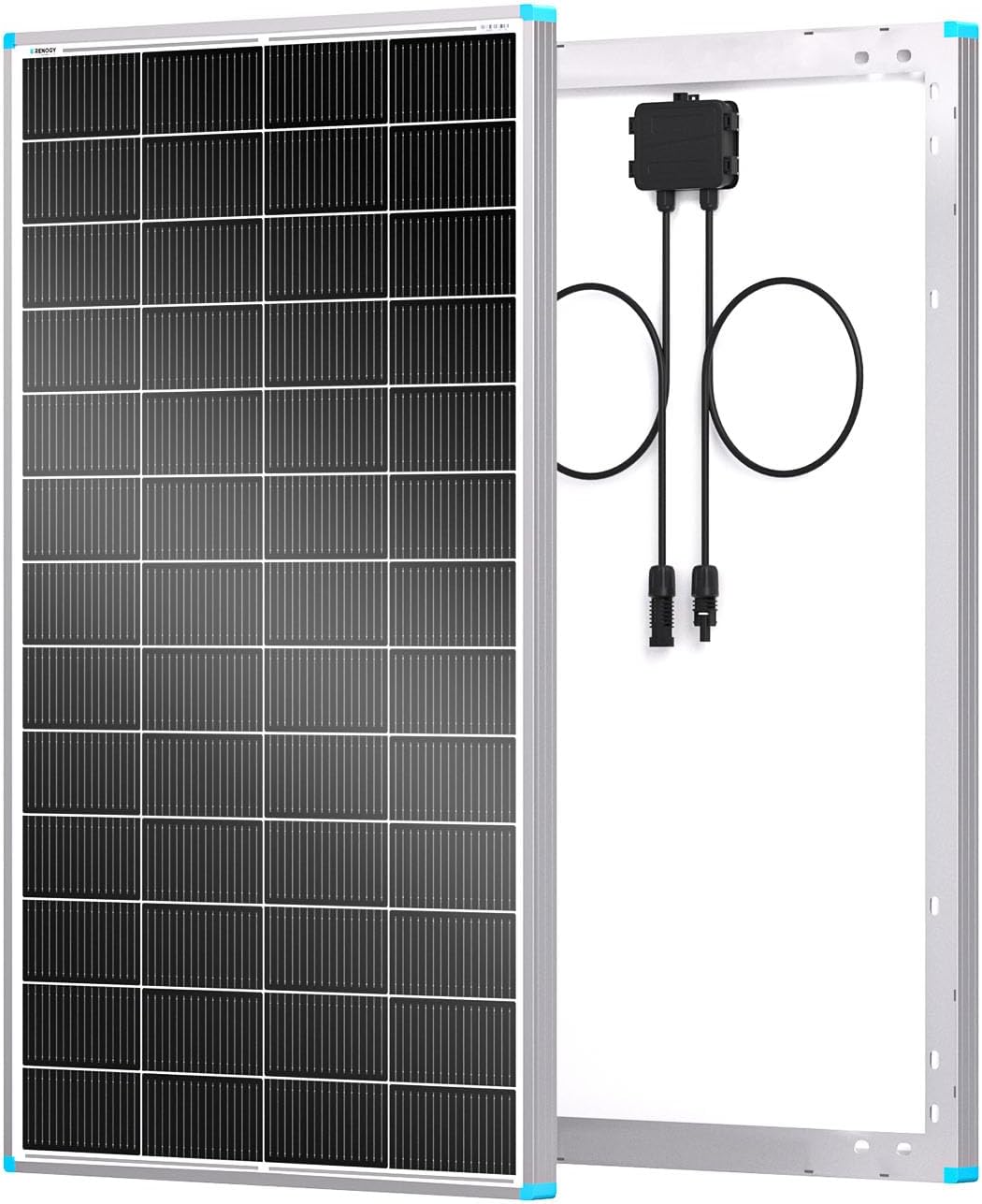
The 200W panel delivers more watts per square foot of mounting space in a single unit — the right choice when you have a clear, uninterrupted roof or ground-mount area and want to minimize the number of panels you’re wiring and mounting. Despite the “24V” in the product name, it remains fully compatible with 12V systems as well. The roughly 40V open-circuit voltage means you’ll want to confirm your charge controller’s maximum PV input rating before wiring it in.
Which Size Should You Buy?
| Your Situation | Recommended Size |
|---|---|
| Small cabin, shed, or first off-grid setup | 100W — start small, add more panels later |
| RV or van roof with moderate space available | 200W — fewer panels to mount for the same total wattage |
| Building a larger array over time | Multiple 100W panels — easier to fit around roof obstacles (vents, AC units) |
| 24V battery bank, want to minimize panel count | 200W — higher per-panel output reduces total panels needed |
The 100W size is genuinely more flexible for irregular roof layouts — two or more smaller panels fit around vents and antenna mounts more easily than one large panel. The 200W size is the more space-efficient choice per watt when you have a clear, uninterrupted mounting area. For a full breakdown of wattage sizing to your actual energy needs, see our 100 watt solar panel guide and 200 watt solar panel guide.
Charge Controller Compatibility
The 100W panel’s open-circuit voltage under 25V works comfortably with the vast majority of MPPT and PWM charge controllers on the market with no special sizing considerations. The 200W panel’s roughly 40V open-circuit voltage requires more attention — when selecting a charge controller, ensure its maximum PV input voltage is at least 40V for a single panel or parallel connections, or 40V multiplied by the number of panels for series-wired arrays. Always use an MPPT controller with N-Type panels rather than PWM to capture the full efficiency benefit — see our MPPT vs PWM charge controller guide for sizing details specific to your array configuration.
Real Owner Feedback
Independent owner reviews of the 100W panel consistently describe reliable real-world performance — one owner running the panel through a grid-tie inverter reported a peak output around 83W, a reasonable and expected figure once accounting for normal inverter conversion losses from the 100W rating. Reviewers across both sizes note straightforward compatibility with standard charge controllers and consistent charging performance for 12V battery banks specifically, alongside the flexibility to use either panel on a 24V system when wired accordingly.
Frequently Asked Questions
Does the “24V” Renogy panel only work with a 24V battery?
No — the “24V” in the product title indicates the panel is suitable for use with a 24V system, not that it’s restricted to one. Renogy’s N-Type panels in both 100W and 200W sizes are compatible with 12V and 24V battery systems, giving you flexibility regardless of which specific system voltage you’re building around.
What’s the difference between N-Type and PERC solar cells?
N-Type cells, used in Renogy’s 16BB panels, deliver roughly 20W more output than a same-sized PERC panel through improved photoelectric conversion efficiency, and they carry a lower risk of hot spots and microcracks over the panel’s lifespan. N-Type also performs better in high heat due to a lower temperature coefficient, an advantage in sunny, hot climates specifically.
Can I mix 100W and 200W Renogy panels in the same array?
Generally not recommended for a wired-together series or parallel string, since mismatched panel specifications (particularly voltage and current ratings) can create imbalances that reduce overall array efficiency. If you need to expand later, adding identical panels to your existing size is the safer approach for maintaining consistent array performance.
What charge controller do I need for the 200W N-Type panel?
Confirm your MPPT charge controller’s maximum PV input voltage is at least 40V for a single panel or parallel wiring, or 40V multiplied by your total panel count for series-wired configurations. Undersizing this spec relative to your array’s actual open-circuit voltage risks damaging the controller.
Is the 100W or 200W panel more space-efficient?
The 200W panel delivers more watts per square foot of roof space in a single unit, making it more space-efficient for a clear, uninterrupted mounting area. The 100W panel offers more layout flexibility for irregular roof shapes with vents, antennas, or AC units that a single large panel can’t easily fit around.
Final Verdict
| Your Situation | Best Pick |
|---|---|
| Flexible, expandable setup or irregular roof | Renogy 100W N-Type 16BB |
| Clear mounting area, want fewer panels | Renogy 200W N-Type 16BB |
The Bottom Line
Both the 100W and 200W Renogy N-Type 16BB panels deliver the same 25% efficiency and genuine 12V/24V system flexibility — the “24V” label describes system compatibility, not a restriction. Choose the 100W size for flexible, expandable installations around irregular roof layouts, and the 200W size when you have a clear mounting area and want fewer panels to wire and mount for the same total output.
For the full Renogy panel lineup across rigid, flexible, and portable categories, see our Renogy solar panels guide. For complete off-grid system design around either panel size, see our off-grid solar system guide.