
This post contains affiliate links. If you buy through our links we may earn a small commission — at no extra cost to you. This never influences our recommendations.
The River 3 Plus sits right above the base River 3 in EcoFlow’s compact lineup, and the differences are genuinely meaningful, not just a higher price for the same hardware — doubled output, a built-in light, and real expansion capability the base model lacks entirely. This review covers the full spec sheet, what independent testing confirms, and how it holds up against budget rivals in the same price range.
River 3 Plus vs Base River 3 — What Actually Changed
| Spec | River 3 (base) | River 3 Plus |
|---|---|---|
| Capacity | 245Wh | 286Wh |
| AC output | 300W continuous | 600W continuous |
| X-Boost surge | 600W | 1,200W |
| Weight | ~7.7 lbs | 10.4 lbs |
| UPS switchover | <20ms | <10ms |
| Built-in light | No | Yes — 2 brightness levels + SOS mode |
| Expandable | No | Yes — up to 858Wh with add-on batteries |
If you’re weighing this against the base River 3 specifically, the Plus is the meaningfully more capable unit across nearly every spec — the trade-off is roughly 3 lbs of added weight for double the AC output and genuine expansion capability.
Full Specifications
| Spec | EcoFlow River 3 Plus |
|---|---|
| Capacity | 286Wh |
| Battery chemistry | LiFePO4 (LFP), 3,000 cycle rating |
| AC output | 600W continuous, 1,200W X-Boost surge |
| Full AC charge | ~1 hour |
| USB-C output | 140W (single port) |
| Car charging | 12.6V/10A, 126W max |
| Total ports | 7 — 3× AC (UPS-supported), 2× USB-A, 1× USB-C, 1× car outlet |
| UPS switchover | <10ms (independently measured at 9ms) |
| Weight | 10.4 lbs |
| Noise | ~30dB |
| Expandability | Add EB300 (286Wh) or EB600 (572Wh) for up to 858Wh total |
| Warranty | 5-year service |
Real Independent UPS Testing
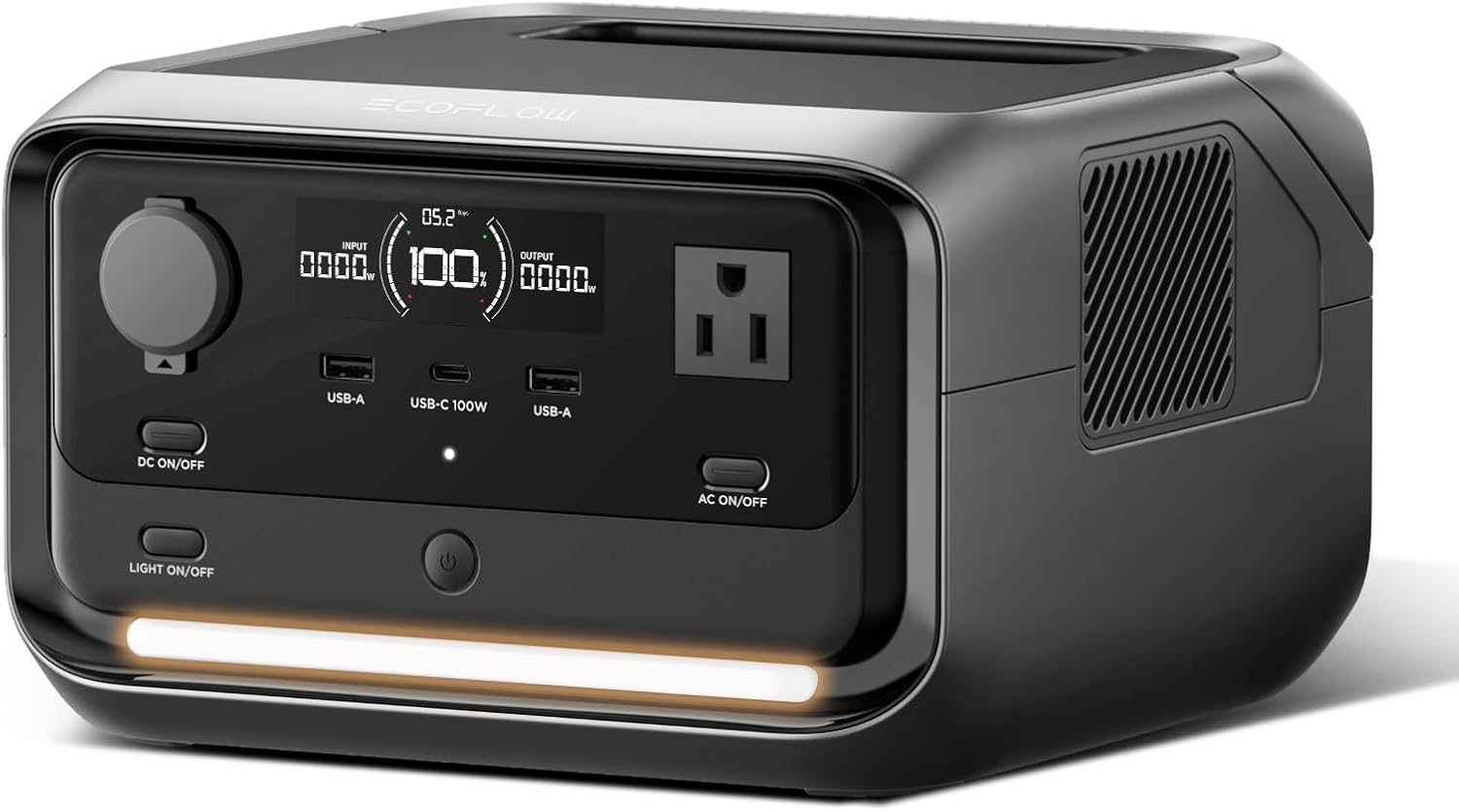
EcoFlow’s sub-10ms UPS switchover claim held up under scrutiny — independent lab testing specifically measured a real switchover time of 9ms, confirming the claim rather than just repeating marketing copy. That’s faster than most dedicated standalone UPS devices on the market, making the River 3 Plus a genuinely credible choice for protecting a home office setup, router, or gaming PC from power interruptions, not just a camping accessory with a UPS feature bolted on.
The X-GaNPower Efficiency Claim
EcoFlow states the River 3 Plus’s X-GaNPower design delivers roughly double the runtime for appliances drawing under 100W compared to less efficient designs — a genuine efficiency improvement at low loads, which matters in practice since phone charging, small lights, and router/modem backup are exactly the kind of light, sustained loads a compact unit like this handles most often.
Real-World Testing: Camping and Home Backup
One detailed two-week test paired the River 3 Plus with the EB600 expansion battery (reaching 858Wh combined) and ran it through both a simulated weekend camping trip — powering a 55W electric cooler, LED lights, and charging phones and a drone — and a planned home outage, running a modem, router, and a 42W desk lamp continuously. The unit handled both scenarios without issue, and the EB600’s independent 140W USB-C port proved genuinely useful as a standalone charger even when not connected to the main unit.
The Built-In Light — A Genuinely Useful Addition
Unlike the base River 3, the Plus includes a bar-style light beneath the display and outlets, with two brightness levels and an SOS mode. Independent reviewers specifically praised the light quality — soft, warm illumination that shines downward and bounces off surfaces for a wider glow, useful for lighting a desk, coffee table, or tent floor without needing a separate lantern.
How It Compares to Budget Rivals
Spec-for-spec against two popular alternatives in the sub-300Wh range, the River 3 Plus wins on three fronts: UPS performance (sub-10ms vs 20ms on the Bluetti EB3A, and no UPS function at all on the Jackery Explorer 300), genuine expandability (the only one of the three that supports add-on batteries), and recharge speed (1 hour vs roughly 5 hours on the older Jackery unit’s NMC chemistry). The Bluetti EB3A counters with a lower price point, making it the better pick specifically if minimizing upfront cost is the top priority over these specific advantages.
Expansion Options Explained
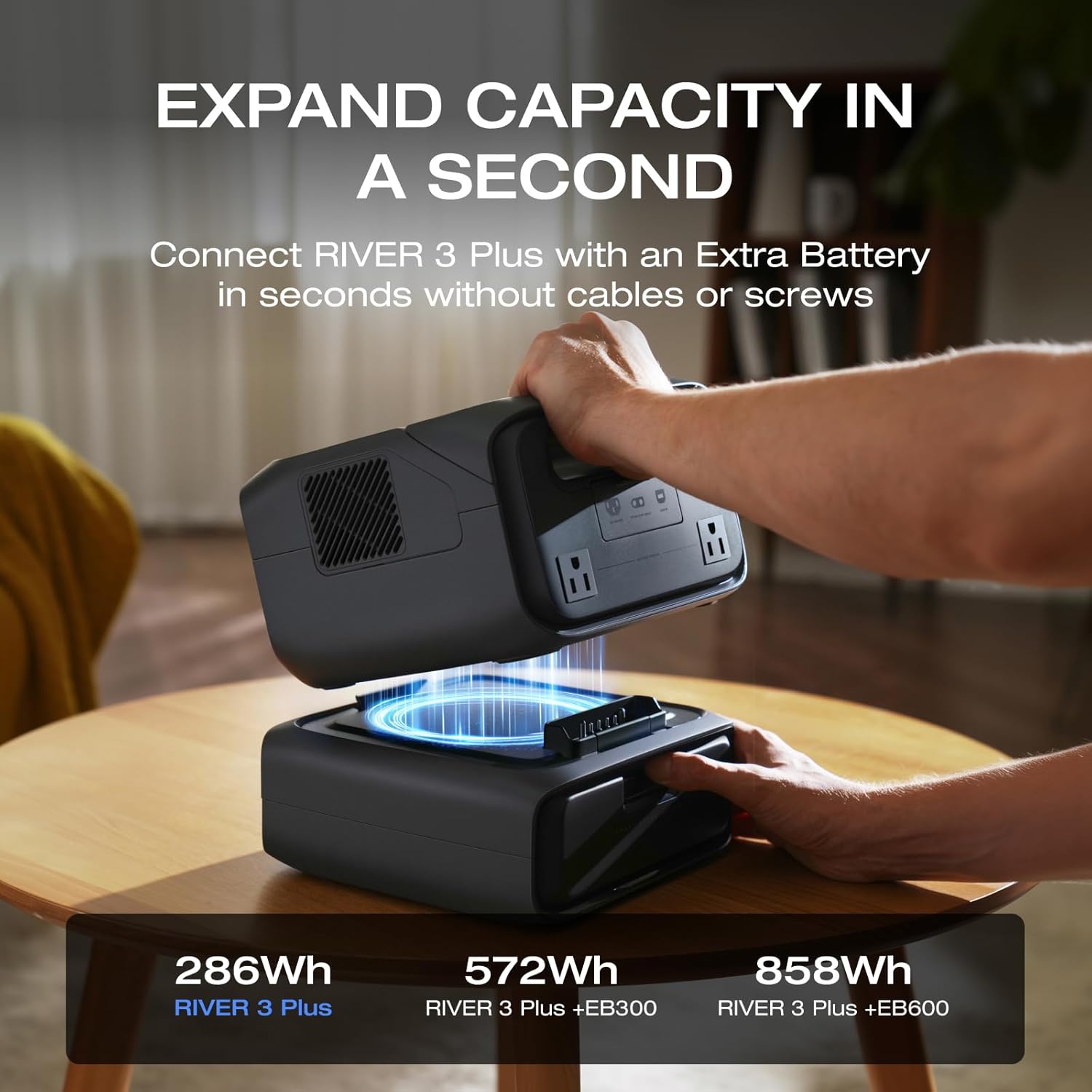
The EB300 (286Wh) doubles total capacity to 572Wh; the larger EB600 (572Wh) brings the system to a maximum 858Wh. Both connect via a tool-free Pogo Pin design — no cables or screws required, just stack and clip. The EB300 specifically can also be used independently of the main unit, with its own 140W USB-C port for charging small devices on its own when detached — genuinely useful flexibility for splitting battery capacity across two people or two uses at once.
Honest Pros and Cons
Pros: Independently verified sub-10ms UPS switchover (9ms measured), genuine expansion capability up to 858Wh, doubled output over the base River 3, useful built-in light with SOS mode, fast ~1 hour full charge, quiet ~30dB operation
Cons: Only one USB-C port despite most modern devices using that connector, 110W max solar input limits fast off-grid recharging, heavier than the base River 3 at 10.4 lbs, plastic construction (though solidly built)
Who Should Buy the River 3 Plus
Best for:
- Home office backup where the verified sub-10ms UPS switchover genuinely protects sensitive equipment
- Weekend camping with moderate power needs — coolers, lights, device charging
- Buyers who want a genuine upgrade path via expansion batteries rather than replacing the whole unit later
- Anyone comparing budget compact power stations who specifically values expandability
Consider alternatives if:
- Budget is the absolute top priority — the Bluetti EB3A undercuts it on price without UPS or expansion capability
- You need faster solar recharging — the 110W max solar input is modest for this capacity
- Lightest possible weight matters more than output — the base EcoFlow River 3 is nearly 3 lbs lighter
Frequently Asked Questions
What’s the difference between the River 3 and River 3 Plus?
The Plus doubles AC output (600W vs 300W), has a faster sub-10ms UPS switchover (vs 20ms), includes a built-in light with SOS mode, and supports genuine battery expansion up to 858Wh — features the base River 3 lacks entirely. The trade-off is roughly 3 lbs of added weight.
Is the River 3 Plus’s UPS claim actually accurate?
Yes — independent lab testing specifically measured a real switchover time of 9ms, confirming EcoFlow’s sub-10ms claim rather than just repeating marketing copy. This is genuinely fast enough to protect sensitive electronics like a router or desktop PC from noticeable interruption during a power blip.
How much can the River 3 Plus expand to?
Up to 858Wh total by adding an EB300 (286Wh) or EB600 (572Wh) expansion battery via tool-free Pogo Pin connection. The EB300 can also be used independently of the main unit for standalone device charging.
How does the River 3 Plus compare to budget competitors like the Bluetti EB3A?
The River 3 Plus wins on UPS performance, genuine expandability, and recharge speed. The Bluetti EB3A counters with a lower price point, making it the better choice specifically for buyers prioritizing minimum upfront cost over those particular advantages.
Does the River 3 Plus have a flashlight or lantern feature?
Yes — a built-in bar-style light beneath the display offers two brightness levels and an SOS mode, a feature the base River 3 doesn’t include. Independent reviewers specifically praised the warm, wide-glow light quality for tent or desk use.
The Bottom Line
The River 3 Plus earns its position above the base River 3 with genuinely meaningful upgrades — doubled output, independently verified fast UPS switchover, and real expansion capability most competitors in this price range don’t offer at all. For home office backup, moderate camping needs, or anyone who wants room to grow their capacity later, it’s a smart, well-tested choice.
Check the EcoFlow River 3 Plus on Amazon →
For the base model comparison, see our EcoFlow River 3 review. For the full EcoFlow lineup, see our best EcoFlow solar generator guide.