This post contains affiliate links. If you buy through our links we may earn a small commission — at no extra cost to you. This never influences our recommendations.
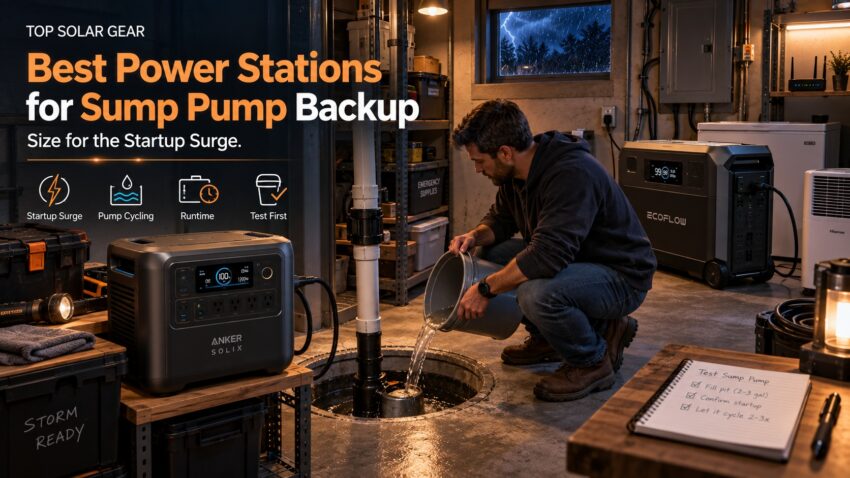
A sump pump’s brief startup surge trips more power stations than its running wattage ever will. A “1,500W” unit can still fail to start a pump that spikes to 3,000W for a fraction of a second.
Here’s the spec that actually matters, and how to test it before a storm, not during one.
The Real Number: Locked Rotor Surge
A typical 1/3 HP sump pump runs at 600-800W. During startup, the motor can briefly spike to 3-4x that — often 2,000-3,500W — for just 200-400 milliseconds.
This is called locked rotor surge, and it’s the spec that decides whether your unit works, not the continuous running wattage.
Target at minimum: 1,800W continuous output and 3,000W+ documented surge rating. For larger 1/2 HP pumps, size up further — some spike as high as 4,100W.
Sizing Runtime Correctly — Cycling, Not Continuous
Sump pumps don’t run continuously. They cycle on for a minute or two whenever the pit fills, then shut off.
During a heavy storm, that might mean 5-10 minutes of runtime per hour, not constant operation. This changes the math significantly.
A 1/3 HP pump cycling 10 minutes per hour uses roughly 100-120Wh per hour. On a 1,024Wh unit, that’s realistically 8-9 hours of storm-cycling before needing a recharge — not the couple of hours a naive continuous-draw calculation would suggest.
Test It Before You Need It
Don’t wait for an actual storm to find out if your setup works. Pour 2-3 gallons of water into the sump pit to trigger the float switch manually.
Confirm the pump starts without the inverter cutting out. A brief rev from the unit’s cooling fan during the surge is normal — that’s expected behavior, not a warning sign.
Let it cycle 2-3 more times. If the inverter trips at any point, the unit is undersized. Fix this before the next storm.
Best Power Stations for Sump Pump Backup — Verified Picks
Best for Most Homeowners: Anker SOLIX C1000 Gen 2
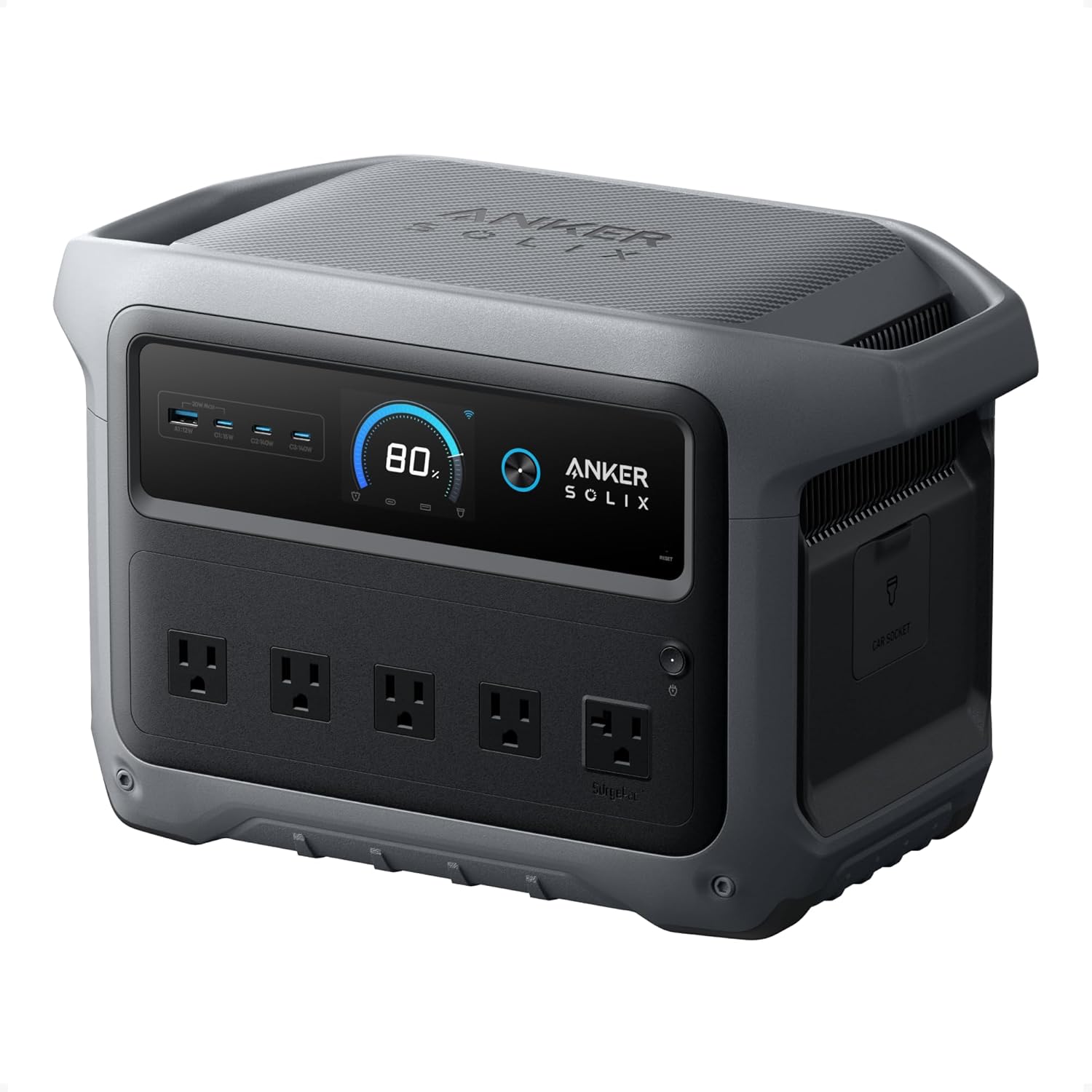
At 2,000W continuous and 3,000W surge, this comfortably clears the startup spike for most 1/3 HP and appropriately-sized 1/2 HP pumps.
Its main limitation is capacity — at roughly 1,024Wh, this isn’t the choice for multi-day storm events without recharging. For a single storm cycle or a short outage, it’s a well-balanced, manageable-sized pick. For the full breakdown against its closest rival, see our Anker C1000 Gen2 vs EcoFlow DELTA 3 Plus comparison.
Best for Extended Storms or Larger Pumps: EcoFlow DELTA Pro 3
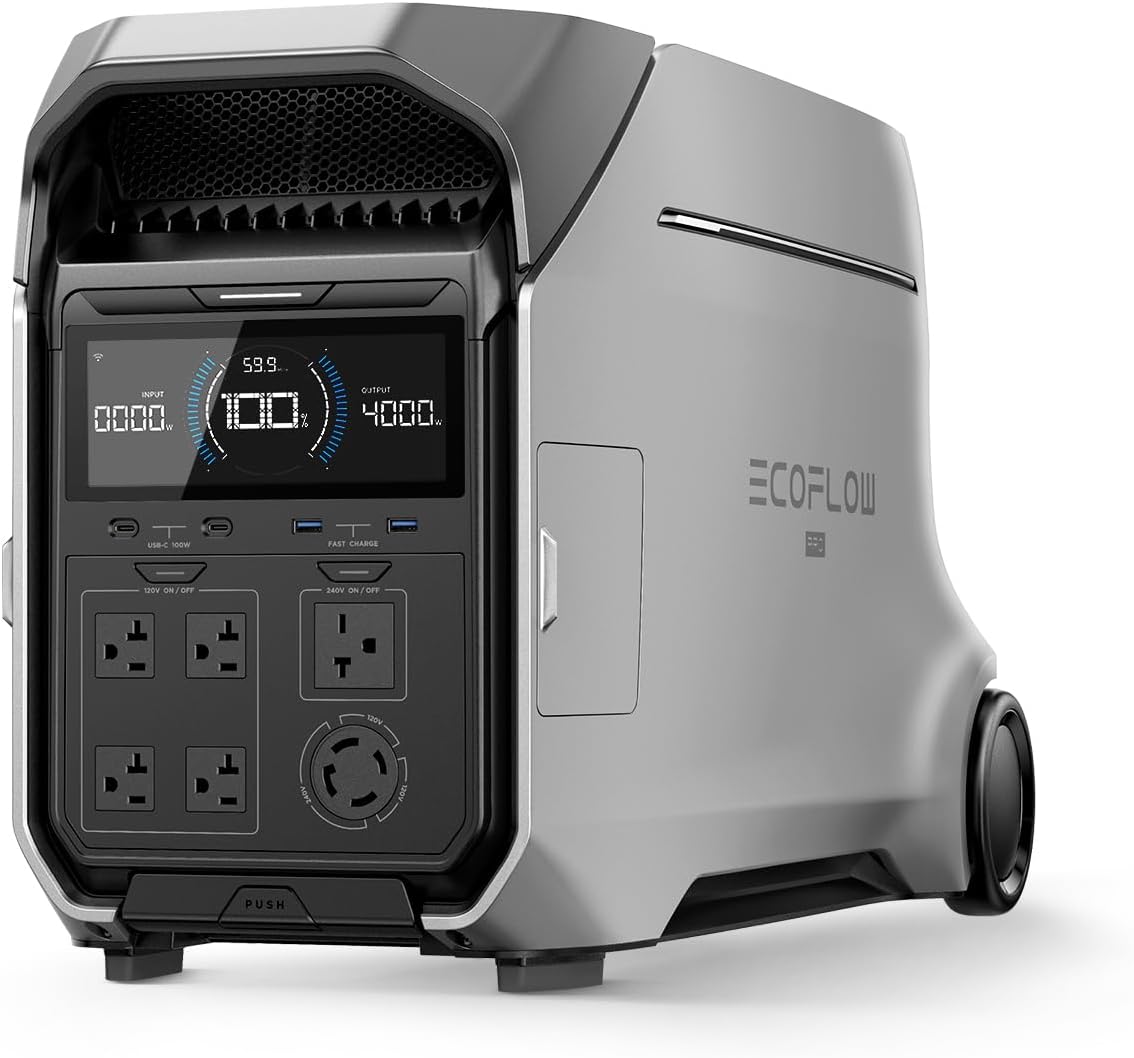
At 4,096Wh with high surge headroom, this handles a larger pump’s startup demand with real margin, and stretches sump-cycling runtime to well over a full day.
If you’re also running a dehumidifier, basement lighting, or a router off the same unit during a multi-day storm event, this capacity tier gives you the room to do so without constantly watching the battery level. For the full spec breakdown, see our EcoFlow DELTA Pro 3 review.
Solar Matters More Than Battery Size for Multi-Day Storms
A large battery sounds great until day three of a sustained storm, when it’s at 0% with no way to refill it.
Two 200W panels (400W total) can realistically produce 800-1,500Wh per day even during overcast storm conditions — genuinely useful for stretching a multi-day event without a wall outlet available.
Frequently Asked Questions
What size power station do I need for a sump pump?
Target at least 1,800W continuous output and a 3,000W+ documented surge rating for a typical 1/3-1/2 HP pump. Battery capacity of 1,000Wh+ covers several hours of storm-cycling; go larger for multi-day events.
Why does my “high wattage” power station still trip when the pump starts?
The surge rating, not the continuous rating, is the limiting factor. A pump’s brief startup spike can hit 3-4x its running wattage for a fraction of a second — a unit needs enough surge headroom to absorb that specific spike, regardless of its continuous rating.
How long will a power station actually run my sump pump?
Longer than you’d expect from continuous-draw math, since sump pumps cycle rather than run constantly. A 1/3 HP pump cycling 10 minutes per hour can realistically run 8-9 hours on a 1,024Wh unit during typical storm conditions.
How should I test my setup before a storm?
Pour a few gallons of water into the sump pit to trigger the float switch manually, confirm the pump starts without the inverter tripping, and let it cycle several times. Fix any issue before the next real storm, not during one.
Does a portable power station activate automatically like a dedicated battery backup pump?
Only if the unit supports UPS or pass-through mode and your primary pump stays plugged into it continuously. Otherwise, the pump only runs when you’ve manually connected it to the power station during an outage.
Final Verdict
| Your Situation | Best Pick |
|---|---|
| Standard 1/3-1/2 HP pump, single storm event | Anker SOLIX C1000 Gen 2 |
| Larger pump or multi-day storm events | EcoFlow DELTA Pro 3 |
The Bottom Line
Size for the surge, not just the running watts — this is the mistake that leaves people with a “big enough” power station that still can’t start their pump.
Test your setup before the season starts, not during the storm that actually needs it.
For broader outage sizing beyond just a sump pump, see our best portable power stations for power outages guide.