This post contains affiliate links. If you buy through our links we may earn a small commission — at no extra cost to you. This never influences our recommendations.
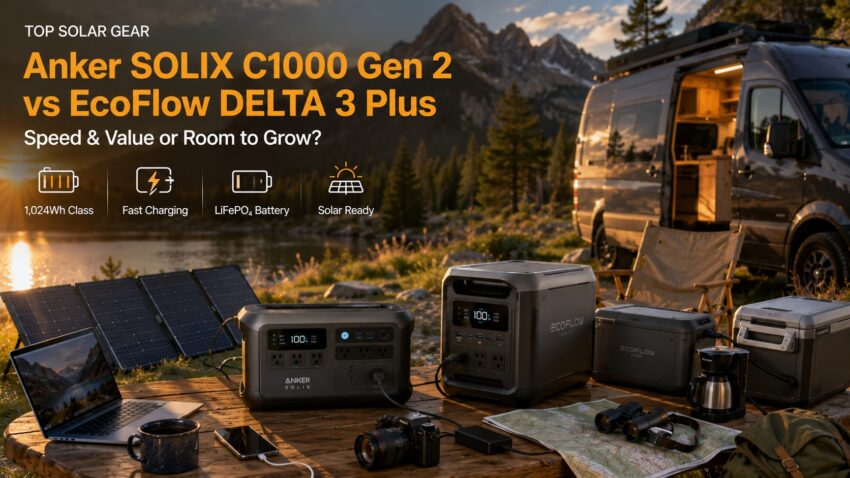
These two show up together constantly. Both sit around 1,024Wh, both use LiFePO4 batteries, and both charge fast enough to matter.
The real choice isn’t quality. It’s a single trade-off: Anker’s speed and lower price, or EcoFlow’s room to grow.
Full Spec Comparison
| Spec | Anker SOLIX C1000 Gen 2 | EcoFlow DELTA 3 Plus |
|---|---|---|
| Capacity | 1,024Wh | 1,024Wh |
| Battery chemistry | LiFePO4 | LiFePO4 |
| Cycle life | ~3,000 cycles | 4,000 cycles |
| AC output | 2,000W continuous | 1,800W continuous |
| Surge output | 3,000W | 2,200W (X-Boost) |
| AC charge time | 49 minutes (Guinness-verified) | ~50 minutes to 80% |
| UPS switchover | <20ms | <10ms |
| Solar input (max) | 600W | 1,000W |
| Weight | 24.9 lbs | 27.6 lbs |
| Expandable | No | Yes, to ~5,120Wh |
| Typical price | ~$449-649 | ~$799-999 |
The Two Units Side by Side
Anker SOLIX C1000 Gen 2
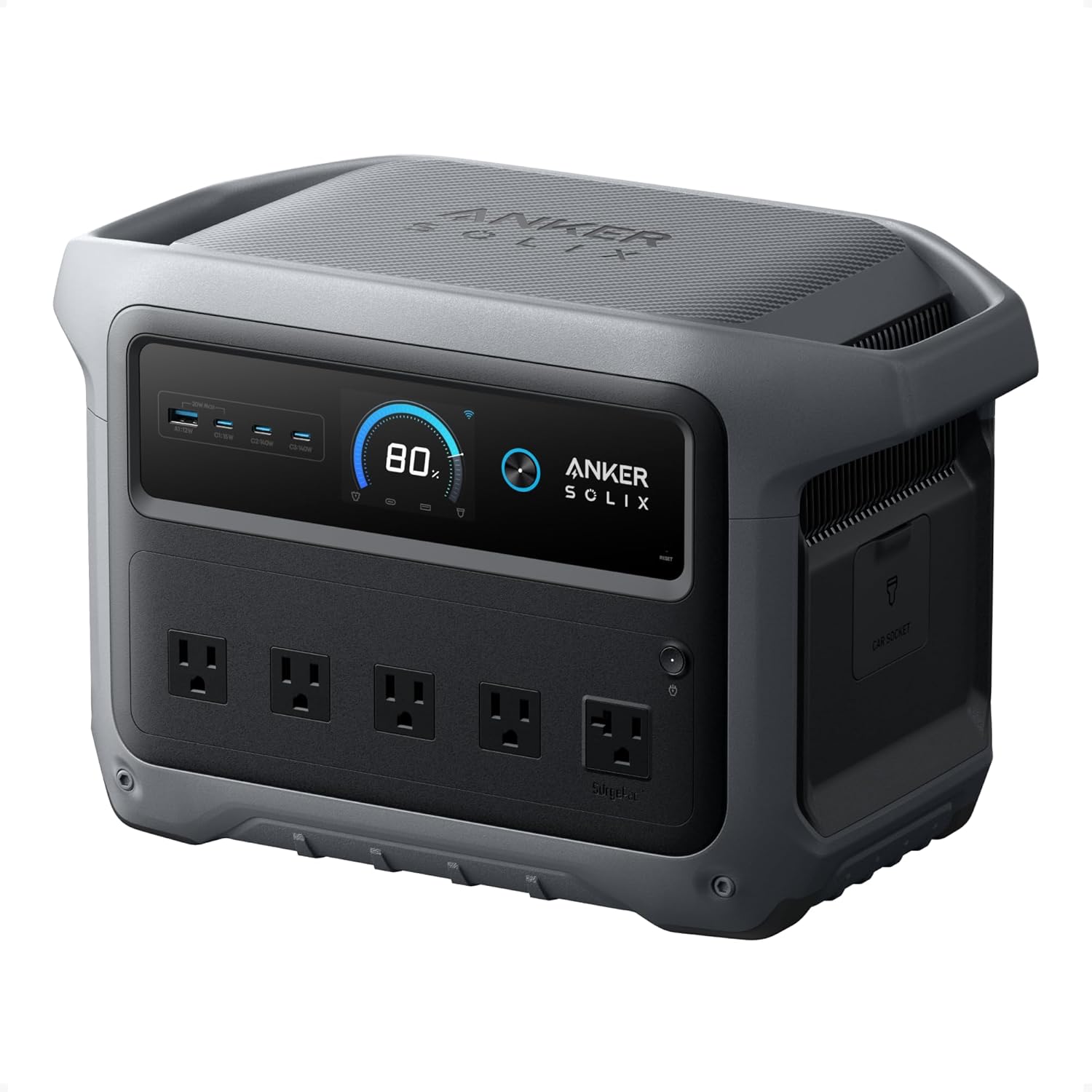
This is the value pick. It charges faster (49 minutes, an independently verified Guinness World Record for this class), delivers more continuous output (2,000W vs 1,800W), and weighs less.
The trade-off is real: Anker gave up battery expandability to hit this speed and weight. What you see is what you get, permanently.
For camping, basic home backup, and general device charging, that’s rarely a problem. For the full lineup breakdown, see our Anker solar generator guide.
EcoFlow DELTA 3 Plus
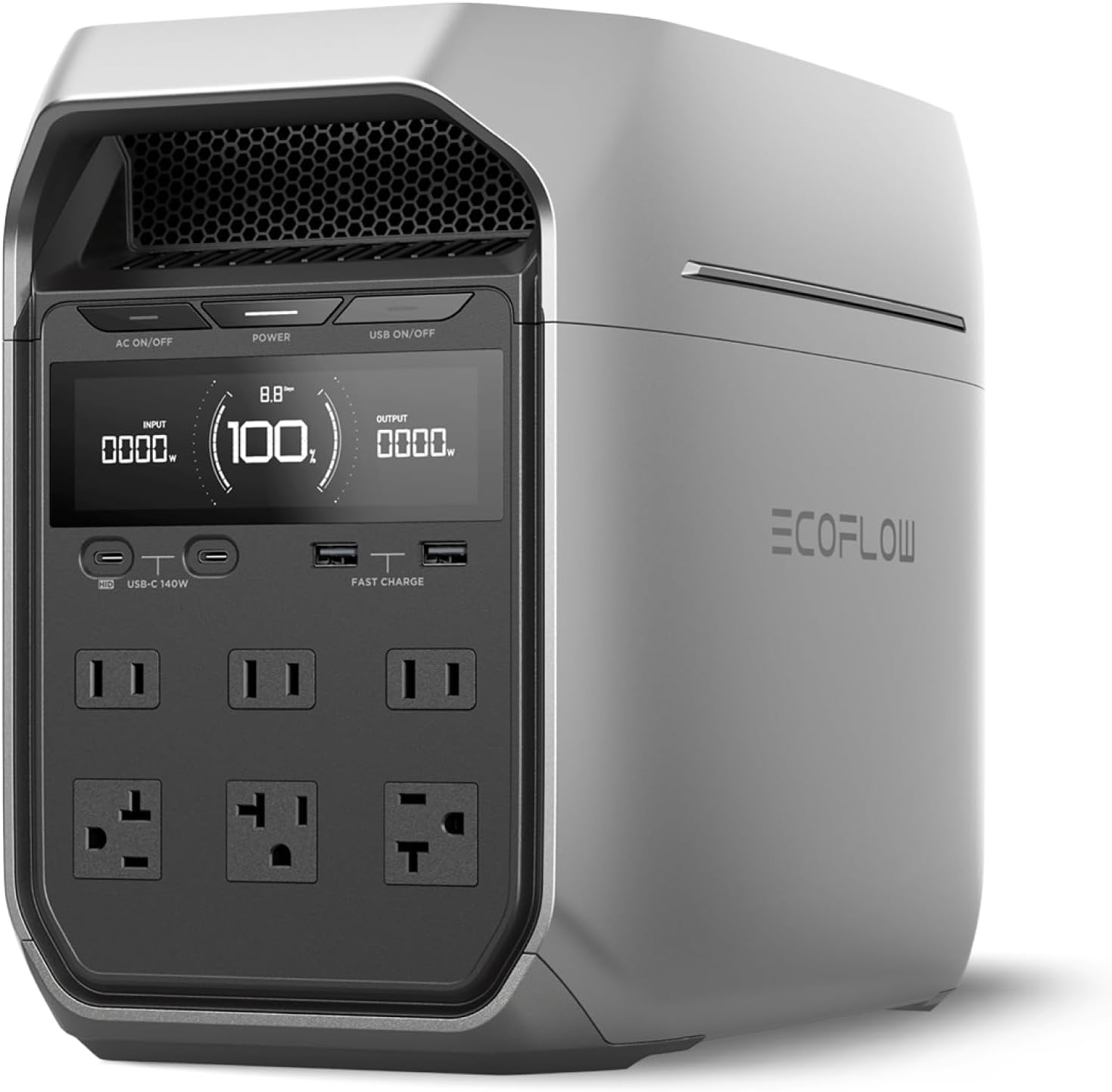
This is the growth pick. It expands to roughly 5,120Wh with add-on batteries — genuine headroom if your needs increase later.
It also edges out the Anker on solar input (1,000W vs 600W) and UPS speed (under 10ms vs under 20ms), useful if you’re pairing it with a larger panel array or protecting sensitive electronics.
The trade-off is price — typically $350-550 more than the Anker. For the full spec breakdown, including an honest cooling-fan issue found in independent testing, see our EcoFlow DELTA 3 Plus review.
An Honest Note on Conflicting Reviews
Most independent comparisons favor the Anker on value — it matches or beats the EcoFlow on several metrics while costing meaningfully less.
One comparison site’s proprietary scoring system rates the EcoFlow higher overall, weighting expandability and solar input heavily in its formula.
Neither is wrong. It depends entirely on how much you personally value expansion room versus saving money today.
Which One Should You Buy?
| Your Situation | Better Fit |
|---|---|
| Want the fastest charge and lowest price | Anker SOLIX C1000 Gen 2 |
| Want room to expand capacity later | EcoFlow DELTA 3 Plus |
| Pairing with a large solar panel array | EcoFlow DELTA 3 Plus (1,000W input) |
| Weekend camping, basic home backup | Anker SOLIX C1000 Gen 2 |
| Protecting sensitive electronics (fastest UPS) | EcoFlow DELTA 3 Plus |
| Not sure if you’ll ever need more than 1kWh | Anker SOLIX C1000 Gen 2 — save the money |
Frequently Asked Questions
Which charges faster, the Anker or the EcoFlow?
The Anker, slightly. Its 49-minute full charge is an independently verified Guinness World Record for this capacity class.
The EcoFlow’s roughly 50 minutes to 80% is close, but the Anker is marginally quicker in most direct tests.
Can either of these expand to more capacity later?
Only the EcoFlow. It scales to roughly 5,120Wh with add-on battery packs.
The Anker C1000 Gen 2 has no expansion option — its capacity is fixed at 1,024Wh for the life of the unit.
Which is better for home backup during an outage?
It depends on your outage length. For short outages, the Anker’s higher continuous output (2,000W) covers more appliances.
For multi-day outages, the EcoFlow’s expansion path gives you more total capacity to work with.
Is the price difference actually worth it?
Only if you specifically need the EcoFlow’s expandability or higher solar input. If neither matters to your situation, the Anker delivers comparable core performance for $350-550 less.
Do both use the same battery chemistry?
Yes, both use LiFePO4. The EcoFlow carries a higher rated cycle life (4,000 vs roughly 3,000), though both are expected to last a decade or more of typical use.
The Bottom Line
Ask yourself one question: will I ever need more than 1,024Wh?
If no, the Anker SOLIX C1000 Gen 2 is the easy call — faster, lighter, and cheaper, with no meaningful downside for typical use.
If yes, or if you’re not sure, the EcoFlow DELTA 3 Plus’s expansion path is worth the premium. Buying capacity you can’t grow later, only to replace the whole unit in two years, costs more in the long run than paying for room to grow today.
For the complete Anker lineup, see our Anker solar generator guide. For a broader cross-brand look at this capacity tier, see our best 1000W solar generators for the money guide.