This post contains affiliate links. If you buy through our links we may earn a small commission — at no extra cost to you. This never influences our recommendations.
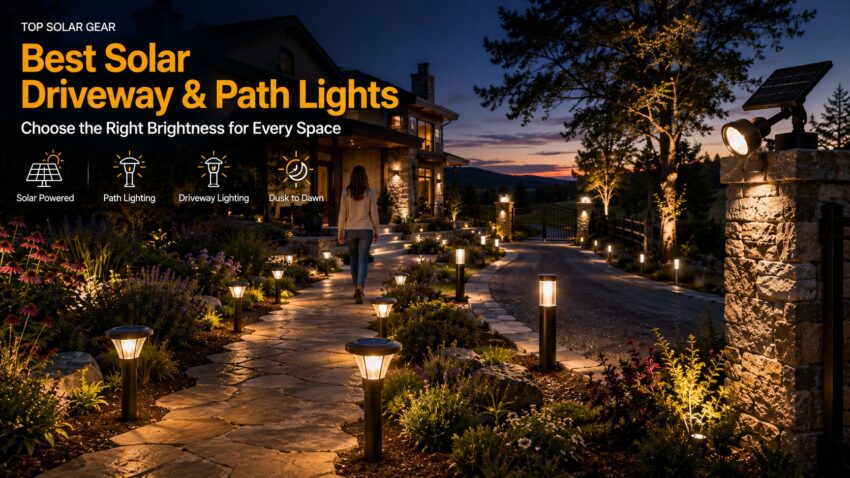
The right solar light for a garden path is genuinely different from the right one for a driveway — brightness needs vary more between these two use cases than most buyers expect, and picking the wrong lumen range leaves you either squinting or annoyed by glare. This guide covers real lumen and spacing guidance by use case, and honest picks for both soft ambient paths and brighter driveway edges.
Match Brightness to the Job — Not the Highest Number Available
| Use Case | Recommended Lumens | Spacing |
|---|---|---|
| Garden borders, accent lighting | 10-25 lumens | 3-5 ft apart |
| Walkway safety, general path | 40-100 lumens | 5-7 ft apart |
| Driveway edges, higher-traffic areas | 100-200+ lumens | 6-8 ft apart |
| Driveway spotlights, security-adjacent | 300-600 lumens | Positioned at key points, not continuous spacing |
More lumens isn’t automatically better — a driveway genuinely needs brighter light to mark edges and help you spot obstacles backing out at night, while a garden border or backyard path benefits from a softer glow that creates ambiance without feeling like stadium lighting. Spacing also depends on pathway width: narrow paths can go 3-5 ft between fixtures, medium paths 5-7 ft, and wider paths or driveways 6-8 ft.
Stake Lights vs Bollard Lights vs Spotlights
Stake lights are the classic, simple design — push directly into soil, ideal for garden paths, flower bed borders, and curved walkways where flexibility matters more than raw output. Most offer 8-12 hours of illumination and work well for informal paths and highlighting landscape features.
Bollard-style lights (typically 24-36 inches tall) offer broader light distribution and more robust construction, better suited to formal entrances, driveway borders, and higher-traffic areas needing more substantial brightness.
Spotlights cast a focused, directional beam rather than a broad wash — the right choice for highlighting a driveway edge, an architectural feature, or providing security-adjacent brightness at a specific point rather than continuous ambient lighting along a path.
Best Solar Driveway and Path Lights — Verified Picks
| Product | Lumens | Style | Best For |
|---|---|---|---|
| LEONLITE 12-Pack Solar Path Lights | 120 | Stake, dusk-to-dawn | Walkways, garden paths, moderate driveway edges |
| JSOT Solar Spotlights 600LM | 600 (high) / 200 (low) | Spotlight, ground stake or wall mount | Driveway highlights, security-adjacent brightness |
Best for Walkways and Paths: LEONLITE 12-Pack Solar Path Lights
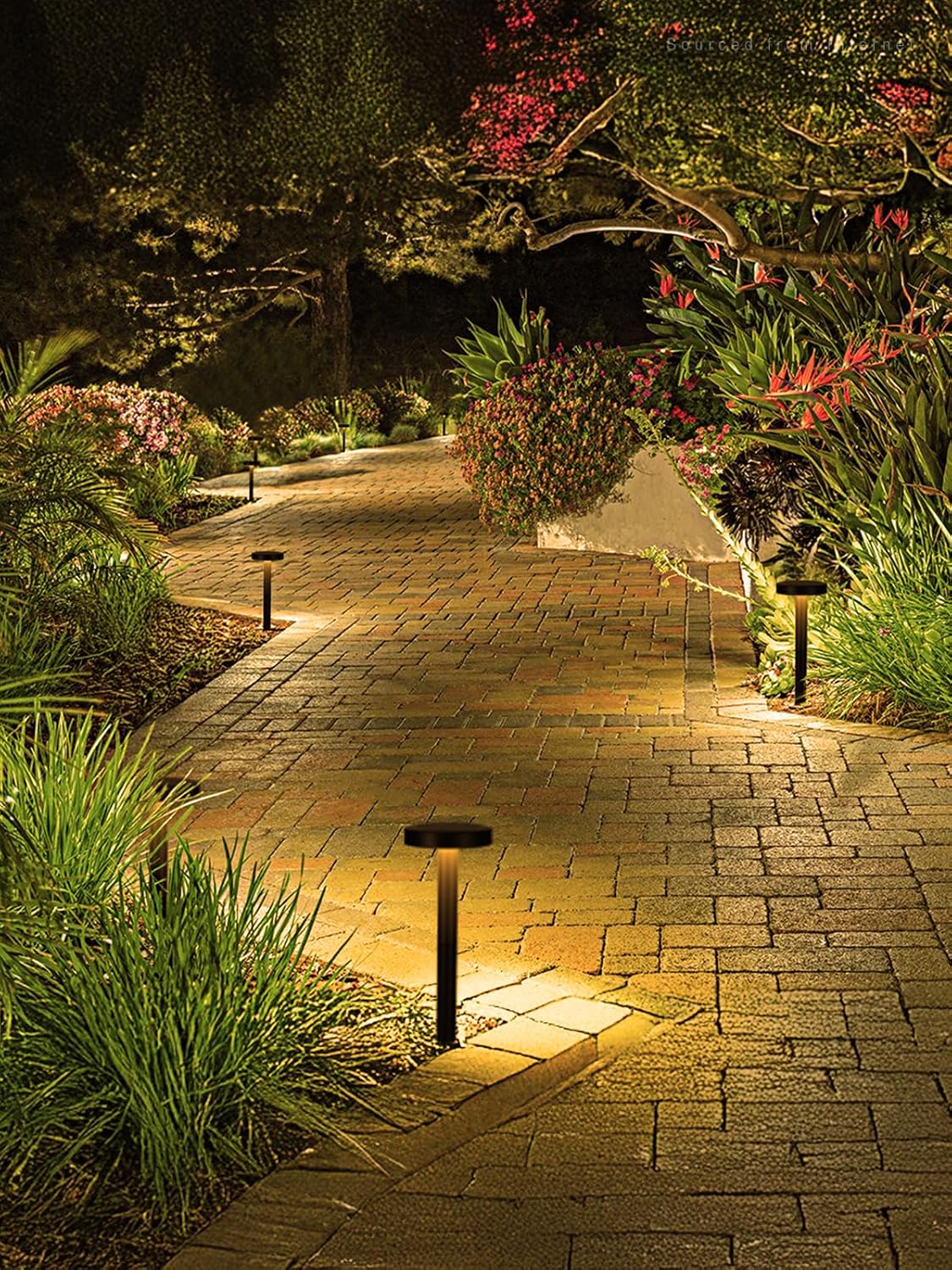
At 120 lumens per fixture, this pack sits right in the driveway-appropriate brightness range while still working well for a wider garden walkway — genuinely more usable light than the 7-10 lumen path lights common at this price point. Dimmable between 50% and 100% output, with a choice of 2700K soft white or 4000K cool white color temperature, it adapts to whatever ambiance you’re going for. Fully automatic dusk-to-dawn operation charges in 6-8 hours of daylight and runs 8-11 hours through the night, with an intelligent dimming system that gradually reduces brightness as the night progresses to stretch battery life further. IP65 waterproofing handles real outdoor conditions, and a set of 12 covers a meaningfully long path or driveway edge in one purchase.
Best for Driveway Edges and Security-Adjacent Brightness: JSOT Solar Spotlights 600LM

When you need genuinely bright, focused light rather than a soft ambient wash, JSOT’s spotlight delivers real dual-mode output — 600 lumens on high, 200 lumens on low — controlled with a single button press. The 5.5V 2.5W solar panel is sized generously for this category, delivering more than 8 hours of runtime after a 6-8 hour daytime charge. IP65 waterproofing and anti-UV ABS/PC construction hold up to rain, snow, and sustained sun exposure, and the 2-in-1 design works as a ground stake or wall-mounted fixture depending on where you need coverage. This is the right pick for marking a driveway entrance, highlighting a specific architectural feature, or adding brighter deterrent-style lighting at key points around a property.
Installation Tips
Install on soft or wet ground. Choose a day after rain, or wet the ground with a hose before staking — hard, dry ground makes it difficult to get lights straight and can crack the plastic stakes typical of most designs.
Stagger rather than line up perfectly. A slightly staggered placement along a path looks more natural than a perfectly straight row, and helps avoid a patchy look where lights alone create isolated pools of light rather than continuous coverage.
Position for direct, unobstructed sun. Even the most efficient solar panel underperforms in shade — check your planned placement against tree cover and structure shadows throughout the day before finalizing where each light goes.
Frequently Asked Questions
How many lumens do I need for a driveway?
100-200+ lumens per fixture for general driveway edge marking, stepping up to 300-600 lumens for spotlight-style highlighting at specific points. This is meaningfully brighter than the 10-25 lumens appropriate for a soft garden border, since driveway lighting is primarily about safety and obstacle visibility rather than ambiance.
How far apart should solar path lights be spaced?
It depends on pathway width — 3-5 feet apart for narrow paths, 5-7 feet for medium-width paths, and 6-8 feet for wider paths or driveways. Fixture height also factors in; taller bollard-style lights can generally be spaced further apart than low stake lights.
Do solar path lights work in winter or cloudy climates?
Yes, generally, though output and runtime both decrease with reduced sun exposure. Quality units with efficient solar panels charge faster and hold up better through winter conditions than older, less efficient designs. As a general rule, expect lower brightness and shorter working time during winter months when daylight and sun angle are reduced.
Should I choose stake lights or spotlights for my driveway?
Stake or bollard-style lights work well for continuous edge marking along the full length of a driveway. Spotlights are better for highlighting specific points — an entrance, a curve, or an architectural feature — where focused, brighter illumination matters more than continuous ambient coverage.
Can solar path lights be too bright?
Yes — for a soft garden border or backyard path, an overly bright light (300+ lumens) can feel like stadium lighting rather than pleasant ambiance. Match your brightness choice to the actual use case rather than assuming more lumens is always better.
Final Verdict
| Your Situation | Best Pick |
|---|---|
| Walkways, garden paths, moderate driveway edges | LEONLITE 12-Pack Solar Path Lights |
| Driveway highlights, brighter security-adjacent lighting | JSOT Solar Spotlights 600LM |
The Bottom Line
Match your solar light choice to the actual job rather than defaulting to the brightest option available — a garden path benefits from soft, ambient illumination, while a driveway genuinely needs brighter light for safety and obstacle visibility. The LEONLITE 12-pack covers most walkway and moderate driveway needs well, while the JSOT spotlight is the right step up when you need focused, adjustable brightness at specific points.
For motion-activated security lighting instead of continuous path lighting, see our solar motion sensor lights guide. For decorative outdoor lighting beyond paths and driveways, see our solar fairy lights guide.