This post contains affiliate links. If you buy through our links we may earn a small commission — at no extra cost to you. This never influences our recommendations.
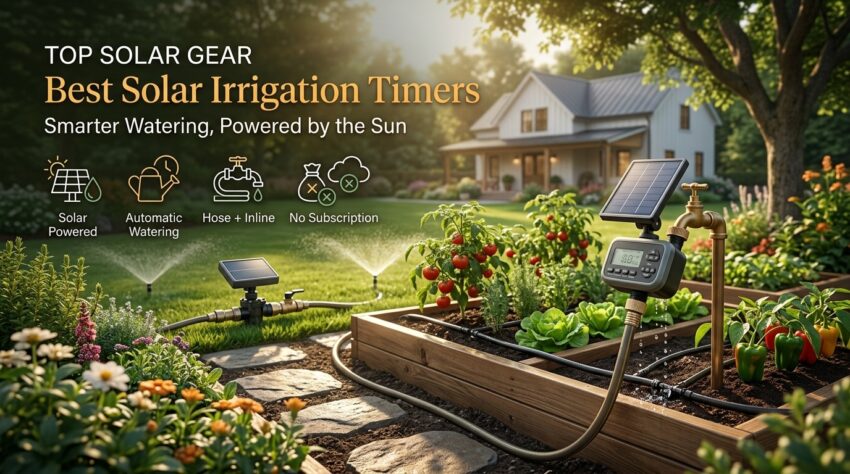
Solar irrigation timers split into two genuinely different categories that solve different problems — a simple hose-end timer that screws onto your outdoor spigot, and a permanent inline valve controller wired into an actual sprinkler or drip system. Picking the wrong type means buying twice. This guide covers the real distinction, an honest warning worth knowing about before you buy, and picks for each category.
Hose-End Timer vs Permanent Inline Controller
Hose-end timers screw directly onto an outdoor faucet or spigot, with a garden hose or drip line connected on the other end — no plumbing modification required, genuinely plug-and-play. This is the right category for container gardens, raised beds, a single drip zone, or anyone who wants automated watering without touching existing sprinkler infrastructure.
Permanent inline controllers install directly into an existing sprinkler or drip irrigation line, replacing or working alongside a traditional wired valve. These handle higher flow rates and pressure ranges, and are the right choice for an actual multi-zone lawn or garden irrigation system rather than a single hose connection.
An Honest Warning: Watch for Subscription Creep
This deserves direct mention, since it’s a genuine and growing pattern worth being alert to. Some newer “smart” irrigation controllers are increasingly requiring a paid subscription just to access basic weather data — the same local forecast information that used to come free with any connected timer. Established brands with a genuine free local weather integration remain available, so there’s no real reason to accept a subscription requirement for what should be a one-time hardware purchase. Check specifically whether any “smart” features you’re paying for require ongoing payment before buying.
Why Solar Timers Use Different Valve Technology
This is worth understanding if you’re comparing a solar timer against a standard wired sprinkler controller: traditional 24V AC solenoid valves — the kind used in most conventional in-ground sprinkler systems — require more electrical “kick” to open and close than a small solar-charged battery can efficiently provide. This is why genuine solar and battery-powered irrigation controllers use DC-latching solenoids instead, a fundamentally lower-power valve technology purpose-built for battery and solar operation. This isn’t a limitation exactly — it’s simply a different, more power-efficient valve type suited to the power source, but it does mean a solar controller generally can’t be retrofitted directly onto an existing 24V AC solenoid without an adapter or valve replacement.
Best Solar Irrigation Timers — Verified Picks
| Product | Type | Power | Flow/Pressure Range | Best For |
|---|---|---|---|---|
| DIG LEIT Solar Irrigation Timer | Permanent inline valve | Ambient light, no battery needed | 0.1-25 GPM, 10-150 PSI | Actual sprinkler/drip zone systems |
| TRJZWA Solar Sprinkler Timer | Hose-end | Solar + 2000mAh battery + USB-C backup | Standard garden hose pressure | Container gardens, single hose connections |
Best for Permanent Irrigation Systems: DIG LEIT Solar Irrigation Timer

This is a genuinely different technology worth understanding — the DIG LEIT is powered entirely by ambient light, with no battery to charge or replace at all, and no wiring required for installation. A wide 0.1-25 GPM flow range and 10-150 PSI pressure tolerance make it flexible enough for both drip irrigation and standard sprinkler zones, with a clear LCD screen for programming and a manual override for on-demand watering outside the regular schedule. This is the right choice for automating an actual multi-zone garden or lawn irrigation system rather than a single hose connection.
Best Hose-End Timer: TRJZWA Solar Sprinkler Timer
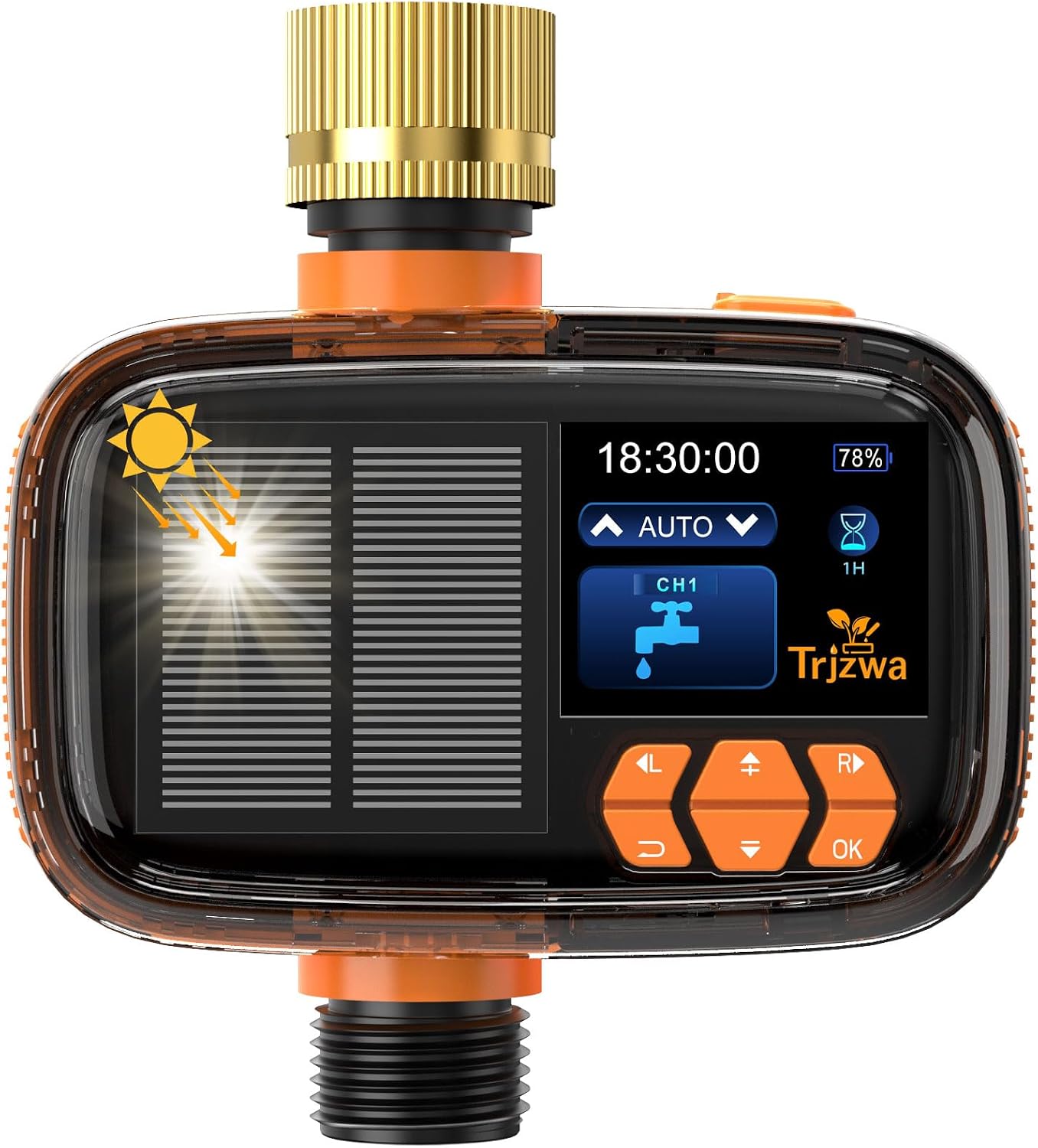
For a simpler setup — container gardens, raised beds, or a single hose or drip line — this hose-end timer combines a solar panel with a 2,000mAh internal battery and USB-C backup charging for genuine redundancy. Independent testing confirmed the battery held a full two weeks of operation during an unusually cloudy stretch with zero sun charging, and a full USB-C backup charge takes just 3 hours when needed. Flexible scheduling lets you set specific days, times, and watering duration, with rain delay and manual watering modes covering the situations automation alone doesn’t handle well.
Sizing and Placement Tips
Check your water pressure before buying. Standard timers typically require 20-25 PSI minimum to operate their valves reliably. If you’re working with a rain barrel or gravity-fed system, look specifically for a low-pressure-rated model, since standard timers often won’t function correctly below their minimum threshold.
Position the solar panel for consistent direct sun, separate from the timer body if your specific model supports a detachable panel — placement near a faucet doesn’t always mean placement in good sun, and these are genuinely separate considerations.
Match zone count to your actual setup. Most consumer solar timers handle 1-2 zones; if you need more, look specifically for a model supporting 4-6 zones or consider a wired main controller paired with solar-powered remote valve actuators for larger properties.
Frequently Asked Questions
What’s the difference between a hose-end timer and an irrigation controller?
A hose-end timer screws directly onto an outdoor faucet with a hose or drip line attached — simple, no plumbing work required, right for container gardens or a single zone. A permanent inline controller installs directly into an existing sprinkler or drip system’s plumbing, handling higher flow rates and multiple zones for an actual lawn or garden irrigation setup.
Can I use a solar timer with my existing sprinkler valves?
Generally not without modification — standard 24V AC solenoid valves used in most in-ground sprinkler systems require more power than a solar-charged battery efficiently provides. Genuine solar and battery-powered controllers use DC-latching solenoids instead, a different valve technology. Check compatibility carefully before assuming a solar timer will work with existing wired sprinkler hardware.
Do solar irrigation timers work during extended cloudy weather?
Yes, generally — quality units with a reasonably sized internal battery can operate for one to two weeks without sun exposure. Models with USB-C backup charging add genuine redundancy for extended overcast stretches or shaded installation locations where solar charging alone might not keep pace.
Should I avoid “smart” irrigation controllers with subscriptions?
Be cautious of any controller requiring a paid subscription just for basic local weather data — this is a genuine, growing pattern worth watching for, since that information has traditionally come free with connected timers. Established brands offering free local weather integration remain widely available, so there’s little reason to accept a subscription requirement for what should be a one-time purchase.
What water pressure do I need for a solar irrigation timer?
Most standard timers require 20-25 PSI minimum to operate their internal valves. If you’re on a rain barrel or gravity-fed system with lower pressure, look specifically for a low-pressure-rated model — some specialized timers work down to 8 PSI, but this isn’t universal across the category.
Final Verdict
| Your Situation | Best Pick |
|---|---|
| Actual multi-zone sprinkler/drip system | DIG LEIT Solar Irrigation Timer |
| Container garden, single hose or drip line | TRJZWA Solar Sprinkler Timer |
The Bottom Line
Match the timer type to your actual setup before anything else — a hose-end timer and a permanent inline controller solve genuinely different problems, and buying the wrong one means starting over. For an established garden or lawn irrigation system, the DIG LEIT’s ambient-light-powered, no-battery design offers a genuinely maintenance-free permanent solution. For simpler container or single-line watering, the TRJZWA’s tested battery backup delivers reliable automation without any ongoing subscription or wiring project.
For related off-grid water systems, see our best solar well pump guide and solar water pump guide.