This post contains affiliate links. If you buy through our links we may earn a small commission — at no extra cost to you. This never influences our recommendations.
Most sheds sit in partial shade. That single fact makes one feature non-negotiable for solar shed lighting.
This guide covers that feature, how to size brightness correctly, and honest picks for small and large sheds.
The Non-Negotiable Feature: A Detachable Panel
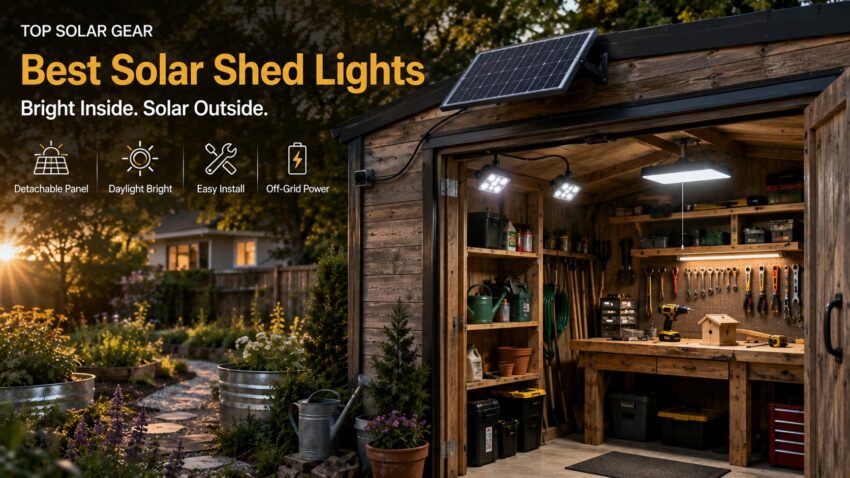
A solar light with the panel built into the fixture only works if that exact spot gets direct sun.
Most sheds don’t have that spot inside. The roof overhang blocks it, or the shed itself sits under trees.
The fix is a split design. The solar panel mounts outside in full sun. A cable — usually 16 feet or longer — runs the light fixture inside.
Skip any solar shed light without this feature. It’s not a nice-to-have here; it’s the difference between a light that works and one that doesn’t.
Sizing Brightness Correctly
| Shed Use | Recommended Lumens |
|---|---|
| Storage, occasional access | 200-1,000 lumens |
| Regular tool use, gardening | 1,000-2,000 lumens |
| Workshop, detail work | 2,000+ lumens |
Color temperature matters too. Most quality shed lights use 6500K daylight white, not warm white.
This mimics midday sun. It makes it easier to see tool details and distinguish wire colors — genuinely useful for workshop tasks, less useful for ambiance.
Best Solar Shed Lights — Verified Picks
| Product | Brightness | Control | Best For |
|---|---|---|---|
| Aqonsie 180LED Dual-Head | 1,200 lumens | Remote, 5 modes | Most sheds, flexible lighting scenarios |
| APILAB Pull String, 2000LM | 2,000 lumens | Pull string | Larger sheds, workshop use |
Best All-Around: Aqonsie 180LED Dual-Head Solar Shed Light

This is the split-design done right. The solar panel mounts outside; two light heads hang inside on separate cables, letting you cover two corners of a shed from one purchase.
Five lighting modes cover nearly every scenario — from dim ambient light at night to full brightness triggered by motion, even during the day.
The remote control means you’re not fumbling for a switch in a dark shed. Just press a button before you walk in.
Best for Larger Sheds: APILAB Solar Shed Light, 2000LM
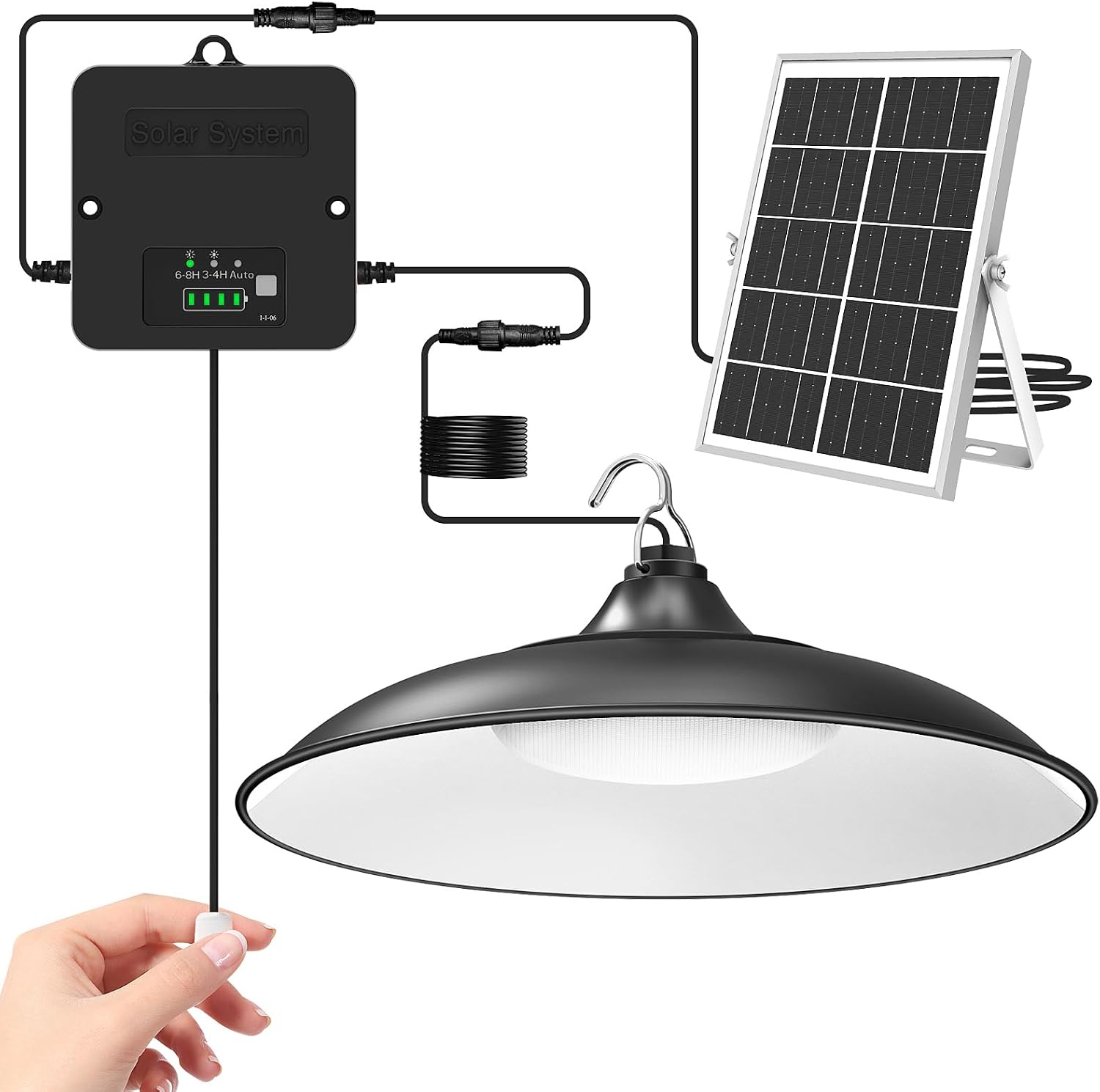
For a full workshop or a larger storage shed, 2,000 lumens genuinely fills the space rather than leaving corners dim.
The pull-string control is deliberately simple — no remote to lose, no app to configure. Just pull the cord.
IP65 waterproofing and ABS housing hold up to real outdoor exposure on the panel side, and the 16.4ft + 9.8ft combined cord gives real flexibility in positioning both the panel and the fixture.
Installation Tips
Mount the panel first, then find placement. Walk around your shed at different times of day to find the spot with the most consistent direct sun before committing to a mounting location.
Drill only where needed. Most cables can route through an existing gap or vent — check before drilling a new hole through the shed wall.
Test before final mounting. Cover the panel with your hand after a full day’s charge to confirm the light still triggers properly, before permanently securing everything in place.
Frequently Asked Questions
Do I really need a detachable panel for a shed light?
Yes, in almost every case. Sheds rarely have a spot inside that gets direct sun.
A detachable panel lets you mount the solar collector outside in full sun while the light itself stays inside where you need it.
How many lumens do I need for shed lighting?
200-1,000 lumens covers basic storage access. Regular tool use or gardening work benefits from 1,000-2,000 lumens.
Workshop or detail tasks are better served by 2,000+ lumens.
Should I choose warm white or cool white?
Cool white (6500K) is the better choice for shed interiors. It mimics daylight and makes it easier to see fine details.
Warm white is more common in ambient or decorative lighting, not workspace lighting.
How long do these lights run on a single charge?
It depends on battery capacity and lighting mode. Expect roughly 4-5 hours on continuous bright mode with smaller batteries, up to 8-10 hours with larger battery capacities or motion-triggered modes that conserve power between activations.
Can I install a solar shed light without any tools?
Mostly, yes. Installation typically takes under 30 minutes with just a screwdriver — mount the panel outside, mount the light inside, and connect the cable.
Final Verdict
| Your Situation | Best Pick |
|---|---|
| Most sheds, want flexible modes and remote control | Aqonsie 180LED Dual-Head |
| Larger shed or workshop needing maximum brightness | APILAB 2000LM Pull String |
The Bottom Line
Before comparing lumens or lighting modes, confirm the light has a detachable panel. Everything else is secondary to that one requirement.
For most sheds, the Aqonsie dual-head covers the space well with genuine flexibility. For a larger workshop, the APILAB 2000LM delivers real workshop-grade brightness.
For broader shed power planning beyond just lighting, see our solar power for shed guide.