
This post contains affiliate links. If you buy through our links we may earn a small commission — at no extra cost to you. This never influences our recommendations.
Quick clarification before we get into it: a 12V RV refrigerator isn’t a regular fridge you power through an inverter. It runs directly off your battery bank’s native 12V DC — no inverter, no conversion loss, just a compressor wired straight to your house batteries.
That’s a different setup than pairing a portable power station with a standard AC fridge — if that’s actually what you’re doing, our guide on how long a solar generator will run a refrigerator covers that instead.
If you’re replacing an old absorption fridge or building an off-grid rig from scratch, here’s what actually matters.
| Spec | RecPro 10.7 Cu Ft 12V RV Refrigerator |
|---|---|
| Capacity | 10.7 cu ft, double door |
| Power | 12V DC, roughly 50Ah per day in real use |
| Cooling | Frost-free, cools down in under an hour |
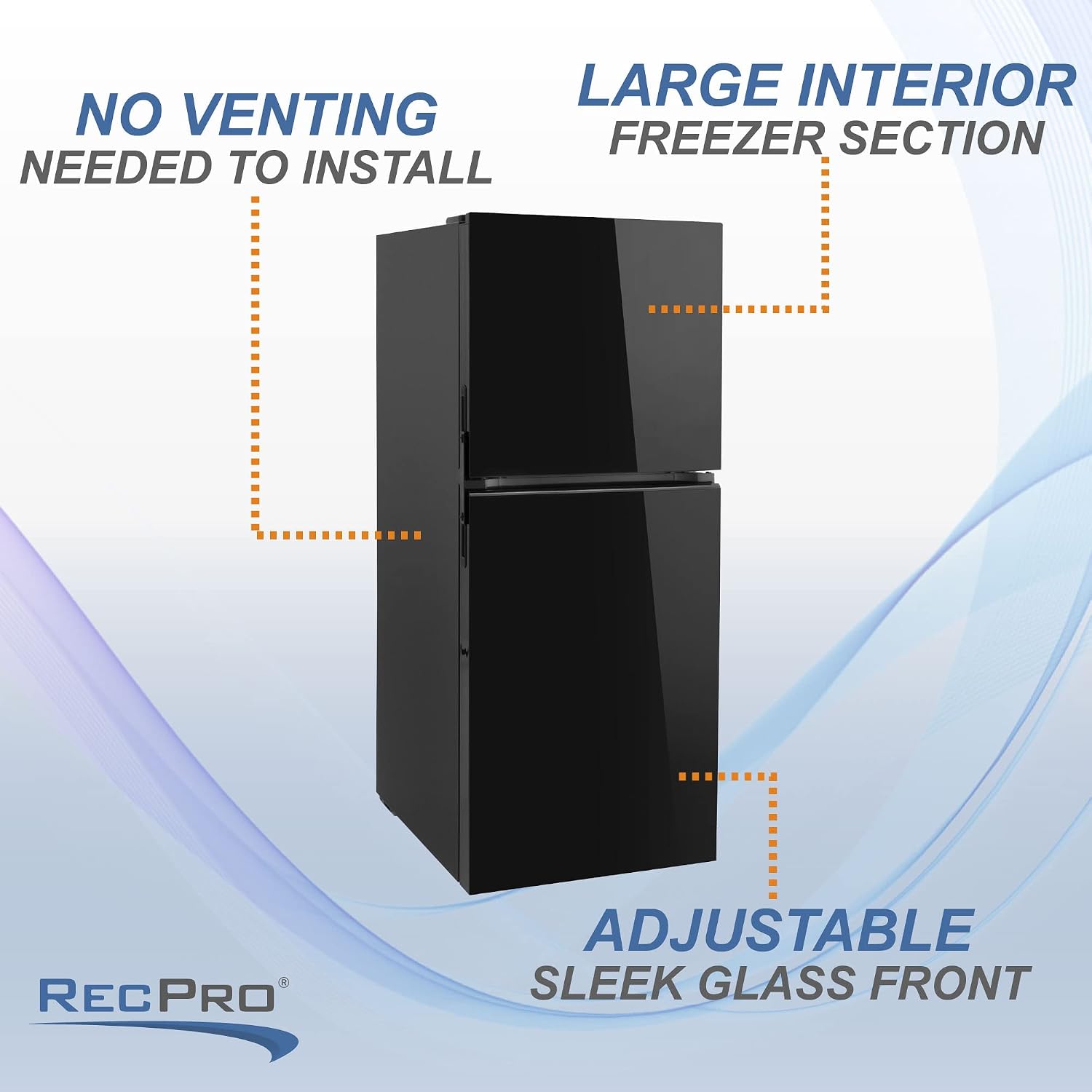
| Installation | No exterior venting required |
| Extras | Reversible doors, adjustable shelves, built-in lock |
Why Compressor Fridges Took Over From Propane
Absorption fridges — the propane-and-electric kind that’s been standard in RVs for decades — struggle in hot weather, need to sit close to level, and tie you to a propane supply.
A 12V compressor fridge doesn’t care about any of that. It cools consistently in 100-degree heat, works at an angle, and runs on nothing but your battery bank.
The trade-off is exactly what you’d expect: no propane bill, but now your battery and solar setup are doing all the work instead.
What This Actually Costs You in Power
A 10 cu ft unit like the RecPro pulls around 50 amp-hours a day in normal use — that number moves with ambient temperature, how often the door opens, and how full it is.
To run one full-time off-grid, plan on at least 200Ah of lithium battery and 400 watts of solar. That’s not a “nice to have” buffer — it’s close to the real minimum for keeping up with daily draw through a full day-night cycle.
Here’s the part that actually saves you power compared to an AC fridge on an inverter: there’s no conversion loss. A regular fridge run through an inverter loses real power just converting DC to AC — a native 12V fridge skips that step entirely.
Sizing your battery bank for the first time? Our portable power station sizing guide walks through the same math in more depth.
Installation Reality Check
One genuine win over absorption fridges: no exterior venting required, since there’s no propane combustion to route outside.
What you do need is the right wire gauge — most 12V fridges call for 8-10 AWG wiring, and skimping here causes voltage drop that can trigger low-voltage error codes or shorten compressor life.
Budget for the defrost cycle too. It can spike to 20 amps briefly, so your wiring and fusing need headroom for that, not just the fridge’s normal running draw.
Pros: No propane needed, ever; performs consistently in hot weather; no exterior venting to install; no inverter conversion loss eating into your power budget.
Cons: Real battery and solar investment required to run it full-time; needs correct wire gauge or you’ll see voltage-drop problems; defrost cycles briefly spike well above normal draw.
Best for: Off-grid and full-time RVers who already have (or are building) a serious battery and solar setup, not weekend campers looking for the cheapest option.
RecPro 10.7 Cu Ft 12V RV Refrigerator
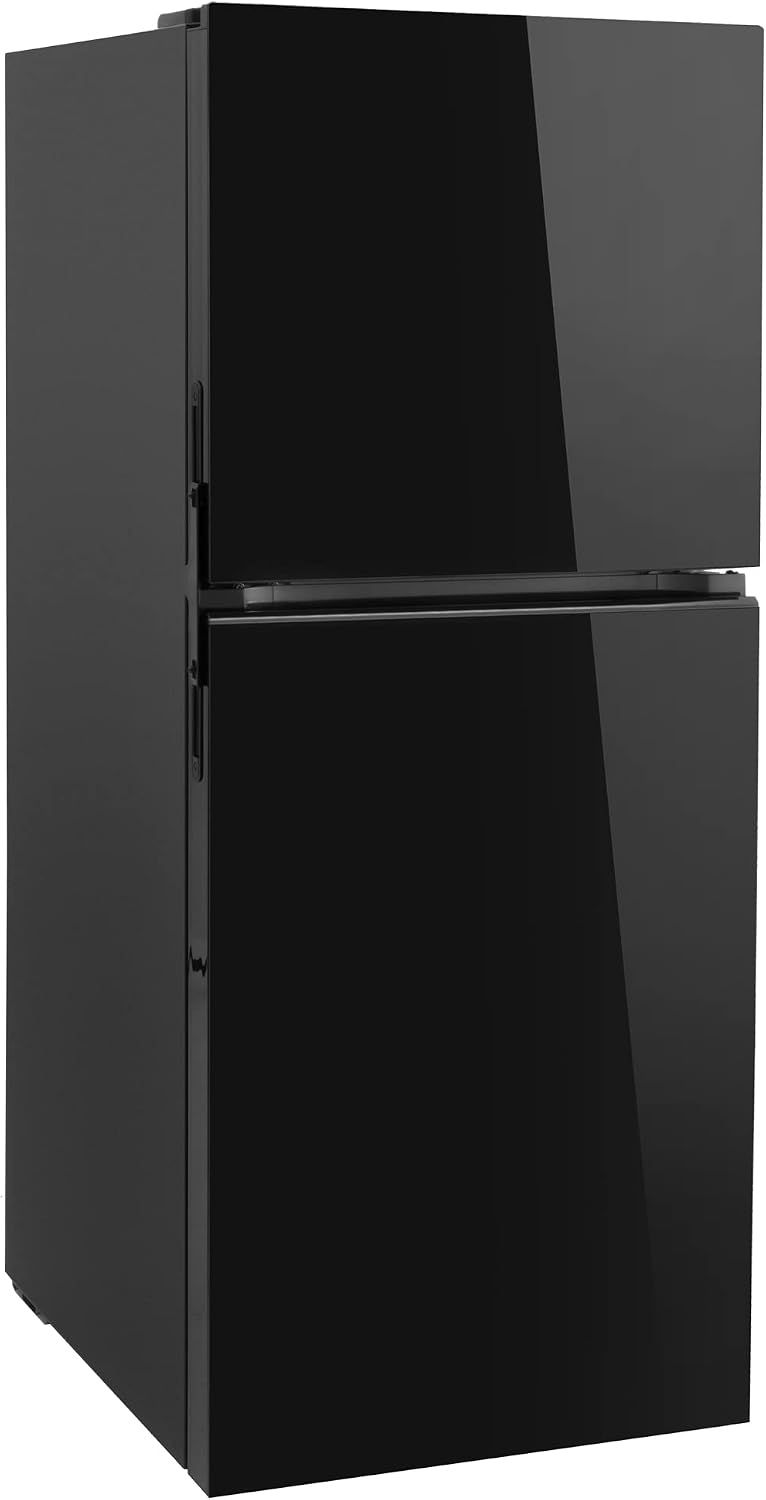
Full details and current price: RecPro 10.7 Cu Ft 12V RV Refrigerator on Amazon
Frequently Asked Questions
How much power does a 12V RV refrigerator use?
A 10 cu ft unit typically draws around 50 amp-hours a day, though heat, door openings, and how full it is all move that number.
How much solar and battery do I need to run one off-grid?
Plan on at least 200Ah of lithium battery and 400 watts of solar for full-time use — less than that and you’ll likely fall behind on cloudy days.
Do 12V RV refrigerators need venting like propane models?
No — since there’s no propane combustion, there’s no exterior venting requirement, which also frees up interior space.
What wire gauge do I need to install one?
Most 12V RV refrigerators call for 8-10 AWG wiring; undersized wire causes voltage drop that can shorten compressor life or trigger error codes.
Is a 12V compressor fridge better than a propane absorption fridge?
For hot-weather performance and getting off propane entirely, yes — but it shifts the real cost onto your battery and solar setup instead.
Final Verdict
A 12V compressor fridge is the right call if your battery bank and solar array can actually feed it — get that part right, and everything else about owning one is an upgrade over propane.