This post contains affiliate links. If you buy through our links we may earn a small commission — at no extra cost to you. This never influences our recommendations.
What a Solar Battery Backup System for Home Actually Is
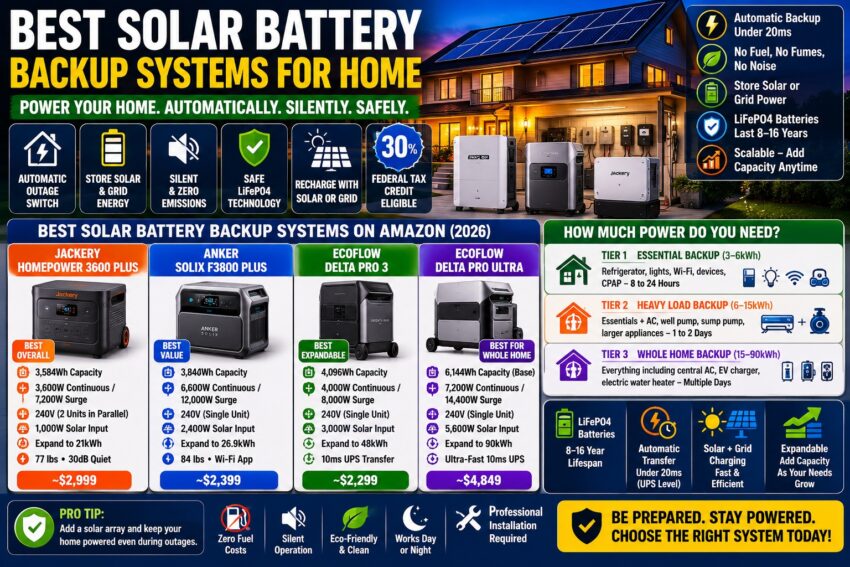
A solar battery backup system does two things that neither solar panels nor a generator can do alone: it stores energy (from solar panels, the grid, or both) and delivers that energy to your home automatically when the grid fails — without you touching anything, without fumes, without noise, and without running out of gas.
The core components are always the same: a large lithium battery bank, a hybrid inverter that manages charging and output, and a transfer mechanism that switches your home from grid to battery power when an outage occurs — typically in under 20 milliseconds. What distinguishes this category from portable power stations is scale and integration: these systems power circuits or the whole home, connect to your solar array, and switch automatically on outage.
The Three Tiers — Choosing the Right Scale Before You Shop
Tier 1: Essential load backup (3–6kWh)
Powers the critical loads — refrigerator, lights, device charging, Wi-Fi, CPAP — for 8–24 hours. The right choice for most homeowners whose primary concern is short-to-medium outages. Cost: $1,500–$3,500.
Tier 2: Heavy load backup (6–15kWh)
Powers essentials plus window AC, well pump, sump pump, and larger appliances. For homes in storm-prone areas or areas with multi-day outages. Cost: $3,000–$7,000.
Tier 3: Whole-home backup (15–90kWh)
Powers the entire home including central AC, electric water heater, EV charger — for multiple days. Built from expandable modular systems. Cost: $7,000–$25,000+.
The systems reviewed below span all three tiers. Most homeowners shopping this category are in Tier 1–2; the Tier 3 EcoFlow DELTA Pro Ultra is included for homeowners with serious energy independence goals.
What to Look for in a Home Solar Battery Backup System
Battery capacity (kWh). The most important specification. A typical American home uses ~30kWh per day. For essential-load backup (30–40% of total): 3–6kWh covers most short outages. For 24-hour whole-home coverage: 20–30kWh minimum.
Continuous AC output (watts). For essential loads: 1,500–2,000W adequate. For heavy loads including AC or pump: 3,000–4,000W. For whole-home: 6,000W+. Surge capacity (typically 2× continuous) matters for motor-starting loads like well pumps and AC compressors.
240V capability. Standard backup runs at 120V. True whole-home backup (central AC, electric dryer, EV charger) requires 240V output. All four systems reviewed here provide 240V — some from a single unit, others requiring parallel operation.
Solar input capacity. Determines how fast the battery recharges from your solar panels during an outage. Ranges from 1,000W (Jackery HomePower) to 5,600W (EcoFlow DELTA Pro Ultra) across our picks.
Automatic transfer time. Under 20ms is imperceptible to electronics. Under 10ms (UPS-level) is appropriate for medical equipment. The EcoFlow DELTA Pro 3 leads our picks at 10ms.
Expandability. All four systems are modular — you can add capacity as budget allows. This future-proofing matters for a 10+ year investment.
Installation requirements. All home battery backup systems require a qualified electrician for panel connection, transfer switch installation, and code compliance. Budget $1,000–$3,000 for professional installation on top of equipment cost.
The Best Solar Battery Backup Systems for Home Right Now
| System | Capacity | AC Output | 240V | Solar Input | Max Expansion | Price |
|---|---|---|---|---|---|---|
| Jackery HomePower 3600 Plus | 3,584Wh | 3,600W / 7,200W surge | ✅ 2 units | 1,000W | 21kWh | ~$2,999 |
| Anker SOLIX F3800 Plus | 3,840Wh | 6,000W / 12,000W surge | ✅ Single unit | 2,400W | 26.9kWh | ~$2,399 |
| EcoFlow DELTA Pro 3 | 4,096Wh | 4,000W / 8,000W surge | ✅ Single unit | 3,000W | 48kWh | ~$2,299 |
| EcoFlow DELTA Pro Ultra | 6,144Wh | 7,200W / 14,400W surge | ✅ Single unit | 5,600W | 90kWh | ~$4,849 |
Jackery HomePower 3600 Plus — Best for Plug-and-Play Simplicity
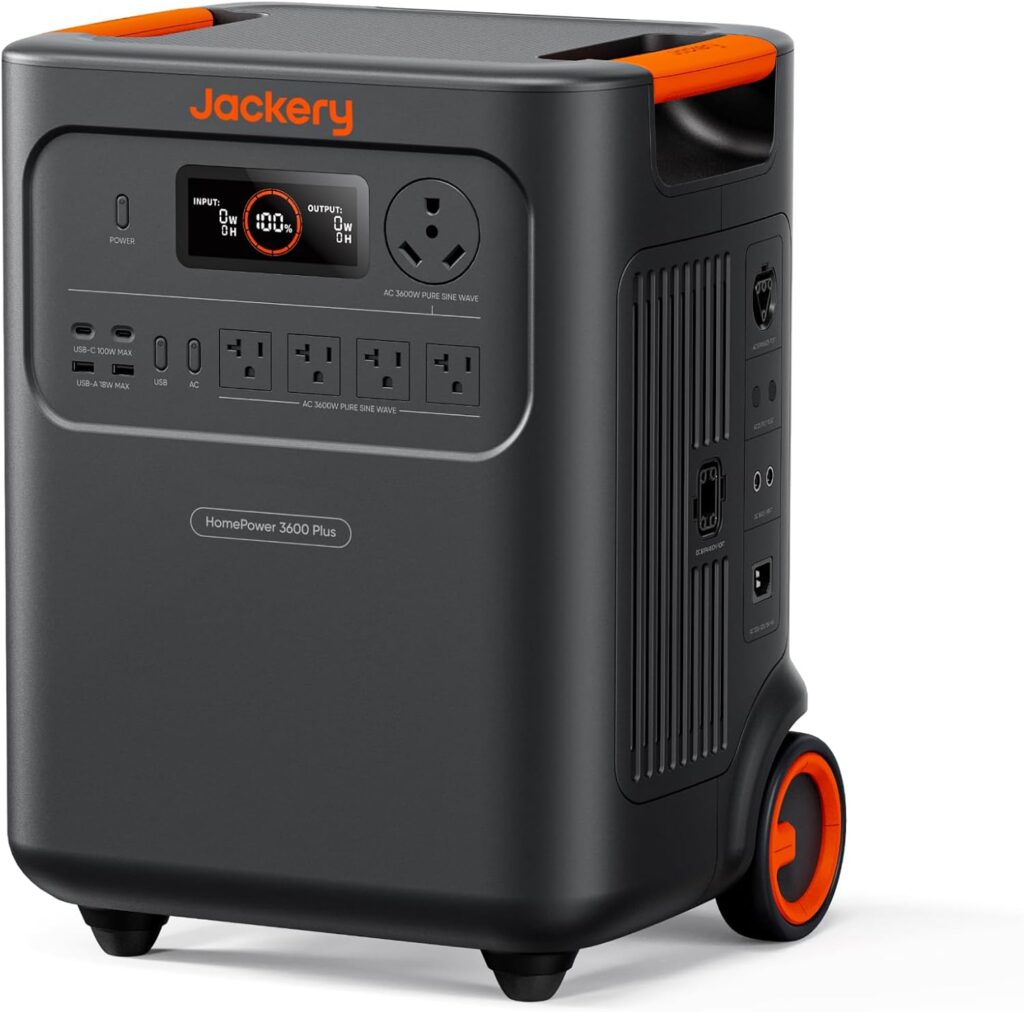
The Jackery HomePower 3600 Plus is topsolargear.com’s most thoroughly tested home backup system. We published a full dedicated review covering real-world performance, the 45-day Northern Michigan winter test, installation, and honest limitations — see our complete Jackery HomePower 3600 Plus review for everything.
The short version: 3,584Wh LiFePO4 capacity, 3,600W continuous AC output, 7,200W surge, expandable to 21kWh, rechargeable in 2 hours via hybrid AC+DC. The 30dB quiet mode makes it suitable for indoor operation. The MTS (Mobile Transfer Switch) enables circuit-level home backup without a full electrician-installed transfer switch — the simplest home integration in our picks.
Where it leads: Simplicity, 30dB quiet operation, lightest at 77 lbs, 6,000-cycle LFP battery (2× most competitors), most plug-and-play home backup available.
Where competitors beat it: 1,000W solar input is the lowest of our picks — homeowners with large existing solar arrays will recharge the other systems significantly faster from solar alone.
Pros: Simplest setup, quietest (30dB), longest battery lifespan (6,000 cycles = ~16 years), lightest for its class, MTS included for easy home circuit connection, 5-year warranty
Cons: Lowest solar input (1,000W), 240V requires two units in parallel, 21kWh maximum expansion lower than competitors
Best for: Homeowners who want the simplest, quietest, most durable home backup system with minimal installation complexity
Anker SOLIX F3800 Plus — Best Value for Heavy-Load Backup
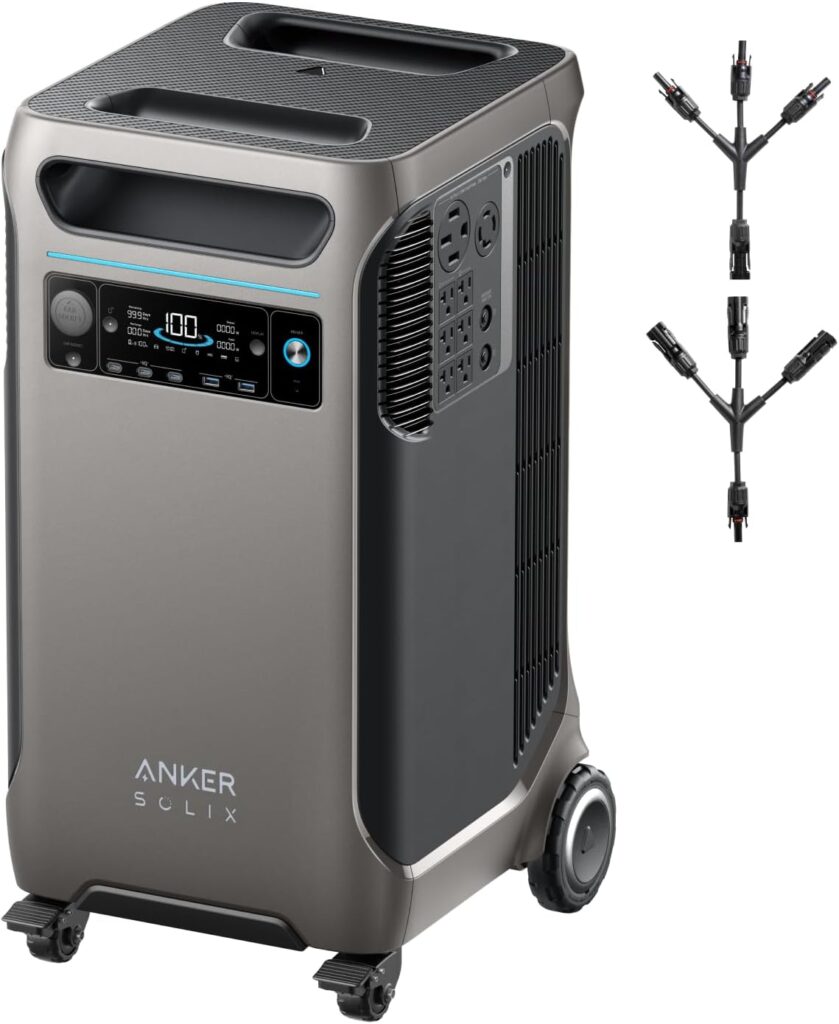
At approximately $2,399, the Anker SOLIX F3800 Plus undercuts the EcoFlow DELTA Pro Ultra by $1,650 while delivering comparable output specs. It combines 3,840Wh of LiFePO4 storage with 6,000W continuous AC output (the highest single-unit continuous output at this price tier), 240V capability from a single unit, and 2,400W of solar input — the highest solar charging rate in our picks at this price point.
The integration with the Anker SOLIX Home Power Panel makes it one of the most complete all-in-one 240V power stations for home backup. Expandable to 26.9kWh with additional Anker SOLIX battery packs. Real-world testing confirms the system handles central AC compressors and other high-surge appliances reliably.
Where it leads: Highest continuous output (6,000W) at this price, best solar input at this price (2,400W), 240V from a single unit, strongest value-per-watt in our picks.
Where competitors beat it: 3,000-cycle LFP rating vs Jackery’s 6,000 cycles; EcoFlow’s ecosystem is more mature for home Smart Panel integration.
Pros: 6,000W continuous output (highest at this price), 2,400W solar input, 240V single unit, $2,399 best value of our picks, handles central AC and heavy loads
Cons: 3,000-cycle battery rating (shorter lifespan than Jackery), Anker ecosystem less developed than EcoFlow for home integration
Best for: Homeowners with existing rooftop solar who want fast solar charging, heavy-load backup including central AC, and 240V capability at the best value price
EcoFlow DELTA Pro 3 — Best Expandable Mid-Range System
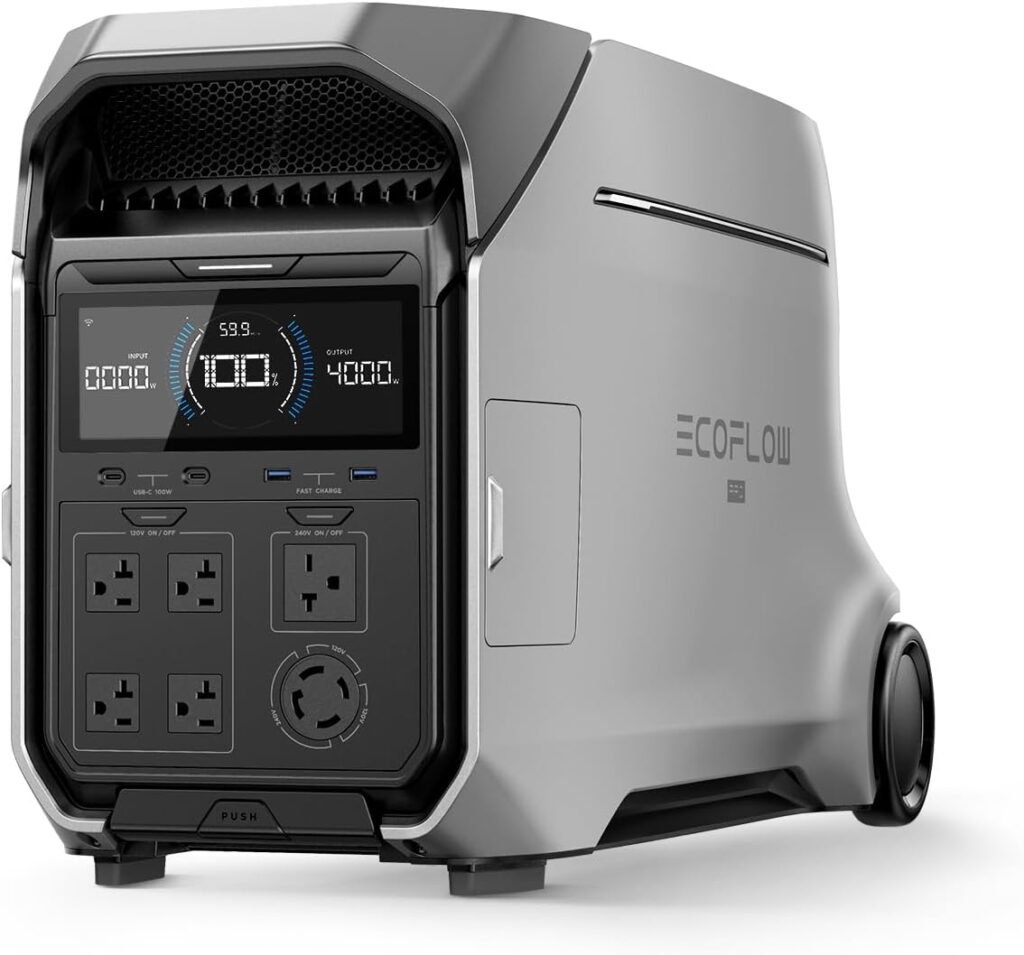
The EcoFlow DELTA Pro 3 leads our mid-range picks on two meaningful specifications: the 10ms UPS transfer time (the fastest in our picks — imperceptible to medical equipment) and the 48kWh maximum expansion ceiling (highest in the mid-range tier). Designed for home backup, off-grid, and RV use, with a 4,096Wh base capacity expandable to 48kWh, 4,000W AC inverter (12kW max across multiple units), and 240V split-phase from a single unit.
EcoFlow’s Smart Home Panel 2 integration enables circuit-level control and automatic switchover — the most developed home integration ecosystem in this category. For homeowners with medical equipment (CPAP, oxygen concentrators) where transfer time matters, the 10ms UPS performance is a genuine clinical advantage over systems specifying only sub-20ms.
Where it leads: 10ms UPS transfer (fastest, best for medical equipment), 48kWh maximum expansion, EcoFlow Smart Home Panel ecosystem, 3,000W solar input.
Where competitors beat it: 3,000-cycle battery rating; Smart Home Panel adds installation cost and complexity; Jackery’s 6,000 cycles lasts significantly longer.
Pros: 10ms UPS transfer time, 48kWh expansion ceiling, EcoFlow ecosystem for home integration, 240V single unit, 3,000W solar input, suitable for medical equipment
Cons: 3,000-cycle LFP rating, Smart Home Panel 2 adds installation complexity and cost, heavier than Jackery at this capacity
Best for: Homeowners with medical equipment (UPS-level transfer required), those building around EcoFlow’s Smart Home Panel ecosystem, buyers wanting maximum expansion headroom at mid-range price
EcoFlow DELTA Pro Ultra — Best for Whole-Home Coverage
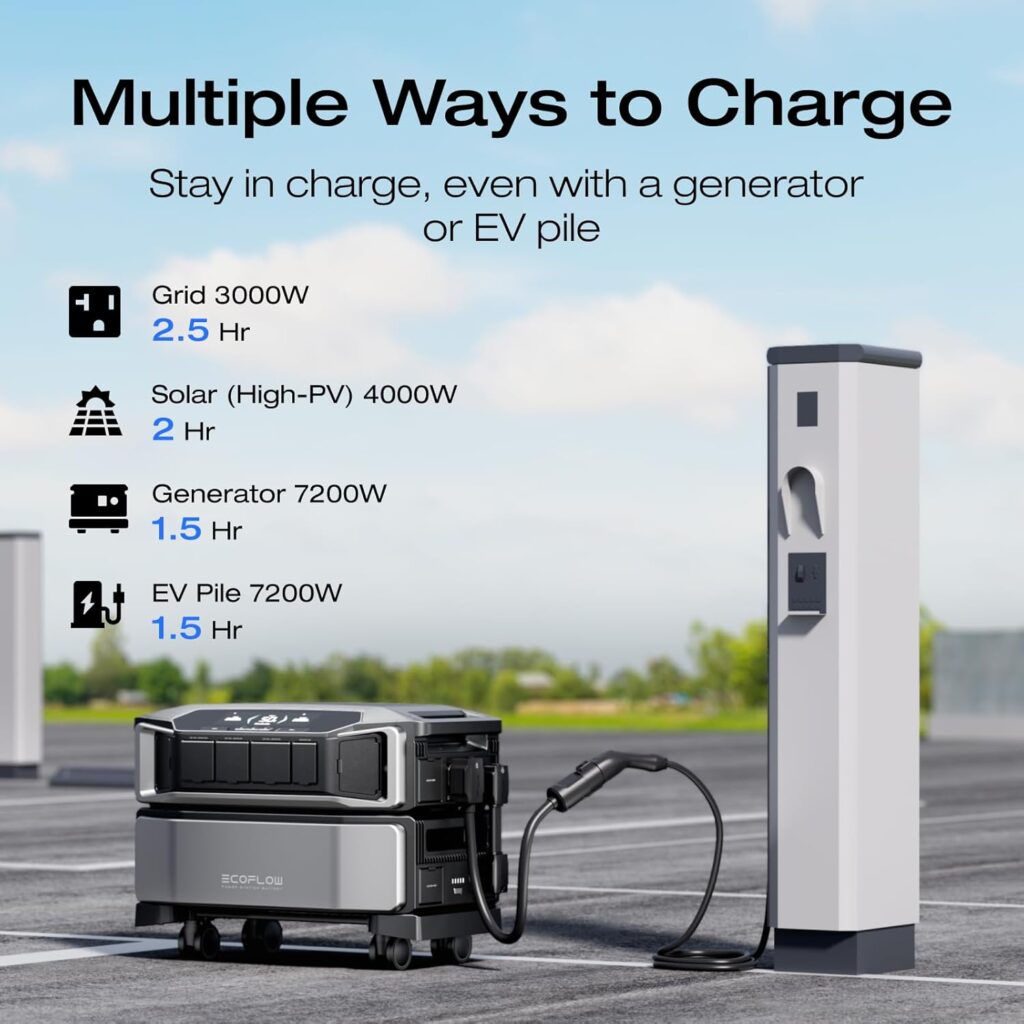
The EcoFlow DELTA Pro Ultra is the system for homeowners who want zero lifestyle compromise during any outage. Starting at 6,144Wh (expandable to 90kWh), delivering 7,200W of continuous AC output (14,400W surge with two units), with 5,600W of solar input per inverter unit — the DELTA Pro Ultra integrates with EcoFlow’s Smart Home Panel 2 for automatic switchover and whole-home circuit management. With online UPS performance, the transition is imperceptible to all connected electronics.
Expanded to 90kWh, it provides 3+ days of full home coverage for most households — genuinely moving from backup into energy independence territory. The 7,200W continuous output handles loads the other units can’t: full central HVAC systems, electric dryers, and multiple simultaneous heavy appliances.
Where it leads: Highest capacity (90kWh max), highest output (7,200W continuous), fastest solar recharge (5,600W input), most complete whole-home coverage of any system in our picks.
Where competitors beat it: Most expensive (~$4,849 base); heaviest and least portable; highest installation complexity; 3,500-cycle rating still below Jackery’s 6,000.
Pros: Largest capacity (90kWh max), 7,200W continuous output for full HVAC coverage, 5,600W solar input, Smart Home Panel 2 whole-home integration, UPS-level transfer
Cons: Most expensive at ~$4,849, heaviest, highest installation complexity, requires professional installation for home integration
Best for: Large homes, whole-home backup without compromise, homeowners with large solar arrays, hurricane and extended-outage regions, energy independence goals
Solar Battery Backup vs. Gas Standby Generator
| Factor | Solar Battery Backup | Gas Standby Generator |
|---|---|---|
| Transfer time | <10–20ms — imperceptible | 10–30 seconds — appliances interrupt |
| Operating noise | Silent to 30dB | 65–75dB — loud outdoors |
| Fuel cost | $0 (solar recharge) | $30–$100+ per outage event |
| Indoor use | ✅ Safe — no emissions | ❌ Never — CO poisoning risk |
| Maintenance | None | Annual service, oil, fuel treatment |
| Unlimited runtime | Only with solar recharge | ✅ With fuel supply |
| Upfront cost | $2,000–$10,000+ | $3,000–$15,000 installed |
For short-to-medium outages (under 48 hours) — the vast majority of grid disruptions — a solar battery backup system wins on every practical dimension. For extended multi-day outages without adequate solar recharge, a gas generator’s unlimited-fuel runtime advantage becomes meaningful. Many homeowners use solar battery backup as the primary solution and keep a small portable gas generator for worst-case extended outages.
How Much Solar Backup Do You Actually Need?
| Appliance | Typical Draw | Daily Wh |
|---|---|---|
| Refrigerator | 150W avg | ~1,200Wh |
| LED lighting (whole house) | 200W | ~800Wh (4hrs) |
| Wi-Fi router | 10W | ~240Wh (24hrs) |
| Phone charging (×4) | 60W | ~120Wh (2hrs) |
| CPAP machine | 30W | ~240Wh (8hrs) |
| Well pump | 800W | ~400Wh (0.5hr) |
| Window AC (10,000 BTU) | 1,000W | ~4,000Wh (4hrs) |
| Essential loads total | ~3,000Wh/day |
A 4kWh system running these essential loads provides approximately 18–24 hours of duty-cycle runtime. With daily solar recharging (a 2kW array produces ~10kWh/day in 5 peak sun hours), the system runs indefinitely through any outage in good weather.
For complete solar system sizing — panels, charge controllers, and system design — see our off-grid solar system guide.
Installation — What’s Required
Every home solar battery backup system requires professional electrical installation. There are no exceptions for connecting to home circuits.
What’s needed: A licensed electrician, transfer switch or backup panel (either a whole-home automatic transfer switch or a subpanel for specific circuits), permits (most jurisdictions require these for battery storage systems), and utility notification for grid-tied solar-coupled installations.
Installation cost range: $1,000–$3,000 for a standard essential-load backup installation. Whole-home backup with Smart Home Panel replacement: $3,000–$6,000.
The federal tax credit: The 30% Residential Clean Energy Credit applies to home battery storage systems. A $3,000 system yields $900 back; a $7,000 system yields $2,100. Verify current eligibility with your tax advisor and keep all receipts.
Frequently Asked Questions
How long will a solar battery backup run my house?
Depends on system size and loads. A 4kWh system running essential loads (~1,500W average) provides approximately 18–24 hours of duty-cycle runtime (where the fridge cycles on and off rather than running continuously). With daily solar recharging from a 2kW array, it runs indefinitely in good weather.
Do I need solar panels to use a battery backup system?
No — all systems here can charge from the grid and function as backup without solar panels. Solar extends utility by enabling recharge during outages when the grid isn’t available. Without solar, the battery charges from the grid when power is on and discharges during outages, then must wait for grid power to return.
What’s the difference between a solar battery backup and a portable power station?
Scale and integration. A portable power station (see our camping solar guide) powers individual appliances via its outlets. A home battery backup system connects to your home’s electrical panel and powers circuits — every outlet and fixture on those circuits works normally during an outage, without extension cords or manual plug-ins.
Can a solar battery backup run central air conditioning?
Central HVAC typically draws 3,500–7,000W at startup. The Anker SOLIX F3800 Plus (6,000W continuous, 12,000W surge) and EcoFlow DELTA Pro Ultra (7,200W continuous, 14,400W surge) handle most 3–5 ton central AC systems. The Jackery HomePower 3600 Plus at 7,200W surge handles most 3-ton systems. Check your AC unit’s nameplate for startup and running wattage before purchasing.
How long do home battery backup systems last?
The Jackery HomePower 3600 Plus leads our picks at 6,000 LFP cycles — approximately 16 years at one cycle per day. EcoFlow and Anker systems rate 3,000–3,500 cycles — approximately 8–10 years. All carry 5-year manufacturer warranties.
Is a solar battery backup system worth it?
For homeowners in outage-prone areas, with existing or planned solar, with medical equipment dependencies, or facing rising electricity rates — yes, clearly. The 30% federal tax credit significantly improves economics. For homeowners in areas with exceptional grid reliability who rarely experience outages, a portable power station for emergencies may be more cost-appropriate.
Final Verdict
| Your Situation | Best Pick |
|---|---|
| Simplest setup, quiet operation, maximum durability | Jackery HomePower 3600 Plus |
| Best value, heavy loads, fast solar charging | Anker SOLIX F3800 Plus |
| Medical equipment (UPS transfer), EcoFlow ecosystem | EcoFlow DELTA Pro 3 |
| Whole-home coverage, large solar array, maximum capacity | EcoFlow DELTA Pro Ultra |
| RV + home backup combined | Jackery HomePower 3600 Plus |
| Tightest budget for heavy-load backup | Anker SOLIX F3800 Plus (~$2,399) |
For most homeowners new to home battery backup, the Anker SOLIX F3800 Plus is the best entry point — 6,000W output, 2,400W solar input, 240V single unit, at the lowest price of our picks. For homeowners who want the simplest, quietest, most durable option with the longest battery lifespan, the Jackery HomePower 3600 Plus is the pick — and our full review covers every detail.
For complete solar system builds that feed into these home backup systems — panels, charge controllers, and off-grid design — see our off-grid solar system guide. For the solar panels that keep these batteries charged during outages, see our high efficiency solar panels guide and our 400 watt solar panel guide. For smaller portable power station options for camping and light backup, see our best solar generator for home backup guide.