This post contains affiliate links. If you buy through our links we may earn a small commission — at no extra cost to you. This never influences our recommendations.
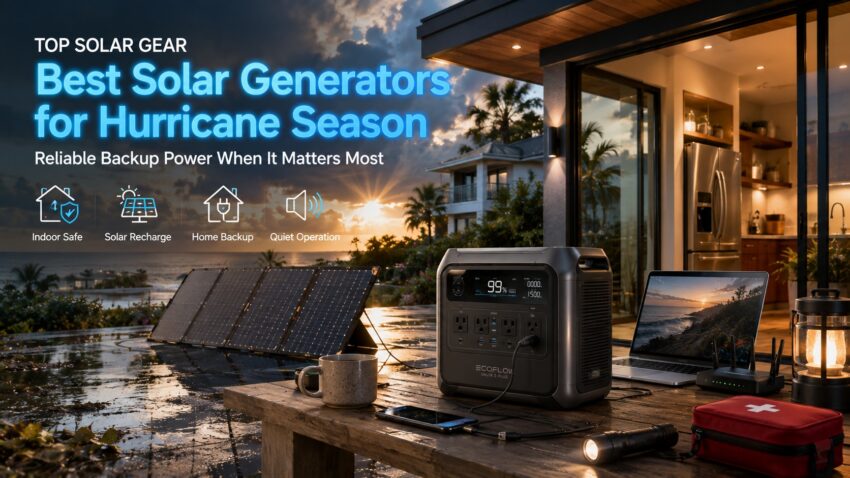
Carbon monoxide poisoning — not the storm itself — is the leading cause of death in the days following a hurricane, almost always from generators run too close to a home or indoors after the power goes out. A solar generator eliminates that risk entirely: no fuel, no exhaust, no carbon monoxide, safe to run in a living room or bedroom. This guide covers how to size one correctly for a real multi-day outage, the pre-storm checklist that actually matters, and picks for every level of coverage.
Why Solar Generators Are the Safer Default for Hurricane Season
Gas generators deliver more raw wattage, but they come with real risks that matter specifically in a post-hurricane scenario: carbon monoxide poisoning from indoor or too-close operation, fuel shortages when gas stations are closed or have hours-long lines, and the noise and maintenance burden of running a fuel-powered engine continuously for days. A battery-based solar generator runs silently indoors with zero emissions, recharges from sunlight once the storm passes, and requires no fuel supply chain at all — a genuine advantage when roads are blocked and stations are dry. For most households, a solar generator is the safer primary choice, with a gas generator (if you already own one) serving as secondary backup for higher-draw needs. See our solar generator vs gas generator guide for the full comparison.
How to Size a Solar Generator for a Real Hurricane Outage
Multi-day outages are the norm, not the exception, after a significant hurricane — sizing for a few hours of coverage sets you up to fail exactly when it matters most. Add up your essential daily loads first, then size your battery capacity around that real number.
| Essential Load | Typical Draw | Daily Energy Use |
|---|---|---|
| Refrigerator (150W continuous, 600-800W surge) | 150W avg (cycling) | 1,000-1,500Wh |
| Phone/device charging (multiple devices) | 20-40W | 100-200Wh |
| LED lighting (several rooms) | 20-40W | 100-200Wh |
| Wi-Fi router/modem | 15W | ~360Wh (if run 24hrs) |
| CPAP machine | 30-60W | 240-480Wh overnight |
| Box fan | 50W | 400-600Wh |
Minimum baseline: at least 1,500Wh capacity with 1,800W AC output covers a fridge, lighting, and device charging for basic multi-day coverage. For longer outages or more demanding needs — medical equipment, a CPAP, multiple people’s devices — 2,000Wh+ with 3,000W output is the more realistic target most guides converge on.
The Solar Recharge Reality Check
This is the detail most hurricane prep guides gloss over: solar panels produce only 10-40% of their rated output under the heavy cloud cover that typically follows a hurricane, not their full rated wattage. The honest way to think about solar panels in a hurricane scenario is as a range extender, not a primary power source during the storm itself — size your battery capacity for 1-2 full days of critical loads on stored charge alone, then let solar panels gradually rebuild capacity as skies clear over the following days.
Also worth knowing: wait until the storm has fully passed before deploying solar panels outdoors. High winds and flying debris during active hurricane conditions pose a real risk to both the panel and anyone setting it up.
Best Solar Generators for Hurricane Preparedness — Verified Picks
| Product | Capacity | AC Output | Expandable | Best For |
|---|---|---|---|---|
| EcoFlow DELTA 3 Plus | 1,024Wh | 1,800W | Yes, to ~5,120Wh | Basic coverage, first-time buyers |
| Jackery Explorer 2000 Plus | 2,042Wh | 3,000W | Yes, to 24kWh | Recommended baseline, most households |
| EcoFlow DELTA Pro 3 | 4,096Wh | 4,000W, 120V/240V | Yes, to 48kWh | Extended outages, whole-circuit backup |
Basic Coverage: EcoFlow DELTA 3 Plus
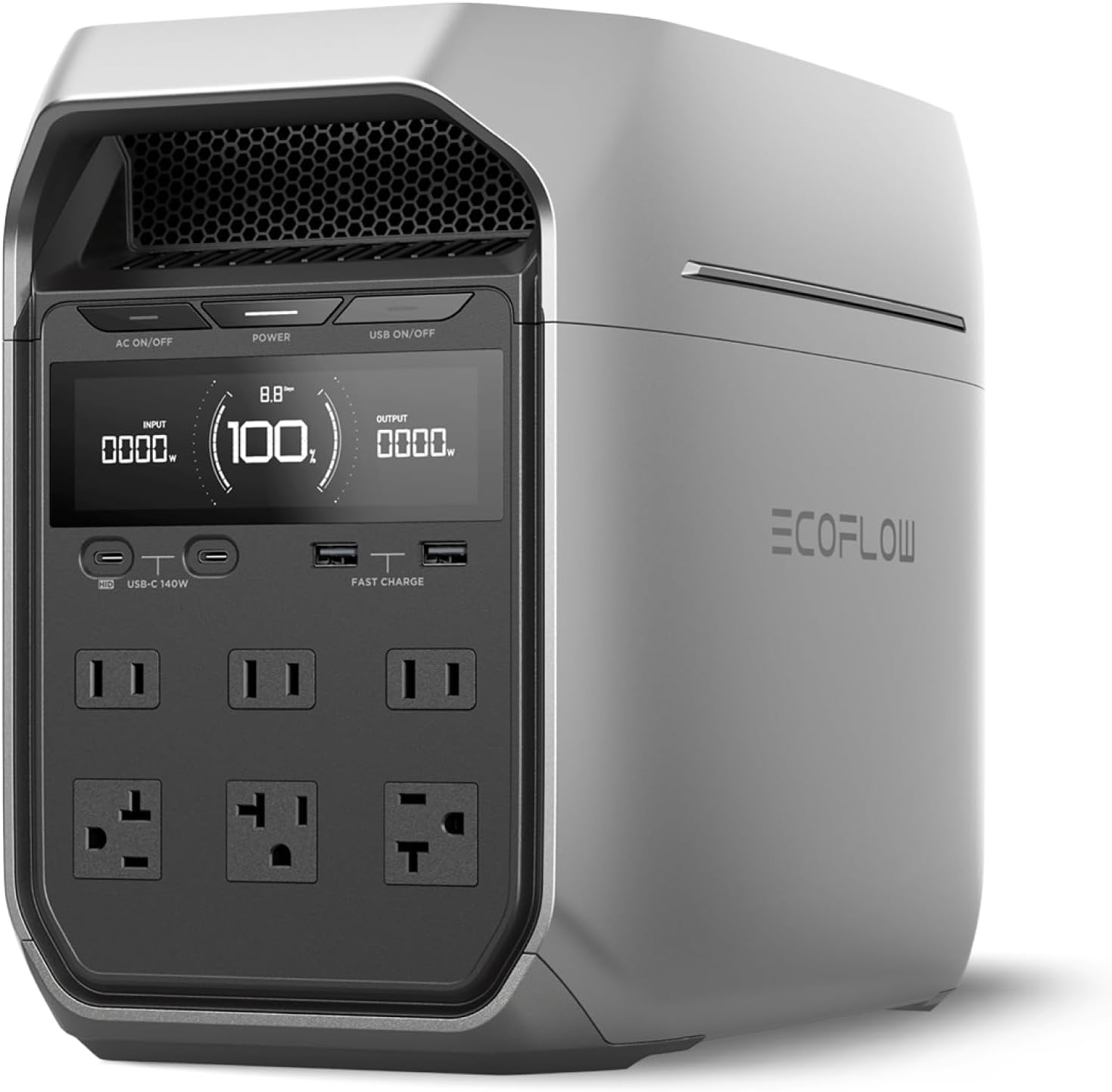
At 1,024Wh with 1,800W continuous output, this covers the essential baseline — a fridge, phone charging, and lighting for the first 12-20 hours before needing a recharge. The fast ~50-minute AC charge means you can top it off quickly in the days before a storm makes landfall, and the sub-10ms UPS switchover keeps a router or medical device running seamlessly if grid power flickers before failing entirely. Expandable to roughly 5,120Wh if your needs grow. For the full breakdown including an honest cooling-fan caveat under sustained heavy loads, see our EcoFlow DELTA 3 Plus review.
Recommended Baseline: Jackery Explorer 2000 Plus
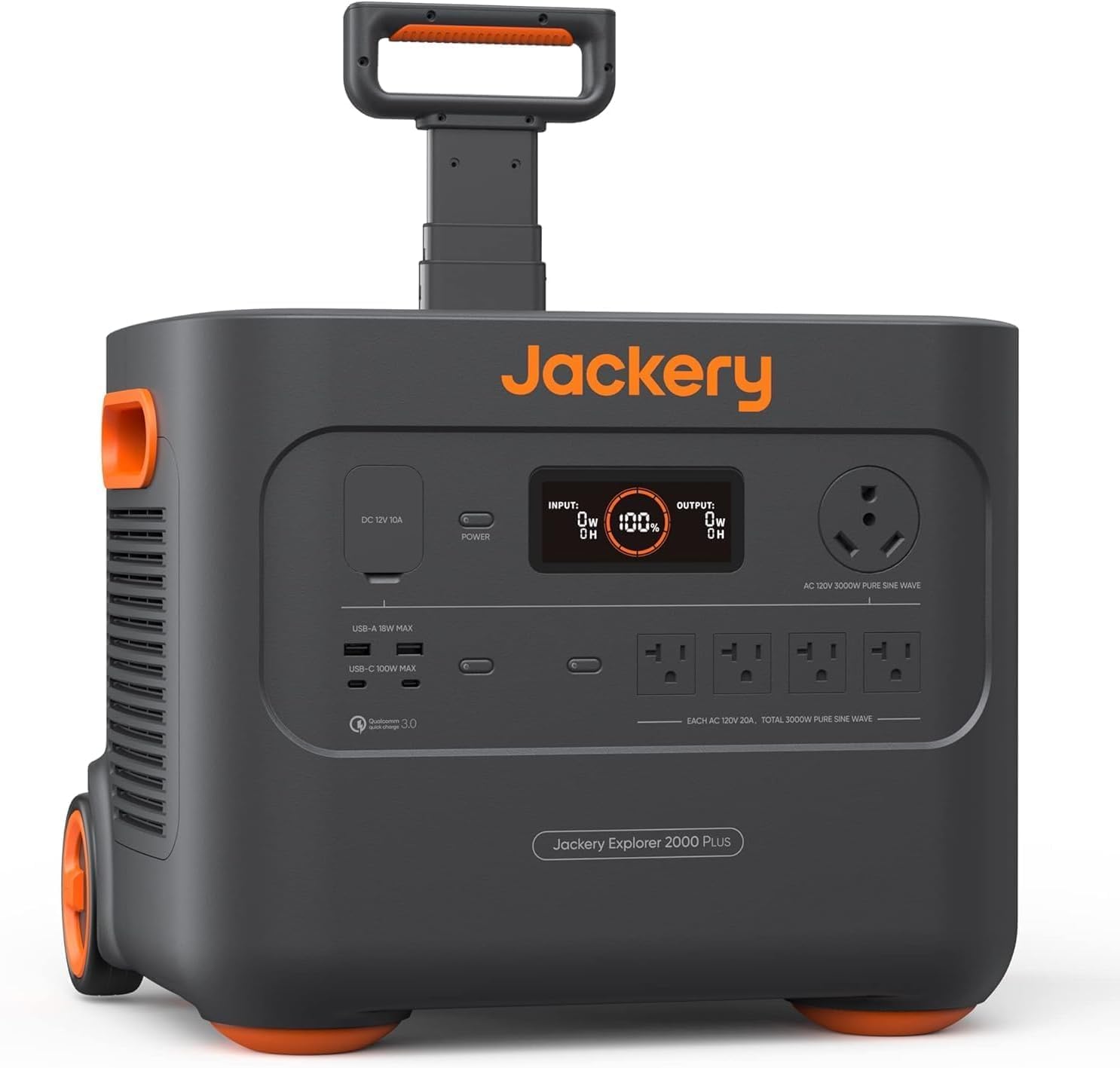
This is the capacity tier most independent guides converge on as the practical sweet spot for real hurricane preparedness — 2,042Wh comfortably runs a full-size refrigerator for 16-20 hours per charge, bridging the overnight gap between solar recharge windows during a multi-day outage. At 30dB operation, it’s genuinely quiet enough to run in a bedroom or living room without adding stress during an already difficult stretch. Expandable to 24kWh via additional battery packs — a meaningful upgrade path if you want to build toward more serious whole-home coverage over time, without replacing the core unit.
Extended Outages: EcoFlow DELTA Pro 3
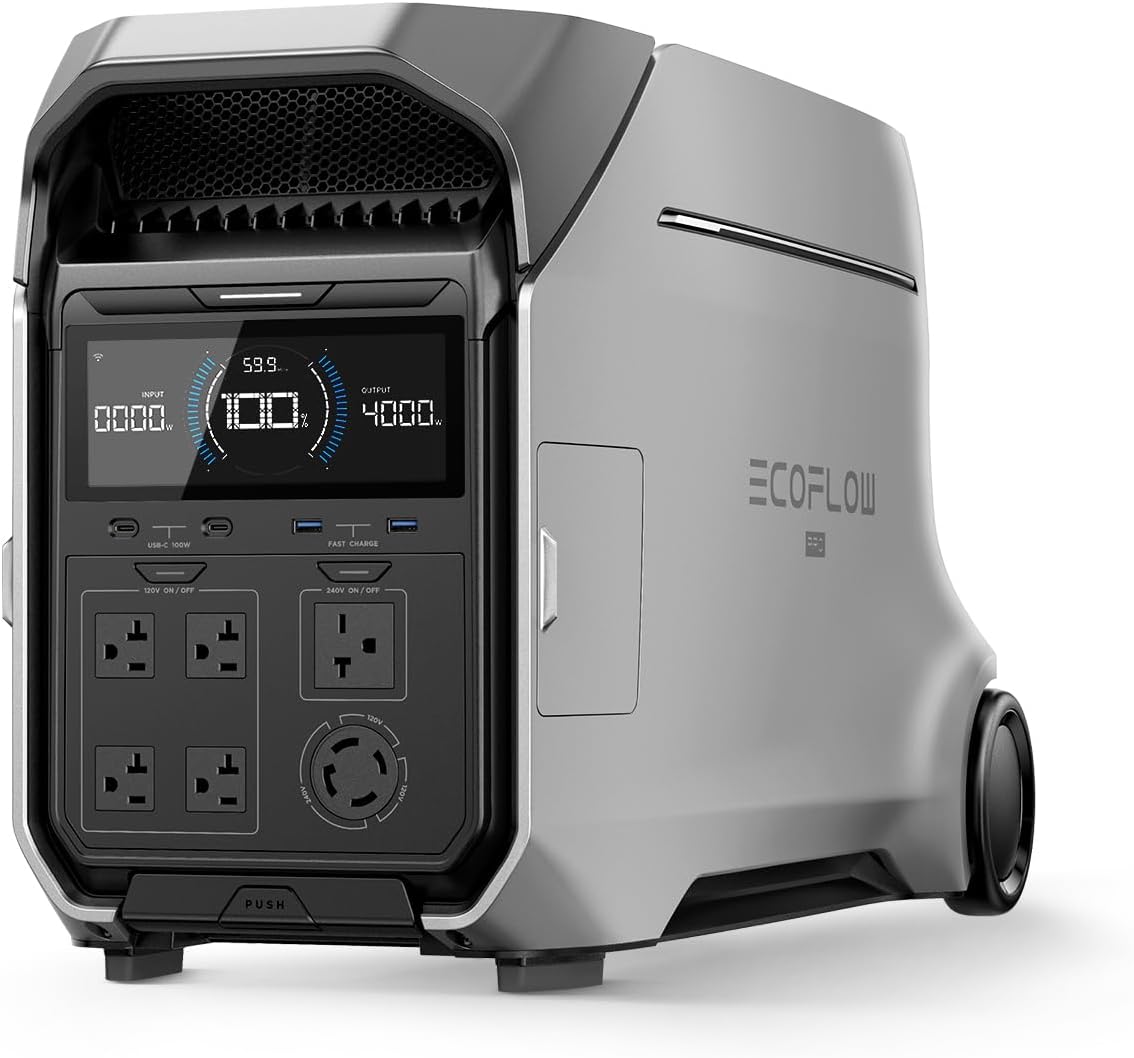
For households in the most storm-prone regions specifically planning for outages measured in weeks rather than days, the DELTA Pro 3’s 4,096Wh base capacity and native 120V/240V output support genuinely serious backup — a well pump, a window AC unit, or multiple major appliances simultaneously. Paired with the optional Smart Home Panel, it integrates directly with your electrical panel to automatically back up chosen circuits during an outage, rather than requiring you to manually plug in each device. Expandable to 48kWh for households wanting true whole-home coverage. For the full spec breakdown and real-world outage testing, see our EcoFlow DELTA Pro 3 review.
The Pre-Storm Checklist
Buy before hurricane season, not during a watch. Units consistently sell out within hours of a hurricane watch or warning being issued, and prices spike accordingly. June-July, including major sale events, is typically the cheapest window to buy — well before an active storm threatens your specific region.
Keep it charged to 80-100% at all times during hurricane season. Don’t wait for a named storm to top it off — by the time a watch is issued, you want to already be at full charge, not scrambling to find an outlet.
Store it away from flood risk. An elevated closet or upper floor is safer than a garage or ground-floor storage area in flood-prone regions.
Know your specific device wattages before the storm hits. Check your refrigerator’s actual rating, confirm your CPAP’s power draw, and do the sizing math in this guide before you’re in an active outage trying to figure it out under stress.
Practice a power rationing plan. Decide in advance what runs continuously (fridge, medical equipment) versus what runs only when needed (device charging, lighting) — this stretches your available capacity meaningfully further than running everything simultaneously without a plan.
Frequently Asked Questions
What size solar generator do I need for hurricane preparedness?
At minimum, 1,500Wh capacity with 1,800W AC output for basic coverage of a fridge, lights, and device charging. For longer outages or more demanding needs — medical equipment, multiple people’s devices, extended multi-day coverage — 2,000Wh+ with 3,000W output is the more realistic target most guides recommend.
Will solar panels actually recharge my generator during a hurricane?
Not reliably during the storm itself — heavy cloud cover typically reduces solar output to just 10-40% of the panel’s rated wattage. Size your battery for 1-2 days of critical loads on stored charge alone, then treat solar recharging as a way to gradually extend your outage coverage over the following days as skies clear, not as your primary power source during active weather.
Is it safe to run a solar generator indoors during a hurricane?
Yes — this is one of the biggest safety advantages over a gas generator. Solar generators produce zero emissions and no carbon monoxide, making them safe to run in a living room, bedroom, or anywhere indoors. Gas generators must always run outdoors, well away from windows and doors, due to genuine carbon monoxide poisoning risk.
How long will a solar generator run a refrigerator during a hurricane outage?
A 1,000Wh unit typically runs a standard refrigerator for 12-18 hours per charge; a 2,000Wh unit covers close to a full day. Pairing either with solar panels once weather clears can extend this indefinitely. For detailed runtime math specific to refrigerators, see our how long will a solar generator run a refrigerator guide.
When should I buy a solar generator for hurricane season?
Well before hurricane season starts, or at minimum before any storm is named or a watch is issued for your region. Units consistently sell out within hours once a specific storm threat emerges, and prices often spike during that window. Shopping calmly months ahead — rather than reactively during an active threat — is both cheaper and far less stressful.
Final Verdict
| Your Situation | Best Pick |
|---|---|
| Basic coverage, first-time buyer | EcoFlow DELTA 3 Plus |
| Recommended baseline for most households | Jackery Explorer 2000 Plus |
| Extended outages, whole-circuit backup | EcoFlow DELTA Pro 3 |
The Bottom Line
For most households in hurricane-prone regions, the Jackery Explorer 2000 Plus hits the sizing sweet spot most independent guides converge on — enough capacity to bridge a real multi-day outage, quiet enough to run indoors without adding stress, and expandable if your needs grow. Whatever capacity you choose, the two things that matter most are buying before a storm is named — not during the panic-buying window — and sizing your battery for real stored capacity rather than counting on solar recharge during the storm itself.
For complete home backup sizing beyond hurricane-specific scenarios, see our best solar generator for home backup guide. For refrigerator-specific runtime math, see our how long will a solar generator run a refrigerator guide.