This post contains affiliate links. If you buy through our links we may earn a small commission — at no extra cost to you. This never influences our recommendations.
There’s no such thing as a genuinely “winter-rated” portable power station at the consumer level, whatever the marketing implies — every mainstream brand uses the same LiFePO4 battery chemistry, and it behaves essentially the same way in the cold regardless of logo. What actually determines how well your unit performs on the ice is sizing your load correctly and how you store it between uses. This guide covers the real cold-weather physics, honest heater math, and picks for both day trips and overnight stays.
What Cold Actually Does to Your Battery
As temperatures drop, the chemical reactions inside a lithium battery slow down, reducing both available capacity and how efficiently the battery can deliver power — this is basic battery chemistry, not a brand-specific weakness. One independent three-winter test at -20°F in Northern Michigan found this holds true across every major brand: all use the same LiFePO4 chemistry and perform comparably once you control for how the unit was stored.
Real tested numbers: one detailed cold-weather test found the Bluetti AC180 lost only about 12% of rated capacity at 28°F, with reliable operation down to 14°F during overnight testing — a useful benchmark for what “normal” cold-weather degradation looks like on a quality LiFePO4 unit, rather than a claim unique to that specific brand.
An Important Safety Note: Never Charge a Frozen Battery
This deserves direct attention. Most portable power stations can discharge (power your devices) even when cold-soaked, but charging a LiFePO4 battery below freezing (32°F) without a proper internal heating system can cause permanent damage to the cells, even though the unit may appear to charge normally. If you’ve had your power station sitting in a cold truck bed or an unheated ice shanty, let it warm to above freezing before plugging it in to charge — don’t assume it’s safe just because the charging port accepts the cable.
The Real Mistake Buyers Make
Most people shop for maximum rated watt-hours when they should be prioritizing efficiency, cycle life, and how the unit is actually stored between trips. A larger unit that degrades faster because it’s left in a freezing truck bed all winter is a worse long-term investment than a smaller, better-matched unit that’s stored properly. A simple insulated storage bag or bringing the unit inside your shelter between uses does more for real-world cold-weather performance than switching brands ever will.
Sizing by Trip Type
| Use Case | Recommended Capacity | Realistic Runtime |
|---|---|---|
| Day trip, fish finder + phone charging + LED lights only | 300Wh+ | Full day, 50%+ capacity remaining |
| Day trip with occasional heated gear (electric blanket/pad) | 500-1,000Wh | Full day plus buffer |
| Overnight or multi-day, running a space heater | 2,000Wh+, budget accordingly | See heater math below |
For a typical 8-10 hour day trip powering electronics, LED lighting, and phone charging without a heater, even a budget 300Wh unit provides sufficient runtime with plenty of margin — this isn’t a category where you need to overspend for a simple day on the ice.
The Honest Heater Math
This is worth understanding before assuming any power station can comfortably run a space heater all day. A typical portable space heater draws around 1,500W continuously — under realistic planning assumptions, a 1,024Wh power station running that load continuously lasts only about 35 minutes before depleting. Even a larger 2,000Wh+ unit only stretches this to roughly 70-90 minutes of continuous heater use, once you factor in cold-weather capacity loss.
The more efficient alternative: an electric blanket or heated sleeping pad draws only 60-100W — a small fraction of a space heater’s draw — and independent testing specifically recommends this as a genuinely more practical way to stay warm on a multi-hour capacity budget than trying to run a full space heater continuously. Reserve heater use for short, intermittent bursts rather than continuous operation if you’re relying on battery power alone.
Best Power Stations for Ice Fishing — Verified Picks
| Product | Capacity | Confirmed Cold-Weather Performance | Best For |
|---|---|---|---|
| Bluetti AC180 | 1,152Wh | 12% loss at 28°F, reliable to 14°F (independently tested) | Overnight trips, moderate loads |
| EcoFlow River 3 Plus | 286Wh | Standard LiFePO4 cold-weather behavior | Day trips, fish finder + electronics |
Best for Overnight or Extended Trips: Bluetti AC180
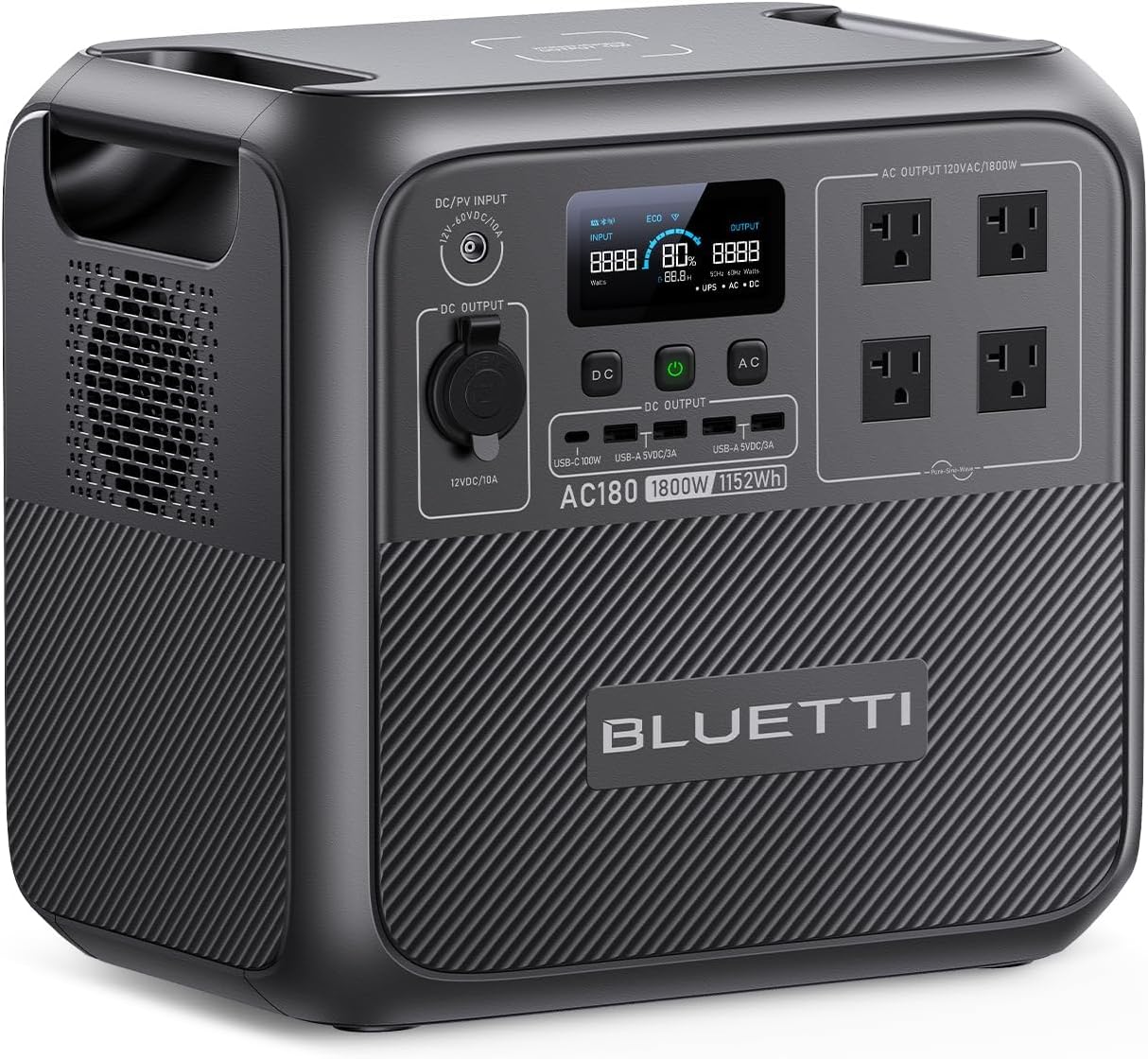
At 1,152Wh with 1,800W continuous output, the AC180 has enough headroom for a fish finder, LED lighting, phone charging, and even brief heater use, with independently confirmed cold-weather performance — only about 12% capacity loss at 28°F and reliable operation down to 14°F in real testing. For anyone spending a full day or overnight on the ice rather than just a few hours, this capacity tier gives genuine buffer against the reduced efficiency cold weather causes. For the full spec breakdown including honest real-world efficiency testing, see our Bluetti AC180 review.
Best for Day Trips: EcoFlow River 3 Plus
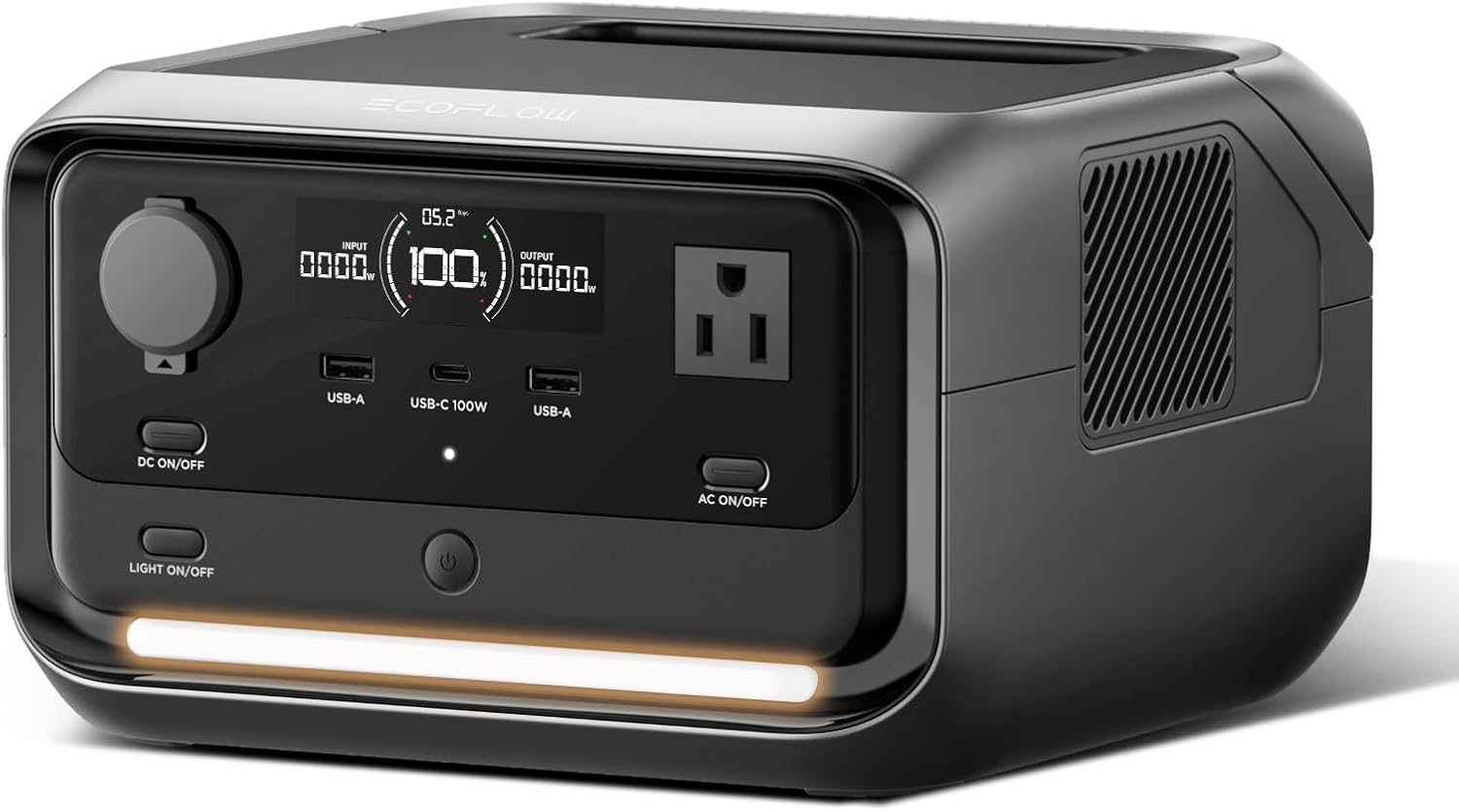
For a straightforward day on the ice — fish finder, phone charging, maybe a portable radio or LED lantern — the River 3 Plus’s 286Wh capacity and 600W output cover the essentials without paying for capacity you won’t use in a single day trip. Its independently verified sub-10ms UPS switchover isn’t particularly relevant to ice fishing specifically, but the fast roughly 1-hour recharge means you can top it off quickly at home between trips. At 10.4 lbs, it’s also genuinely easy to carry across the ice to your shelter. For the full spec breakdown, see our EcoFlow River 3 Plus review.
A Note on Emerging Sodium-Ion Technology
Sodium-ion battery chemistry is a genuinely notable development for cold-weather use specifically — it retains usable capacity at temperatures where standard LiFePO4 cells start struggling, making it an interesting option for serious winter use. The trade-off as of 2026 is cycle life: sodium-ion units typically rate for 1,500-2,000 cycles, roughly half of a mature LiFePO4 unit’s 3,000-6,000+ cycle rating. Worth watching as the technology matures, but not yet a clear across-the-board upgrade over proven LiFePO4 units for most buyers.
Storage and Care Tips for Ice Fishing Specifically
Keep the unit inside your shelter or an insulated bag rather than leaving it directly on the ice or in an unheated vehicle — this single habit does more for real-world performance than any brand choice.
Let a cold-soaked unit warm above freezing before charging it at home after a trip, to avoid the cell damage risk covered above.
Don’t place the unit directly beside a heater — protect it from both extreme cold and excessive heat, and keep ventilation openings clear.
Bring a backup battery pack for your phone specifically, so you’re not drawing down your main power station’s capacity for small device charging when it’s needed for higher-priority electronics.
Frequently Asked Questions
Is there really no such thing as a “winter-rated” power station?
Correct, at the consumer level — every mainstream brand uses the same LiFePO4 battery chemistry, which behaves similarly in cold regardless of marketing claims. Independent multi-winter testing found storage strategy (keeping the unit insulated between uses) matters more for real-world cold-weather performance than which brand you choose.
Can I run a space heater off a portable power station while ice fishing?
For short bursts, yes, but not continuously for long periods — a typical 1,500W space heater depletes a 1,024Wh unit in roughly 35 minutes of continuous use. An electric blanket or heated pad (60-100W) is a far more efficient way to stay warm on a limited battery budget than running a full space heater continuously.
Is it safe to charge my power station if it’s been sitting in a cold truck or shanty?
Not immediately — let it warm to above freezing (32°F) before charging. Charging a LiFePO4 battery while it’s still cold-soaked below freezing, without a proper internal heating system, can cause permanent cell damage even though it may appear to charge normally.
What size power station do I need for a day of ice fishing?
For a typical 8-10 hour day trip running a fish finder, phone charging, and LED lighting without a heater, even a budget 300Wh unit provides sufficient runtime with capacity to spare. Only step up to 1,000Wh+ if you’re planning overnight stays or want meaningful heater backup capacity.
How much capacity do power stations actually lose in cold weather?
Independent testing measured roughly 12% capacity loss at 28°F on a quality LiFePO4 unit, with reliable operation continuing down to 14°F. This is a reasonable benchmark for what to expect across most quality LiFePO4 power stations, not a claim unique to any single brand.
Final Verdict
| Your Situation | Best Pick |
|---|---|
| Overnight or extended ice fishing trips | Bluetti AC180 |
| Standard day trips, electronics only | EcoFlow River 3 Plus |
The Bottom Line
Don’t overpay chasing a “winter-rated” label that doesn’t meaningfully exist at the consumer level — every quality LiFePO4 power station handles cold similarly, and how you store and manage the unit matters more than brand. For day trips, a smaller unit like the EcoFlow River 3 Plus covers electronics and lighting comfortably. For overnight stays or heavier loads, the Bluetti AC180’s larger capacity and independently confirmed cold-weather performance provide real buffer. Whatever you choose, keep it insulated between uses and never charge it while still cold-soaked below freezing.
For a broader look at capacity options at this tier, see our best 1000W solar generators for the money guide. For the full Bluetti lineup, see our best Bluetti solar generator guide.