This post contains affiliate links. If you buy through our links we may earn a small commission — at no extra cost to you. This never influences our recommendations.
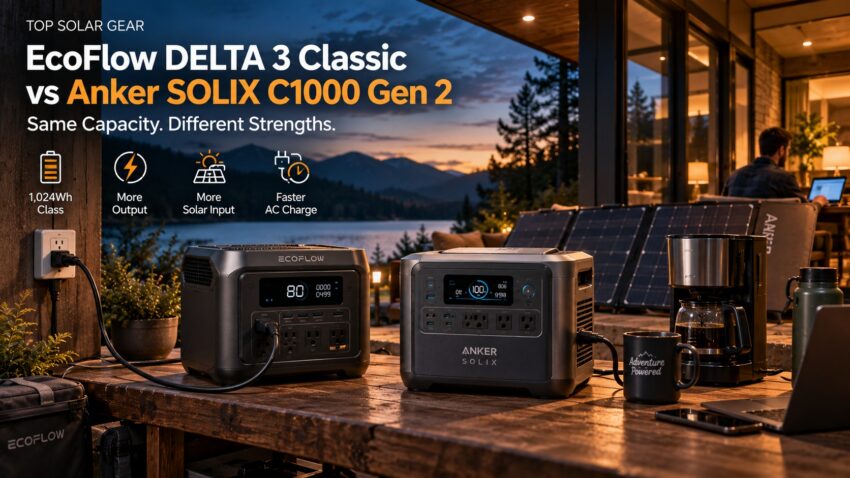
Both are budget-tier options in the same 1,024Wh class. Both are trying to win on price rather than premium features.
The Anker wins on more specs than you’d expect. One genuine edge still favors the EcoFlow.
Full Spec Comparison
| Spec | EcoFlow DELTA 3 Classic | Anker SOLIX C1000 Gen 2 |
|---|---|---|
| Capacity | 1,024Wh | 1,024Wh |
| Battery chemistry | LiFePO4 | LiFePO4 |
| Cycle life | Not consistently confirmed | 4,000 cycles |
| AC output | 1,800W continuous | 2,000W continuous |
| AC charge time | 45 minutes | 49 minutes |
| Solar input (max) | 500W | 600W |
| UPS switchover | Under 10ms | Under 20ms |
| Weight | Comparable | 24.9 lbs |
| Expandable | Genuinely unclear — conflicting claims | No |
The Two Units Side by Side
EcoFlow DELTA 3 Classic
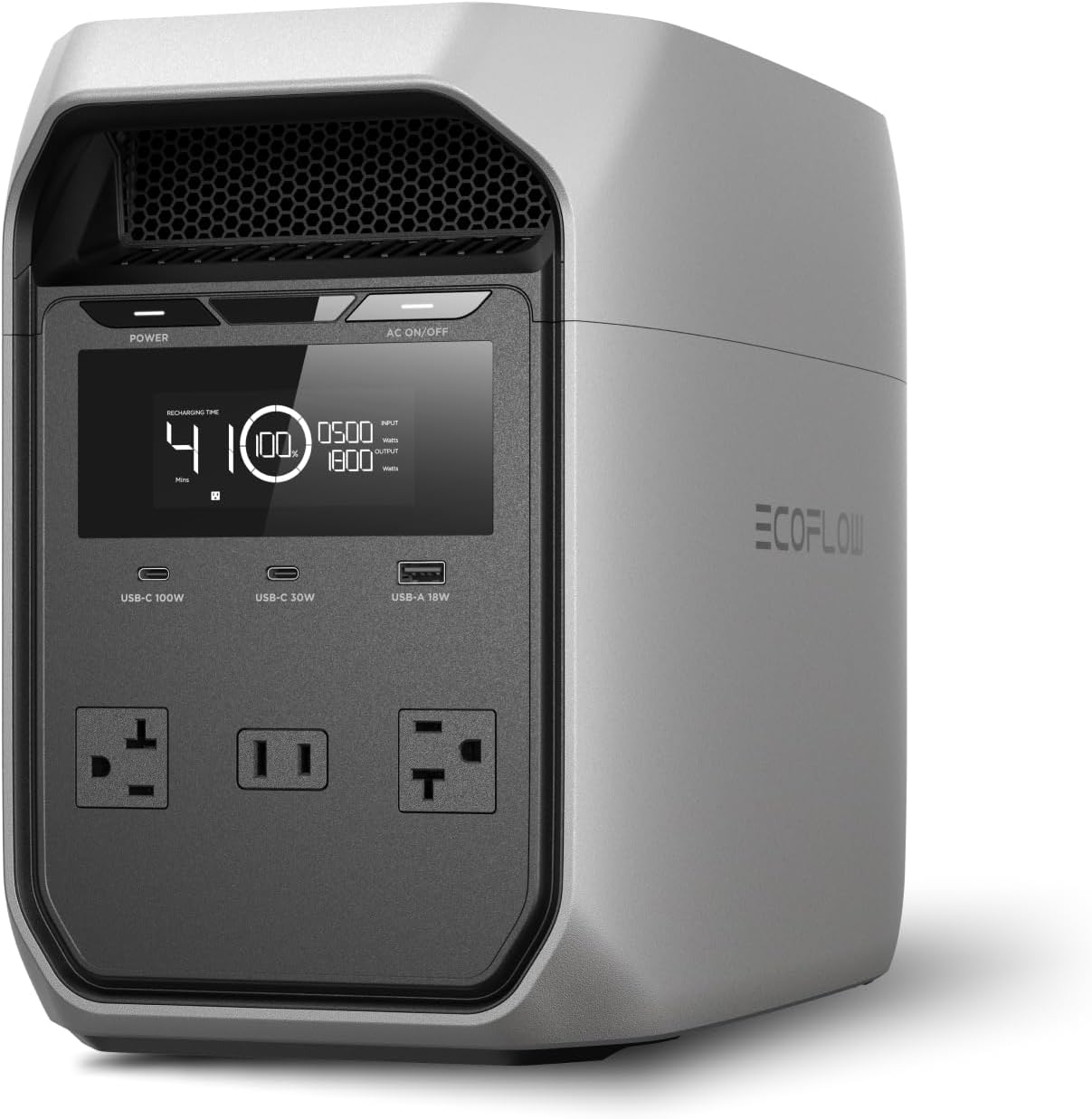
The one genuine edge here is charging speed — 45 minutes to 80% beats the Anker’s 49-minute figure, a real if narrow win.
Beyond that, this unit’s case gets harder to make against the Anker specifically. It trails on continuous output, solar input, and neither cycle life nor expandability are clearly confirmed. For the full breakdown including the expansion conflict, see our EcoFlow DELTA 3 Classic review.
Anker SOLIX C1000 Gen 2
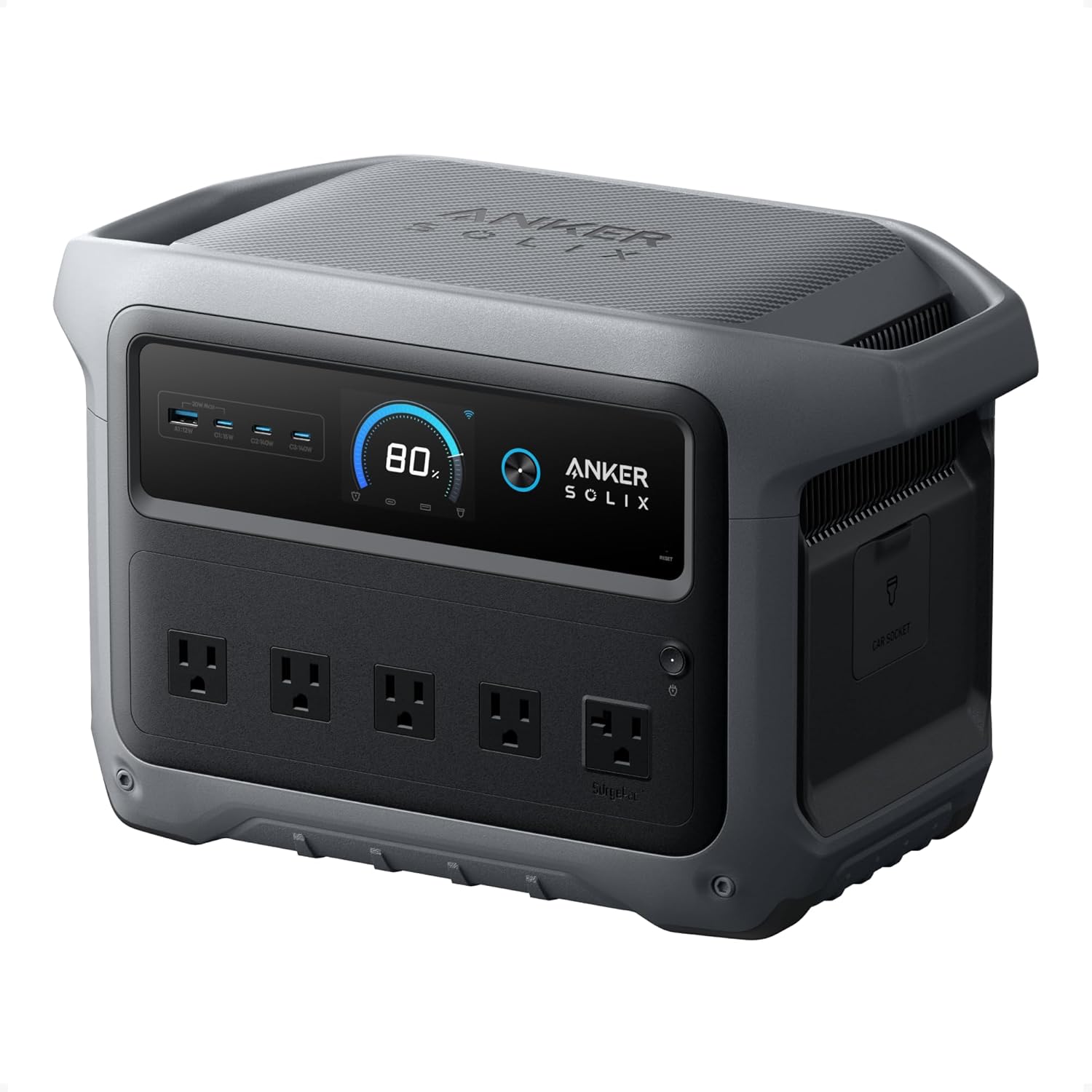
This wins on nearly every hard spec: higher output (2,000W vs 1,800W), more solar input (600W vs 500W), and a confirmed 4,000-cycle rating with no ambiguity attached.
It’s also generally the more established, higher-review-volume product in this exact matchup. For the broader picture against EcoFlow’s higher-tier DELTA 3 Plus, see our Anker C1000 Gen2 vs EcoFlow DELTA 3 Plus comparison.
Which One Should You Buy?
| Your Situation | Better Fit |
|---|---|
| Want the fastest possible AC recharge | EcoFlow DELTA 3 Classic |
| Want confirmed cycle life and higher output | Anker SOLIX C1000 Gen 2 |
| Pairing with a larger solar array | Anker SOLIX C1000 Gen 2 (higher solar ceiling) |
| Not sure and want the safer overall pick | Anker SOLIX C1000 Gen 2 |
Frequently Asked Questions
Which charges faster?
The EcoFlow DELTA 3 Classic, at 45 minutes to 80% versus the Anker’s 49 minutes — a real but narrow win for EcoFlow.
Which has better battery longevity?
The Anker SOLIX C1000 Gen 2 has a clearly confirmed 4,000-cycle rating. The DELTA 3 Classic’s cycle life isn’t consistently confirmed across sources.
Can either unit expand its capacity?
The Anker C1000 Gen 2 has no expansion option at all. The DELTA 3 Classic’s expandability is genuinely unclear — sources conflict, and at least one official listing states it’s not compatible with EcoFlow’s extra battery packs.
Which handles more solar input?
The Anker, at 600W versus the EcoFlow’s 500W — a modest but real advantage for anyone pairing a larger panel array.
Is either one a clearly better value?
The Anker generally wins more hard specs in this specific matchup, making it the safer default recommendation unless the EcoFlow’s faster charge time is a priority for you specifically.
The Bottom Line
Unlike the DELTA 3 Plus, which genuinely earns its higher price against the Anker through confirmed expandability and higher output, the base DELTA 3 Classic has a harder case to make in this specific matchup.
The Anker SOLIX C1000 Gen 2 wins more specs here, with the EcoFlow’s faster charge time as its one clear advantage.
For the full lineup comparisons, see our best 1000W solar generators for the money guide.