This post contains affiliate links. If you buy through our links we may earn a small commission — at no extra cost to you. This never influences our recommendations.
Roof solar panels fall into two very different jobs. A whole-house grid-tied system is a licensed-installer project with permits and utility sign-off. A small off-grid roof array for an RV, van, shed or cabin is something you can plan and mount yourself.
This guide covers the second one. Here’s what to check on your roof, and three roof-ready options you can order online.
Quick Comparison
| Option | Power | Controller | Mounting Hardware | Best Roof |
|---|---|---|---|---|
| Renogy 200W N-Type Solar Panel | 200W, one panel | Not included | Not included | Van or small camper |
| Renogy 200W N-Type RV Solar Panel Kit | 200W, one panel | 30A PWM | Brackets included | RV, trailer or boat |
| Renogy 400W Premium Solar Kit | 400W, four 100W panels | 40A MPPT with Bluetooth | Z-brackets included | Shed, cabin or large RV |
What to Check Before You Buy
Space comes first. Measure the clear roof area, then leave room around vents, skylights and AC units. Shade from one vent can cut a whole string’s output.
Next is the mount. Panels need to be bolted or clamped into the roof structure, and every screw hole needs sealant. Our solar panel roof mounts guide covers brackets and sealing.
Then think about cable runs. Long runs lose power if the wire is too thin, so check our solar panel wire guide before you cut anything.
If your roof is shaded, steep or crowded, a ground array may work better. See our ground-mounted solar panels guide.
How Much Power Will Your Roof Make?
Here’s our rough estimate: panel watts × about 5 sun hours × 65–80% real-world efficiency.
That puts 200W at roughly 650–800Wh a day and 400W at roughly 1,300–1,600Wh a day in good sun. Flat-mounted panels, winter sun and shade will all pull those numbers down.
For scale, 650–800Wh covers LED lights, a phone and laptop charging, and a 12V fridge. It won’t run an air conditioner.
Best Roof Solar Panels
1. Renogy 200W N-Type Solar Panel — Best Single Panel for Tight Roofs
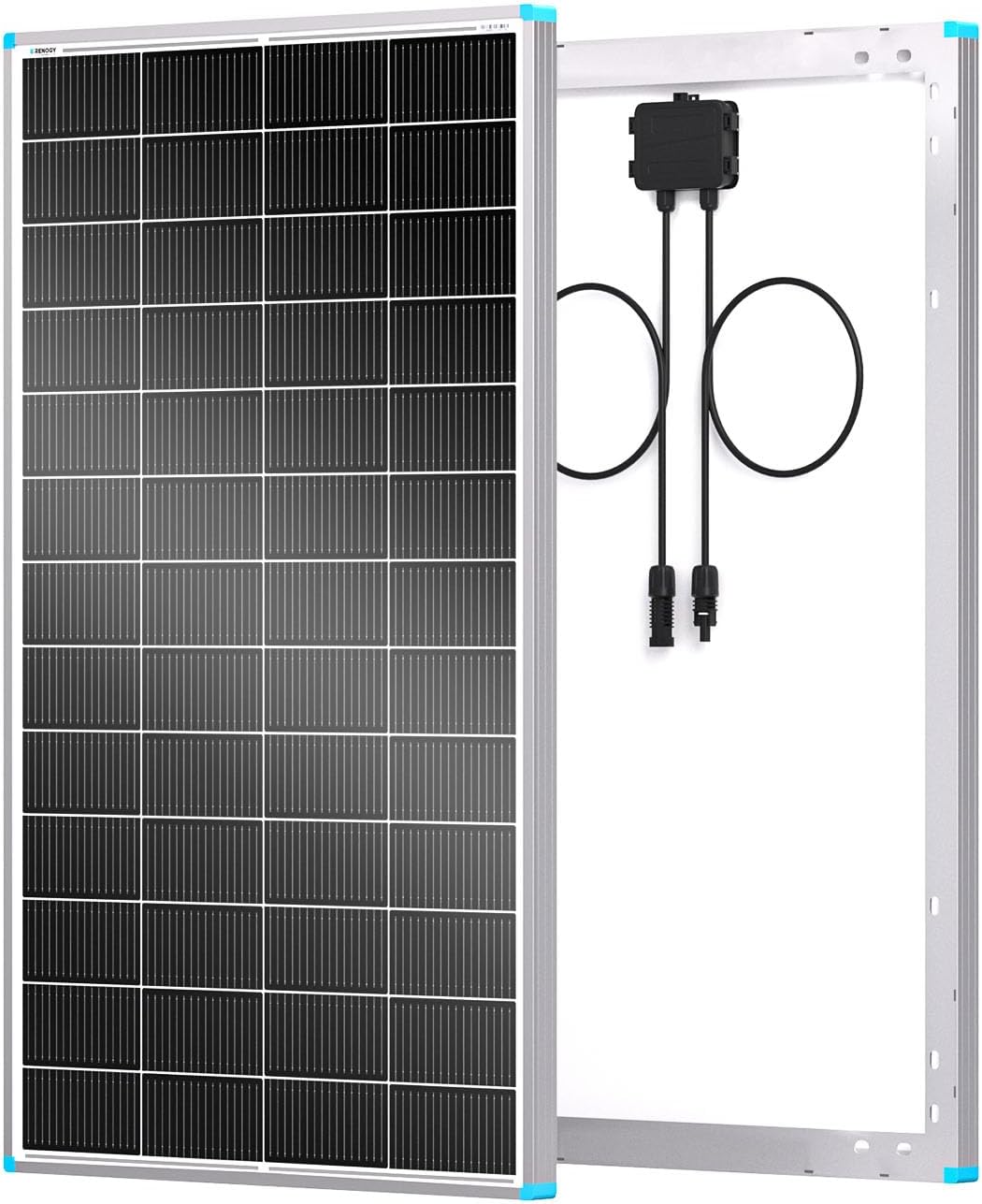
This is a rigid 200W panel with 25% efficient N-type cells. Renogy says it’s 7.5% smaller and 11.7% lighter than its older model, which helps when roof space is the limit.
The catch is that it’s only the panel. You need a charge controller, mounting brackets and cable, and Renogy says it runs at 24V, so an MPPT controller is the better match. Our MPPT vs PWM comparison explains why.
It’s backed by a 10-year material warranty and a 25-year performance guarantee at 80% output. The listing shows 4.6 stars from over 7,000 ratings.
| Pros | Cons |
|---|---|
| Compact for its output | No controller or brackets included |
| 10-year warranty | Works best with an MPPT controller |
| 4.6 stars from 7,000+ ratings | One panel is just 200W |
Best for: DIY van builds and anyone adding a panel to an existing system.
Full details and current price: Renogy 200W N-Type Solar Panel on Amazon
2. Renogy 200W N-Type RV Solar Panel Kit — Best Complete Small Roof Kit
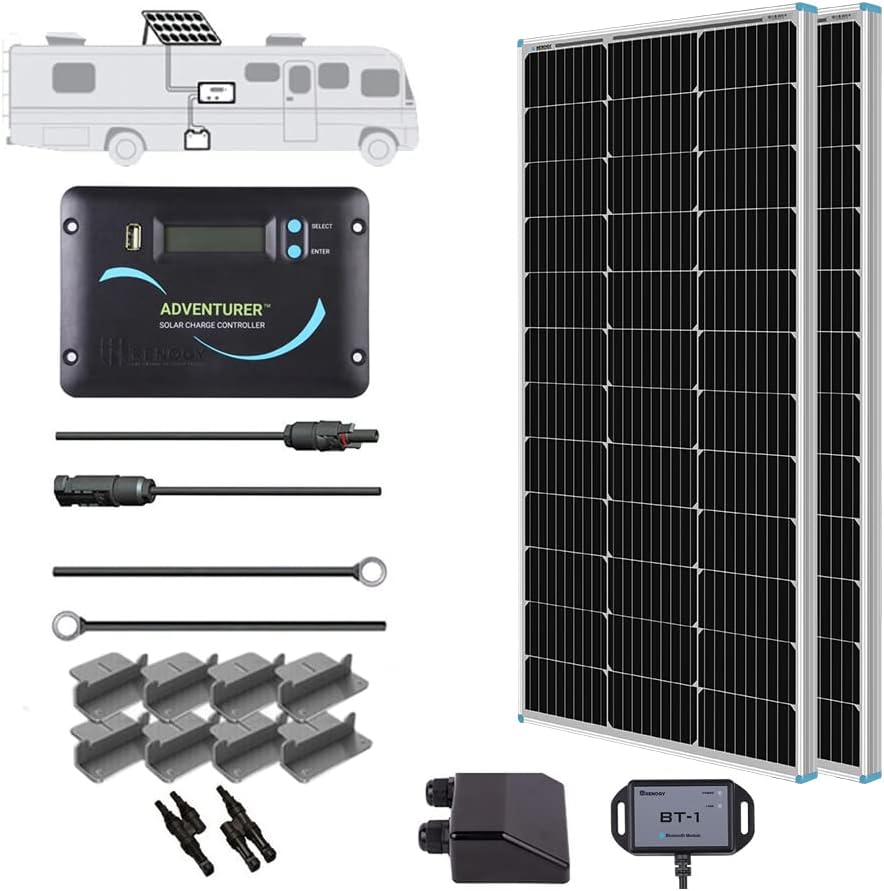
This kit adds an Adventurer 30A PWM controller with an LCD screen, mounting brackets and parallel branch connectors. The controller is made to be flush-mounted on an RV or camper wall.
The catch is the controller. It’s PWM, so you give up some efficiency compared with MPPT. Renogy’s listing says 800Wh a day, but that assumes four full sun hours, so treat it as a best case.
It costs more than the panel alone, which is the price of getting the controller and brackets in one box. The listing shows 4.6 stars from about 540 ratings and lists a 5-year warranty.
| Pros | Cons |
|---|---|
| Panel, controller and brackets in one kit | PWM controller is less efficient |
| Works with lithium and lead-acid batteries | Warranty is shorter than the panel-only listing |
| Parallel connectors included | Battery and wiring to it not included |
Best for: A first RV, camper or boat roof setup.
Full details and current price: Renogy 200W 12V N-Type RV Solar Panel Kit on Amazon
3. Renogy 400W Premium Solar Kit — Best for Sheds and Cabins
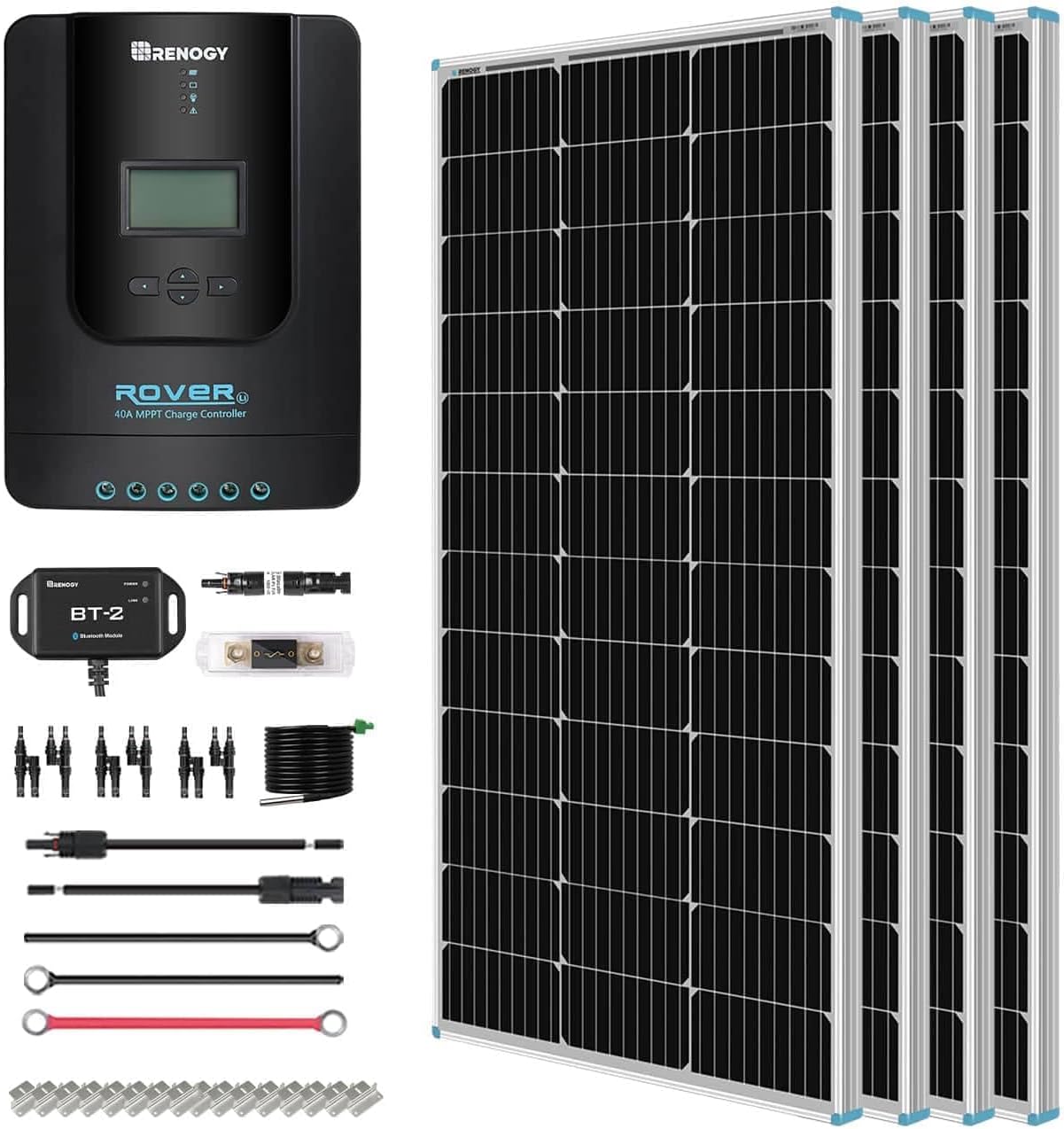
Four 100W monocrystalline panels come with a 40A MPPT controller, a Bluetooth module, Z-brackets, cables and an adaptor kit. Four smaller panels are easier to lift onto a roof than two big ones.
The catch is roof area. Four panels need more space than most vans have, and you’ll want to check the layout before you order. The listing also notes a maximum battery voltage of 32V.
For a shed or cabin, this size runs lights, a fan, tools and a small fridge. Our solar power for shed guide shows how to size the rest of the system. The listing shows 4.5 stars from nearly 580 ratings.
| Pros | Cons |
|---|---|
| 40A MPPT controller with Bluetooth monitoring | Needs a large, clear roof area |
| Smaller panels are easier to carry up a ladder | Costs the most of the three |
| Z-brackets and cables included | Battery not included |
Best for: Sheds, cabins and large RVs with room for four panels.
Full details and current price: Renogy 400W Premium Solar Kit with 40A MPPT Charge Controller on Amazon
Frequently Asked Questions
Can I install roof solar panels myself?
For a small off-grid array, yes. Grid-tied home systems normally need a licensed installer, permits and utility approval, so check your local rules.
How many roof solar panels do I need?
Start from your daily watt-hours. Divide that by about 3.25–4 (our 5 sun hours × 65–80% estimate) to get the panel watts you need.
Do roof solar panels damage a roof?
Mounting adds screw holes, so each one needs proper sealant. A poor seal is the most common cause of leaks.
Is a flat or tilted roof mount better?
Tilted panels make more power, especially in winter. Flat mounting is simpler and quieter on an RV, but expect lower output.
Do I need a charge controller?
Yes, if you’re charging a battery directly. A controller protects the battery from overcharging, and MPPT models harvest more power than PWM.
Final Verdict
| Option | Best For |
|---|---|
| Renogy 200W N-Type Solar Panel | Tight roofs and DIY builds |
| Renogy 200W N-Type RV Solar Panel Kit | A complete first RV roof setup |
| Renogy 400W Premium Solar Kit | Sheds, cabins and big roofs |
Measure your roof first, then pick the smallest setup that covers your daily watt-hours. If you’re unsure, the complete 200W kit is the easiest place to start.