
This post contains affiliate links. If you buy through our links we may earn a small commission — at no extra cost to you. This never influences our recommendations.
Under $1,000 no longer means compromise in the solar generator category — it’s genuinely the sweet spot. This budget tier covers 1,000–1,150Wh units with LiFePO4 batteries, fast AC charging, and enough continuous output to run a fridge, CPAP, or a full day of camping devices. The pricier units above $1,000 mostly add capacity, not fundamentally better technology.
This guide covers what to prioritize at this price point, and the best solar generators that deliver genuine capability without crossing the four-figure line.
What $1,000 Actually Buys You in 2026
The under-$1,000 tier has shifted dramatically over the past two years. What used to require a $1,500+ spend — fast AC charging, 2,000W+ output, LiFePO4 chemistry with thousands of cycles — is now standard at this price point. The real differentiators between units in this range come down to four things: charge speed, solar input ceiling, cycle life, and included accessories like a bundled solar panel.
What you’re not getting at this price: whole-home backup capacity, native 30A RV hookup ports (available on some units but not most), or capacities above roughly 1,150Wh in a single unit. For those needs, you’re looking at $1,200+ territory or an expandable system with additional battery packs.
What to Prioritize at This Price Point
LiFePO4 battery chemistry is non-negotiable — confirm any unit under consideration uses it rather than older lithium-ion (NMC), which degrades far faster and handles heat less safely.
AC charge speed varies more than you’d expect at this price tier — from under an hour to over ninety minutes for a full charge. A fast-charging unit means less anxiety about topping up between uses and quicker recovery after an outage.
Solar input ceiling determines whether the unit can genuinely sustain off-grid use. Look for at least 500W of solar input capability if you plan to pair it with panels regularly.
Included solar panel bundles can be genuinely good value — buying a unit with a panel already matched and included often costs less than buying the components separately, and removes the guesswork of panel compatibility.
Best Solar Generators Under $1,000 — Verified Picks
| Model | Capacity | Output | AC Charge | Best For |
|---|---|---|---|---|
| Anker SOLIX C1000 Gen 2 | 1,024Wh | 2,000W / 3,000W surge | 49 min | Best overall under $1,000 |
| Bluetti AC180 | 1,152Wh | 1,800W / 2,700W surge | 45 min | Best value, largest capacity |
| Jackery Explorer 1000 v2 | 1,070Wh | 1,500W / 3,000W surge | ~60 min | Best for longevity, lightest weight |
| Anker SOLIX C300 + 60W Panel | 288Wh | 300W / 600W surge | 50 min | Best complete budget kit |
Best Overall Under $1,000: Anker SOLIX C1000 Gen 2
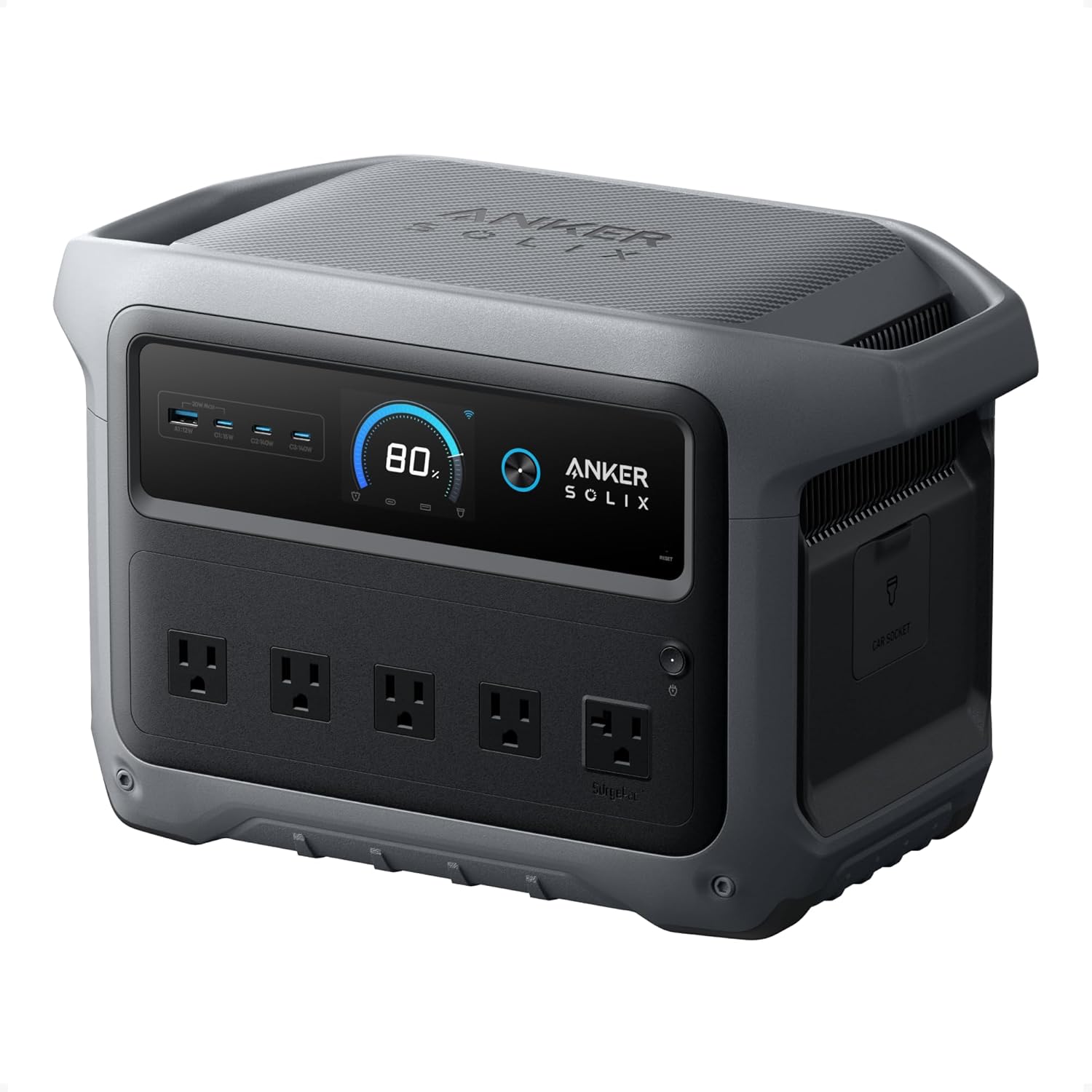
The C1000 Gen 2 delivers the strongest all-around package at this price point — a 49-minute full AC charge (Guinness World Record verified for its class), 2,000W continuous output that handles nearly any household or camping appliance, and a 4,000-cycle LFP battery rated for over a decade of regular use. Every spec that matters at this price tier, this unit leads or ties for the lead.
For home backup, camping, or CPAP use, the combination of fast charging and high output means less waiting and more capability than most competitors offer at a similar price. 600W max solar input is solid, if not class-leading. For most buyers shopping under $1,000, this is the easiest recommendation to make. See our Anker solar generator guide for the full SOLIX lineup breakdown.
Pros: Fastest AC charge in this price tier, highest continuous output, 4,000 LFP cycles, compact build, 5-year warranty
Cons: 600W solar input trails the Jackery’s 800W ceiling; no expansion battery option
Best for: Anyone who wants the single best all-around unit under $1,000, home backup, CPAP use, camping
Best Value, Largest Capacity: Bluetti AC180
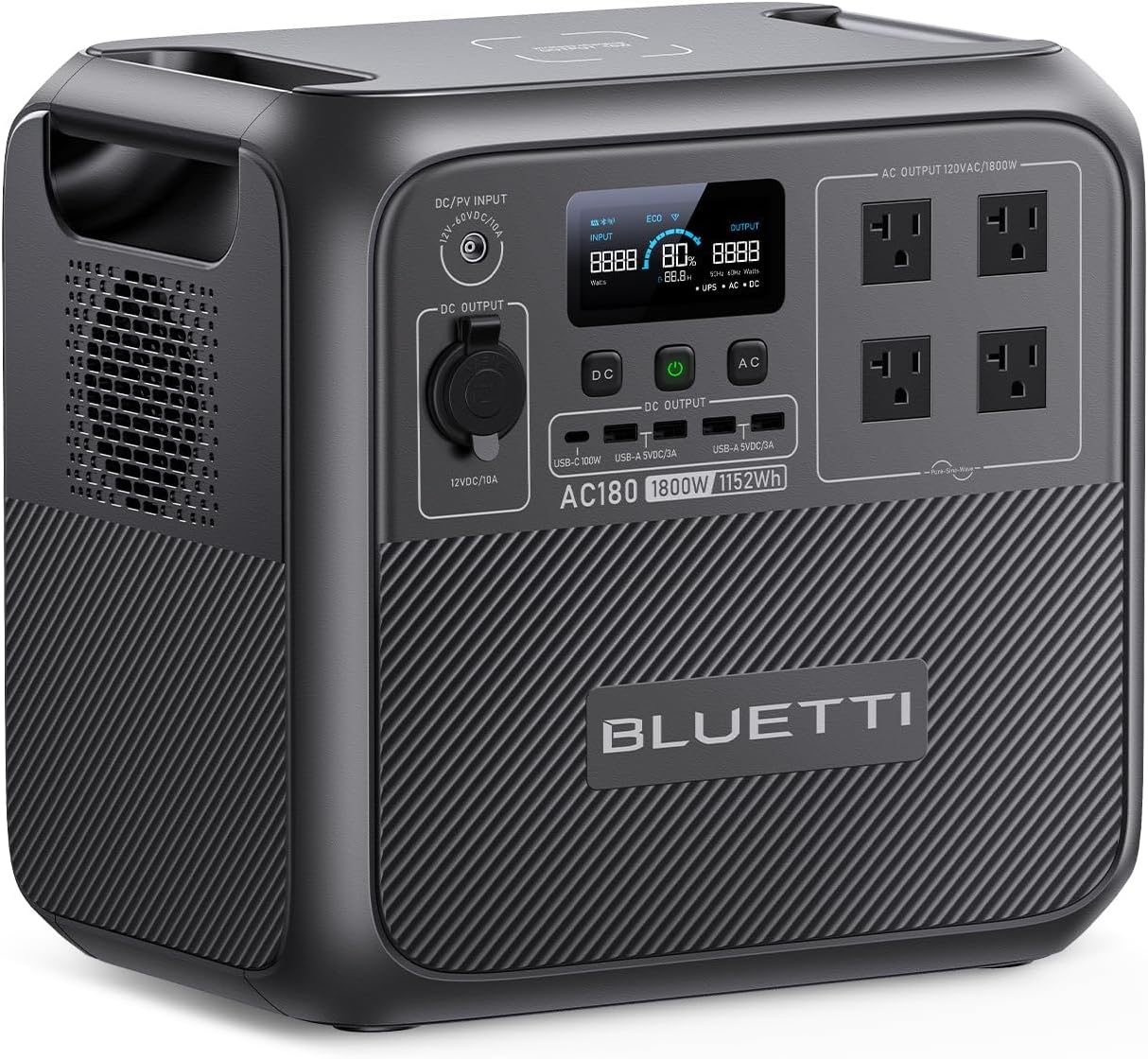
At 1,152Wh, the AC180 has the largest raw capacity of any unit in this price range, paired with a 45-minute AC charge and 2,700W Power Lifting surge mode that handles demanding startup loads. Bluetti has built a reputation for packing flagship-adjacent features into mid-tier pricing, and the AC180 shows that clearly — an 11-outlet configuration and 20ms UPS switchover are features you’d typically expect to pay more for.
500W max solar input is solid for regular off-grid recharging. For buyers optimizing purely for maximum capacity and feature density per dollar spent, this is the strongest pick under $1,000.
Pros: Largest capacity in class at 1,152Wh, 45-min AC charge, 2,700W Power Lifting surge, 20ms UPS, 11 outlets
Cons: 3,500 cycles trails the Anker and Jackery’s 4,000-cycle ratings
Best for: Buyers prioritizing maximum capacity and feature set per dollar, home backup and camping use
Best for Longevity and Lightest Weight: Jackery Explorer 1000 v2
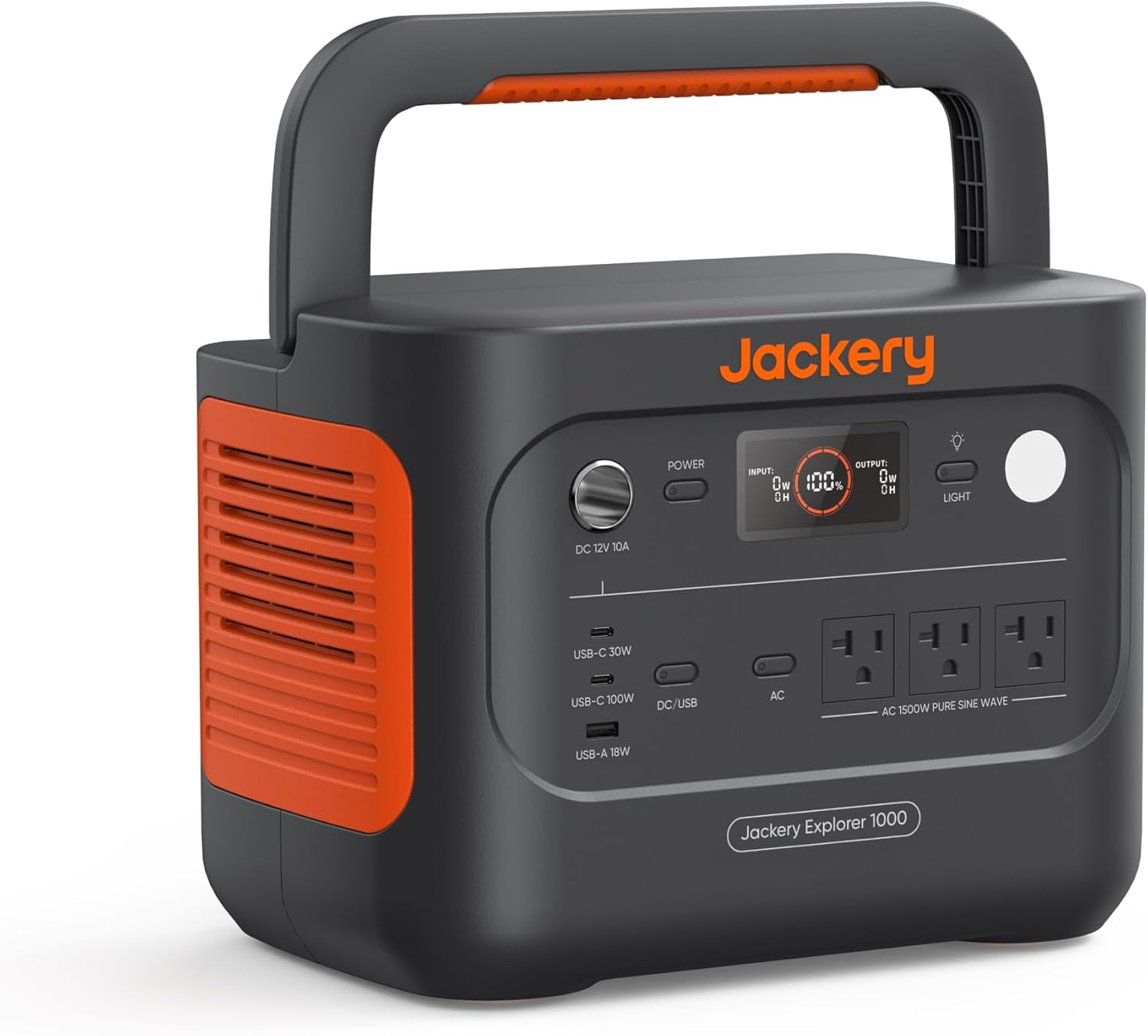
The Explorer 1000 v2 wins on two numbers that matter for long-term ownership: a 4,000-cycle LFP battery rating (roughly 11+ years of usable life at one cycle per week) and the lightest build in this comparison at 23.8 lbs. The 800W max solar input is the highest of any unit under $1,000, meaningful for anyone pairing with a serious panel array for off-grid use.
The 1-hour emergency AC charge mode and included alignment sight glass on the companion solar panel (sold separately or bundled depending on configuration) are small but genuinely useful touches. The one consideration: plug-and-play solar charging without an adapter requires Jackery’s own panels.
Pros: 4,000 LFP cycles (longest lifespan), lightest at 23.8 lbs, 800W max solar input (highest in this tier), 1-hour emergency charge
Cons: Requires Jackery panels for plug-and-play solar; slower standard AC charge than the Anker or Bluetti
Best for: Frequent users who want the lowest cost-per-year of ownership, campers who prioritize weight
Best Complete Budget Kit: Anker SOLIX C300 + 60W Solar Panel
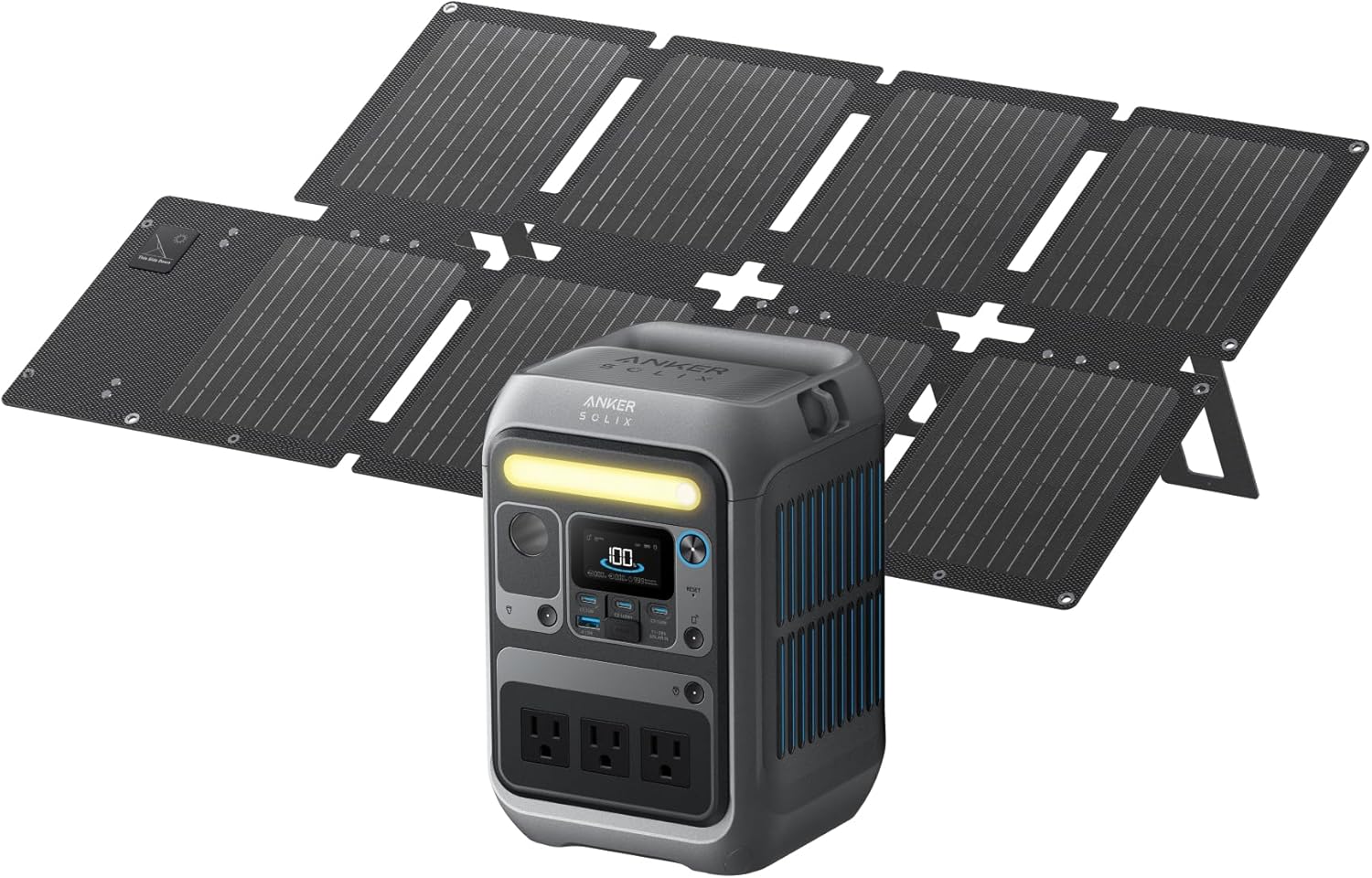
Not everyone under $1,000 needs — or wants to pay for — a full 1kWh unit. For weekend camping, day trips, and light emergency device charging, the SOLIX C300 bundled with a 60W solar panel delivers a complete, ready-to-use kit for a fraction of the price of the larger units above. 288Wh capacity, 300W continuous output (600W surge), and a 50-minute AC charge to 80% cover the essentials without excess.
The bundled panel removes any guesswork about compatibility or additional purchases — this is genuinely plug-and-play out of the box. At 25dB operating noise and light enough to carry easily, it’s the right-sized solution for anyone whose needs don’t justify a larger, pricier unit.
Pros: Complete kit with panel included, 50-min AC charge, lowest price point in this guide, genuinely quiet, easy portability
Cons: 288Wh limits multi-day use without frequent recharge; not suitable for a fridge or CPAP beyond very light use
Best for: Weekend camping, day trips, light emergency backup, budget-conscious first-time buyers
What These Units Can and Can’t Run
At the 1,000–1,150Wh capacity level with 1,800–2,000W continuous output, these units comfortably handle a 12V or standard compressor fridge, CPAP machine, laptop and device charging, LED lighting, a router, and a fan — the core essential load stack for camping or emergency backup. See our solar generator for refrigerator guide and solar generator for CPAP guide for detailed sizing math on those specific use cases.
What they won’t reliably run: central air conditioning, electric water heaters, or high-draw kitchen appliances used for extended periods. For those loads, you’re looking at a step up to 2,000Wh+ capacity or a system built for whole-home backup.
Is It Worth Spending More Than $1,000?
The honest answer depends entirely on your loads. If your essential-use case fits within what a 1,000–1,150Wh unit delivers — and for most camping, CPAP, and partial home backup scenarios, it does — spending more buys capacity you may never use. Step up past $1,000 specifically if you need to run a full-size refrigerator and freezer simultaneously, want genuine whole-home backup for a multi-day outage, or need native RV 30A hookup compatibility that most sub-$1,000 units lack.
Frequently Asked Questions
What is the best solar generator you can buy for under $1,000?
The Anker SOLIX C1000 Gen 2 offers the strongest overall combination of fast charging, high output, and battery longevity at this price point. The Bluetti AC180 is the best pick if maximum capacity is the priority, and the Jackery Explorer 1000 v2 wins for buyers who prioritize weight and long-term cycle life.
Can a solar generator under $1,000 power a whole house?
No — units in this price and capacity range (1,000–1,150Wh, 1,800–2,000W output) are designed for essential-load backup, not whole-home power. They handle a fridge, lighting, device charging, and similar loads, but can’t run central AC, electric heating, or multiple large appliances simultaneously. For whole-home backup, look at systems above $1,200 with expandable battery packs or dedicated home backup units.
How much solar panel capacity do I need for a sub-$1,000 solar generator?
Match your panel wattage to the unit’s solar input ceiling for the fastest possible recharge — typically 400–600W of panels (two 200–300W panels) for units in this price range. Going beyond the unit’s stated maximum solar input wastes panel capacity the unit can’t use.
Are solar generators under $1,000 worth it compared to a gas generator?
For most residential backup needs — essential loads during an outage, camping, or CPAP use — yes. They’re silent, safe indoors, and require zero fuel or maintenance. Gas generators still win for extended high-wattage use where fuel availability matters more than quiet operation. See our solar generator vs gas generator guide for a full comparison.
Do sub-$1,000 solar generators include a solar panel?
Some do, some don’t — check the specific listing carefully. The Anker SOLIX C300 kit includes a matched 60W panel; the larger 1kWh units in this guide are typically sold as the power station alone, with panels purchased separately. Bundled kits can offer better value if you need both components anyway.
Final Verdict
| Your Priority | Best Pick |
|---|---|
| Best overall balance of speed, output, and longevity | Anker SOLIX C1000 Gen 2 (B0FN7MSY4L) |
| Maximum capacity and features for the price | Bluetti AC180 (B0C1SMJTDT) |
| Lightest weight, longest battery life | Jackery Explorer 1000 v2 (B0D7PPG25F) |
| Complete budget kit, lightest use cases | Anker SOLIX C300 + Panel (B0DBLJRRPW) |
For most people shopping under $1,000, the Anker SOLIX C1000 Gen 2 is the easy recommendation — fast charging, strong output, and a battery built to last over a decade of regular use. If maximum capacity matters more than shaving minutes off charge time, the Bluetti AC180 delivers real value. And for lighter needs where a full 1kWh unit is overkill, the Anker SOLIX C300 kit gets you a complete, ready-to-use system for a fraction of the price.
For specific use-case sizing, see our solar generator for camping guide, solar generator for RV guide, and best 1000W solar generators for the money guide for a deeper dive into this exact capacity tier.