This post contains affiliate links. If you buy through our links we may earn a small commission — at no extra cost to you. This never influences our recommendations.
Renogy is the name most DIY off-grid builders encounter first, and for good reason — 15 years of field testing, a 25-year power output warranty most budget brands don’t come close to matching, and a lineup broad enough to cover everything from a van build to a full off-grid cabin array. This guide maps Renogy’s current panel categories clearly, so you can pick the right type and wattage rather than guessing from a crowded product page.
How Renogy Organizes Its Panel Lineup
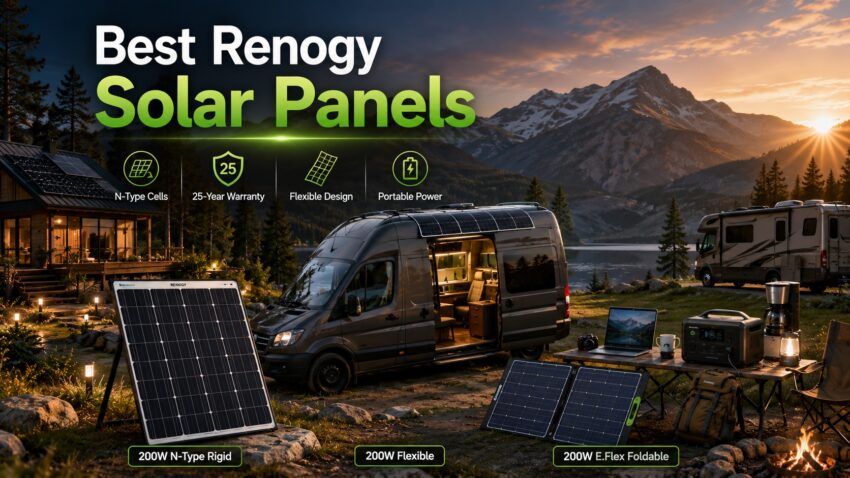
Renogy splits its solar panels into three practical categories, each solving a different mounting problem.
Rigid panels are the durable workhorses — highest structural stability, longest lifespan (25+ years), and the most consistent performance of any category. Backed by Renogy’s 25-year power output warranty, these are the right choice for permanent installations: RV roofs, off-grid cabins, and fixed residential arrays. Within the rigid line, N-Type cell technology represents the current generation, delivering up to 25% efficiency compared to roughly 22–23% for older PERC panels.
Flexible panels bend up to 240° to conform to curved surfaces — van roofs, boat hulls, tent canopies, and Airstream-style rounded RVs where a rigid frame simply won’t sit flat. They weigh a fraction of an equivalent rigid panel (roughly 4–6 lbs vs 15+ lbs) but carry a shorter 5-year power warranty, since the flexible substrate is inherently less durable than tempered glass — a pattern that holds true industry-wide, not just for Renogy specifically.
Portable/foldable panels combine a suitcase-style folding design with built-in kickstands for quick deployment — set up in seconds, no permanent mounting required. These are the right choice for camping, overlanding, and charging a power station at a campsite rather than a fixed installation.
Renogy Panel Lineup at a Glance
| Category | Wattage Range | Warranty | Best For |
|---|---|---|---|
| Rigid (N-Type) | 100W–400W+ | 25-year power output | RV roofs, off-grid cabins, fixed arrays |
| Flexible | 100W–200W | 5-year power output | Curved roofs, vans, boats, weight-sensitive builds |
| Portable/Foldable | 100W–400W | Varies by model | Camping, overlanding, charging power stations at camp |
Best Renogy Solar Panels — Verified Picks
Best Rigid Panel: Renogy 200W N-Type 16BB Rigid
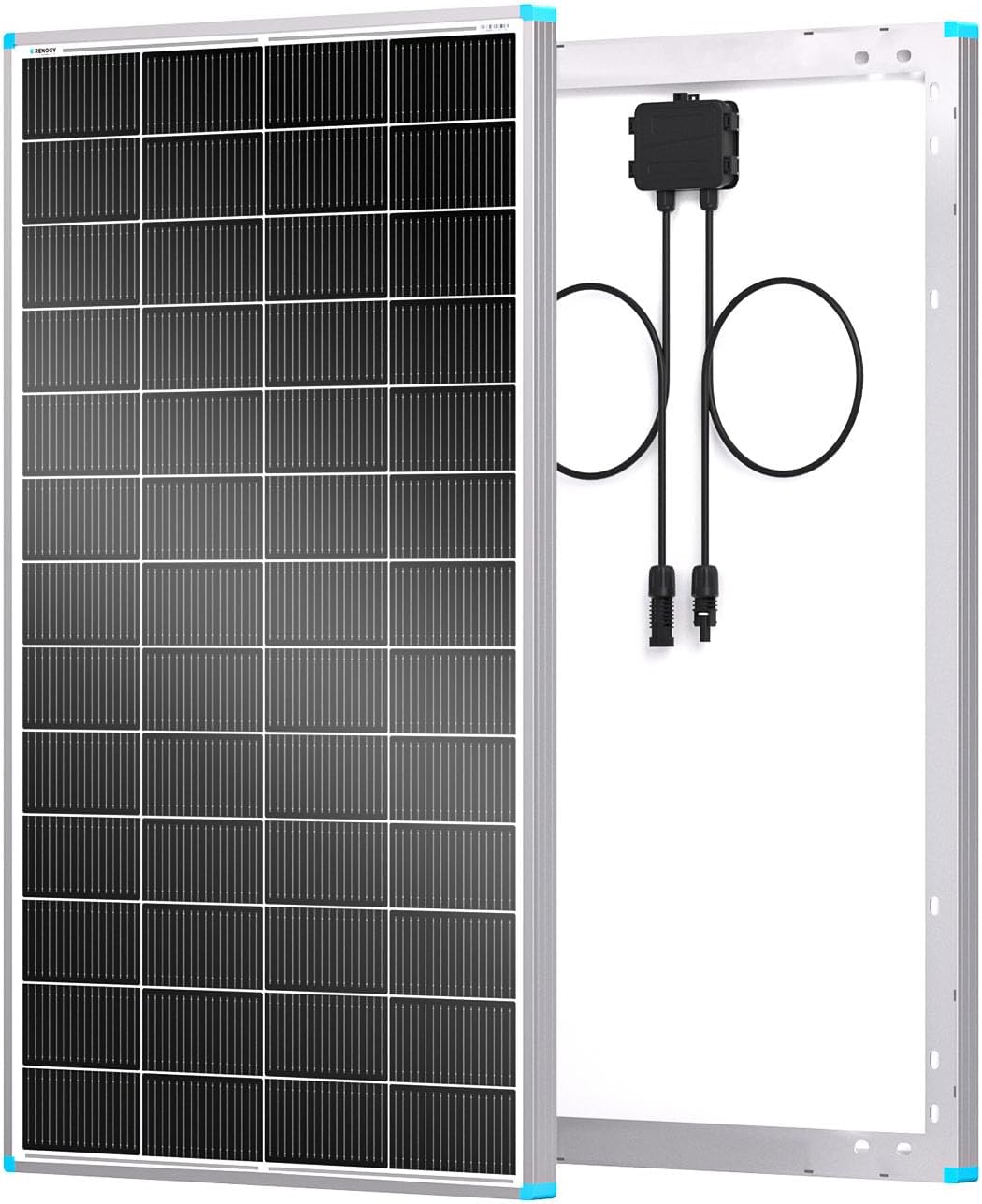
The 100W rigid panel is the product that built Renogy’s reputation, and the 200W N-Type version is its natural successor for anyone needing more output per panel. At 25% efficiency with 16BB cell technology, it outperforms the older PERC generation while retaining the same 25-year power output warranty that separates Renogy from most budget competitors. Compatible with both 12V and 24V systems, it’s the most versatile single rigid panel in Renogy’s current lineup — the panel most YouTube off-grid builds and forum guides are designed around, and for good reason.
For a full sizing breakdown and comparison against other wattage tiers, see our 200 watt solar panel guide.
Best Starter Array: Renogy 2×100W N-Type 16BB
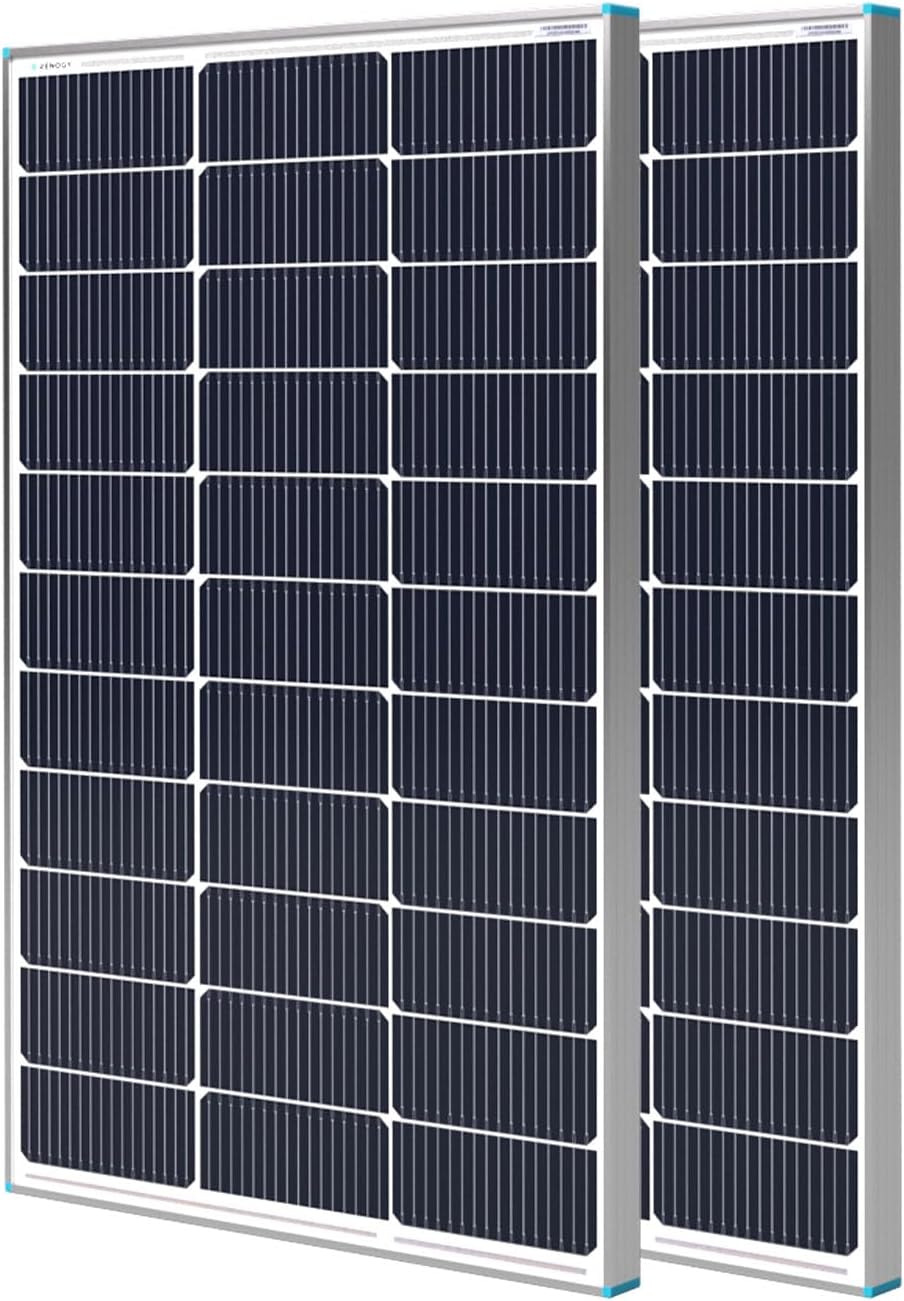
For sheds, small cabins, or a first off-grid system, two 100W N-Type panels in one purchase is the cleanest entry point Renogy offers. Both panels hit 25% efficiency with the same IP65 rating and 25-year power warranty as the single 200W option, and the 2-pack pricing is more economical per watt than buying singles separately. Wire in series for a 24V array or parallel for 12V with doubled current — flexible enough to match whatever system voltage you’re building around.
Best for Larger Fixed Arrays: Renogy 400W N-Type (2×200W)
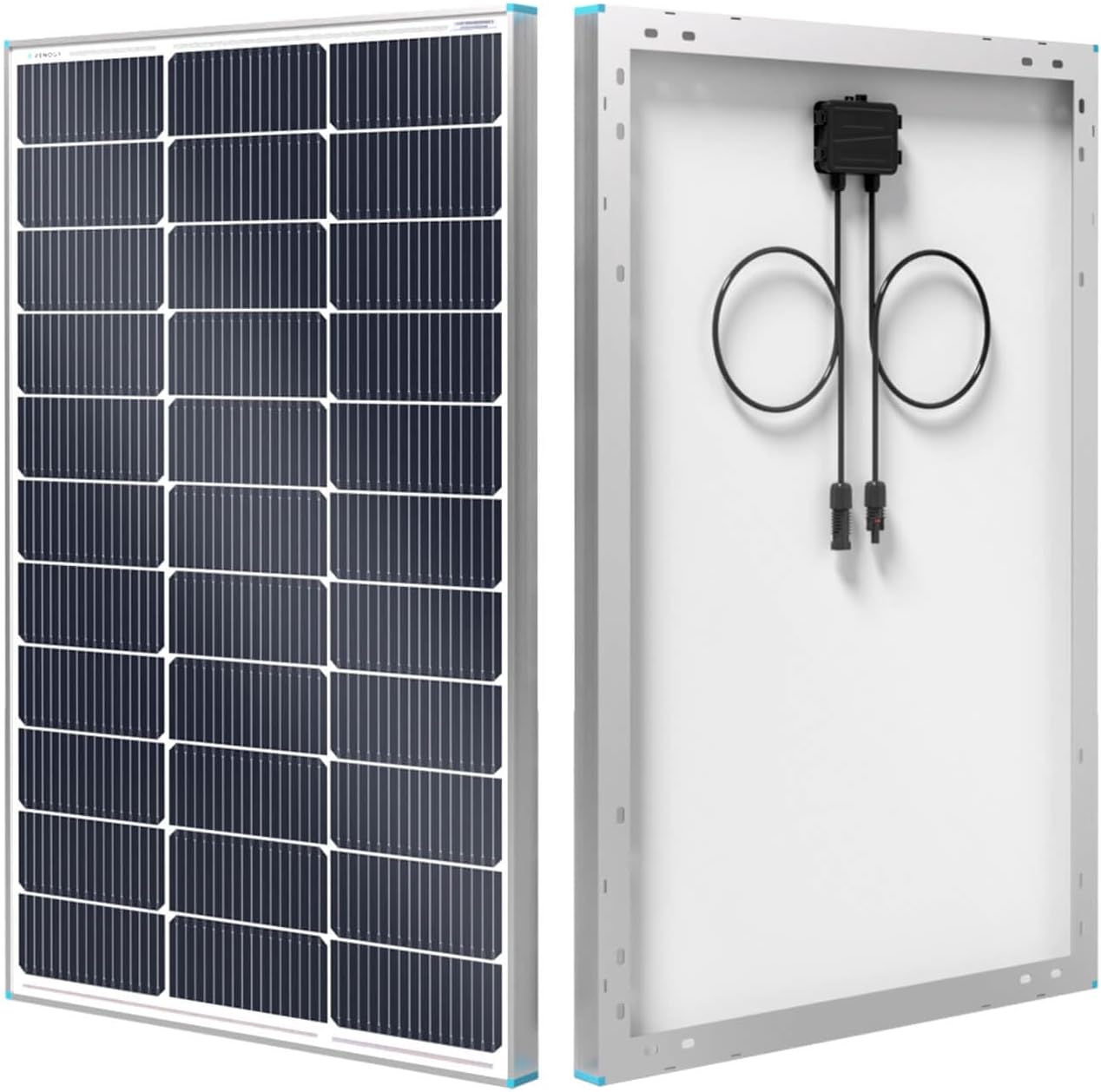
When 200W isn’t enough — a cabin running a fridge, lighting, and device charging simultaneously — the 400W configuration (two 200W N-Type panels) delivers 1,400–1,800Wh of usable daily energy in 4–5 peak sun hours, comfortably covering a full daily load stack. Two panels at this wattage simplify mounting and wiring versus four smaller panels covering the same total output, and the low degradation rate (≤0.4%/year) keeps output consistent over the panel’s 25-year rated life.
Best Flexible Panel: Renogy 200W Flexible
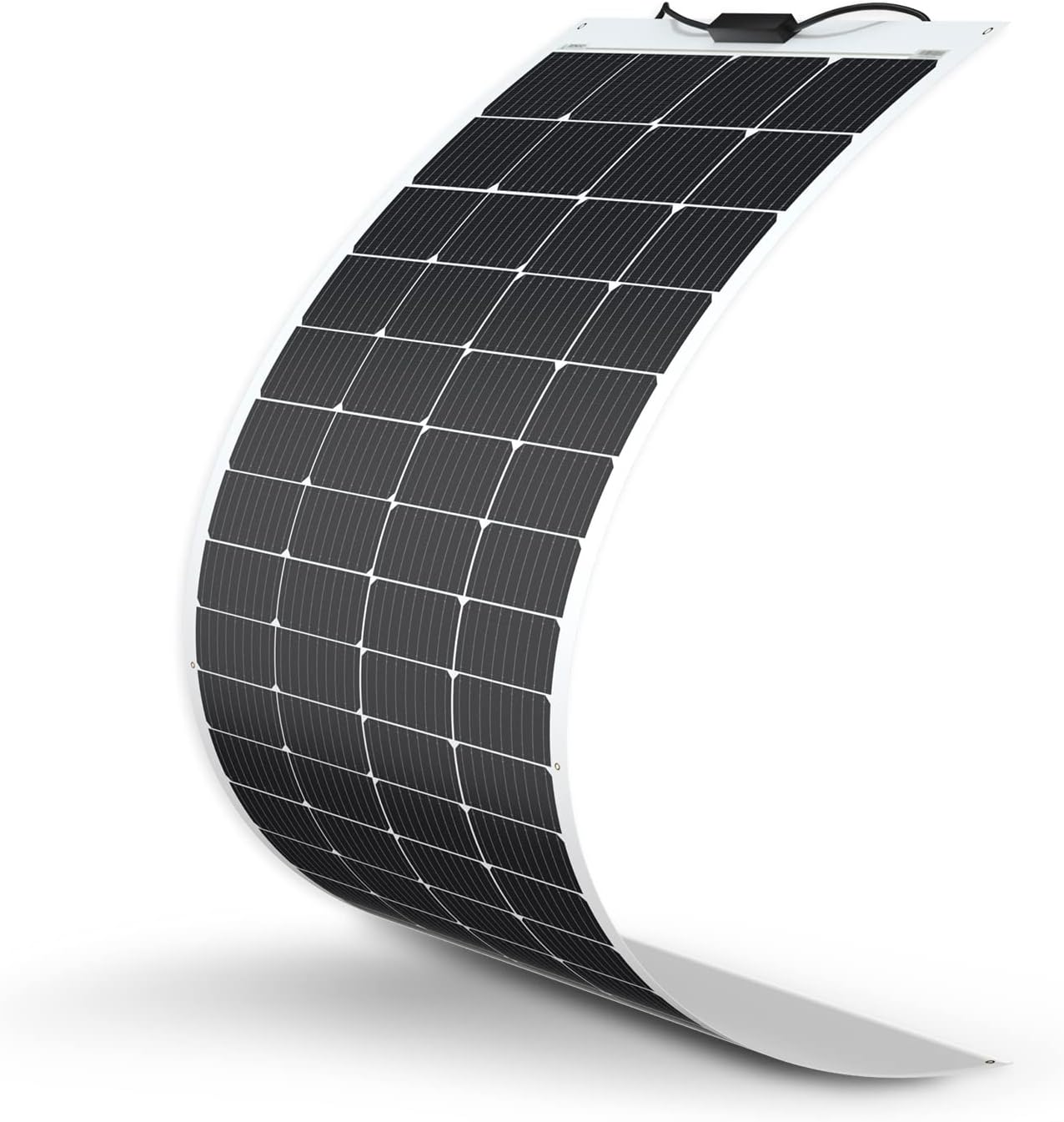
For curved van roofs, boat hulls, or any surface where a rigid frame won’t sit flat, the 200W flexible panel bends up to 240° while maintaining 22% efficiency via half-cut PERC cells. At roughly a third the weight of an equivalent rigid panel, solo installation becomes realistic without a second set of hands. ETFE surface coating resists UV degradation better than cheaper PET-coated alternatives, and pre-drilled mounting holes give you the choice of adhesive or mechanical mounting.
Independent 2026 testing places Renogy’s flexible efficiency slightly behind newer N-Type competitors from BougeRV (23–25%), but still notes it as “a solid pick” for buyers who specifically want a reliable, well-established brand. For the full comparison against curved-roof alternatives, see our solar panels for van guide.
Best Portable Panel: Renogy 200W E.Flex Foldable
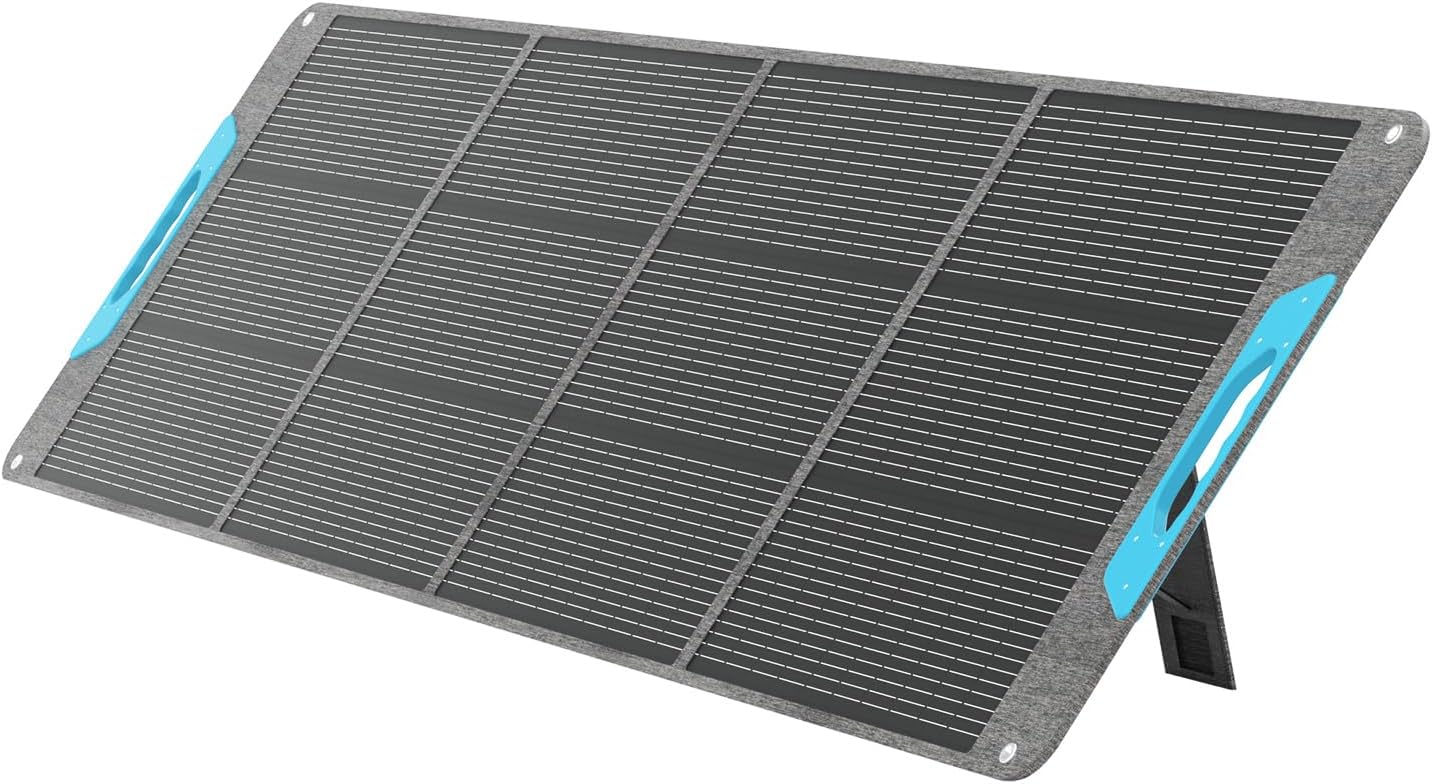
For camping, overlanding, or charging a power station away from a fixed installation, the E.Flex 200W folds down for storage and deploys with adjustable kickstands in seconds. At 25% efficiency with N-Type cells, it delivers rigid-panel performance in a genuinely portable form factor — no permanent mounting, no drilling, just position it toward the sun and connect.
An Honest Note on Renogy’s Broader Product Line
Renogy’s product range has expanded well beyond panels to include charge controllers, batteries, inverters, and even their own Phoenix portable power stations. It’s worth being direct about where the brand’s strength actually lies: independent reviews consistently praise Renogy’s solar infrastructure — panels, MPPT charge controllers, and batteries — while flagging a real warranty gap on their power stations specifically. Renogy’s solar panels carry a 25-year power output warranty and charge controllers get 2 years, but the Phoenix power stations are covered for only 1 year — a meaningfully shorter term than dedicated power station brands like EcoFlow, Anker, or Jackery typically offer (3–5 years).
The practical takeaway: Renogy panels, charge controllers, and batteries are a strong, well-proven choice for the solar generation and storage layer of your system. For the power station itself, it’s worth comparing warranty terms against dedicated brands — see our best Jackery solar generator guide, Anker solar generator guide, or best EcoFlow solar generator guide before committing to a Renogy power station specifically.
What Charge Controller to Pair With Renogy Panels
Always use an MPPT controller with Renogy’s N-Type panels — PWM controllers waste 20–30% of potential output, especially in cold morning conditions when open-circuit voltage peaks. Size your controller for total array wattage plus a 25% safety margin: a single 200W panel needs at minimum a 20A controller, while a 400W array needs 40A minimum. See our MPPT charge controller guide for detailed sizing across every array configuration.
Frequently Asked Questions
Are Renogy solar panels actually good quality?
Yes — Renogy has 15 years of field testing across the off-grid community, and their N-Type rigid panels deliver up to 25% efficiency backed by a 25-year power output warranty that few budget-tier competitors match. Independent reviews consistently rank Renogy’s panels, charge controllers, and batteries as strong, reliable choices, while noting their power stations specifically carry a shorter warranty than dedicated power station brands.
What’s the difference between Renogy’s rigid and flexible panels?
Rigid panels offer higher durability, a 25-year warranty, and better long-term performance for permanent installations like RV roofs and cabin arrays. Flexible panels bend up to 240° to fit curved surfaces, weigh significantly less, but carry only a 5-year power warranty since the bendable substrate is less durable than tempered glass — a trade-off that applies industry-wide, not just to Renogy.
Do Renogy panels work with other brands’ charge controllers and power stations?
Yes — Renogy panels use standard MC4 connectors compatible with most third-party MPPT charge controllers and power stations, provided the voltage and wattage fall within the accepting device’s input specifications.
Which Renogy panel should I buy for a van build?
The 200W Flexible panel is purpose-built for curved van roofs where a rigid frame won’t sit flat. If your van has a flat roof section, a rigid N-Type panel delivers better long-term durability and a longer warranty at a lower cost per watt.
How long do Renogy solar panels last?
Rigid N-Type panels are rated for 25+ years of power output with degradation of no more than roughly 0.4% annually, backed by Renogy’s 25-year power output warranty. Flexible panels have a shorter expected lifespan given their less durable substrate, reflected in their 5-year power warranty.
The Bottom Line
Renogy remains one of the strongest choices for solar panels specifically — the 25-year warranty on rigid N-Type panels and 15 years of proven field performance make it a natural starting point for any off-grid build. Match the category to your mounting situation: rigid for permanent fixed arrays, flexible for curved surfaces, portable for camping and off-grid flexibility. For the power station side of your system, it’s worth comparing warranty terms against dedicated brands before committing to Renogy’s own Phoenix lineup.
For complete system design around any Renogy panel setup, see our off-grid solar system guide and best solar battery guide. For wattage-specific deep dives, our 100W, 200W, and 300W solar panel guides cover the full range in detail.