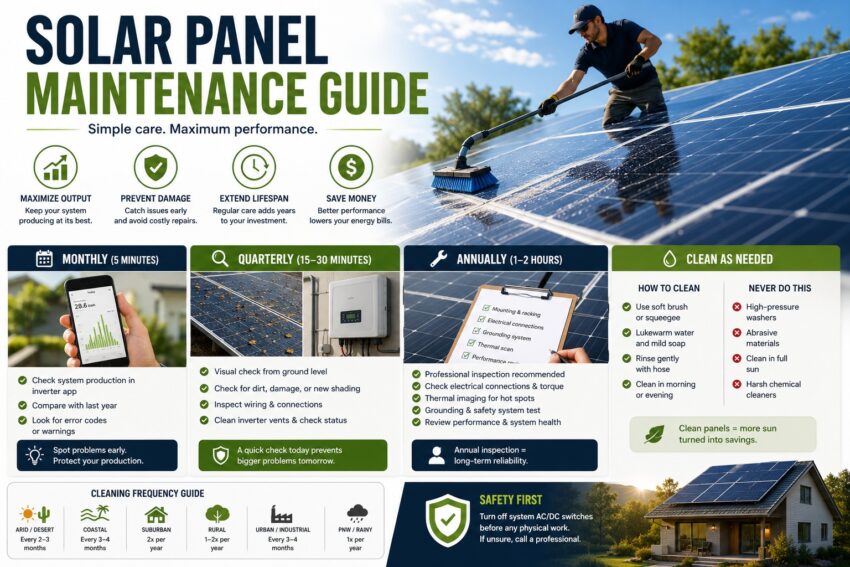
Why Solar Panel Maintenance Matters More Than Most Owners Realise
Solar panels are marketed as maintenance-free. They’re not — they’re low-maintenance. The distinction matters.
According to the National Renewable Energy Laboratory, solar panel productivity decreases by approximately 0.8 percent per year on average — a measurable degradation that compounds over a system’s 25–30 year lifespan. A 10kW system losing 0.8% annually produces approximately 3.7kWh less per day by year 10 than it did at installation.
But degradation is the baseline — unavoidable physics. What maintenance prevents is the additional losses from soiling, shading, component failures, and electrical issues that compound on top of natural degradation. In Arizona, unchecked dust accumulation can reduce panel efficiency by 15–25%. A poorly maintained system can lose 20–30% of its output potential from entirely preventable causes.
The good news: annual inspection takes less than an hour but can identify issues that would otherwise reduce output for years. Most solar panel maintenance is simple, safe, and requires no specialised tools.
Two Maintenance Categories — What You Do vs. What a Professional Does
Owner maintenance — safe, simple, no specialist required:
- Panel surface cleaning
- Visual inspection from ground level or rooftop (with appropriate fall protection)
- Monitoring system output via inverter app or display
- Vegetation and shading checks
- Checking for obvious physical damage
- Cleaning inverter air vents
Professional maintenance — requires a qualified technician:
- Electrical connection torque verification
- Thermal imaging for hot spot detection
- Grounding system testing
- Inverter internal servicing
- Any work involving the main electrical panel or disconnects
- Diagnosis of inverter error codes that don’t self-clear
Many solar owners overlook inverter air filter cleaning and electrical connection torque checks — two simple tasks that prevent the majority of unplanned failures. Schedule these quarterly, not annually, especially in dusty or coastal environments.
The Complete Solar Panel Maintenance Schedule
Monthly Tasks — Output Monitoring (5 Minutes)
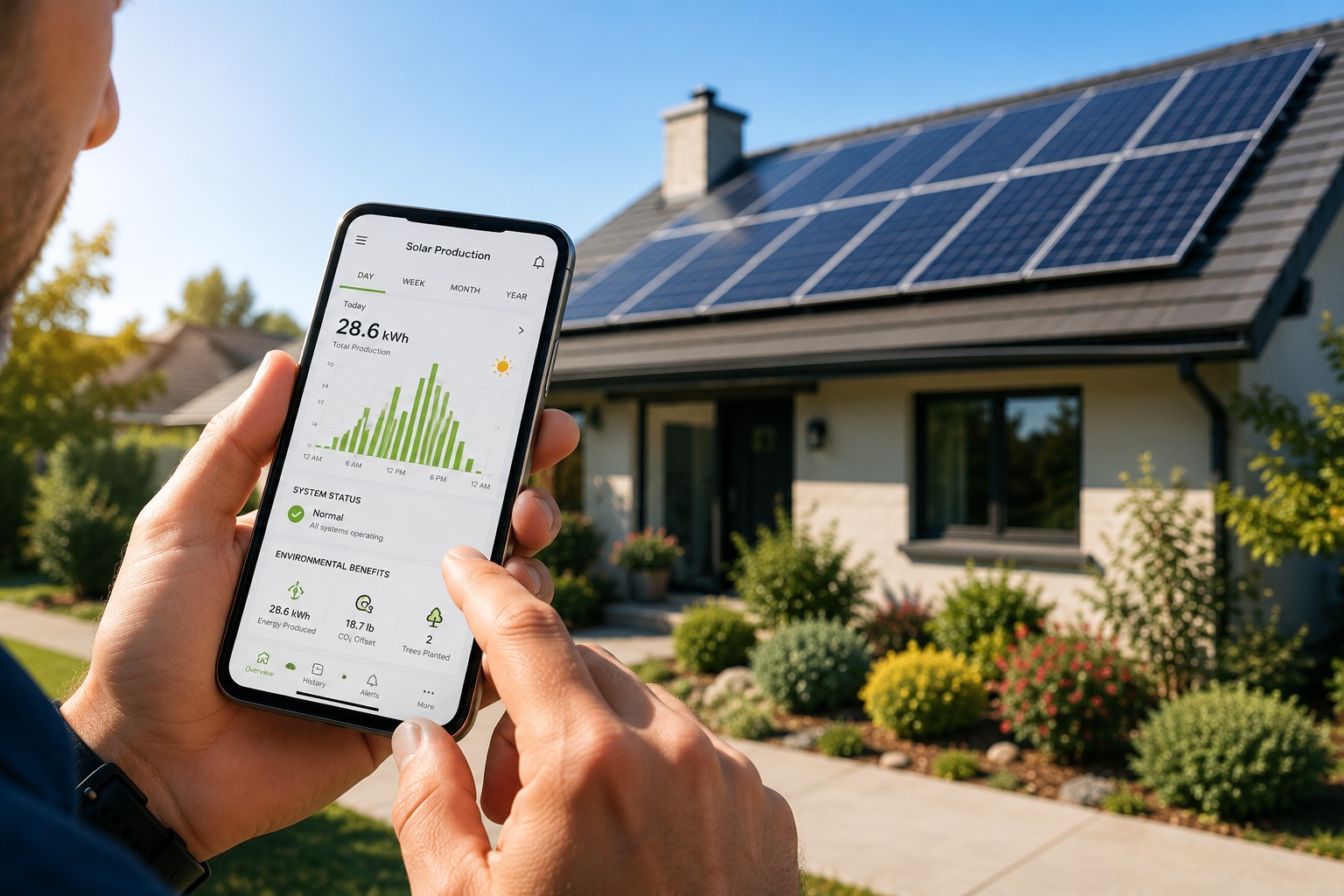
The single most valuable maintenance habit is checking your inverter output data monthly. Every modern inverter — Enphase, SolarEdge, Fronius, GoodWe — has a monitoring app or web dashboard showing daily, monthly, and annual generation in kWh.
What to check:
- Total kWh generated this month vs. the same month last year
- Any unexplained drop greater than 5% year-on-year — this indicates a problem worth investigating
- Inverter error codes or warning lights
- String-level performance if you have microinverters or power optimisers (Enphase, SolarEdge) — these allow individual panel monitoring that quickly isolates underperforming units
Most panel failures, soiling problems, and shading issues show up in output data before they’re visible on the roof. Monthly monitoring is the earliest warning system available — and it costs nothing beyond five minutes of attention.
Quarterly Tasks — Visual Inspection and Inverter Check (15–30 Minutes)
Visual inspection from ground level:
- Scan panel surfaces for visible soiling, bird droppings, leaf accumulation, or obvious cracking (use binoculars if needed)
- Check for new shading sources — tree growth, new structures, antenna additions
- Inspect visible wiring runs for UV cracking, damage, or animal interference
- Check that no panels appear discoloured or show visible delamination at the edges
Inverter check:
- Inspect inverter air vents for dust accumulation — blocked vents cause overheating that reduces efficiency and shortens inverter life
- Clean vents with compressed air or a soft brush if dusty
- Check the display for any persistent error codes
- Verify DC and AC disconnect switches are in the correct position
Ground-mount systems: For ground-mounted arrays (see our ground mounted solar panels guide), quarterly checks should also include inspecting racking feet and ground anchors for soil movement or frost heave, checking rail-to-panel clamp tightness visually, and clearing vegetation growth near the array base that could eventually shade lower panel rows.
How Often to Clean Solar Panels — By Climate Zone
Panel cleaning frequency is the most variable maintenance task. Most residences need cleaning once or twice yearly — but adjust for your local conditions and monitor output data to confirm your frequency is right.
| Climate / Location | Recommended Cleaning Frequency | Primary Soiling Source |
|---|---|---|
| Arid / desert (Southwest) | Every 2–3 months | Dust, sand, pollen |
| Coastal | Every 3–4 months | Salt spray, sea mist |
| Suburban temperate | 2× per year | Pollen, dust, bird droppings |
| Rural temperate | 1–2× per year | Bird droppings, pollen |
| Urban / industrial | Every 3–4 months | Particulate pollution |
| Pacific Northwest | 1× per year | Moss, lichen (moderate rainfall helps) |
The rainfall question: rain removes loose dust but leaves residue at the panel edges and is ineffective against bird droppings, stuck pollen, and industrial particulates. In high-rainfall climates, cleaning frequency is lower — but rain alone isn’t a replacement for manual cleaning in most environments.
How to Clean Solar Panels — Step by Step
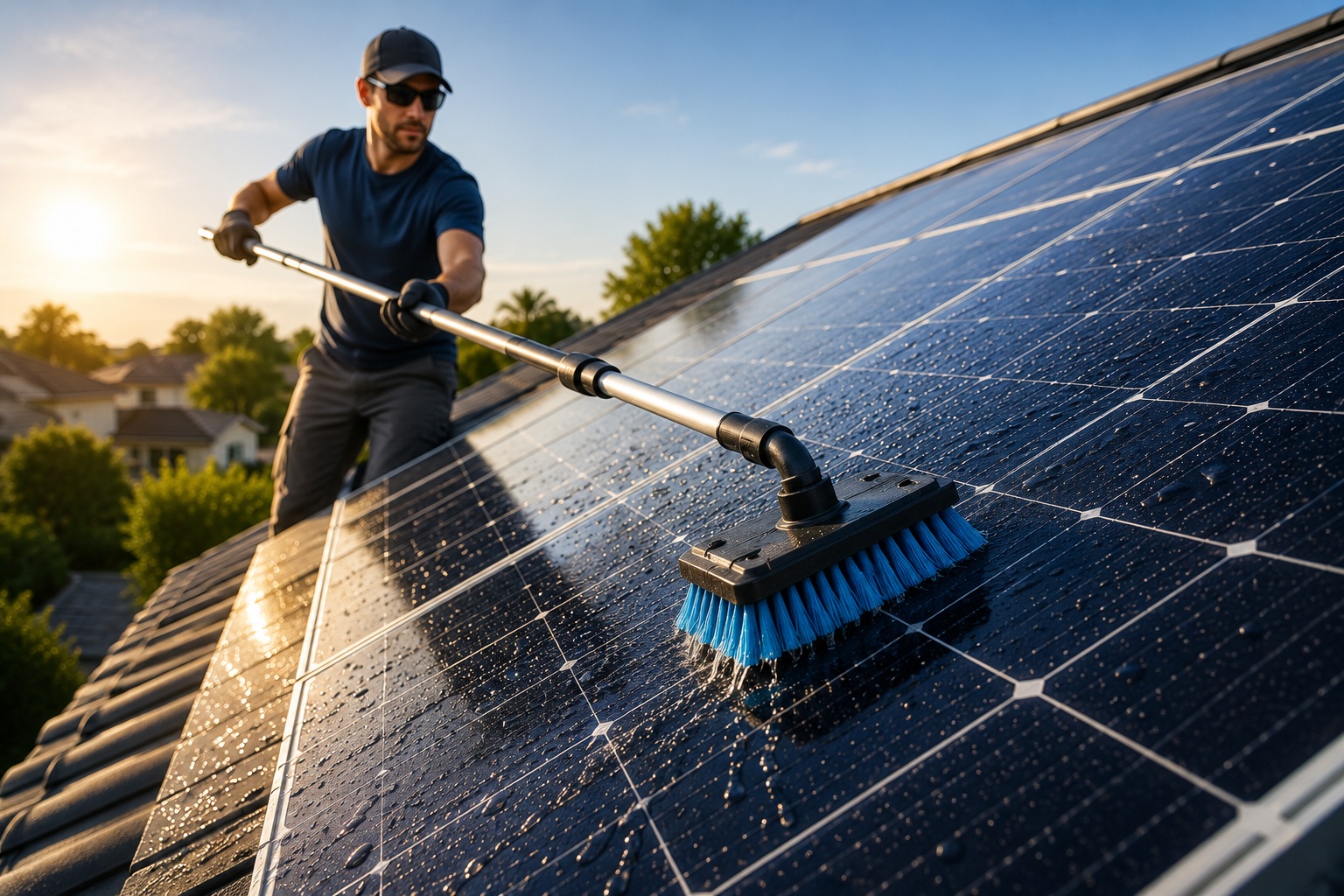
What you need: Soft-bristle brush or squeegee with extension pole, bucket of clean lukewarm water, biodegradable streak-free soap (optional — plain water often sufficient), garden hose with gentle spray nozzle, soft microfibre cloth (optional).
What to avoid:
- High-pressure washers — can damage panel frames, force water under seals, and crack the glass surface
- Abrasive materials — steel wool, rough sponges, or abrasive cleaners scratch the anti-reflective coating, permanently reducing light transmission
- Cleaning in full midday sun — thermal shock from cold water on hot glass can stress the panel; clean in early morning or evening
- Harsh chemical cleaners — acidic or alkaline cleaners damage frames, seals, and anti-reflective coating. Plain water is the safest option.
Step 1 — Safety first. For rooftop systems: use appropriate fall protection. Never step on panels. For ground-mount systems, cleaning from ground level with an extension-handled brush is safest.
Step 2 — Rinse first. Apply a gentle spray of water across the panel surface to loosen loose dust before scrubbing. This prevents scratching from dragging dry grit across the glass.
Step 3 — Wash. Use a soft brush or squeegee working from the top of the panel downward. For bird droppings, soak briefly before scrubbing — dried droppings require gentle soaking rather than hard scrubbing.
Step 4 — Rinse thoroughly. Rinse from top to bottom ensuring no soap residue remains. Soap residue left to dry creates a film that reduces light transmission.
Step 5 — Verify results. Check the monitoring system output the following sunny day — a well-cleaned system typically shows a measurable output increase.
Annual Tasks — Comprehensive Inspection Checklist
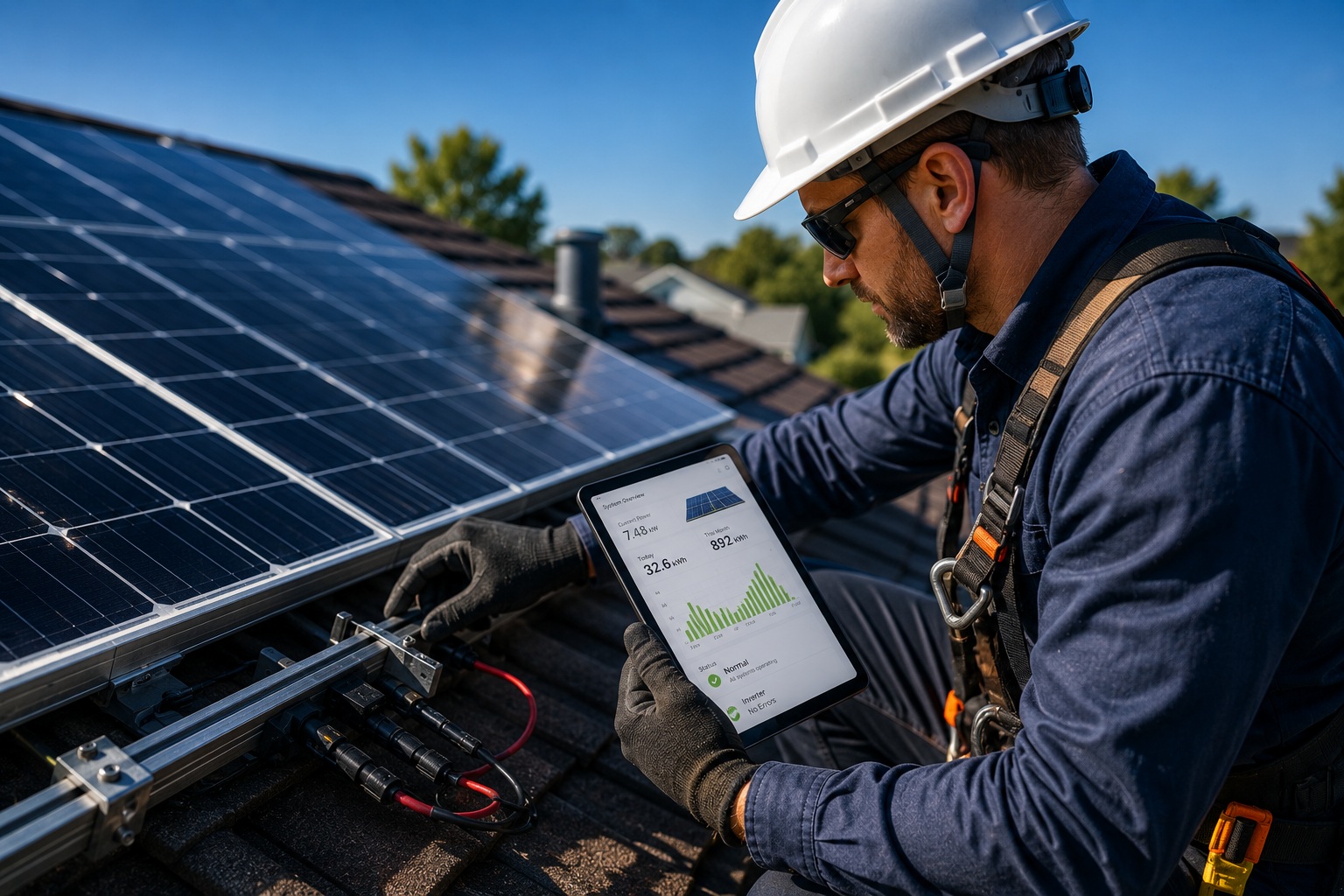
The annual inspection combines owner-conducted visual assessment with a professional electrical check. Use this checklist as your annual reference:
Panel surfaces:
- ☐ All panels visually free of cracks, chips, or delamination at edges
- ☐ No discolouration, yellowing, or browning visible (indicates cell damage or EVA delamination)
- ☐ No visible hot spots — dark or lighter patches on panel surface compared to others
- ☐ Frames intact — no bent or broken sections
- ☐ Junction boxes (where visible) — no cracking or moisture ingress
Mounting system:
- ☐ All visible mounting hardware intact — no missing bolts, broken clamps, or cracked rail sections
- ☐ Ground-mount foundations show no movement, heave, or tilting
- ☐ Roof penetrations — no visible signs of water infiltration around flashings
- ☐ Panel tilt angle consistent across the array — no panels that appear shifted
Wiring (visible runs only):
- ☐ No visible UV cracking, brittleness, or animal damage on accessible wiring
- ☐ MC4 connectors properly mated — no partially disconnected connectors visible
- ☐ No standing water in conduit runs or junction boxes
Inverter and monitoring:
- ☐ Inverter displaying normal operation with no persistent error codes
- ☐ Annual output total compared to previous year — flag any unexplained variance above 5%
- ☐ Monitoring system data accessible and uploading correctly
- ☐ Inverter firmware up to date
Professional inspection — every 3–5 years — ask for:
- Thermal imaging scan of the full panel array (identifies hot spots invisible to visual inspection)
- Electrical connection torque check (loose connections are the primary cause of arc faults and fire risk)
- Ground continuity testing
- Insulation resistance testing on DC wiring
- Inverter internal inspection and filter cleaning
Seasonal Maintenance Tasks
Spring (pre-summer peak season):
- Clean panels after pollen season — spring pollen is one of the most significant soiling events of the year
- Check for winter storm damage — missing or shifted panels, damaged flashings, frost-heaved ground-mount footings
- Trim any vegetation that may shade panels through summer
- Check battery bank connections and state of health (off-grid systems — see our solar battery guide)
Summer (peak production season):
- Monitor output data closely — summer should be highest production; underperformance is most visible and impactful now
- Increase cleaning frequency in desert climates (dust and monsoon debris)
- Ensure inverter ventilation is unobstructed — inverters are most stressed in high ambient temperatures
- Check for bird nesting under panels — nests block airflow and attract rodents that chew wiring
Autumn (pre-winter preparation):
- Comprehensive visual inspection before winter weather arrives
- For off-grid systems: verify battery bank is fully charged and healthy before reduced winter sun hours
- Check MPPT charge controller settings for seasonal sun angle changes — see our MPPT charge controller guide for optimal seasonal settings
- Clear debris accumulation around ground-mount array bases before leaf fall
Winter:
- Snow removal from panels if applicable — see below
- Reduce cleaning frequency in low-pollen, wet climates
- Monitor output relative to expected winter levels as a baseline for spring comparison
Snow Removal — What’s Safe and What Isn’t
Snow typically slides off panels on its own once temperatures rise slightly — the smooth glass surface and residual panel warmth accelerate this. For most light snow events, no action is required.
Safe snow removal (when needed):
- Use a soft roof rake with a foam or rubber edge — never metal tools on panel surfaces
- Work from the bottom of the panel upward — gravity assists
- Never stand on panels or apply significant downward pressure
- Do not use salt or ice-melting chemicals — salt damages frames and seals
What not to do: Never use a pressure washer on snow-covered panels, never use a metal shovel or scraper on panel surfaces, and never attempt removal from a ladder on an icy roof. If production loss isn’t significant, let nature handle it.
Warning Signs — When to Call a Professional Immediately
Some findings during routine maintenance warrant immediate professional attention:
- Any visible burn marks, char, or scorched wiring — indicates arc fault or fire risk
- Cracked panel glass exposing cells — creates electrocution risk from exposed energised conductors
- Inverter GFCI/ground fault error that doesn’t self-clear — can indicate insulation failure
- Output drop greater than 20% not explained by soiling or shading
- Evidence of animal chewing on wiring — exposed conductors create fire and shock risk
- Water infiltration into the inverter enclosure
Important safety note: DC wiring from solar panels is energised whenever light hits the panels — it cannot be “turned off” at the inverter. Any work involving DC conductors, panel wiring, or connections requires a qualified person. Owner maintenance is limited to visual inspection and surface cleaning — never open electrical enclosures or attempt wiring work.
Monitoring — Your Most Powerful Maintenance Tool
Modern monitoring systems transform solar maintenance from reactive to proactive. Every modern inverter has a monitoring app showing daily, monthly, and annual generation — and this data is more valuable than any visual inspection for detecting early-stage problems.
String-level and panel-level monitoring (Enphase, SolarEdge) shows production from each individual panel — a single failed diode, bird dropping, or cracked cell shows up as a dip in that panel’s data long before it’s visible from the ground. Seasonal performance comparison (October 2026 vs October 2025 at the same location) controls for weather and shows true system degradation or improvement. And cleaning verification — output typically increases the day after cleaning — tells you exactly how much soiling was costing you and whether your current cleaning frequency is right.
Maintenance for Off-Grid and Battery-Based Systems
Off-grid systems involve all the panel maintenance above plus battery and charge controller maintenance.
LiFePO4 battery maintenance:
- Monthly: Check state of charge and verify BMS is operating normally via Bluetooth app
- Quarterly: Inspect terminal connections for corrosion or looseness — clean and retorque if needed
- Annually: Full capacity test to verify capacity hasn’t degraded beyond expected levels
- Cold climate essential: Ensure self-heating function is operational before freezing temperatures arrive
See our complete solar battery guide for LiFePO4 maintenance specifics and our MPPT charge controller guide for controller-specific maintenance tasks.
Portable and foldable panels: Clean before folding for storage (grit between folded panels scratches the ETFE surface), store dry, and check connector condition each season. See our foldable solar panels guide for portable panel care.
The Complete Solar Panel Maintenance Schedule at a Glance
| Task | Frequency | Who | Time Required |
|---|---|---|---|
| Output monitoring (inverter app) | Monthly | Owner | 5 min |
| Visual inspection from ground | Quarterly | Owner | 15 min |
| Inverter vent cleaning | Quarterly | Owner | 10 min |
| Vegetation / shading check | Quarterly | Owner | 10 min |
| Panel cleaning | 1–4× per year (climate-dependent) | Owner or professional | 1–3 hrs |
| Battery inspection (off-grid) | Quarterly | Owner | 15 min |
| Comprehensive visual inspection | Annually | Owner | 45–60 min |
| Electrical connection check | Annually | Professional | 1–2 hrs |
| Post-storm inspection | After severe weather | Owner | 15–30 min |
| Thermal imaging scan | Every 3–5 years | Professional | 2–4 hrs |
| Full professional servicing | Every 3–5 years | Professional | Half-day |
Frequently Asked Questions
How often should solar panels be cleaned?
Most residences need cleaning once or twice yearly. Adjust for your local conditions: dusty or arid climates (Arizona, Nevada, Southern California) benefit from cleaning every 2–3 months. Coastal areas need more frequent cleaning due to salt spray. In the Pacific Northwest with regular rainfall, once per year is often adequate. Use your output monitoring data to confirm — if output returns to expected levels after cleaning, your current frequency is appropriate.
Do solar panels need professional maintenance?
Basic maintenance (cleaning, visual inspection, monitoring) is owner-manageable. A professional inspection every 3–5 years is good practice to catch issues not visible from the ground — particularly thermal imaging for hot spots and electrical connection torque checks. Most issues are found through monitoring data first, which is why monthly output monitoring is the most valuable maintenance habit.
What happens if you never clean solar panels?
Output gradually declines as soiling accumulates. In Arizona, unchecked dust accumulation can reduce panel efficiency by 15–25%. In most temperate climates, annual soiling loss without cleaning is 2–5%. Cleaning restores this loss — the panel itself isn’t damaged by soiling, only its output. Bird droppings left long-term can cause hot spots from sustained cell shading, which can permanently damage cells over extended periods.
How long do solar panels last with proper maintenance?
Quality panels are warranted for 25–30 years and typically last longer with maintained performance. The NREL-documented degradation rate of approximately 0.8% per year means a 400W panel today produces approximately 328W after 25 years — still functional, just reduced. Proper maintenance minimises additional losses from soiling and failures on top of this baseline. For a full breakdown, see our guide to how long solar panels last.
Can I pressure wash solar panels?
No — avoid high-pressure washing as per manufacturer guidelines. High-pressure washing risks cracking panel glass, forcing water into junction boxes and frame seals, and damaging the anti-reflective coating. A garden hose with a gentle spray nozzle and a soft-bristle brush is the correct method.
Does rain clean solar panels?
Partially. Rain removes loose dust but leaves residue at panel edges and is ineffective against bird droppings, stuck pollen, and industrial particulates. In high-rainfall climates, cleaning frequency is lower — but rain alone isn’t a replacement for manual cleaning in most environments.
Final Thoughts
Solar panels are one of the most reliable home energy investments precisely because they have so few moving parts. But “low-maintenance” is not “no-maintenance” — and the difference between a well-maintained system and a neglected one is measurable in kilowatt-hours and dollars over a 25-year system life.
The maintenance that matters most: monthly monitoring to catch problems early, cleaning calibrated to your local environment, annual visual inspection, and a professional electrical check every 3–5 years. Start with the monitoring app for your inverter — it costs nothing, takes five minutes per month, and is by far the most valuable maintenance tool available.
For the components that make up your complete solar system, see our full guides: high efficiency solar panels, solar batteries, MPPT charge controllers, off-grid solar system design, and how long solar panels last.