This post contains affiliate links. If you buy through our links we may earn a small commission — at no extra cost to you. This never influences our recommendations.
Which Portable Power Station Is Right for You?
Portable power stations have quietly become one of the most useful pieces of gear a household can own. They power your fridge during outages, run your laptop at a remote campsite, keep your CPAP going when the grid goes down, and do all of it silently, without fumes, and indoors — none of which is true of a gas generator.
The market has exploded. Jackery, EcoFlow, Anker, Bluetti, Goal Zero — each brand makes a dozen models at overlapping price points. Buying the right one requires knowing what you actually need it for, which specs matter, and which brands are worth trusting. This guide is structured around use cases — not brands — because what you need for a camping trip is genuinely different from what you need for whole-home backup.
The Specs That Actually Matter
Capacity (Wh) — how long you run things. A 1,000Wh power station running a 100W device lasts approximately 8 hours (accounting for inverter efficiency losses). For overnight camping, 500Wh is a reasonable floor. For multi-day off-grid use or home backup, 2,000Wh+ is where real self-sufficiency begins.
Continuous output (W) — what you can run. A 1,000W inverter cannot run a 1,500W space heater even if the battery has plenty of capacity — the inverter is the ceiling, not the battery. Check the peak surge rating too — motor-driven appliances (fridges, pumps, power tools) draw 2–3× their running wattage at startup.
Charging speed. A power station that charges in 1 hour versus 4 hours is a fundamentally different tool for camp use with limited grid access. EcoFlow’s X-Stream and Jackery’s HyperCharger technologies bring charge times under 2 hours for most models.
Battery chemistry. All the units in this guide use LiFePO4 (LFP) — the chemistry that provides 3,000–6,000 cycle life, no thermal runaway risk, and consistent performance over a decade. Earlier NMC-based power stations are worth avoiding for new purchases in 2026.
Solar input. If solar charging is part of your plan, this number must match your panel capacity — a station with 400W solar input won’t meaningfully benefit from four 200W panels. See our panel pairing table further down.
The Best Portable Power Stations — By Use Case
Best for Most People: EcoFlow Delta 3 Plus
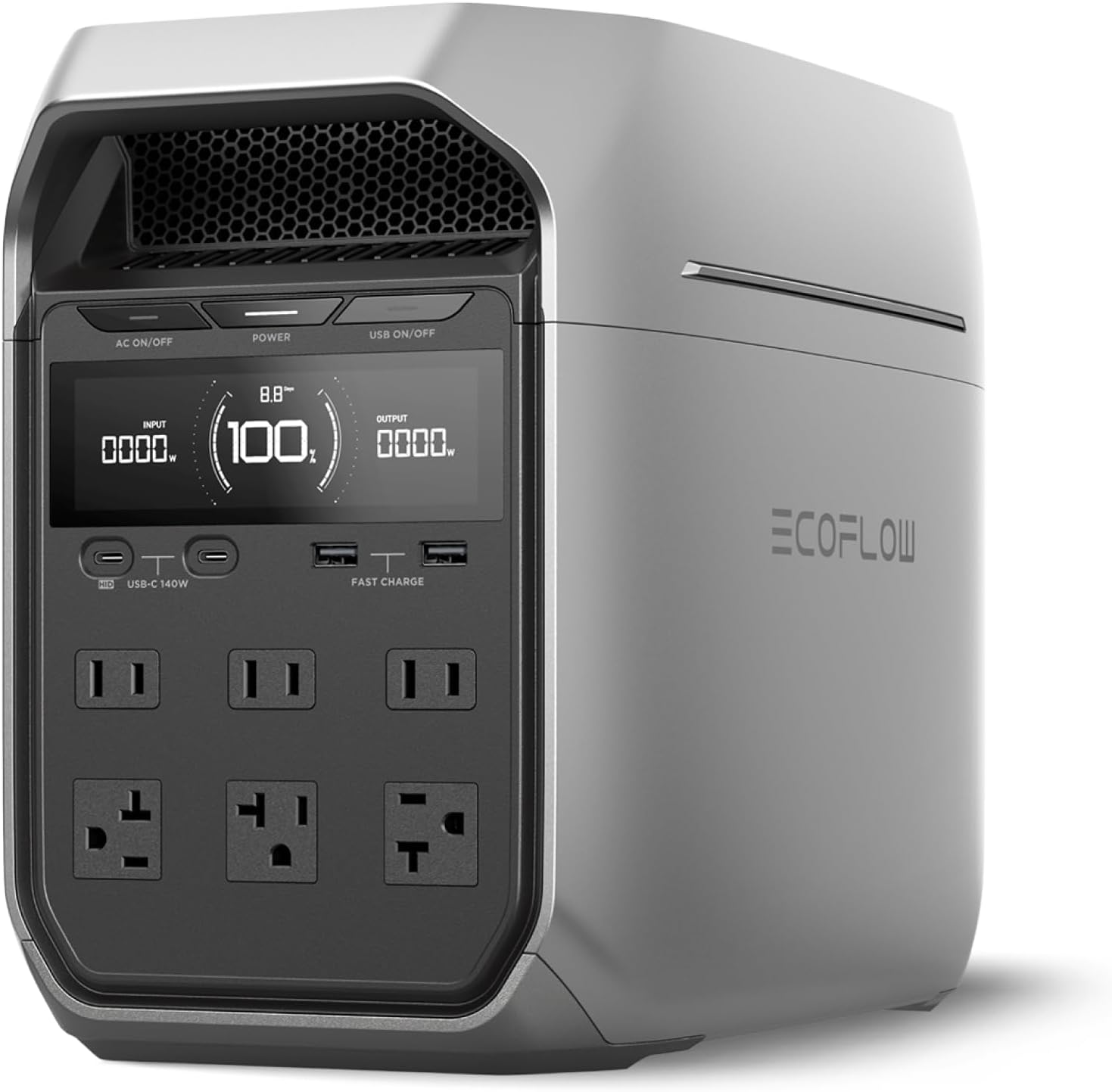
The EcoFlow Delta 3 Plus is the best-rounded portable power station in 2026 — balancing capacity, output, charging speed, port selection, and price for the widest range of buyers. Specs: 1,024Wh capacity, 2,400W continuous output, 4× AC outlets, 2× USB-C, 2× USB-A, 1× car outlet, 1,000W solar input, 10ms UPS switchover, expandable to 5kWh.
The 1,024Wh handles most weekend camping trips and 8–12 hours of essential home backup. The 2,400W output runs most household appliances including microwaves, small air conditioners, and power tools. The 1,000W solar input means a full recharge in approximately 1.5 hours with adequate panels — one of the fastest solar recharge rates in the 1kWh class. The expandability to 5kWh through additional batteries turns a camping power station into a meaningful home backup system without starting from scratch.
Best paired with: Our 200W solar panel guide for solar recharging, and our home backup guide for home integration.
Price: ~$799–$999 | Check Amazon for current EcoFlow promotions — they run frequent sales.
Best Value Under $400: Anker SOLIX C1000
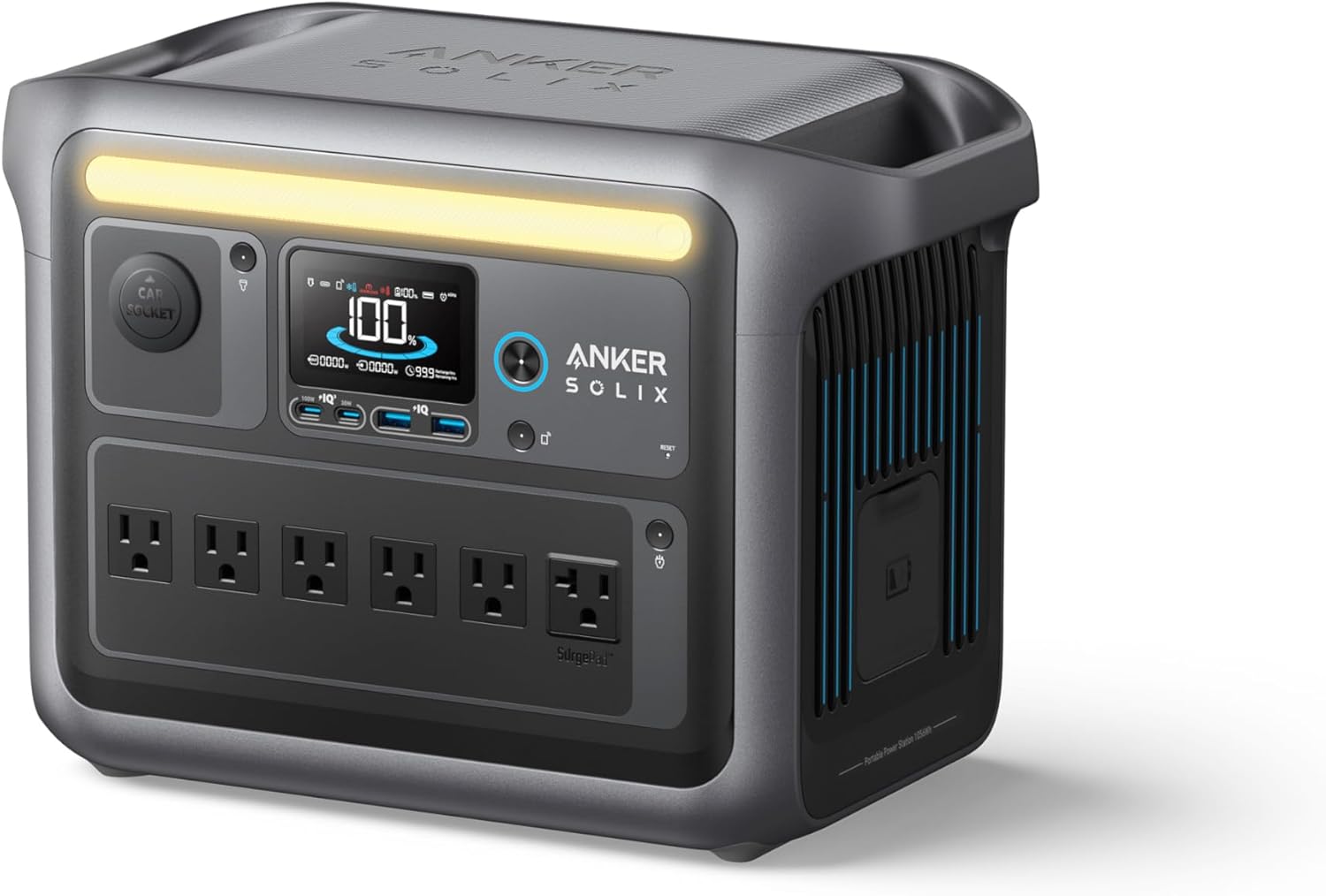
The Anker C1000 is the best power station when budget is a priority — currently available for under $400, it delivers a combination of price, power, and portability that hits the sweet spot. 1,056Wh of LFP capacity, 1,800W continuous output, 0–80% charge in under 58 minutes via Anker’s HyperFlash technology. Anker’s decades-long consumer electronics presence translates to more responsive US-based customer service and hassle-free warranty claims — a genuine advantage over newer brands.
For buyers who need a power station for camping trips, weekend outages, and emergency preparedness without spending $800+, the Anker C1000 is the most straightforward recommendation in the category.
Price: ~$400
Best for Camping and Outdoor Use: EcoFlow River 2 Pro
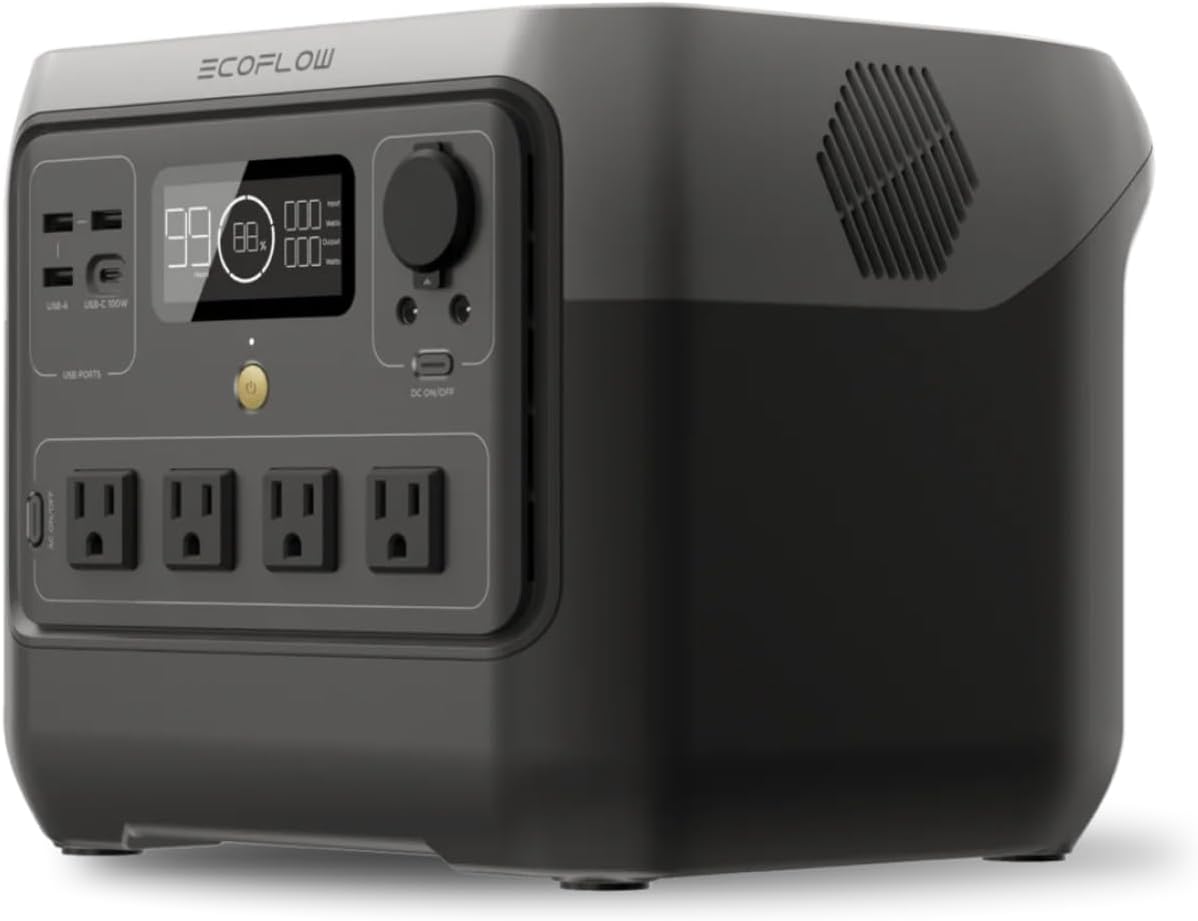
The EcoFlow River 2 Pro at 768Wh is the real sweet spot between the common 500Wh and 1,000Wh units — providing the portability of smaller options with nearly the same output as larger power stations. At 17 lbs with 800W output, a 70-minute charge time, and 4 AC outlets, it earned Best Overall in The Inertia’s field testing. 768Wh covers a full weekend camping trip — device charging, LED lighting, a small fan, camera batteries, and a CPAP without humidifier. One person can carry it without effort.
We reviewed the EcoFlow River 2 in full detail — see our EcoFlow River 2 review for the complete specs breakdown, the River 2 vs River 2 Pro comparison, and the River 3 question addressed directly.
Price: River 2 ~$189 | River 2 Pro ~$339
Best Lightweight 2kWh Power Station: Jackery Explorer 2000 v2
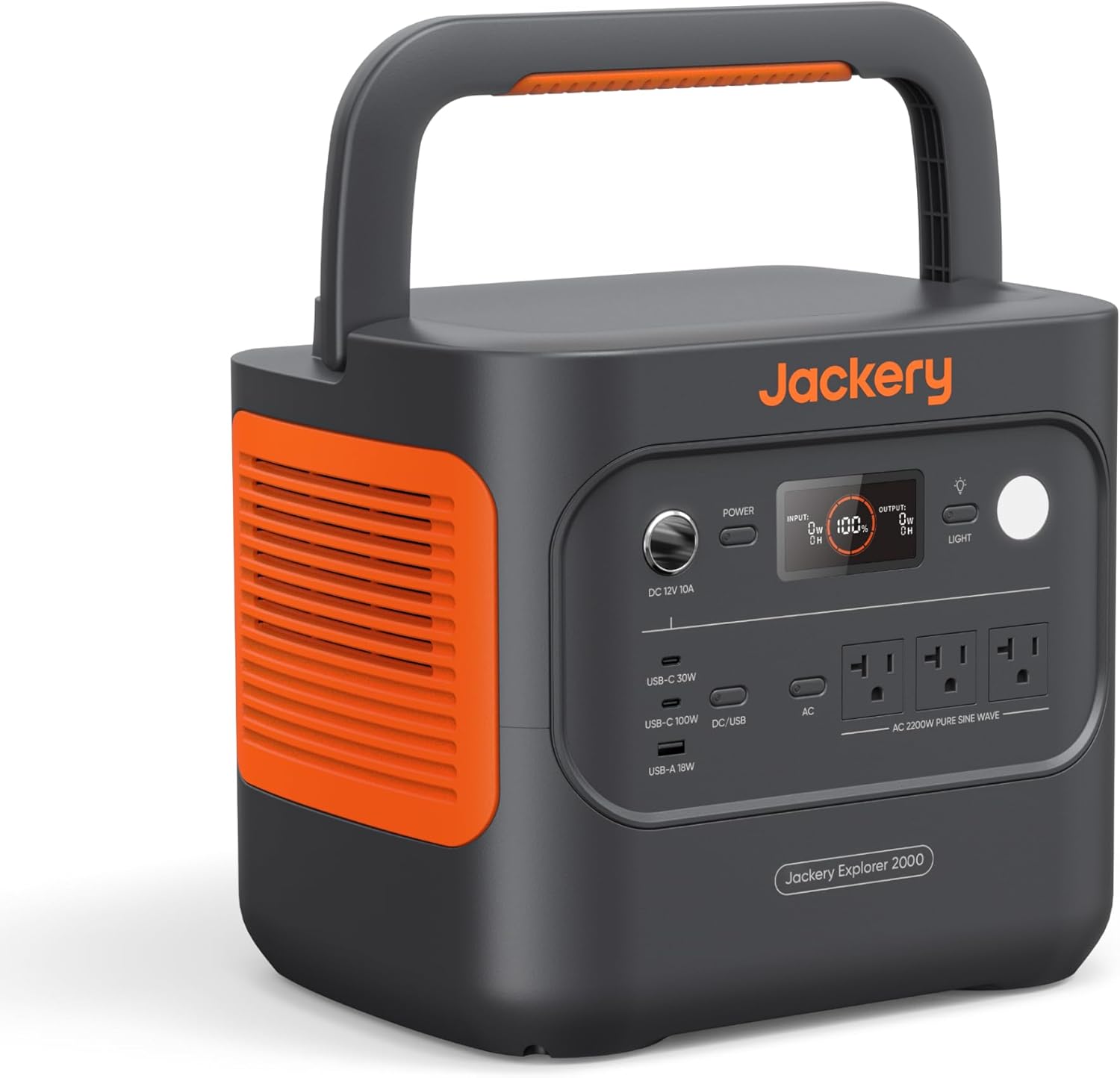
The Jackery Explorer 2000 v2 delivers 2,042Wh at just 39 lbs — double the power of the Anker C1000 with only a 34% increase in weight, making it the best power-to-weight ratio in the 2kWh class. 39 lbs is light enough to carry one-handed. The simplicity of Jackery’s interface — a single dial, a clear display, the Jackery app — makes it the most accessible 2kWh power station for first-time buyers. Jackery focuses on ultimate lightweight portability and simplicity, winning on plug-and-play operation for buyers who want it to just work.
Note: this is distinct from the Explorer 2000 Plus. The v2 is lighter and simpler; the Plus is heavier but expandable to 24kWh with a higher solar input. See our full Explorer 2000 Plus review for the detailed head-to-head.
Price: ~$799
Best Expandable Mid-Range Platform: Jackery Explorer 2000 Plus
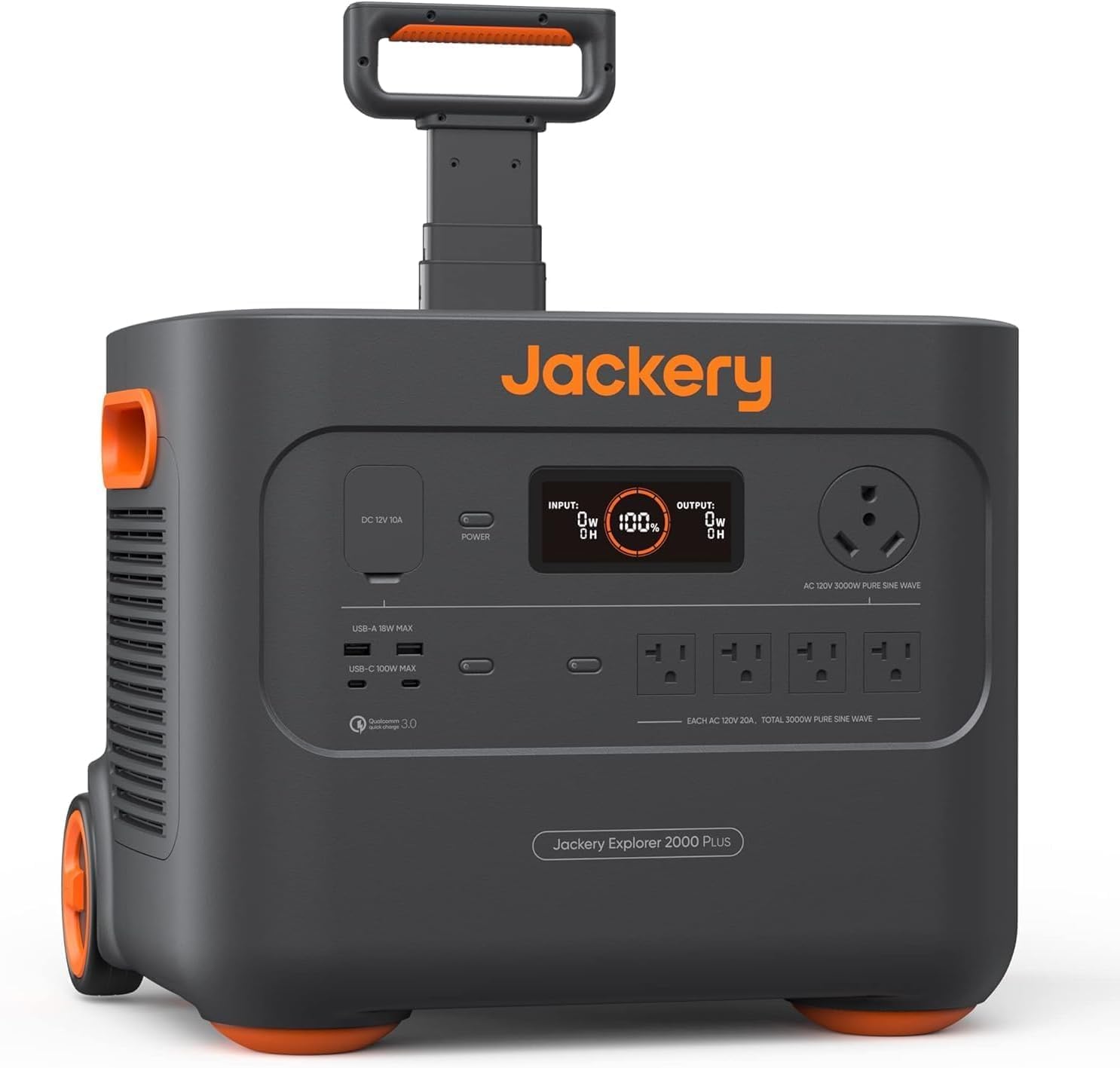
The Explorer 2000 Plus is the right choice for buyers who want 2kWh today and the option to grow to 24kWh over time. 2,042.8Wh, 3,000W continuous output, 6× AC outlets, 1,200W IBC solar input, and the Battery Pack 2000 Plus expansion system. At ~$899, the $100 premium over the v2 buys higher output (3,000W vs 2,200W), faster solar charging (1,200W vs 800W), expandability, and more outlets. If you can afford the Explorer 2000 Plus, buy the Plus.
Full specs, real-world testing, and complete v2 comparison in our Jackery Explorer 2000 Plus review. Available on Amazon and Jackery.com.
Price: ~$899
Best for RV and 240V Home Backup: Jackery HomePower 3600 Plus
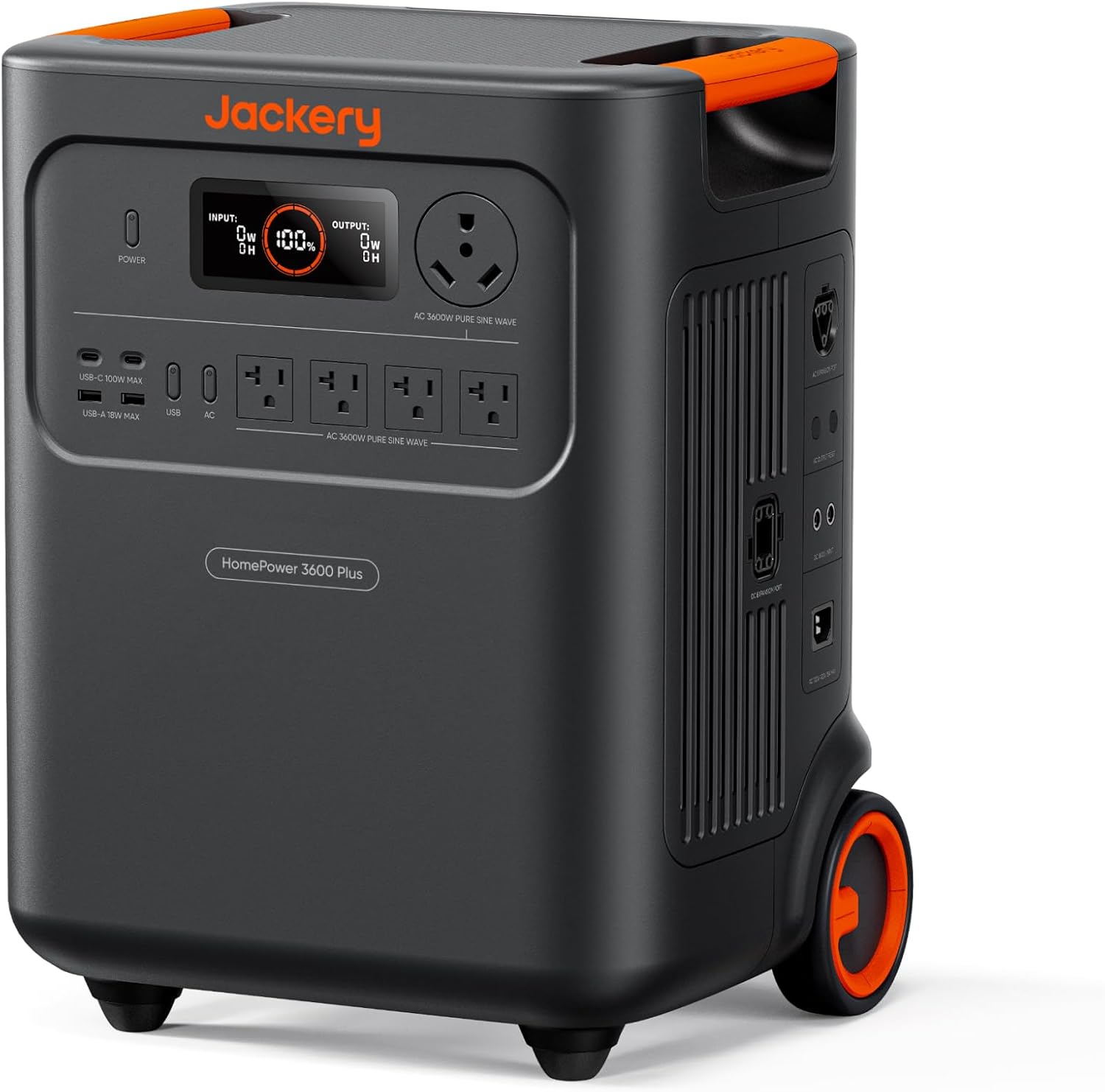
The HomePower 3600 Plus bridges the gap between mid-range and flagship — 3,584Wh LFP, 3,600W continuous, 7,200W surge, 120V and 240V simultaneous output from a single unit, 1,000W solar input, expandable to 21kWh, 77 lbs with wheels. The 240V capability from one unit makes it the strongest option for RV owners who need to run large 240V appliances and for homeowners who want 240V backup without buying two units.
Full specs and real-world assessment in our Jackery HomePower 3600 Plus review.
Price: ~$2,299–$2,699
Best for Whole-Home Multi-Day Backup: Jackery Explorer 5000 Plus
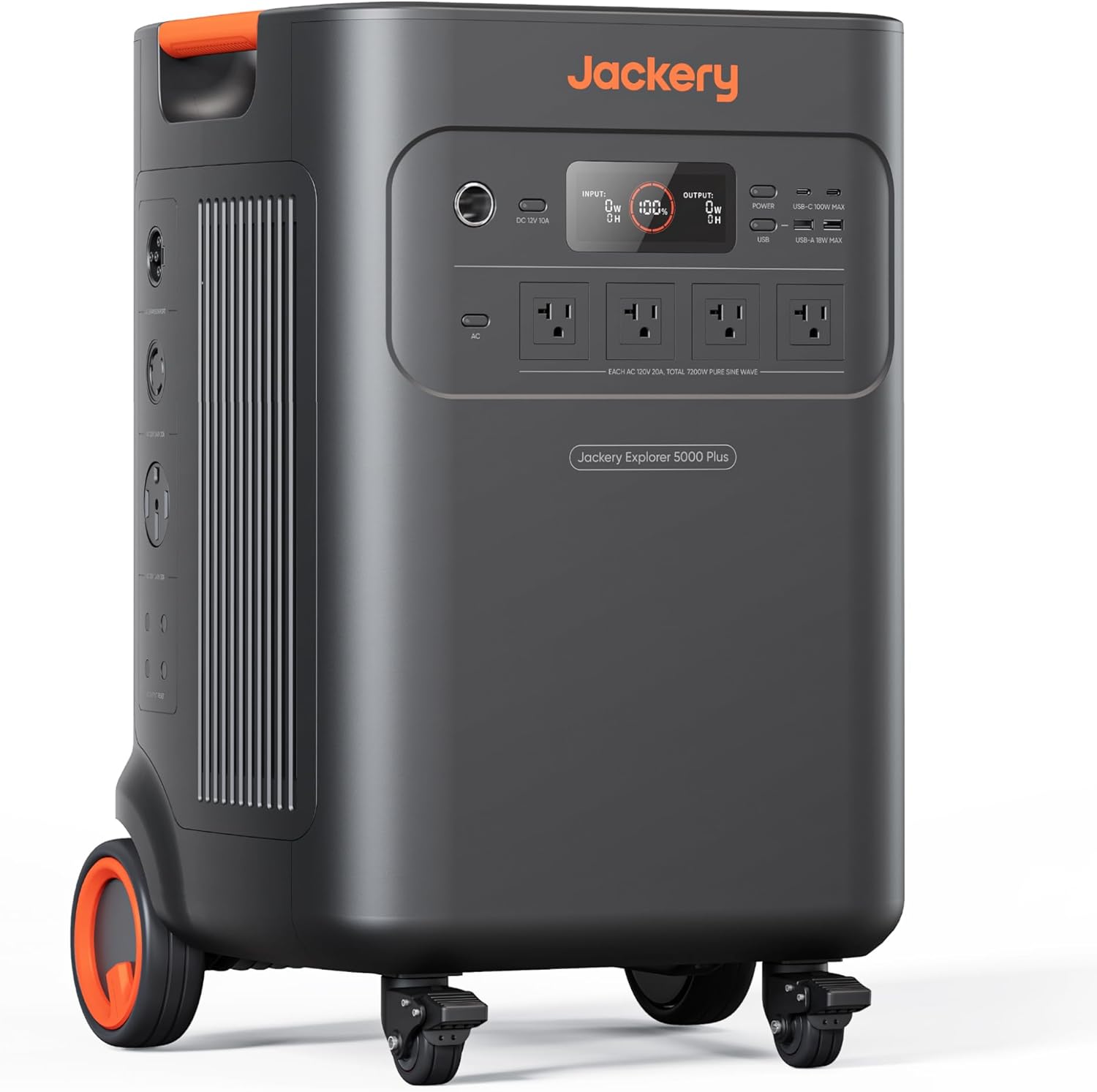
The Explorer 5000 Plus is where portable power stations cross into serious home backup territory. 5,040Wh LFP, 7,200W continuous output, 14,400W surge, 4,000W solar input, 0ms UPS via Smart Transfer Switch, 120V and 240V simultaneous, expandable to 60kWh. A real-world 90-hour outage at 12°F confirmed it handles multi-day whole-home backup without failure. At ~$3,000, it matches the Anker SOLIX F3800 price while delivering more capacity and output power.
Full specs, the 90-hour outage test, and the complete competitor comparison in our Jackery Explorer 5000 Plus review. Available on Amazon and Jackery.com.
Price: ~$2,999–$3,500
Brand Comparison — Who Makes What Best
| Brand | Best At | Watch Out For |
|---|---|---|
| EcoFlow | Fastest charging, strongest app, best all-round balance | Support quality varies; some flagship models are very heavy |
| Jackery | Portability, simplicity, ecosystem integration | Slower charging than EcoFlow at the same capacity |
| Anker | Value per dollar, US support and warranty responsiveness | Newer to the high-capacity category; fewer flagship options |
| Bluetti | Large-capacity expandable systems, serious off-grid focus | Heavier and pricier per Wh than EcoFlow and Jackery |
| Goal Zero | Premium build quality, outdoor brand credibility | Expensive; slower charging than newer brands |
For most people, EcoFlow is the best overall choice because it balances charging speed, portability, and everyday usability. Bluetti is usually better for longer outages and larger battery capacity. Jackery remains the easiest option for beginners and buyers who prioritise portability and simplicity above all else.
What Capacity Do You Actually Need?
| Capacity | Best For | Runtime Example |
|---|---|---|
| Under 500Wh | Day trips, device charging, minimal loads | Phone ×20, laptop 6 hrs |
| 500–1,000Wh | Weekend camping, short power outages | Camping fridge 5 hrs + full device charging |
| 1,000–2,000Wh | Multi-day camping, 12–16 hour backup | Fridge 10 hrs + devices + fan all night |
| 2,000–4,000Wh | Extended camping, serious home backup | Whole-home essentials for 24 hours |
| 4,000Wh+ | Multi-day home backup, off-grid homesteading | 2–4 days of whole-home essential loads |
Pairing Solar Panels With Your Power Station
Every power station in this guide charges from solar panels as well as from the wall. Match the panel wattage to the power station’s solar input limit — running more wattage than the station accepts wastes the extra panels’ capacity. Most portable power stations have built-in MPPT controllers; third-party panels connect directly via MC4. See our MPPT charge controller guide for voltage compatibility guidance.
| Power Station | Solar Input Max | Recommended Panel |
|---|---|---|
| EcoFlow River 2 / River 2 Pro | 110–220W | 100W foldable panel |
| EcoFlow Delta 3 Plus / Anker C1000 | 1,000W | 200W panels ×4–5 |
| Jackery Explorer 2000 Plus | 1,200W IBC | SolarSaga 200W ×4–6 |
| Jackery HomePower 3600 Plus | 1,000W | SolarSaga 200W ×5 |
| Jackery Explorer 5000 Plus | 4,000W | SolarSaga 500X ×6 |
Frequently Asked Questions
What’s the difference between a portable power station and a generator?
A portable power station stores electrical energy in a battery and converts it on demand — silently, without fuel, with no carbon monoxide emissions. A gas generator produces electricity by burning fuel — louder, requires ventilation, produces lethal CO indoors, but can run indefinitely as long as fuel is available. For indoor emergency backup and camping: power stations. For multi-day whole-home backup where indefinite runtime is needed: a generator or a very large battery bank with solar.
How long does a portable power station last?
The LFP batteries in current-generation power stations are rated for 3,000–6,000 cycles before degrading to 80% capacity — approximately 8–16 years at one cycle per day. In practice, most users don’t cycle daily, extending functional life further. A quality power station purchased today should provide reliable service for a decade or more.
Can a portable power station run a refrigerator?
Yes — with appropriate capacity and output. A 12V compressor camping fridge draws approximately 45W average, consuming ~1,080Wh over 24 hours. A 1,000Wh power station runs it for approximately 18–20 hours. A full-size household refrigerator needs 2,000Wh+ for meaningful overnight backup. The Jackery Explorer 2000 Plus or EcoFlow Delta 3 Plus handles this comfortably.
Are portable power stations safe indoors?
Yes — LFP power stations produce no carbon monoxide, no toxic gases, and have no thermal runaway risk under normal conditions. They are safe for indoor use in living spaces, bedrooms, and basements. This is the primary safety advantage over gas generators, which must never be used indoors.
What size power station do I need for home backup?
Essential home backup load: fridge (~150W average) + lights (50–100W) + devices (50–100W) + CPAP if needed (30W) ≈ 400–500W continuous. For 8–12 hours of backup through a typical outage: 400W × 10hrs = 4,000Wh. The Jackery Explorer 5000 Plus (5,040Wh) or an expanded Explorer 2000 Plus handles this. For a full sizing guide, see our home backup system guide.
EcoFlow vs Jackery — which brand is better?
It depends on what you value. EcoFlow leads on charging speed and output power — its units charge 2–3× faster than comparable Jackery models at similar price points. Jackery leads on portability and simplicity — consistently the lightest units in each capacity class, with the most straightforward interface. For most buyers who want the fastest-charging, most capable unit: EcoFlow. For buyers who want the lightest and simplest: Jackery. Both brands have excellent 5-year warranties and are well-supported on Amazon.
The Bottom Line
| Your Situation | Best Pick | Price |
|---|---|---|
| Best all-round power station | EcoFlow Delta 3 Plus | ~$899 |
| Under $400, no compromises | Anker SOLIX C1000 | ~$400 |
| Best for camping, lightweight | EcoFlow River 2 Pro | ~$339 |
| Lightest 2kWh for van life | Jackery Explorer 2000 v2 | ~$799 |
| Expandable 2kWh platform | Jackery Explorer 2000 Plus | ~$899 |
| Best 3kWh home and RV backup | Jackery HomePower 3600 Plus | ~$2,499 |
| Whole-home multi-day backup | Jackery Explorer 5000 Plus | ~$2,999 |
The power station market has never offered better value than it does in 2026. A quality LFP power station purchased now will serve you reliably for a decade — making the decision less about the cost and more about choosing the right capability tier for how you’ll actually use it.
For the complete system around any of these units — solar panels, charge controllers, and battery banks — see our off-grid solar system guide. For dedicated solar panel pairings, see our foldable solar panels guide for portable options and our high efficiency solar panels guide for permanent installations.